As of October 2026, the landscape of German higher education has shifted. With the announcement of three new individual universities and two ambitious academic clusters joining the "Excellence" ranks, the federal government is doubling down on its strategy to compete on the global stage. But while the prestige is undeniable, the structural implications for the German academic system remain a subject of intense debate.
The German Excellence Strategy, a joint funding initiative by the federal and state governments, has long been the primary mechanism for directing specialized investment toward the country’s most promising research institutions. By providing significant financial injections to universities that demonstrate world-class research output and strategic vision, the program aims to elevate German academia to the level of Ivy League institutions or the top-tier research hubs of the United Kingdom.
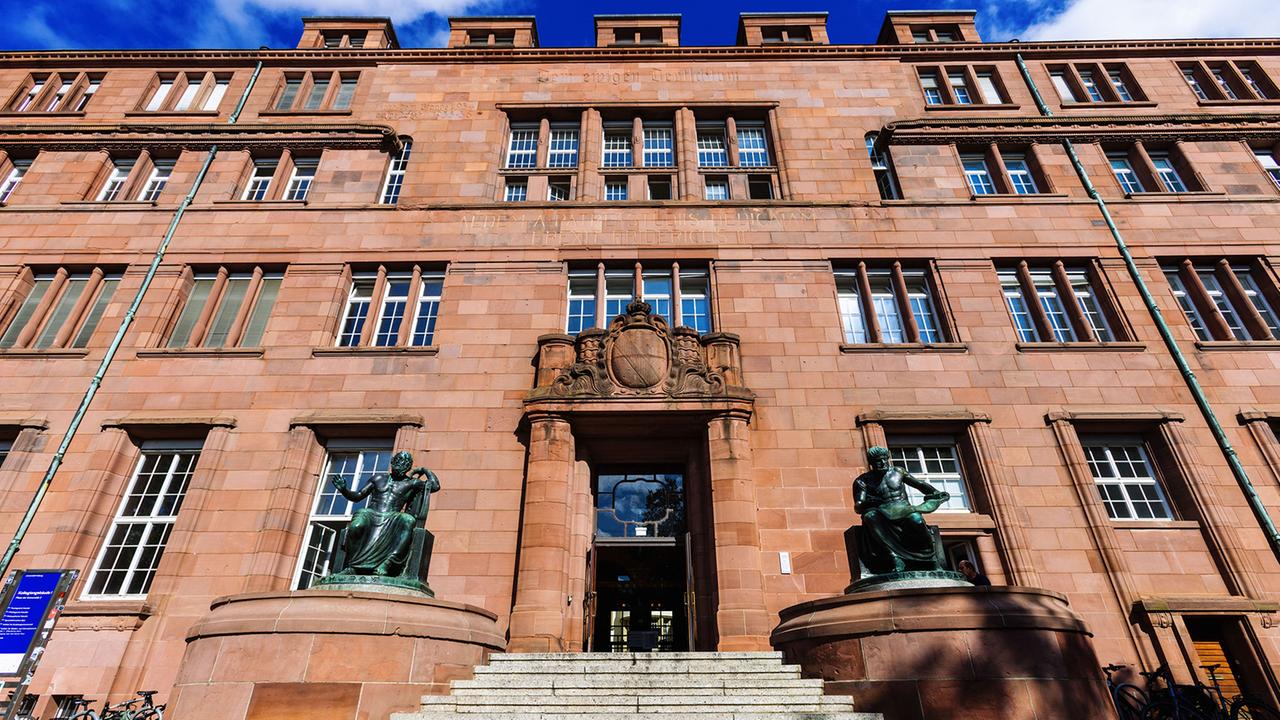
The latest announcement by the German Council of Science and Humanities (Wissenschaftsrat) and the German Research Foundation (DFG) has officially designated the universities of Freiburg, Jena, and Cologne as the newest "Excellence Universities." Furthermore, two high-profile university alliances—the Rhein-Main-Universities (comprising Darmstadt, Mainz, and Frankfurt am Main) and the Ruhr Innovation Lab (a partnership between TU Dortmund and the University of Bochum)—have been inducted into the prestigious funding circle.
The Mechanism of Selection: Beyond Mere Research
Becoming an "Excellence University" is not a lifetime achievement award; it is a rigorous, time-bound status that requires continuous reinvention. The selection process, overseen by an independent panel of international experts, evaluates institutions based on four primary pillars: cutting-edge research performance, sustainable future strategy, international connectivity, and the institution’s capacity for structural self-development.
A prerequisite for entry is the possession of at least two "Excellence Clusters"—specialized, highly funded research projects that were identified in the first stage of the strategy. This two-tier system ensures that only universities with a proven, multi-disciplinary track record of high-impact science can apply for the prestigious title and the accompanying institutional funding.
Chronology: Two Decades of "Elite" Evolution
The concept of the "Excellence Initiative," the predecessor to the current strategy, was first introduced in 2006. At that time, it was a radical departure from the egalitarian tradition of German universities. The goal was simple: to break the "leveling" effect of public funding and allow top performers to pull ahead.
- 2006: The inaugural round saw only three institutions—the LMU Munich, the TU Munich, and the Karlsruhe Institute of Technology (KIT)—receive the title.
- 2012: Recognizing the need for a broader base of elite institutions, the government expanded the program, bringing the total number of funded sites to eleven.
- 2019: The "Excellence Strategy" was launched as the successor to the original initiative. The cap on the number of funded institutions was raised to 15, signaling a permanent shift in how German research funding is distributed.
- 2026: The current cycle confirms ten of the eleven incumbent universities, while introducing new blood. Notably, the University of Konstanz, a long-standing member of the elite circle, has been dropped from the list after failing to maintain the required number of research clusters—a harsh reminder that even the most prestigious titles are not permanent.
Supporting Data: The Financial Landscape
The financial dimensions of this strategy are significant, though they represent only a portion of total university budgets. Currently, roughly 687 million euros are allocated annually for the excellence program, with the federal government bearing the lion’s share of the burden.
- Individual Universities: Successful applicants receive between 10 and 15 million euros annually in institutional funding.
- University Clusters/Alliances: These partnerships are eligible for 15 to 28 million euros per year, depending on the complexity and scope of their collaborative research.
Critics often point out that for large, multi-faculty universities with billion-euro budgets, 15 million euros is a relatively modest sum. However, the true value lies in the "multiplier effect." The title of "Excellence University" acts as a powerful brand, enabling institutions to secure third-party funding, attract high-caliber international talent, and foster partnerships with industry leaders that might otherwise remain out of reach.
The Existing "Elite" Guard
The following institutions remain the pillars of the current Excellence cohort, having successfully defended their status in the most recent evaluation:
- RWTH Aachen
- University of Bonn
- TU Dresden
- University of Hamburg
- University of Heidelberg
- Karlsruhe Institute of Technology (KIT)
- Ludwig-Maximilians-University (LMU) Munich
- Technical University of Munich (TUM)
- University of Tübingen
- The Berlin University Alliance (Free University, Humboldt University, and TU Berlin)
Implications: Research, Prestige, and the Student Experience
The primary objective of the strategy is to strengthen Germany’s competitive edge. In an era where global research is dominated by US and British institutions, policymakers fear that German universities might lose their relevance if they remain too decentralized. By concentrating resources, the government hopes to create "lighthouses of research."
The "Trickle-Down" Fallacy?
One of the most persistent criticisms concerns the impact on students. The funds provided under the Excellence Strategy are explicitly earmarked for research infrastructure, specialized equipment, and the creation of new research chairs. Direct investment into undergraduate teaching is rarely a priority of this funding. Consequently, students at an "Excellence University" may experience world-class laboratories and prestigious faculty, but they do not necessarily receive more personalized teaching or improved student services compared to their peers at non-elite institutions.
Structural Criticism
Sociologist Richard Münch, a vocal critic of the program, has long argued that the strategy creates a "Matthew Effect"—where those who have, receive more, while those who lack resources are pushed further into the shadows. By focusing funding on already-successful institutions, the program risks widening the gap within the German academic landscape, potentially starving smaller or humanities-focused universities of the resources needed to compete.
Furthermore, the administrative burden of the constant "application marathon" is taking its toll. Academics report that the pressure to constantly frame their research within the logic of "excellence" and "innovation" distracts from the core, long-term scientific questions that require patience and freedom from competitive constraints.
Official Stance and Future Outlook
Despite the criticism, the federal government and the DFG remain committed to the strategy. The official view is that the global competition for talent and breakthroughs is unforgiving. To stay at the forefront of the digital and energy transitions, Germany needs research engines that can operate at the highest possible speed.
For the newly selected universities in Freiburg, Jena, and Cologne, the designation is a transformative moment. It provides the institutional legitimacy required to lead international consortia and defines their research identity for the next funding period.
As the 2026–2033 cycle begins, the eyes of the global scientific community will be on these institutions. Will the extra millions translate into tangible breakthroughs in fields like biotechnology, AI, or climate physics? Or will the administrative costs of maintaining "Excellence" status eventually stifle the very creativity the program intends to foster?
For now, the elite circle has grown, and with it, the pressure on Germany’s academic system to prove that it can foster both quantity and quality in the pursuit of scientific progress. The "Excellence" label has become the defining currency of modern German academia, and as the case of the University of Konstanz shows, it is a currency that must be earned anew every single day.