


NEW DELHI, India – October 10, 2026 – In a dramatic pre-dawn swoop, Indian police have arrested Abhijeet Dipke, the charismatic founder of the burgeoning "Cockroach Movement" (CJP), along with two other key leaders, just hours before a planned mass demonstration against the country’s Election Commission (EC). The arrests, confirmed by the CJP across various online platforms, occurred shortly after the trio’s flight landed in the capital, New Delhi. The move has ignited a fierce debate about freedom of speech, electoral integrity, and the state’s response to public dissent in the world’s largest democracy.
Foundational Facts: A Nation on Edge
The arrests come amidst an intensifying political climate, with the CJP demanding the resignation of Election Commission Chief Gyanesh Kumar over what it alleges are politically motivated irregularities in the ongoing voter roll verification process. Authorities had previously declared the planned demonstration illegal, citing concerns over public order. The crackdown extended beyond the arrests, with New Delhi experiencing significant disruptions: several metro stations were sealed, major thoroughfares blocked, and mobile internet services in key areas were suspended – measures typically reserved for high-security situations or severe civil unrest.
High-Profile Arrest Sparks Outcry
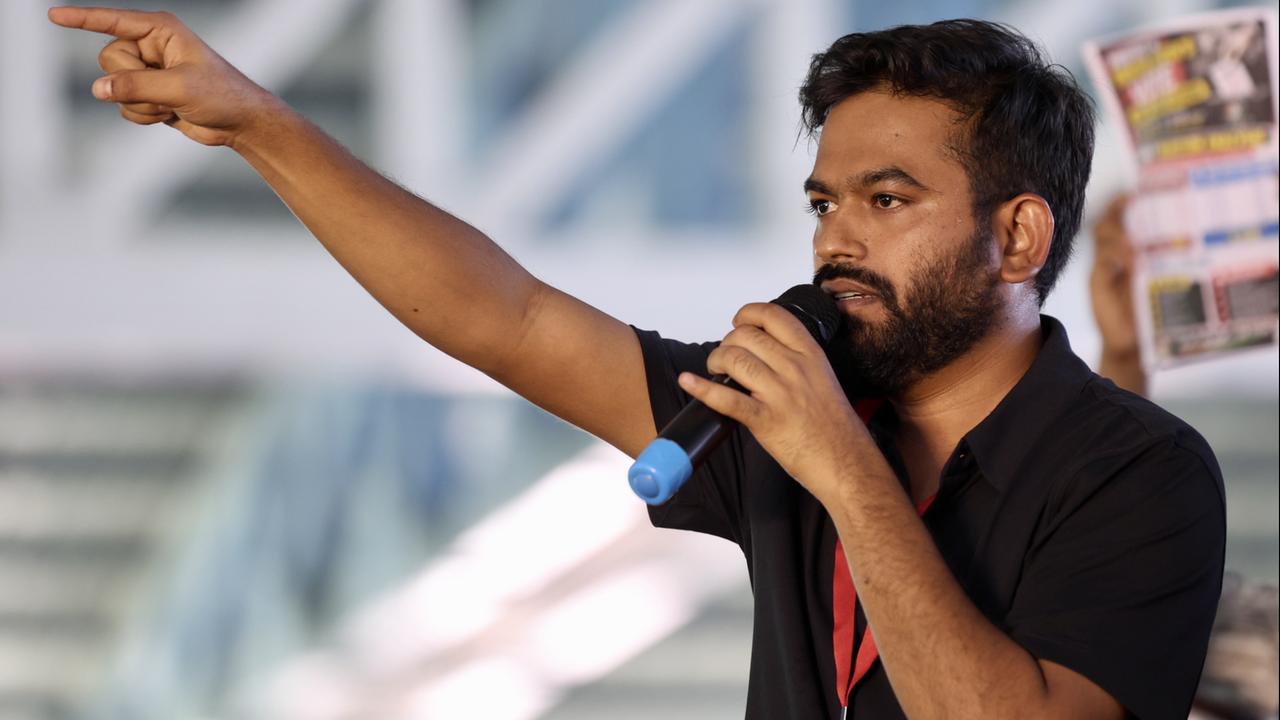
Abhijeet Dipke, a prominent figure known for his sharp wit and ability to mobilize youth, was apprehended at Indira Gandhi International Airport, along with two unidentified senior members of the CJP. The movement swiftly condemned the arrests as an authoritarian attempt to silence legitimate protest. "They want to crush our voices before they can even be heard," a CJP spokesperson stated online, appealing to supporters to remain resolute despite the state’s heavy-handed tactics. Television reports indicated that police had earlier warned Dipke to cancel the protest, asserting its illegality. The swiftness and coordination of the arrests suggest a pre-emptive strategy by the government to dismantle the protest leadership before it could gather momentum.
The Contested Electoral Roll
At the heart of the CJP’s protest is the Election Commission’s controversial review of voter registers. Officially, the EC maintains that this extensive audit is crucial to purify the electoral system by eliminating duplicate entries and names of ineligible voters. However, critics, including the CJP and several opposition parties, fear that the process is being weaponized to disenfranchise millions of legitimate voters, particularly those from marginalized communities or those perceived as less likely to support the ruling Bharatiya Janata Party (BJP) led by Prime Minister Narendra Modi. Reports citing a deputy head of the Election Commission, who allegedly expressed "grave concerns" over the potential deletion of an astounding 130 million voters, have fueled these anxieties, casting a shadow over the impartiality of a crucial democratic institution.
A City Under Siege
The capital’s transformation into a virtual fortress on the day of the planned protest underscored the government’s resolve to prevent any assembly. Images circulating online showed police and paramilitary forces deployed in large numbers across sensitive locations. The closure of key metro stations, which serve as lifelines for millions of commuters, brought parts of the city to a standstill. The deliberate disruption of mobile internet services, a tactic increasingly employed by Indian authorities during protests, severely hampered communication and the ability of activists to coordinate, raising alarms about the suppression of digital rights alongside physical assembly. These measures highlight a deepening trend of pre-emptive state control over public spaces and information flow in response to dissent.
The Genesis of Dissent: The Cockroach Movement’s Rise
The "Cockroach Movement for Justice" (CJP) is a relatively nascent but impactful civil society group that has rapidly captured public imagination through its unconventional methods and direct challenges to authority. Its origins lie in a moment of judicial condescension that unexpectedly ignited a firestorm of satirical defiance.
From Judicial Scorn to Popular Symbolism
The movement emerged in May of this year, born out of a moment of judicial scorn that inadvertently became a rallying cry. During a hearing, Supreme Court Justice Surya Kant reportedly referred to young government critics as "cockroaches" and "parasites." Intended as a dismissive insult, the remark backfired spectacularly. Instead of being shamed, these young activists, predominantly students and professionals, embraced the derogatory term with defiant pride. They transformed "cockroach" into a symbol of resilience, tenacity, and the ability to thrive even in adverse conditions, reflecting their determination to persist in the face of perceived official contempt. This act of reclaiming a slur resonated deeply with a segment of the population feeling marginalized and unheard, quickly propelling the CJP into the national spotlight. The adoption of the "cockroach" moniker not only neutralized the insult but also created a distinctive, memorable brand for their activism, allowing them to communicate complex grievances through a simple, powerful metaphor.
Early Victories and Shifting Focus
The CJP’s initial foray into activism targeted systemic issues within India’s vast and often beleaguered education system. In July, the movement spearheaded widespread protests against alleged corruption, arbitrary fee hikes, and a lack of accountability in educational institutions. Their sustained pressure, marked by creative demonstrations and effective social media campaigns, culminated in a significant victory: the resignation of the then-Education Minister. This unexpected success demonstrated the CJP’s capacity for effective mobilization and its ability to achieve tangible results, lending it considerable credibility and momentum. Following this achievement, the CJP declared its protests on education matters concluded, signaling its strategic approach to activism—focusing on specific issues and moving on once demands were met or significant progress achieved. This early triumph positioned the CJP as a formidable new voice in India’s civil society landscape.
The Call to Action Against the Election Commission
With the success in the education sector under its belt, the CJP quickly identified another critical area demanding attention: the integrity of India’s electoral process. The movement turned its gaze to the Election Commission, specifically targeting the ongoing voter roll review. This strategic pivot was driven by growing alarm among civil rights groups and opposition parties about the potential for large-scale disenfranchisement. The CJP saw the EC’s actions as a direct threat to the foundational principles of Indian democracy and a potential harbinger of electoral manipulation. By demanding the resignation of Election Commission Chief Gyanesh Kumar, the movement sought to hold the institution accountable and ensure that the process of electoral purification was conducted transparently and fairly, without political bias. This new focus marked a significant escalation in the CJP’s ambition, moving from sectoral grievances to a fundamental challenge to the machinery of democratic governance itself.
Unpacking the Controversy: India’s Electoral System Under Scrutiny
The current turmoil surrounding the Election Commission’s voter roll review is not merely a technical dispute but a profound challenge to the credibility and impartiality of India’s democratic institutions. The accusations leveled by the CJP and opposition parties strike at the very heart of free and fair elections, a cornerstone of India’s identity as the world’s largest democracy.
The Voter Deletion Drive: Official Justifications vs. Critical Concerns
The Election Commission of India, an autonomous constitutional body, is tasked with the monumental responsibility of conducting elections across the vast and diverse nation. Its official mandate for the current voter roll review is to enhance electoral accuracy by identifying and removing duplicate entries, deceased voters, and individuals who are no longer eligible. This process, on the surface, appears to be a standard administrative exercise aimed at maintaining the purity of the electoral list.
However, the scale of the proposed deletions, reportedly impacting up to 130 million voters – a staggering figure representing roughly 15% of the total electorate – has raised serious red flags. Critics argue that such a massive deletion drive, if mishandled, could disproportionately affect marginalized communities, internal migrants, and economically vulnerable populations who often face bureaucratic hurdles in proving their identity and residency. There are fears that the criteria for deletion might be applied arbitrarily or with a bias, leading to the wrongful disenfranchisement of legitimate voters. Opposition parties and civil society groups contend that the sheer volume of potential deletions, combined with a lack of transparent and robust verification mechanisms, creates an environment ripe for political manipulation. They suggest that the ruling BJP could benefit from such deletions if voters from opposition strongholds are disproportionately removed, thereby altering electoral outcomes in crucial constituencies. The absence of adequate public awareness campaigns about the deletion process and avenues for appeal further exacerbates these concerns, leaving many vulnerable citizens uninformed and unable to protect their right to vote.
The Independence of the Election Commission: A Cornerstone Challenged
The Election Commission of India has historically been lauded as a bulwark of impartiality, playing a pivotal role in ensuring free and fair elections despite the country’s complex political landscape. Its independence is enshrined in the Constitution, designed to shield it from executive interference. However, in recent years, this independence has come under increasing scrutiny. Appointments to the EC, particularly of the Chief Election Commissioner and Election Commissioners, have become a contentious issue, with critics alleging a lack of transparency and a potential for political favoritism.
The CJP’s demand for the resignation of Chief Election Commissioner Gyanesh Kumar is a direct challenge to the perceived impartiality of the institution. Such a demand, though audacious, reflects a growing public distrust in the EC’s ability to act as an unbiased arbiter. If the EC is seen as succumbing to political pressure or facilitating measures that benefit the ruling party, it risks eroding public faith in the entire electoral process. This erosion of trust could have profound and lasting consequences for India’s democratic health, potentially leading to widespread cynicism about election results and the legitimacy of elected governments. The current controversy, therefore, is not just about voter lists but about the very institutional integrity that underpins India’s democratic framework.
Historical Precedents and Electoral Reforms
India’s electoral history is rich with efforts to reform and strengthen the democratic process. From the introduction of Electronic Voting Machines (EVMs) to various measures aimed at curbing electoral malpractices, the EC has often been at the forefront of innovation. However, these reforms have not been without their own controversies. Debates surrounding the reliability of EVMs, the role of money in politics, and the influence of social media have consistently challenged the system.
The current voter roll controversy echoes past instances where electoral processes have been questioned. While mass deletion drives are not unprecedented, the scale and the political context of the current exercise amplify the concerns. Past attempts at electoral reforms have often involved extensive consultations with political parties, civil society, and legal experts to build consensus and ensure transparency. Critics of the current drive point to a perceived lack of such inclusive engagement, suggesting that the process is being pushed through without adequate safeguards or public confidence-building measures. Understanding these historical precedents helps contextualize the current crisis, highlighting that while electoral system adjustments are necessary, they must be undertaken with utmost care to avoid any perception of bias or disenfranchisement, lest they undermine the very democratic principles they are meant to uphold.
Official Reactions and State Control
The state’s response to the planned protests and the CJP’s allegations has been swift, decisive, and largely dismissive, framing the actions within the confines of maintaining law and order rather than addressing the substance of the grievances. This approach is consistent with a broader pattern observed in India where dissent, particularly against government policies, is increasingly met with robust state countermeasures.
Government’s Stance: Maintaining Order and Dismissing Allegations
The Indian government, led by Prime Minister Narendra Modi’s BJP, has remained steadfast in its narrative that the arrests and restrictions are purely administrative measures to uphold public order and prevent potential disruptions. While no official statement directly from the Prime Minister’s office was immediately available, spokespersons for the Ministry of Home Affairs and Delhi Police asserted that the planned demonstration was illegal as it lacked the necessary permits. They emphasized that the police action was a necessary step to ensure the safety and security of citizens, prevent traffic chaos, and avoid any untoward incidents.
The government has consistently dismissed allegations of political motivation behind such crackdowns, often portraying protesting groups as "anti-national" elements or those driven by vested interests, rather than genuine public concern. In this instance, the CJP’s claims of electoral manipulation are likely to be characterized as baseless and an attempt to destabilize the democratic process. This rhetoric serves to delegitimize the protest movement and garner public support for the state’s actions, effectively shifting the focus from the issues raised by the protestors to the perceived threat they pose to stability. The use of Section 144 of the Criminal Procedure Code, which prohibits the assembly of four or more people, is a common tool employed by authorities to preemptively curb protests, often justified on grounds of maintaining peace and order.
The Election Commission’s Defense
The Election Commission of India has strongly defended its ongoing voter roll verification process, reiterating that its objective is solely to ensure the accuracy and integrity of the electoral database. While the specific statements from Chief Election Commissioner Gyanesh Kumar regarding the CJP’s demand for his resignation are yet to be fully detailed, the EC’s official stance has consistently been that the process is non-discriminatory and follows established legal procedures.
The EC maintains that comprehensive guidelines are in place to prevent the wrongful deletion of legitimate voters. It points to the provision for individuals to file claims and objections if their names are erroneously removed, emphasizing that due process is followed. Regarding the reported concerns from a deputy commissioner about 130 million potential deletions, the EC might clarify that this figure represents the total number of entries under review or potential anomalies identified, not necessarily the final number of deletions. They would likely stress that a multi-layered verification process is involved, including booth-level verification and public hearings, to ensure accuracy before any final deletions are made. However, critics argue that the sheer scale of the operation and the short timelines for verification make it difficult for ordinary citizens, especially those in remote or less literate areas, to navigate the objection process effectively.
Opposition Voices and Broader Critiques
Opposition parties across the political spectrum have vociferously condemned the arrests of CJP leaders and the heavy-handed state response. They have rallied behind the CJP’s concerns regarding the voter roll review, echoing fears of widespread disenfranchisement aimed at consolidating the ruling party’s power. Leaders from major opposition parties have issued statements accusing the government of stifling dissent, undermining democratic institutions, and creating an atmosphere of fear.
They argue that the pre-emptive arrests and the extensive security lockdown are clear indicators of an authoritarian shift, where the fundamental rights to protest and free speech are being systematically eroded. Opposition figures have called for an immediate release of the arrested CJP leaders and for the Election Commission to halt its controversial voter deletion drive until complete transparency and public trust can be restored. Beyond the immediate crisis, human rights organizations and legal experts have also weighed in, expressing alarm over the escalating use of restrictive measures like internet shutdowns and blanket bans on assembly. They argue that such actions are disproportionate and violate international human rights standards, signaling a worrying trend for the health of India’s democratic fabric. These critiques highlight a growing chasm between the government’s narrative of order and the concerns of civil society regarding fundamental freedoms.
Far-Reaching Implications: A Test for Indian Democracy
The events of October 10, 2026, represent more than just a localized crackdown on a protest movement; they signify a critical juncture for Indian democracy. The state’s response to the "Cockroach Movement" and the underlying controversy surrounding the Election Commission’s actions have profound implications for civil liberties, institutional integrity, and the very nature of political discourse in India.
The Future of the Cockroach Movement
The arrest of Abhijeet Dipke and other CJP leaders could have a dual effect on the movement. On one hand, it might serve as a chilling deterrent, instilling fear among potential supporters and making future mobilization more challenging. The state’s ability to swiftly neutralize leadership and impose severe restrictions on public assembly demonstrates the risks associated with organized dissent. The immediate disruption of the planned protest is a tactical victory for the authorities.
However, historical patterns suggest that such crackdowns can also galvanize a movement. The CJP, having already demonstrated its resilience by embracing a derogatory term, might draw further strength from the perception of state oppression. The arrests could transform Dipke and his colleagues into martyrs, inspiring greater public sympathy and commitment to their cause. The movement’s use of online platforms, while temporarily hindered by internet shutdowns, could become an even more crucial avenue for disseminating their message and coordinating actions, potentially shifting their tactics towards more decentralized or digital forms of protest. The long-term impact will depend on the CJP’s ability to adapt, maintain cohesion, and continue to resonate with a populace increasingly concerned about democratic freedoms.
Erosion of Democratic Freedoms and Civil Liberties
The measures employed by the state—pre-emptive arrests, bans on assembly, internet shutdowns, and extensive security deployments—raise serious questions about the health of democratic freedoms and civil liberties in India. The right to peaceful protest and freedom of expression are fundamental tenets of any democracy. When these rights are curtailed under the guise of maintaining public order, it sets a dangerous precedent.
Critics argue that these actions contribute to an environment where dissent is criminalized, and citizens are discouraged from holding their government accountable. The repeated use of internet shutdowns, in particular, is a growing concern, impacting not only protest coordination but also economic activity, education, and access to essential services. This systematic erosion of civil space not only silences critical voices but also creates a chilling effect on broader public discourse, leading to self-censorship and a decline in vibrant public debate—an essential component of a functioning democracy.
International Watchdogs and Global Perception
The events in New Delhi are unlikely to go unnoticed on the international stage. Human rights organizations, democracy watchdogs, and international media outlets have increasingly expressed concerns about the state of civil liberties and democratic institutions in India. Reports from organizations like Amnesty International and Human Rights Watch have previously highlighted issues such as restrictions on NGOs, crackdowns on journalists, and the use of sedition laws against activists.
The arrest of CJP leaders and the large-scale suppression of a protest against the Election Commission could further damage India’s global image as a vibrant democracy. International observers might view these actions as evidence of democratic backsliding, particularly given the magnitude of the voter deletion concerns. Such perceptions can have diplomatic and economic consequences, potentially affecting foreign investment, international partnerships, and India’s standing as a responsible global actor. The world watches closely as India navigates the delicate balance between national security and democratic freedoms.
The Road Ahead: Electoral Integrity and Public Trust
Ultimately, the controversy surrounding the Election Commission and the CJP’s protests is a profound test of India’s electoral integrity and the public’s trust in its democratic institutions. If the concerns about widespread disenfranchisement are not addressed transparently and credibly, it risks undermining the legitimacy of future elections. A robust, independent, and trusted Election Commission is indispensable for a healthy democracy.
The path forward requires not only the release of arrested activists but also a genuine commitment from the Election Commission to address public concerns about the voter roll review process. This includes ensuring absolute transparency, providing clear and accessible mechanisms for verifying voter status, and offering robust avenues for redressal for any wrongful deletions. For the government, it necessitates upholding the constitutional rights to freedom of assembly and expression, allowing peaceful dissent to flourish as a vital check and balance. The events of October 10, 2026, serve as a stark reminder that the strength of a democracy is measured not just by its elections, but by its ability to protect the voices of its citizens, even – and especially – when those voices are critical. The future trajectory of Indian democracy will depend on how these fundamental challenges are confronted and resolved.




















