

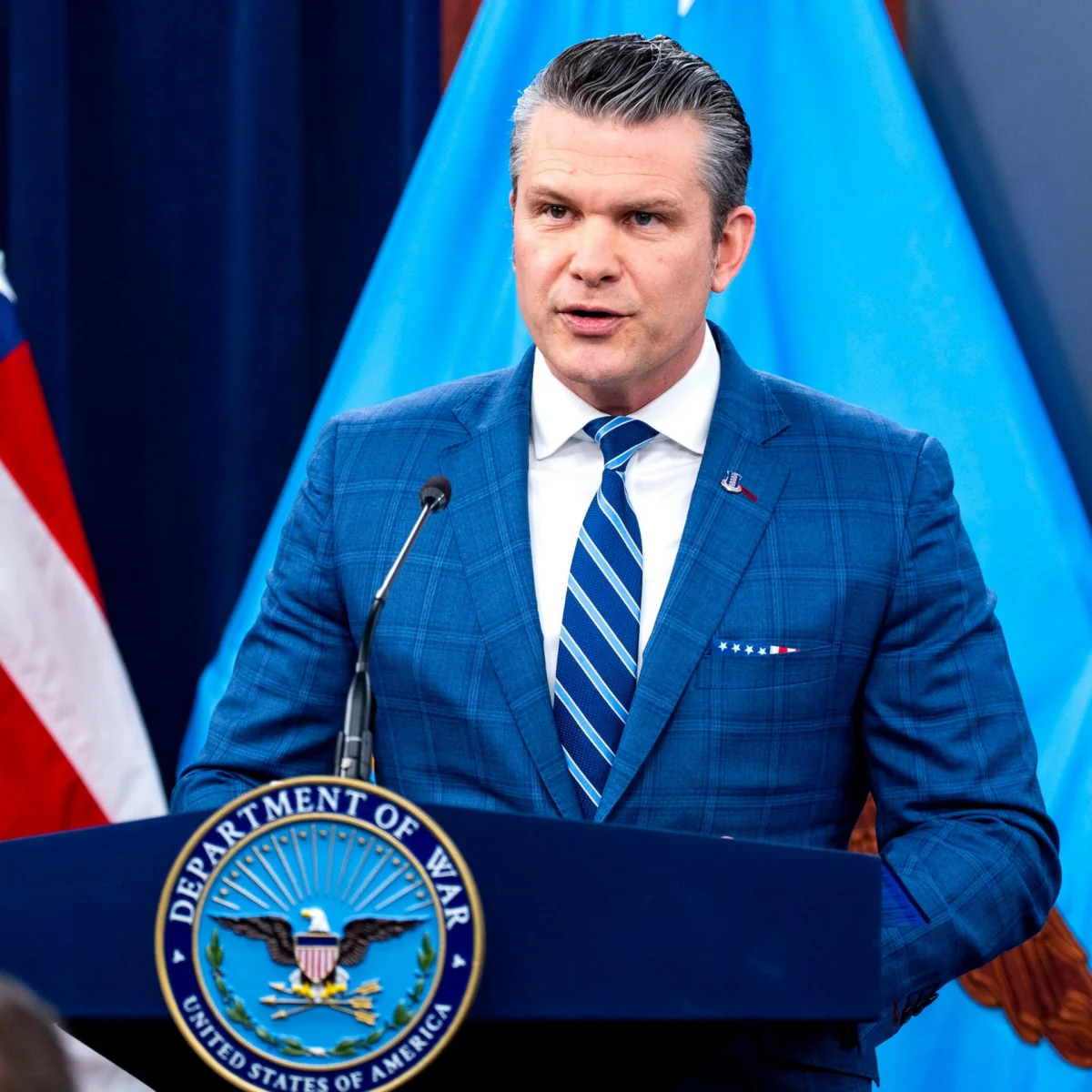
Washington D.C., October 10, 2026 – In a move that has sent shockwaves across the globe, the United States Department of Defense (DoD) has announced its intention to live-stream the execution of a condemned military assassin, scheduled for early December. This unprecedented decision, revealed by US Secretary of Defense Pete Hegseth, has ignited a firestorm of criticism from international human rights organizations, prominent political figures, and religious leaders, who decry the plan as barbaric, a form of torture, and a dangerous step backward for modern justice.
The announcement marks a stark departure from established norms surrounding capital punishment, particularly in an era where most developed nations have abolished the death penalty and transparency surrounding executions typically involves limited witness access, not a global broadcast. Should it proceed, this would be the first military execution in the United States in 65 years, and the first by a military firing squad since the immediate aftermath of World War II in 1945, adding layers of historical and ethical complexity to an already contentious issue.
Main Facts: Unprecedented Decision Ignites Global Outcry
The core of the controversy lies in Secretary Hegseth’s explicit plan to broadcast the execution live to the public. His stated rationale—that "people need to see that such acts have serious consequences"—has been met with immediate and fierce condemnation, prompting a critical examination of the very nature of justice, punishment, and public spectacle in the 21st century.
The Announcement: A Paradigm Shift in Execution Transparency
On October 10, 2026, the US Department of Defense, through its Secretary Pete Hegseth, declared its intent to make the upcoming military execution of a convicted assassin available for live public viewing. This revelation shattered conventional expectations regarding the solemn and private nature of capital punishment, even in countries where it is still practiced. Historically, executions, even when public, were often confined to specific audiences or documented only retrospectively. The notion of a real-time, widely accessible broadcast via modern digital platforms introduces a new dimension of public engagement, or rather, public spectacle, to state-sanctioned killing. Secretary Hegseth’s reasoning suggested a punitive and deterrent objective: to visually reinforce the gravity of capital offenses and their ultimate consequences. However, critics swiftly argued that such a broadcast crosses a fundamental ethical line, transforming an act of justice into a macabre form of entertainment or psychological warfare.
The Condemned: A Military Assassin and a Firing Squad
The execution is slated for an unnamed individual convicted of assassination under military law. The details surrounding the crime itself, while undoubtedly grave, have been overshadowed by the method and proposed broadcast of the punishment. The use of a firing squad is particularly noteworthy. While lethal injection has become the predominant method for capital punishment in the United States since the 1980s, the firing squad, with its stark, visceral imagery, evokes a different historical context, often associated with military justice or wartime executions. This choice, combined with the live-stream, further amplifies concerns about the potential for desensitization and the promotion of a "culture of death," as articulated by religious leaders. The last military execution in the US occurred in 1961, and the last by military firing squad dates back to 1945, underscoring the exceptional nature of this upcoming event.
Immediate Backlash: A Torrent of Condemnation
The reactions to Secretary Hegseth’s announcement were swift and overwhelmingly negative from a wide array of influential voices. The United Nations Human Rights Office was unequivocal, labeling the live broadcast as a "form of torture," highlighting its potential psychological impact on both the condemned and the viewing public, and its inherent violation of human dignity. Domestically, US Democratic Senator Chris Murphy denounced the proposal as "disgusting and medieval," reflecting a sentiment that such an act belongs to a bygone, less enlightened era. Archbishop Paul Coakley, President of the US Conference of Catholic Bishops, condemned the decision as a "barbaric promotion of a culture of death," aligning with the Catholic Church’s long-standing opposition to capital punishment and particularly to any act that might diminish human dignity or promote violence. These initial reactions set the stage for a prolonged and heated debate over the ethics, legality, and societal implications of this unprecedented decision.
Chronology: A Timeline Leading to Controversy
The announcement of a live-streamed military execution is not an isolated event but rather the culmination of historical precedents, evolving legal frameworks, and recent policy shifts within the US military justice system.
Historical Context: The Long Hiatus of Military Executions
Capital punishment has been a feature of military law in the United States since its inception, primarily for offenses such as desertion during wartime, espionage, murder, and mutiny. However, its application has seen significant fluctuations. The last military execution prior to the current controversy occurred in 1961, when Army Private John A. Bennett was hanged for rape and attempted murder. Before that, military executions, particularly by firing squad, were more common during periods of intense conflict like World War II, when dozens of soldiers, primarily for murder or rape, faced capital punishment. The last military execution by firing squad specifically was in 1945. Following the 1961 execution, a de facto moratorium emerged, driven by evolving legal interpretations of "cruel and unusual punishment" under the Eighth Amendment, increasing public scrutiny of capital punishment, and a series of Supreme Court rulings that refined due process requirements for death penalty cases. While the military justice system retained the legal authority to impose capital sentences, actual executions ceased, reflecting broader societal shifts away from capital punishment.
The Road to Reinstatement: Shifting Policies and Legal Battles
The path to potentially resuming military executions has been gradual and fraught with legal challenges. In the early 2000s, attempts were made to reactivate the military death penalty, with several service members being sentenced to death for egregious crimes such as premeditated murder. However, these sentences were consistently met with lengthy appeals processes, focusing on issues of mental competency, prosecutorial misconduct, and the constitutionality of specific execution methods. Presidential directives and departmental policies under various administrations have also played a role, sometimes reaffirming the availability of the death penalty for military offenses, at other times pausing its application for review. The specific case leading to the current announcement likely involved the exhaustion of all appeals for the condemned assassin, coupled with a recent administrative decision or directive from the current administration, spearheaded by Secretary Hegseth, to actively pursue and implement capital sentences that had long been dormant within the military justice system. This push signals a more aggressive stance on military justice, possibly driven by a desire to project an image of strength and unwavering consequence for severe transgressions.
The October 10th Revelation: Hegseth’s Stance
Secretary of Defense Pete Hegseth’s announcement on October 10, 2026, was not merely a statement of intent but a declaration of a new policy direction for the DoD regarding capital punishment. His public articulation of the rationale—that citizens "need to see" the consequences of heinous acts—positions the live broadcast not just as an administrative act but as a deliberate public demonstration. This reasoning implies a belief in the deterrent effect of public spectacle, a concept largely abandoned in modern penology. The announcement was delivered with an air of conviction, suggesting a firm commitment to proceeding despite anticipated opposition, and perhaps even welcoming the ensuing debate as a means to highlight the severity of military crimes.
Anticipated Execution: Early December’s Grim Prospect
With the announcement made in October, the execution is scheduled for "early December," leaving a compressed timeframe for potential legal challenges, protests, and diplomatic interventions. This short window intensifies the pressure on opponents to secure injunctions or executive clemency. The specificity of the timing underscores the DoD’s apparent resolve to move forward, suggesting that logistical preparations for the execution and its broadcast are already well underway. The countdown to early December now begins, setting the stage for a period of intense legal and ethical scrutiny.
Supporting Data: The Broader Context of Capital Punishment
To fully grasp the magnitude of the DoD’s announcement, it is crucial to examine the wider landscape of capital punishment in the United States and globally, as well as the historical and ethical debates surrounding public executions and media transparency.
Capital Punishment in the US: State vs. Federal vs. Military
The United States stands as an outlier among Western democracies, maintaining the death penalty at state, federal, and military levels. As of 2026, roughly half of the US states authorize capital punishment, with methods varying from lethal injection (the most common) to the electric chair, gas chamber, and, rarely, firing squad or hanging. Federal executions, while less frequent, also occur for specific federal crimes. The military justice system operates under the Uniform Code of Military Justice (UCMJ), which allows for capital punishment for a range of offenses, particularly during wartime or for crimes committed in a military context. Unlike state or federal systems, military executions have been exceptionally rare in recent decades, making the current announcement particularly salient. The distinctions between these systems often lead to varying legal precedents and procedural standards, adding layers of complexity to the death penalty debate.
Methods of Execution: A Spectrum of Practices
The methods used for capital punishment in the US have evolved over time, often driven by legal challenges concerning "cruel and unusual punishment." Lethal injection, introduced in the late 20th century, was initially perceived as a more humane alternative but has faced increasing scrutiny due to botched executions and difficulties in acquiring necessary drugs. Other methods, such as the electric chair and gas chamber, have largely fallen out of favor due to their perceived brutality. The firing squad, while rare, has been reintroduced or considered in some states as an alternative when lethal injection drugs are unavailable, or legal challenges halt other methods. Its use in this military case—the first since 1945—is highly symbolic, evoking images of martial law and immediate, uncompromising justice, which further fuels the ethical debate surrounding its public broadcast.
Public Opinion and the Death Penalty: A Divisive Issue
Public support for the death penalty in the United States has fluctuated significantly over the past decades. While it generally remains above 50% for convicted murderers, support has declined from its peak in the mid-1990s. This decline is often attributed to concerns about wrongful convictions, racial disparities in sentencing, and the high cost of appeals. However, specific heinous crimes can temporarily sway public opinion in favor of capital punishment. The concept of live-streaming an execution, however, introduces a new variable. While some proponents of capital punishment might endorse it as a deterrent or a transparent act of justice, a significant portion of the public, including many who support the death penalty in principle, may find the spectacle of a live execution deeply disturbing or morally reprehensible.
The Ethics of Live Broadcasting: Precedents and Perceptions
The idea of live-broadcasting an execution is not entirely without historical precedent, though the context is vastly different. Public executions were common for centuries, serving as both punishment and public warning. However, with the rise of modern sensibilities and human rights principles, such spectacles were largely relegated to the past by the 19th and early 20th centuries. In the modern era, debates around broadcasting executions have occasionally surfaced, often in high-profile cases, but have consistently been rejected by media organizations and legal bodies due to ethical concerns. The primary arguments against broadcasting include the potential for sensationalism, the dehumanization of the condemned, the risk of traumatizing viewers, the possibility of glorifying violence, and the transformation of a solemn legal process into a morbid form of entertainment. Unlike a news report or documentary that can contextualize and filter graphic content, a live broadcast offers raw, unfiltered imagery, raising profound questions about media responsibility and public morality.
International Perspectives on Capital Punishment and Transparency
Globally, the trend is overwhelmingly towards the abolition of the death penalty. Over two-thirds of the world’s countries have abolished capital punishment in law or practice. The United States is one of a handful of countries, alongside nations like China, Iran, Saudi Arabia, and Egypt, that continue to carry out executions regularly. Within this context, the notion of live-streaming an execution is virtually unheard of and would be met with almost universal condemnation from international human rights bodies, democratic allies, and the vast majority of the global community. Such an act would further isolate the US on the international stage, damaging its standing as a proponent of human rights and democratic values.
Official Responses: A Chorus of Dissent
The announcement by Secretary Hegseth has triggered a broad spectrum of official responses, predominantly characterized by outrage and condemnation, highlighting the deep ethical and moral fault lines this decision has exposed.
International Bodies: The UN’s Strong Denunciation
The United Nations Human Rights Office was among the first and most vocal critics. Its spokesperson, speaking from Geneva, unequivocally stated that live-streaming an execution would constitute a "form of torture," not only for the condemned individual, who would face an agonizing public death, but also for the family, witnesses, and potentially the broader viewing public. The UN has long advocated for the abolition of the death penalty, considering it an affront to human dignity. Furthermore, its stance emphasizes that any act designed to intentionally inflict severe mental or physical suffering for punishment or intimidation falls under the definition of torture. The public nature of the broadcast, designed for maximum visibility, is seen as exacerbating the inherent cruelty of capital punishment itself, turning it into a spectacle of suffering that violates international human rights norms and conventions, including the Convention Against Torture and Other Cruel, Inhuman or Degrading Treatment or Punishment.
Domestic Political Figures: Bipartisan Concerns
While Senator Chris Murphy, a Democrat, quickly branded the proposal as "disgusting and medieval," his sentiment is expected to resonate across the political spectrum, potentially even among some Republicans who may harbor reservations about the spectacle of public executions. Murphy’s comments underscored a belief that such an act is out of step with modern civilized society and serves no legitimate penological purpose. Other Democratic leaders and progressive groups are likely to echo his condemnation, framing it as an authoritarian move that normalizes state violence. There is also potential for some moderate Republicans, especially those sensitive to religious or ethical arguments, to express discomfort, even if they generally support capital punishment. However, the proposal could also galvanize a segment of the conservative base who might view it as a necessary display of "tough on crime" justice, creating a sharp partisan divide on the issue.
Religious Organizations: Moral and Ethical Opposition
The religious community, particularly the US Conference of Catholic Bishops, has voiced profound opposition. Archbishop Paul Coakley, the conference’s president, labeled the decision a "barbaric promotion of a culture of death." The Catholic Church has a long-standing and increasingly firm opposition to the death penalty, arguing that it is inadmissible in all cases because it constitutes an attack on the inviolability and dignity of the person. This stance is rooted in the belief in the sanctity of all human life and the importance of rehabilitation over retribution. A live-streamed execution, in the Church’s view, would not only contradict these principles but also actively foster a societal desensitization to violence and suffering, undermining the moral fabric of the nation. Other religious denominations, including many Protestant, Jewish, and Muslim leaders, are expected to join this chorus of moral condemnation, emphasizing compassion, redemption, and the sanctity of life.
Legal Experts and Human Rights Advocates: Questions of Cruelty and Deterrence
Human rights organizations like the American Civil Liberties Union (ACLU) and Amnesty International are mobilizing, preparing for immediate legal challenges. Their arguments will likely center on the Eighth Amendment of the US Constitution, prohibiting "cruel and unusual punishment," contending that a live-streamed execution, especially by firing squad, constitutes an exceptionally cruel and psychologically torturous act. Legal scholars will also question the purported deterrent effect, citing extensive research indicating that capital punishment has no unique deterrent value compared to life imprisonment. Instead, they will argue that such a public spectacle risks desensitizing the public to violence, potentially inciting further violence, and eroding the fundamental principles of justice. They will also raise concerns about due process, the potential for public shaming, and the psychological impact on the executioners themselves, who would be performing their duties under intense public scrutiny.
Implications: The Far-Reaching Consequences of a Controversial Decision
The live-streaming of a military execution by the US Department of Defense carries profound and multifaceted implications, potentially reshaping legal precedents, ethical debates, public discourse, and America’s standing on the global stage.
Legal Challenges: The Inevitable Court Battles
The announcement is guaranteed to trigger a cascade of legal challenges. Human rights organizations, civil liberties groups, and the condemned individual’s legal team will undoubtedly file immediate injunctions and appeals. These challenges will likely argue that the live broadcast, particularly of a firing squad execution, constitutes "cruel and unusual punishment" under the Eighth Amendment, given the heightened psychological distress and public humiliation it would inflict. Attorneys may also invoke First Amendment arguments concerning the right to dignity and privacy, even for a condemned individual, and challenge the DoD’s authority to mandate such a public spectacle without clear statutory authorization or overriding public interest. The courts will be tasked with weighing the government’s stated interest in deterrence and transparency against fundamental constitutional protections and evolving standards of decency. The short timeframe before the planned execution means these legal battles will be expedited and fiercely contested, possibly reaching the Supreme Court.
Ethical and Moral Dilemmas: The Spectacle of Death
Beyond the legal realm, the decision plunges society into a deep ethical and moral quagmire. The concept of live-streaming a state-sanctioned killing transforms a judicial act into a public spectacle, raising questions about the desensitization of violence and the potential for voyeurism. Critics argue that it risks normalizing extreme violence and blurring the lines between justice and entertainment. What message does it send to future generations about the sanctity of life and the nature of punishment? Does it satisfy a primal urge for retribution or foster a more thoughtful understanding of justice? The emotional and psychological toll on viewers, especially children and vulnerable individuals, is also a significant concern, with potential for trauma and adverse societal impacts. It forces a direct confrontation with the raw reality of capital punishment in a way that modern society has largely sought to avoid, potentially sparking a renewed and more visceral debate about its morality.
Impact on Public Discourse: Normalizing Violence?
The decision will inevitably dominate public discourse, forcing a re-evaluation of capital punishment, media ethics, and the role of the state in delivering justice. While some proponents might argue it provides transparency and accountability, opponents fear it will normalize violence and diminish human dignity. The live stream could polarize society further, cementing positions on both sides of the death penalty debate. It could also influence future discussions about media coverage of sensitive events, pushing boundaries that have long been considered sacrosanct. The widespread availability of such graphic content could also desensitize the public to the finality and brutality of death, altering societal attitudes towards violence and retribution.
International Relations: Damaging America’s Image
On the international stage, this move will almost certainly elicit widespread condemnation and severely damage America’s reputation as a global leader in human rights. Many of the United States’ closest allies, who have long abolished the death penalty, will view this as a regressive and barbaric act. It will fuel criticisms that the US selectively applies human rights principles and undermines its moral authority when advocating for human rights abroad. Diplomatic relations could be strained, and it might provide ammunition for adversarial nations to criticize American values. The US, already an outlier for its continued use of capital punishment, would become even more isolated, seen as embracing a form of justice antithetical to modern international norms.
The Future of Capital Punishment: A Defining Moment
Ultimately, the live-streaming of a military execution could prove to be a defining moment for the future of capital punishment in the United States. It could either serve as a catalyst for a national re-evaluation and eventual abolition of the death penalty, spurred by the visceral public reaction to such a spectacle, or, conversely, it could embolden proponents to push for greater "transparency" in other jurisdictions, potentially leading to similar broadcasts in state or federal executions. The outcome will depend heavily on the public’s reaction, the rulings of the courts, and the political will of future administrations. Regardless of the immediate outcome, this unprecedented decision by the Department of Defense has irrevocably altered the landscape of the death penalty debate, forcing society to confront the profound implications of making state-sanctioned death a public spectacle.





















