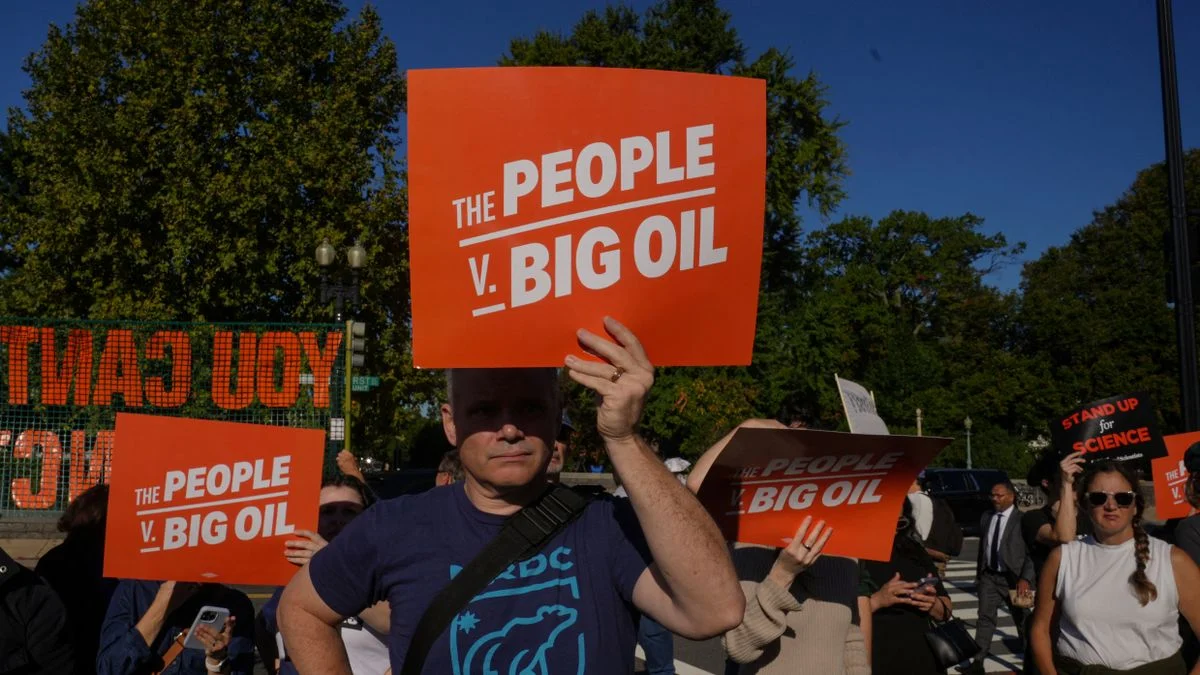
In an era defined by extreme weather events and shifting political tides, a resurgent movement is emerging across the United States. While the federal government under the current administration has signaled a pivot away from rigorous environmental oversight, a grassroots coalition of states, municipalities, and local leaders is refusing to concede the climate agenda. They are turning to the one arena where political rhetoric cannot replace evidence: the courtroom.
Two landmark legal battles currently working their way through the American judiciary serve as bellwethers for the future of climate policy. These cases represent more than just local disputes; they are high-stakes confrontations over corporate accountability, the limits of executive power, and the financial burden of a warming planet.
The Challenge to Federal Environmental Deregulation
The first major front in this legal war involves a sweeping challenge to the dismantling of climate protections. Last week, a formidable coalition—spearheaded by New York and comprising 21 states and four major cities—filed a lawsuit against the Environmental Protection Agency (EPA).
The plaintiffs argue that the EPA’s recent decision to rescind climate safeguards for power plants is not only reckless but illegal. The regulations in question, established during the Biden administration, were designed to force a transition away from high-emission coal and gas-fired power plants. Under those now-rescinded rules, coal-fired facilities were effectively given a timeline to either slash their greenhouse gas emissions to near-zero by 2040 or cease operations entirely. Furthermore, the rules imposed strict carbon limits on new natural gas plants.
By removing these guardrails, the plaintiffs argue, the current administration is fueling a boom in "dirty" energy at a time when climate scientists warn that the window to avert catastrophic warming is rapidly closing. The lawsuit, filed in the U.S. Court of Appeals for the District of Columbia Circuit, positions the judicial branch as the final defense against what environmental advocates describe as the "factual abolition" of U.S. climate policy.

The "Merchants of Doubt" at the Bar of Justice
While the challenge to the EPA focuses on government policy, a second, perhaps even more significant case, targets the private sector directly. The County and City of Boulder, Colorado, have launched a bold legal offensive against oil giants ExxonMobil and Suncor Energy. This case is not merely about future policy; it is a reckoning with the past.
Boulder officials accuse these corporations of a decades-long campaign of deception. The core of the argument is that these companies were aware of the devastating impacts of fossil fuel combustion as early as the 1970s, yet chose to prioritize profit over planetary health. The plaintiffs allege that the companies funneled millions into sophisticated disinformation campaigns, funding "doubt-peddling" scientists and creating market-liberal think tanks to cast skepticism on climate science.
These individuals and organizations, often referred to as the "Merchants of Doubt," were instrumental in stalling climate legislation for generations. By making the scientific consensus appear controversial, they successfully delayed the transition to renewables. Internal documents—many of which have been unearthed through investigative journalism and legal discovery—paint a damning picture of industry leaders who understood the risks of climate change while publicly downplaying the role of their products in fueling it.
Chronology of Climate Accountability
To understand the weight of these legal maneuvers, one must look at the historical arc of the fossil fuel industry’s relationship with climate science:
- 1970s–1980s: Internal research by major oil companies begins to link fossil fuel emissions directly to global temperature rises.
- 1990s: Industry groups ramp up lobbying efforts and public relations campaigns aimed at framing climate change as an "uncertain" scientific theory.
- 2000s–2010s: Climate impacts move from theoretical projections to daily realities, including intensified wildfires, droughts, and unprecedented flooding.
- 2021: The Marshall Fire destroys nearly 1,100 homes in Boulder County, causing an estimated $2 billion in damages, and serving as a visceral turning point for local climate action.
- 2023–2024: The battle over venue shifts to the Supreme Court, as corporations attempt to block state-level lawsuits.
- 2027: The Supreme Court is expected to issue a pivotal decision regarding whether these cases can proceed in state courts.
The Economic Burden: Who Pays for the Disaster?
The Boulder case is not just about abstract justice; it is about the taxpayer’s wallet. The plaintiffs argue that the costs associated with climate change—ranging from the logistical nightmare of fighting mega-wildfires to the infrastructure repairs needed after "100-year" floods—should not fall solely on the shoulders of the public.

The Marshall Fire is the central exhibit in this argument. By pinning the costs of climate-related disasters on the corporations that allegedly contributed to the conditions that made such fires possible, Boulder is attempting to redefine the principle of "polluter pays." The city and county seek to hold ExxonMobil and Suncor financially responsible for the disaster-preparedness and recovery costs that have become a permanent, expensive feature of local governance.
The Defense: A Question of Jurisdiction
ExxonMobil and Suncor are not sitting idly by. Their legal strategy centers on a jurisdictional defense: they argue that because climate change is a global phenomenon driven by global emissions, it falls under the purview of federal law. By claiming that state courts are not the appropriate venue for these grievances, the companies are effectively trying to stall the proceedings indefinitely.
They argue that federal law does not permit these types of claims against private companies for global climate impacts. By pushing the case to the U.S. Supreme Court, the energy giants hope to trigger a ruling that would effectively kill not only the Boulder lawsuit but dozens of similar cases across the country. If the Supreme Court rules in their favor, the "floodgates" of litigation would be bolted shut.
Implications and Future Outlook
The implications of these rulings extend far beyond the borders of Colorado or the District of Columbia. If Boulder succeeds in keeping its case in state court, it could create a blueprint for municipalities worldwide. Such a victory would signal to the fossil fuel industry that the era of impunity is ending.
Conversely, a loss would represent a significant setback for the climate justice movement. Michael Gerrard, a leading expert from the Sabin Center for Climate Change Law at Columbia University, notes that if the Supreme Court blocks these cases, "all these other proceedings will likely disappear."

However, the tide of public opinion and the sheer frequency of climate-driven catastrophes may make the status quo untenable. As Boulder Mayor Aaron Brockett noted in Politico, this is about accountability and ensuring that those who profited from the crisis contribute to the survival of the communities currently on the front lines.
Conclusion
The legal landscape in the United States is currently the most active front in the global fight against climate change. While the executive branch may oscillate between action and apathy, the judiciary is being forced to grapple with the foundational questions of the 21st century: Who is responsible for a burning planet? Can corporations be held liable for the long-term consequences of their business models? And can local governments, representing the people most affected by the crisis, reclaim their right to demand justice?
The road to 2027, when the Supreme Court is scheduled to weigh in, will be a long one. Yet, regardless of the outcome, these cases have already succeeded in bringing the internal history of the fossil fuel industry into the light. The "Merchants of Doubt" may have stalled the transition for decades, but the evidence is now in the public record. Whether the law can catch up to the science remains the ultimate question of our time.