Berlin, Germany – In an era marked by escalating political tensions and mounting financial pressures on cultural institutions, the Schaubühne Berlin has launched its new season with Thomas Ostermeier’s highly anticipated production of "Stereophonic." The play, an acclaimed Broadway and West End hit by American playwright David Adjmi, delves into the tumultuous recording process of a fictional 1970s soft-rock band, drawing clear parallels to the legendary Fleetwood Mac. While the production delivers captivating performances and compelling music by Will Butler of Arcade Fire, it raises a salient question: Does theatre, especially in fraught times, have a responsibility for social commentary, or is providing an artful escape a valid and necessary function?
The initial reception has been a blend of admiration for Ostermeier’s masterful direction and the ensemble’s musical prowess, coupled with a critical undercurrent questioning the choice of such an ostensibly escapist piece. As Germany grapples with a shifting political landscape and cultural sectors face unprecedented challenges, the Schaubühne’s season opener invites a broader discussion on the role of art in an increasingly complex world.
Main Facts: A Deep Dive into 70s Rock Drama
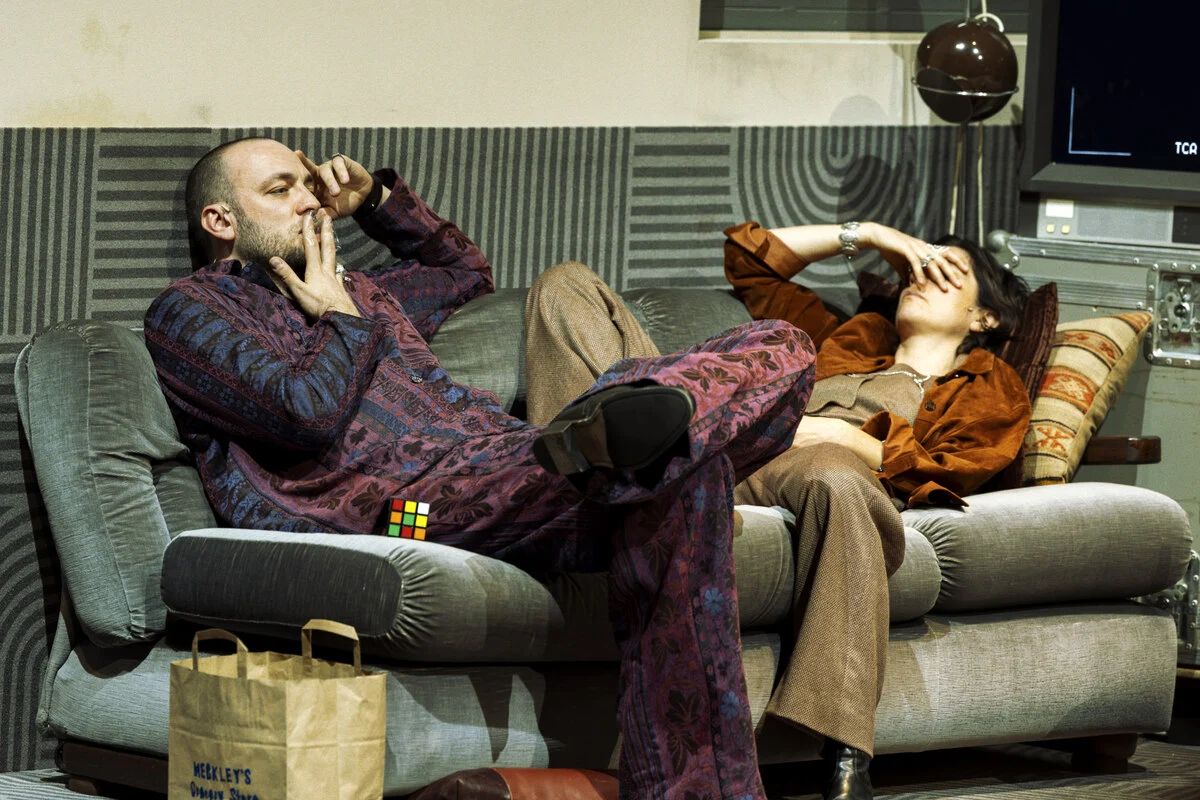
Thomas Ostermeier, the acclaimed artistic director of the Schaubühne, brings David Adjmi’s multi-award-winning "Stereophonic" to the Berlin stage. The play, celebrated for its raw depiction of artistic creation and interpersonal conflict, chronicles a fictional band’s struggle to record their sophomore album. Set entirely within the claustrophobic confines of a recording studio, the narrative plunges into the volatile dynamics of a group where four of its five members are romantically entangled. The intense pressure to replicate their debut album’s success is compounded by a maelstrom of drug excess, bitter rivalries, and intense jealousy, threatening to unravel both their music and their relationships.
The musical score, a crucial element of the production, was specially composed by Will Butler, formerly of the indie-rock band Arcade Fire. His compositions, described as grittier and more rock-infused than the smooth sounds of Fleetwood Mac, possess a distinct quality that elevates the drama. A standout performance comes from Magdalena Lermer, whose live rendition of the heartbreak ballad "Bright" is particularly lauded. Her character arc, transforming from a singer subservient to her frontman boyfriend into an independent artist, forms a significant emotional core of the three-hour performance.
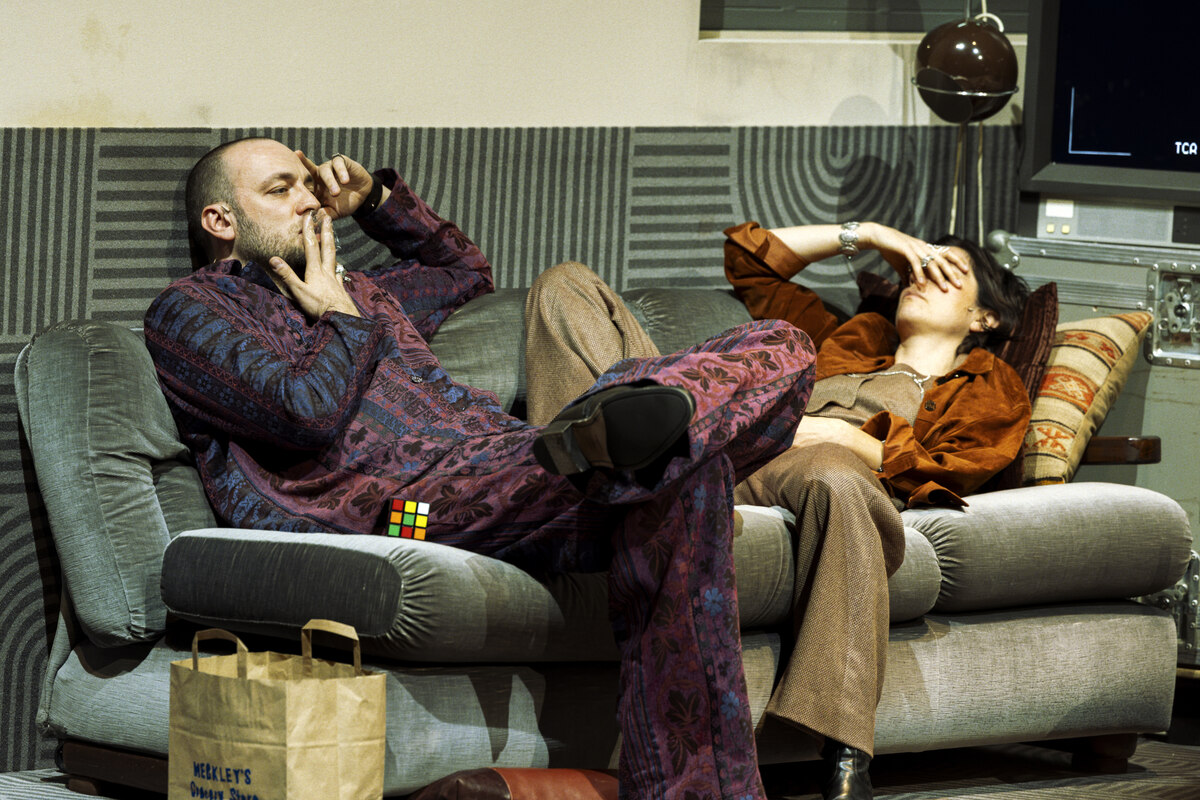
Ostermeier’s direction is characteristically meticulous, extracting nuanced performances from his musically gifted ensemble. A pivotal scene, oscillating dramatically between whispered murder threats and harmonious choral singing, exemplifies his skill in blending intense emotional conflict with the power of music. The single, immersive stage design of the recording studio effectively amplifies the suffocating atmosphere, trapping the characters and the audience in their unfolding drama.
Chronology: From Broadway Buzz to Berlin’s Bebelplatz
"Stereophonic" premiered off-Broadway in 2023, quickly garnering critical acclaim and subsequently transferring to Broadway, where it became a commercial and artistic success, earning multiple Tony Awards. Its journey to Berlin under Ostermeier’s direction marks a significant international transfer, bringing a contemporary American theatrical phenomenon to a prominent European stage.
The play’s subject matter—a band’s internal strife mirroring that of Fleetwood Mac during the creation of their iconic "Rumours" album (1977)—is not coincidental. Playwright David Adjmi faced a copyright infringement lawsuit from a Fleetwood Mac producer, who alleged that Adjmi had plagiarized parts of his memoir detailing the "Rumours" recording sessions. The lawsuit was eventually settled out of court, underscoring the real-world inspirations behind the fictionalized drama. Both Adjmi and composer Will Butler were reportedly present at the Berlin premiere, highlighting the production’s significance and its direct lineage to its creators.
The decision to open the Schaubühne’s season with "Stereophonic" comes at a particularly charged moment for Berlin’s cultural landscape. The article’s opening paints a stark, albeit hypothetical, picture of a Germany in 2026, reeling from the election of an AfD politician to a state parliament presidency, juxtaposed with a populace singing patriotic songs in despair. While this specific scenario is a literary device used by the original critic to underscore a sense of urgency, it reflects a palpable anxiety within Germany regarding the rise of right-wing populism and its potential impact on democratic norms and cultural freedoms.

Supporting Data: Berlin’s Cultural Crossroads
The Schaubühne, situated on the affluent Kurfürstendamm, has historically cultivated a reputation for sophisticated, often politically engaged, theatre. However, its choice of "Stereophonic" for the season opener is perceived by some as a departure, leaning towards escapism rather than direct political commentary. This decision must be understood within the broader context of challenges currently facing Berlin’s theatre scene.
Berlin’s cultural institutions are navigating increasingly difficult terrain. An overheated political climate, characterized by societal polarization and a sense of unease, has created an environment where the role of art is constantly debated. Compounding this are severe budget cuts impacting cultural funding across the city, coupled with an impending change in the city’s cultural senate, which often brings uncertainty regarding future artistic direction and financial support.
A significant blow to the Schaubühne itself was the sudden cancellation of funding for its popular discourse series, "Streitraum." This series, known for its critical engagement with contemporary social and political issues, was a vital platform for intellectual debate. Its abrupt discontinuation left a void and underscored the precariousness of cultural funding. In this climate, Ostermeier’s choice to stage a play that is not only a commercial success but also geographically and temporally distant—set in 1970s California—could be interpreted as a strategic move. It aligns with his established reputation for realistic theatre, yet offers a thematic retreat from immediate socio-political anxieties.
The meticulous attention to detail in the production extends even to prop cigarettes, reportedly the same brand used in the New York production, which had caused discomfort in the front rows due to their potent aroma. The Berlin audience, however, proved "unverwüstlich" (indestructible or unfazed), absorbing the on-stage excesses of smoking, drinking, and drug snorting without apparent complaint. This controlled depiction of excess, while visually striking, maintains a distance that prevents it from feeling truly anarchic.

Official Responses and Critical Interpretations: The Role of Theatre
While there are no direct "official responses" from the Schaubühne or Ostermeier quoted in the original article regarding the specific critical angle, their artistic choices inherently constitute a response to the prevailing climate. The selection of "Stereophonic" can be seen as an implicit statement: either a deliberate pivot towards providing high-quality entertainment and emotional resonance amidst a turbulent reality, or a missed opportunity for more direct societal analysis.
The critical interpretation, as articulated in the original review, strongly leans towards the latter. The reviewer questions whether such a significant degree of "reality escape" (Realitätsflucht) is appropriate for theatre’s mission in the current moment. The argument posits that while the play is undoubtedly entertaining, offering witty dialogues and sharp observations on relationship dynamics ("How do you talk to yourself about me?"), and Ostermeier’s staging is masterful, it might fall short in its engagement with pressing contemporary issues.
Adjmi’s strength as an observer of complex relationship dynamics, magnified by the claustrophobic studio setting, is acknowledged. The play effectively captures the intensity of human interaction under pressure. However, the core critical query remains: is providing sophisticated diversion enough when the real world outside the theatre’s doors is perceived to be spiraling into political and social uncertainty?
The tension between providing an escape and offering a mirror to society is a perennial debate in the arts. For some, theatre’s primary role is to reflect, challenge, and provoke thought on contemporary issues, serving as a public forum for critical discourse. For others, its value lies in its ability to transport audiences, offer catharsis, or simply provide beauty and entertainment, thereby offering a necessary respite from the harshness of daily life. In times of crisis, this debate intensifies, with proponents of both views arguing for the greater societal benefit of their chosen artistic path.

Implications: Art, Escapism, and Societal Responsibility
The Schaubühne’s production of "Stereophonic" and the ensuing critical discourse highlight several significant implications for the role of theatre in contemporary society. Firstly, it underscores the profound pressures on cultural institutions to remain relevant, financially viable, and artistically impactful. In an environment of shrinking budgets and heightened political scrutiny, choices about programming become laden with symbolic meaning. Ostermeier, a director known for his astute engagement with societal themes in previous works, might be navigating these pressures by opting for a globally successful, high-quality production that promises both artistic merit and audience appeal.
Secondly, the debate reignites the fundamental question of theatre’s societal responsibility. Is it incumbent upon major public theatres, particularly those receiving public funding, to actively engage with the most pressing political and social issues of their time? Or can providing a space for profound emotional experience, artistic excellence, and even temporary forgetfulness be considered a vital public service? The success of "Stereophonic" on Broadway and West End suggests a strong audience appetite for compelling character-driven drama, regardless of its immediate political commentary. Yet, the Berlin context, as framed by the critic, introduces a different lens, one where the urgency of political developments might demand a more direct artistic response.
Finally, the production serves as a powerful reminder of the enduring allure of rock ‘n’ roll narratives. The story of a band’s creative and personal unraveling, a theme famously embodied by Fleetwood Mac, resonates deeply with audiences, speaking to universal struggles of ambition, love, betrayal, and the fragile balance between individual artists and collective creation. While Will Butler’s music grounds the play in its own artistic identity, the echoes of rock history add layers of recognition and nostalgia for many.
In conclusion, Thomas Ostermeier’s "Stereophonic" at the Schaubühne is undeniably a polished, well-acted, and musically rich production that offers compelling entertainment. The ensemble’s talent, coupled with Adjmi’s sharp dialogue and Ostermeier’s precise direction, ensures a thoroughly engaging theatrical experience. However, the critical question posed by its premiere—whether art, in times of palpable societal tension, ought to provide escape or direct engagement—remains a potent and unresolved point of discussion, leaving audiences and critics alike to ponder the true mandate of the stage in an increasingly complex world.