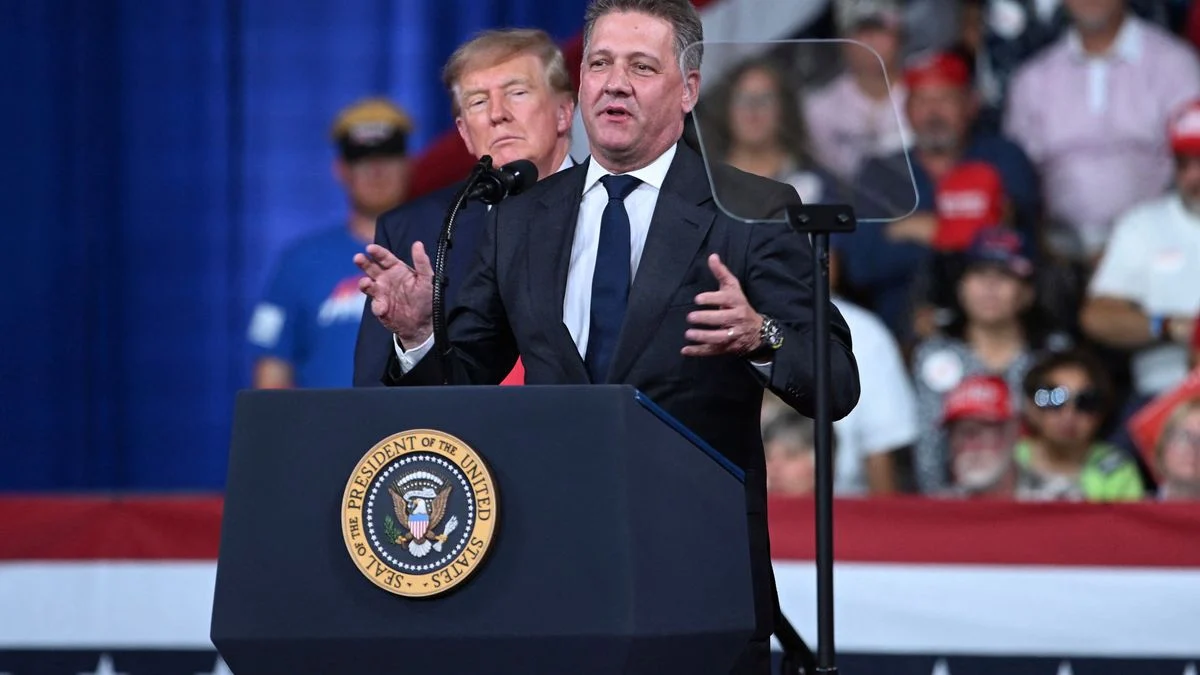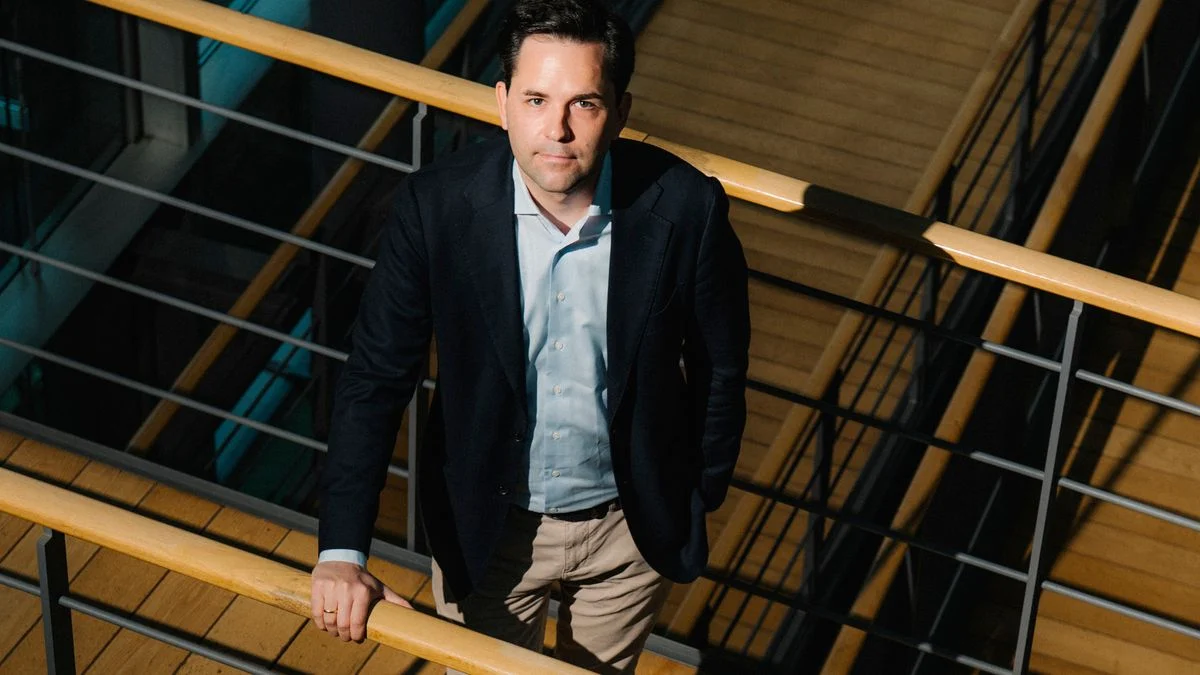
Berlin, Germany – The leadership of Germany’s main opposition party, the Christian Democratic Union (CDU), finds itself at a critical juncture as its youth wing, the Junge Union (JU), has openly questioned the suitability of party leader Friedrich Merz as a future Chancellor candidate. Johannes Winkel, the assertive head of the Junge Union, delivered a pointed message that reverberated through the political establishment: "Is Friedrich Merz still the right Chancellor? He must prove that now." This declaration, made in a prominent German news outlet, underscores a growing impatience and internal debate within the CDU regarding its strategic direction and, more specifically, the electability of its current leader in the upcoming federal elections.
Winkel’s statement is not merely a youthful outburst but a calculated move from a historically influential faction within the CDU/CSU alliance. The Junge Union, known for its capacity to both energize the party base and challenge established hierarchies, has often served as a bellwether for broader sentiment within the conservative camp. Their direct challenge to Merz signals that the honeymoon period, if it ever truly existed for the veteran politician, is unequivocally over. The onus, Winkel implies, is now squarely on Merz to demonstrate not just leadership within the party, but a tangible path to regaining the Chancellorship for the CDU – a feat that has eluded the party since Angela Merkel’s departure in 2021. The question now looms large: can Merz rally his party and the electorate, or will this internal pressure pave the way for an alternative candidate?
Main Facts: A Gauntlet Thrown
The core of the issue revolves around the CDU’s struggle to reclaim its dominant position in German politics following its historic defeat in the 2021 federal election. Friedrich Merz, a long-time political figure and a prominent voice of the more conservative wing of the CDU, ascended to the party chairmanship in early 2022, promising renewal and a clear conservative profile. His leadership was initially greeted with a mixture of hope and skepticism. While he successfully unified a party often fractured by internal ideological debates, particularly after the Merkel era, his ability to consistently connect with a broader electorate and project a compelling vision for Germany has remained a subject of intense scrutiny.
Johannes Winkel, as the head of the Junge Union, represents a crucial demographic and ideological segment of the CDU. The JU comprises members typically aged between 14 and 35, often embodying the future talent pool and, at times, the conscience of the party. Winkel’s public questioning of Merz’s "Kanzlerfähigkeit" (chancellorship capability) is significant because it comes from within the party’s own ranks, rather than from an external opposition or media critique. It suggests that a segment of the party, particularly its younger, often more reform-minded members, is not fully convinced by Merz’s current trajectory or his perceived electability.
The statement puts direct pressure on Merz to perform. "Proving himself" implies a demand for concrete results: improved poll numbers, a more cohesive and inspiring policy agenda, and a demonstrably stronger connection with the German populace. It also hints at a desire for Merz to articulate a clearer path to victory against the ruling "Ampel" coalition of Social Democrats (SPD), Greens, and Free Democrats (FDP). The implication is clear: without such proof, Merz’s position as the presumptive Chancellor candidate for the CDU/CSU in the next federal election could become untenable. This internal challenge risks exposing divisions within the party at a time when unity and a clear message are paramount for electoral success.
Chronology: Merz’s Tumultuous Path to Leadership and Beyond
Friedrich Merz’s political journey has been marked by ambition, setbacks, and a remarkable comeback. A corporate lawyer by profession, Merz first entered the Bundestag in 1994. He quickly rose through the ranks, becoming chairman of the CDU/CSU parliamentary group in 2000. However, his political ascendancy was interrupted by Angela Merkel, who replaced him as parliamentary group leader in 2002. This marked the beginning of Merz’s long political hiatus, during which he remained a vocal critic of Merkel’s centrist course from outside active party leadership, often advocating for a return to more conservative principles.
After Merkel announced her retirement, Merz made his first bid for the CDU chairmanship in 2018, narrowly losing to Annegret Kramp-Karrenbauer. He tried again in 2020, losing to Armin Laschet, who subsequently led the CDU/CSU to its worst-ever federal election result in 2021. Following Laschet’s resignation, Merz finally secured the party chairmanship in January 2022, winning with a decisive 62.5% of the vote from party members. His victory was seen as a mandate for a clearer conservative profile and a more confrontational approach to the new "Ampel" government.
Since taking the helm, Merz has faced a series of challenges. The initial boost in CDU poll numbers following his election proved to be fleeting. While the CDU/CSU has generally maintained a lead over the SPD in national polls, Merz’s personal approval ratings as a potential Chancellor have often lagged behind other political figures, including Chancellor Olaf Scholz and Green Party Vice-Chancellor Robert Habeck. His leadership has been characterized by a more aggressive rhetorical style, which, while appealing to parts of the conservative base, has at times alienated centrist voters and drawn criticism for perceived gaffes or insensitivity.
The Junge Union, for its part, has a rich history of influencing party direction. In the early 1970s, the "Junge Wilde" (Young Wild Ones) within the JU played a significant role in pushing for more modern social policies. Later, during the Kohl era, the JU was instrumental in bringing through a new generation of leaders, including Angela Merkel herself, who was once a member of the JU federal board. The youth wing has often acted as a critical and sometimes rebellious force, challenging the party’s status quo and demanding fresh perspectives. Winkel’s statement can be seen in this tradition, signaling that the JU believes Merz has not yet fully articulated a winning strategy or embodied the dynamic leadership required to regain the Chancellorship.
Recent political developments have intensified the pressure. While the CDU/CSU has performed strongly in some state elections (e.g., reclaiming the top spot in Berlin, solidifying power in Bavaria and Hesse), these successes have not consistently translated into a clear national advantage or a significant surge in Merz’s personal popularity. Furthermore, the CDU’s response to national crises, such as the energy crunch, inflation, and debates around immigration, has been perceived by some as reactive rather than proactive, failing to consistently offer compelling alternative solutions that resonate broadly with the electorate. This backdrop of fluctuating fortunes and persistent questions about national leadership forms the critical context for Winkel’s challenge.
Supporting Data: Polls, Performance, and Internal Discontent
A deeper dive into public opinion and electoral trends reveals the basis for the Junge Union’s apprehension. While the CDU/CSU currently enjoys a lead in most national polls, typically hovering between 28-32%, this figure represents a significant recovery from their 2021 federal election low of 24.1%, but it is still far from the commanding lead the party once held under Angela Merkel. More critically, the "Kanzlerfrage" (direct election for Chancellor) polls consistently show Friedrich Merz trailing behind Chancellor Olaf Scholz and, at times, even Vice-Chancellor Robert Habeck. For instance, recent surveys have often placed Merz several percentage points behind Scholz when voters are asked who they would prefer as Chancellor if they could directly elect them. This gap between party popularity and leader popularity is a significant concern for the CDU.
Moreover, the demographic breakdown of Merz’s support often reveals a stronger appeal among older, more traditionally conservative voters, while younger and urban demographics remain elusive. This is particularly problematic for a party aiming for broad national appeal and future electoral success. The Junge Union, representing the party’s future, would naturally be concerned by a leadership that struggles to attract younger voters.
Electoral performance in recent state elections provides a mixed picture. The CDU secured strong results in Bavaria and Hesse in 2023, and notably, became the largest party in Berlin in 2023, leading a new coalition. These victories demonstrated the CDU’s regional strength and ability to form governments. However, these successes were often attributed more to local factors, popular state premiers like Hendrik Wüst (North Rhine-Westphalia) or Daniel Günther (Schleswig-Holstein), and the perceived weaknesses of the incumbent state governments, rather than a direct endorsement of Friedrich Merz’s national leadership. Critics within the party argue that Merz has not effectively capitalized on these regional wins to build national momentum or to visibly boost his own standing.
Internal party dynamics also play a significant role. Since his election, Merz has worked to consolidate power and instill discipline, aiming to project an image of a unified and decisive party. However, reports of underlying dissent and frustration have surfaced periodically. Some party members privately express concerns about Merz’s communication style, which is sometimes perceived as too sharp or divisive, particularly on social issues or immigration. There is also a quiet worry that his emphasis on a "return to conservative values" might be too narrow to appeal to the broad middle ground of German society that the CDU traditionally occupied.
Policy coherence has also been a point of contention. While the CDU has positioned itself as a strong opposition, particularly on economic and energy policy, some critics argue that the party has not always offered sufficiently detailed or innovative alternative proposals. Instead, the focus has often been on critiquing the government’s perceived failures, which, while effective in the short term, may not be enough to convince voters that Merz’s CDU offers a superior long-term vision for Germany. The demand for Merz to "prove himself" therefore encompasses a need for greater clarity, vision, and a more compelling narrative that transcends mere opposition.
Official Responses: Navigating the Internal Challenge
The immediate aftermath of Johannes Winkel’s statement saw a flurry of reactions, both public and behind closed doors, within the CDU and across the German political spectrum.
From Johannes Winkel and the Junge Union: Winkel himself has clarified that his statement is intended as constructive criticism, not an outright rebellion. He emphasized the Junge Union’s historical role in fostering debate and ensuring the party remains dynamic and responsive. "We want to win the next federal election," Winkel reportedly stated, "and for that, we need a Chancellor candidate who can genuinely inspire and unite the country. Friedrich Merz has the opportunity to show he is that person, but the proof must come through action and clear results." Sources within the JU suggest a widespread feeling that the party, despite leading in polls, is not translating that into enthusiasm for its leader, and that a more robust strategy for the Chancellorship is urgently needed.
From Friedrich Merz and the CDU Leadership: Merz himself has largely maintained a stoic front, avoiding a direct and public rebuttal of Winkel’s comments. His strategy appears to be one of demonstrating leadership through continued political work rather than engaging in an open internal dispute. However, statements from his inner circle and party spokespeople have subtly pushed back. CDU General Secretary Carsten Linnemann, for example, reportedly emphasized the party’s unity behind its leader and pointed to Merz’s success in stabilizing the party and improving its poll numbers since taking office. "Friedrich Merz has brought the CDU back on track," Linnemann was quoted as saying, "and he has the full support of the party to lead us into the next election." This suggests an attempt to project solidarity and downplay the significance of Winkel’s challenge, portraying it as a healthy but ultimately minor internal discussion.
From Other Prominent CDU Figures: The reaction from other influential CDU figures has been varied, reflecting the nuanced internal landscape. Some prominent state premiers, such as Hendrik Wüst and Daniel Günther, who themselves are often touted as potential future Chancellor candidates, have publicly expressed support for Merz as the current party leader, emphasizing the need for party unity. Their statements, however, have also been carefully worded, often focusing on the collective strength of the CDU rather than a ringing endorsement of Merz’s individual "Kanzlerfähigkeit." Other figures, particularly those aligned with Merz’s more conservative wing, have been more vocal in defending him, highlighting his experience and his role in sharpening the party’s profile. Conversely, some voices from the more centrist or younger factions of the party have privately, or subtly in public, acknowledged the legitimacy of the Junge Union’s concerns, hinting at a broader desire for more strategic clarity.
From Political Analysts and Pundits: The German media and political analysts have largely interpreted Winkel’s statement as a significant internal warning shot. Stefan Marschall, a political science professor, suggested that "the Junge Union is effectively setting a deadline for Merz. It’s a clear signal that the party’s patience isn’t infinite, and that Merz needs to move beyond just consolidating the conservative base and truly reach out to the broader electorate." Other commentators highlighted the historical precedent of the JU acting as an internal corrective, noting that such public challenges are rare but impactful, indicating a deeper unease within the party about its path to power. Opposition parties, predictably, have seized on the internal CDU strife as evidence of disunity and lack of direction within the main opposition bloc, further fueling the narrative of a fragmented political landscape.
Implications: A Defining Moment for Merz and the CDU
The Junge Union’s direct challenge to Friedrich Merz marks a defining moment for his leadership and carries significant implications for both his personal ambition to become Chancellor and the broader future of the CDU/CSU.
For Friedrich Merz’s Chancellorship Bid: The pressure is now palpable. Merz must swiftly and decisively demonstrate that he possesses the vision, charisma, and broad appeal necessary to lead Germany. "Proving himself" entails several key areas:
- Sustained Poll Improvement: Not just for the party, but for his personal approval ratings in the "Kanzlerfrage" polls. He needs to show he can outperform Scholz and other potential rivals.
- Coherent and Inspiring Vision: Beyond critique, Merz needs to articulate a positive, forward-looking agenda for Germany that resonates with a diverse electorate. This means offering compelling solutions to pressing issues like economic competitiveness, climate change, and social cohesion.
- Party Unity and Mobilization: He must unite the various factions within the CDU/CSU and harness their energy to project a strong, unified front to the public. Any further signs of internal dissent could severely damage his credibility.
- Effective Communication: Merz needs to refine his communication style to avoid perceived gaffes and ensure his messages are inclusive and broadly appealing, rather than alienating any segment of the electorate.
Failure to meet these expectations could lead to several scenarios. Merz might strengthen his position by successfully navigating this challenge, cementing his status as the indispensable leader. Alternatively, if his numbers fail to improve and internal doubts persist, he could face a more direct challenge from within the party for the Chancellor candidacy, potentially from a popular state premier. In an extreme scenario, though unlikely given his tenacity, he might even be compelled to reconsider his own Chancellorship ambitions. The timing of the decision on the Chancellor candidate for the next federal election, usually made well in advance, will be heavily influenced by Merz’s performance in the coming months.
For the CDU/CSU: The internal debate sparked by Winkel’s statement poses a dual risk and opportunity for the party. On one hand, it risks exposing internal divisions, potentially undermining the unity Merz has worked to foster. A prolonged period of internal strife could distract from effective opposition work and erode public trust. On the other hand, it presents an opportunity for the party to engage in a necessary self-reflection about its leadership, strategy, and electoral viability.
The CDU/CSU needs to decide whether Merz truly represents their best chance to regain power. This decision will not just affect the next federal election, but also the long-term ideological direction of the party. The party’s ability to manage this internal discourse constructively will be crucial. A clear and unified decision on the Chancellor candidate, supported by all wings of the party, will be essential to mount a credible challenge to the incumbent government.
For German Politics as a Whole: The scrutiny of Merz highlights a broader trend in German politics: the increasing difficulty for established parties to find charismatic, unifying leaders who can command broad popular support. In an increasingly fragmented political landscape, with the rise of smaller parties and shifting voter loyalties, the traditional "Volksparteien" (catch-all parties) like the CDU are struggling to produce figures with the overwhelming authority and appeal of past Chancellors like Merkel or Kohl. The outcome of Merz’s current challenge will therefore be watched closely as a barometer for the health of Germany’s major parties and their ability to adapt to new political realities. It underscores that even the largest opposition party is not immune to internal questions about its leadership, vision, and ultimate capacity to govern.
The Junge Union, by throwing down the gauntlet, has ensured that the coming months will be a period of intense examination for Friedrich Merz. His response to this internal pressure, and his ability to demonstrate genuine "Kanzlerfähigkeit," will undoubtedly shape not only his own political destiny but also the trajectory of the CDU and, potentially, the future political direction of Germany.