By Investigative Desk
As October draws to a close, the city of Halle (an der Saale) is preparing to transform once again into a bustling epicenter of intellectual discovery and cinematic immersion. From October 28, the ninth edition of the SILBERSALZ Science and Media Festival will descend upon the city, bringing with it a provocative central inquiry: "Ich, verbesserlich?" (Me, improvably?). Over five days, the festival will challenge the public to confront the rapid advancements in biotechnology, artificial intelligence, and human augmentation, balancing the promise of a "better" human against the ethical complexities of self-optimization.
Main Facts: A Convergence of Science and Storytelling
SILBERSALZ has cemented its reputation as one of Europe’s most significant intersections for science communication. By moving away from dry academic lectures and toward visceral, experiential storytelling, the festival attracts a diverse demographic ranging from curious families to leading research scientists.
This year’s program is anchored by a thematic focus on the future of medicine, longevity, and physical performance. The festival serves as a cultural bridge, utilizing the medium of film and interactive technology to explain complex scientific phenomena to the layperson. With its origins rooted in the desire to make science accessible, the event operates under the belief that when people understand the "how" and "why" of research, they become better equipped to participate in the democratic discourse surrounding scientific policy.
Chronology of the Festival: From Local Idea to European Beacon
Since its inception, SILBERSALZ has undergone a remarkable evolution. Initially conceptualized as a niche event, it has steadily expanded its footprint across the urban landscape of Halle.
- Foundation Years: The early editions established the core format of combining high-quality science documentaries with public debate.
- Expansion Phase: By integrating local heritage sites, the festival expanded its reach, utilizing venues like the Salinemuseum and historical cinemas to create a unique atmosphere.
- The 2026 Milestone: The ninth edition marks a shift toward deeper, more personal engagement. By utilizing the former Xenos department store as a central hub, the festival signals a commitment to revitalizing urban spaces while simultaneously tackling the "transhumanist" questions of the modern age.
With over 45,000 visitors recorded in previous years, the festival has grown from a regional initiative into a major European "lighthouse" event, consistently drawing international participants and high-profile media collaborations.
Supporting Data: The Scale of Engagement
The impact of SILBERSALZ is not merely anecdotal; the metrics reflect a growing public appetite for science-based entertainment.
- Attendance: With 45,000 visitors in the previous cycle, the festival is one of the most well-attended science events in Germany.
- Format Diversity: The 2026 program includes over 13 dedicated Virtual Reality (VR) stations, allowing participants to experience simulated versions of neurological conditions like dementia or sensory impairments.
- Media Reach: The inclusion of six live podcasts from major German broadcasters (ARD, ZDF, Arte) demonstrates the festival’s role as a production hub, not just a viewing venue.
- Access: By maintaining a policy of free entry, the organizers ensure that socioeconomic barriers do not prevent the public from accessing high-level scientific education.
Official Responses: Navigating the Ethics of Enhancement
The philosophical heart of this year’s festival lies in the question of human limits. Festival Director Donata von Perfall articulates the tension inherent in the theme: "How far can we actually optimize ourselves? And above all: Do we even want to?"
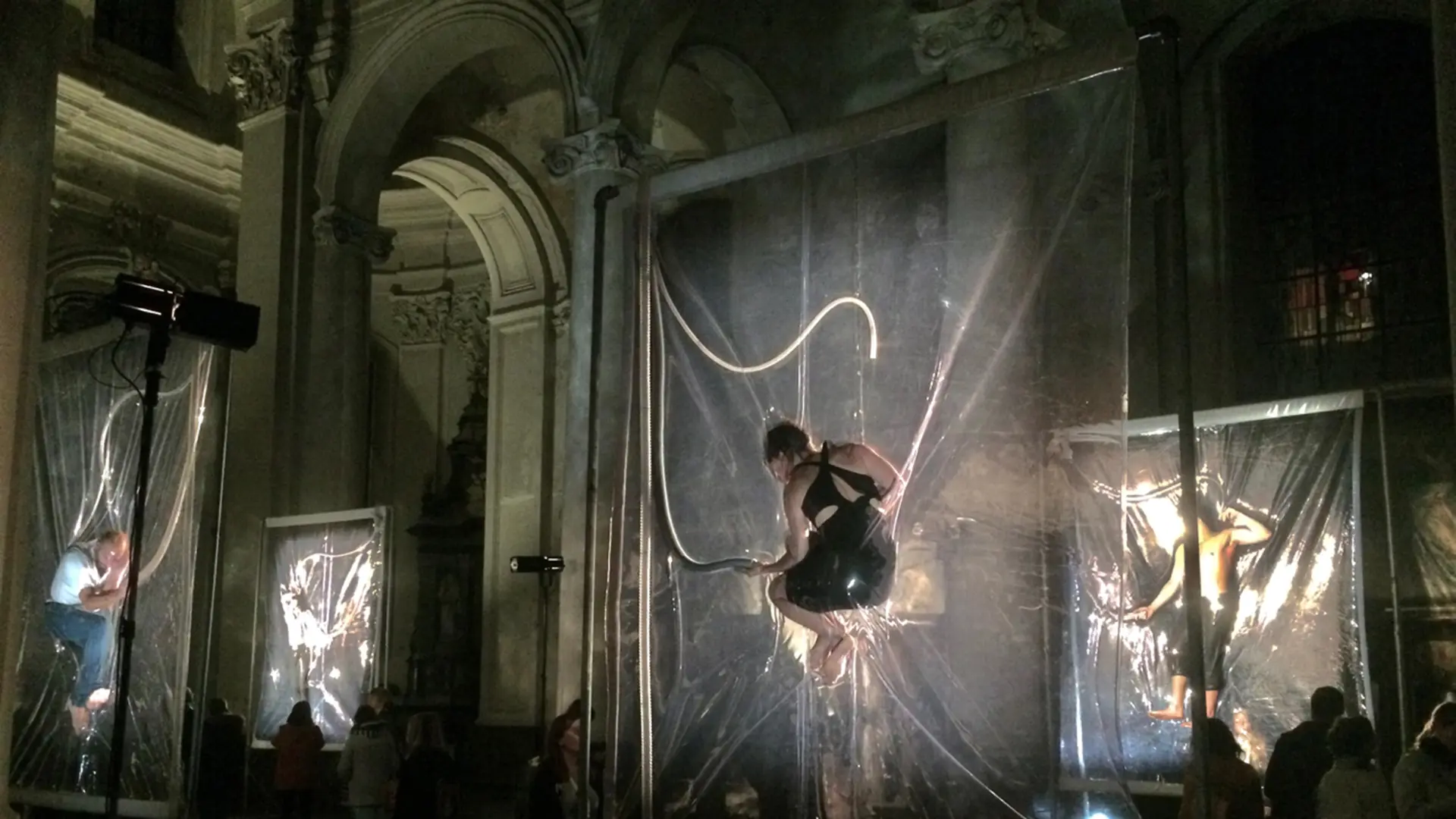
For von Perfall, the debate is not just about vanity or "super-humans," but about solving fundamental human struggles. "How can we prevent the onset of dementia? How can we facilitate seamless communication with the hearing impaired without the barrier of learning sign language?" she asks. These are the practical applications of technology that the festival seeks to highlight.
Christina Herrebroick, head of the Culture and Youth department at MDR, emphasizes the collaborative nature of the festival. By screening documentaries like “Mein Körper, mein Schlaf” (My Body, My Sleep), the festival forces a confrontation with the mundane aspects of optimization. "We look at questions like: Do I really need eight hours of sleep, or do four suffice?" Herrebroick notes. The goal is to provide a grounded, scientific perspective on the "self-improvement" industry that often permeates social media and modern lifestyle culture.
Implications: The Future of Human-Technology Interaction
The festival’s decision to focus on "The Improvable Human" carries profound societal implications. As AI continues to be integrated into diagnostic medicine, the question of algorithmic bias and human agency becomes critical. By creating a space where the public can interact with these technologies through VR and live discussions, SILBERSALZ is effectively performing a mass public consultation on the future of healthcare.
The Role of Virtual Reality in Empathy
One of the most significant takeaways from the upcoming event is the use of technology to build empathy rather than just efficiency. The VR exhibition is designed to place the user in the shoes of those living with chronic conditions. This is a deliberate shift in the discourse: instead of viewing "optimization" as a way to fix a "broken" person, the festival encourages participants to use technology to bridge gaps in human experience.
Institutional Collaboration
The partnership with the City of Halle and regional government bodies highlights the importance of institutional support in science communication. By converting the vacant Xenos department store into a "Festival Central," the city is demonstrating how scientific discourse can serve as an engine for urban development. The inclusion of the Salinemuseum and the Dom (Cathedral) further weaves the festival into the historical fabric of the city, suggesting that science is not a separate, detached pursuit, but a continuation of the city’s long tradition of innovation and trade.
The "Podcast Boom" and Scientific Transparency
The focus on live podcasts marks a turning point in how science is consumed. By inviting the public to watch the production process, the festival strips away the "pre-packaged" nature of media. When attendees see experts struggle with questions, retract statements, or debate nuanced points in real-time, the authority of science becomes more human and less monolithic. This transparency is vital in an era where misinformation often competes with scientific consensus.
Conclusion: A Call to Curiosity
As the countdown to October 28 begins, the organizers of SILBERSALZ remain focused on their core mission: to make science a tangible, sensory, and accessible experience. Whether through a VR headset in a former department store or an intimate discussion at a live podcast recording, the festival offers an invitation to participate in the most important conversation of the century.
Are we "improvable"? And if so, at what cost to our humanity? The ninth SILBERSALZ festival will not provide all the answers, but it promises to ask the right questions—challenging every visitor to look in the mirror and reconsider the boundaries of the self. With free entry and an expansive program, Halle is set to once again prove that the most profound scientific discoveries are those that help us understand not just our world, but ourselves.