By Editorial Staff
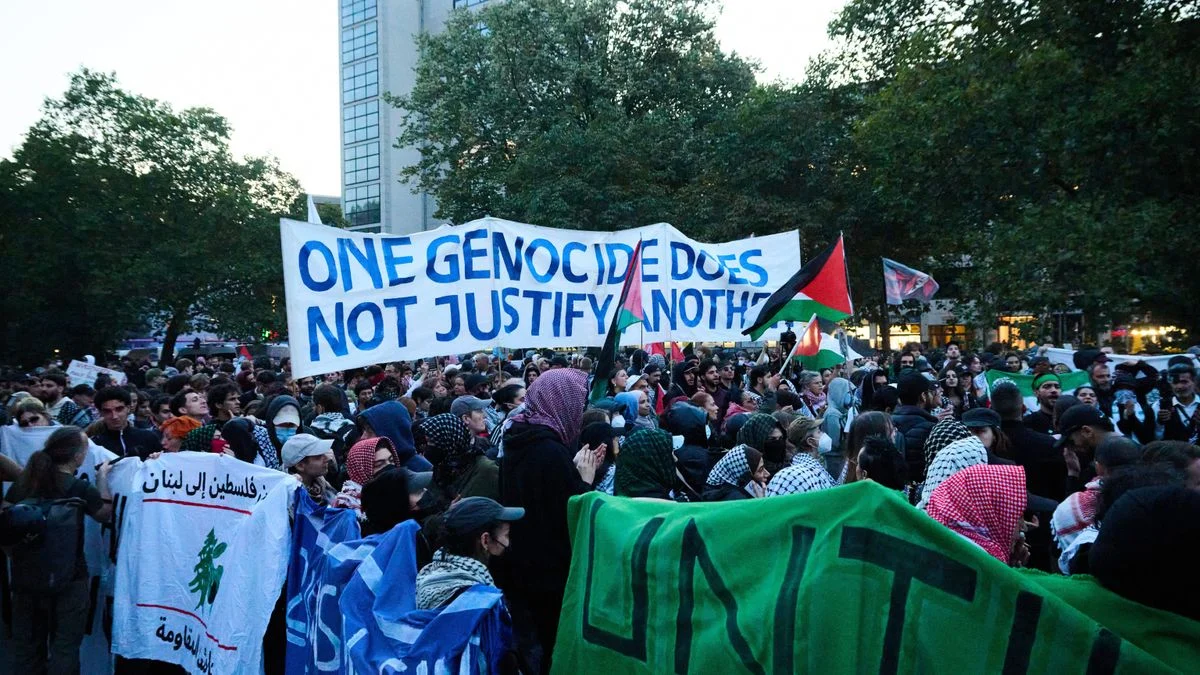
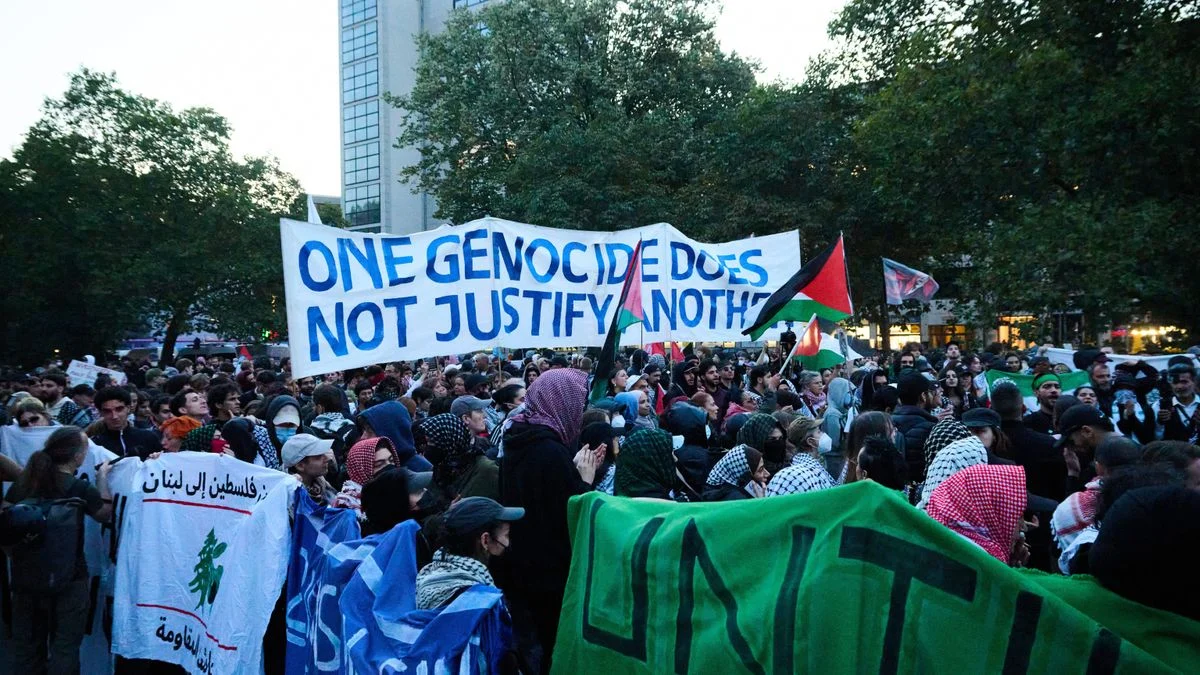
The anniversary of the October 7, 2023, Hamas-led terror attacks on Israel was marked by profound tension in Berlin, as a pro-Palestine demonstration descended into chaos, leading to a forceful police intervention. The march, which snaked through the city’s Kreuzberg district, was ultimately terminated by law enforcement officials, who cited repeated breaches of public order and the direct endangerment of public safety.
The event, which saw the participation of high-profile figures including climate activist Greta Thunberg, quickly drew condemnation from local authorities and political leaders due to the nature of the slogans chanted and the symbols displayed by participants.
Chronology of the Escalation
The demonstration was organized under the banner of "total liberation," a slogan that appeared on promotional materials circulating on social media. These materials notably featured an image of a bulldozer breaking through a security fence—a direct reference to the method used by Hamas militants to infiltrate Israeli territory three years ago.
As the march commenced, it was met with a small counter-protest; approximately a dozen individuals gathered across the street bearing Israeli flags and signs reading "Shame on you." Despite the heavy police presence, the atmosphere deteriorated rapidly.
Throughout the afternoon, the march proceeded through Berlin’s streets, but the tone shifted from political expression to explicit provocation. Police reported that, as the group moved toward the Hermannplatz in the Neukölln district, the situation spiraled. According to police spokesperson Nath, participants began engaging in physical confrontations with officers, including shoving and kicking, which prompted the decision to shut down the protest entirely.
Terror-Glorifying Rhetoric and Symbols
The core of the controversy centers on the vocabulary and imagery employed by the demonstrators. Observers noted that participants chanted slogans such as "Viva, viva Palestina" and, more alarmingly, "There is only one solution: Intifada Revolution."

The term "Intifada" carries deep historical weight in the context of the Middle East conflict, referring to the Palestinian uprisings against Israeli occupation that began in the late 1980s and early 2000s. These periods were characterized by intense violence, including suicide bombings and armed attacks that resulted in thousands of civilian deaths on both sides. By calling for an "Intifada Revolution" on the anniversary of the October 7 massacre, demonstrators were viewed by many as explicitly endorsing violent resistance against the state of Israel.
Furthermore, reports from local media outlet Tagesspiegel confirmed that chants of "Glory to the resistance" were heard throughout the march. Such slogans, when directed at an organization recognized as a terrorist group by the European Union and the United States, constitute a significant legal and ethical threshold.
The presence of prohibited symbols further complicated the situation. During the police crackdown, over 30 individuals were arrested. The charges were largely related to the public display of banned symbols—specifically those associated with Hamas—and the incitement of hatred.
Supporting Data: The Backdrop of October 7
To understand the intensity of the protests, one must consider the historical context of the day being observed. On October 7, 2023, the Hamas terror organization initiated an unprecedented, large-scale assault on Israel. The attacks resulted in the deaths of approximately 1,200 people, most of them civilians, and the abduction of 251 individuals who were forcibly taken into the Gaza Strip.
The aftermath of that day triggered a massive military offensive by the Israeli Defense Forces (IDF) in the Gaza Strip. The subsequent conflict has led to a devastating humanitarian crisis, with tens of thousands of Palestinians killed and large swaths of urban infrastructure destroyed. This backdrop served as the fuel for the demonstrators’ anger, with one large placard carried during the Berlin protest reading, "One genocide does not justify another."
The Role of Public Figures
The presence of Greta Thunberg at the demonstration sparked significant public debate. Thunberg, who has increasingly aligned herself with pro-Palestinian advocacy, was seen amidst the protesters in Berlin. Her involvement highlights the ongoing intersection between climate activism and the broader "Free Palestine" movement, a development that has drawn criticism from various corners, including Jewish advocacy groups and political centrists who argue that the movement has become increasingly radicalized and detached from human rights concerns, veering instead into antisemitic rhetoric.
Official Responses and Police Strategy
The Berlin Police Department faced the difficult task of balancing the constitutional right to freedom of assembly with the imperative to maintain public order and prevent the spread of hate speech.

"The demonstration was terminated due to repeatedly numerous violations of the conditions and significant endangerment of public safety," police stated following the order to disperse. The use of force was described as a last resort, following physical attacks on officers.
Government officials in Berlin have been increasingly vocal about the rise in antisemitism since the onset of the war in Gaza. The Senate of Berlin and federal authorities have frequently reiterated that while protests are a fundamental right, they do not provide a cover for the celebration of terrorism or the harassment of Jewish citizens. The arrests made on this day signal a shift toward a "zero-tolerance" policy regarding the display of Hamas insignia and calls for the destruction of Israel.
Broader Implications for German Society
The incident in Berlin raises fundamental questions about the limits of protest in modern Germany. For years, the German state has prided itself on its "culture of remembrance" (Erinnerungskultur), which centers on a commitment to never repeat the horrors of the Holocaust and to protect Jewish life.
However, the recent wave of pro-Palestine protests has tested the resilience of this commitment. Sociologists suggest that the protest illustrates a growing polarization within German society. On one hand, there is a segment of the population that feels deeply connected to the Palestinian cause, viewing the war in Gaza as an urgent humanitarian catastrophe. On the other, the German political establishment and a significant portion of the public view the slogans used at these protests—specifically those calling for an "Intifada"—as a direct threat to the safety and integration of Jewish communities in Germany.
The fact that these protests took place on the anniversary of October 7, 2023, was perceived by many as an intentional provocation. By choosing this date, organizers ensured that the focus of the protest was not merely on humanitarian aid or a ceasefire, but on the political and existential status of Israel.
Conclusion: A City on Edge
As the dust settles on the events in Kreuzberg and Neukölln, the city of Berlin remains in a state of heightened alert. The images of police breaking up a protest on the anniversary of a major terrorist attack serve as a stark reminder of how global conflicts are being mirrored in the streets of Europe.
Moving forward, the debate in Berlin is expected to focus on stricter regulations for future demonstrations. Legal experts are already discussing whether the current laws regarding the glorification of terror are sufficient, or if they need to be tightened to address the specific nuances of modern protest culture. For now, the events in Berlin serve as a grim indicator of the enduring volatility surrounding the Israel-Palestine conflict and the challenges that democratic states face in protecting the right to protest while ensuring that such events do not descend into platforms for hate and violence.