Introduction: A Midnight Shift at the Pumps
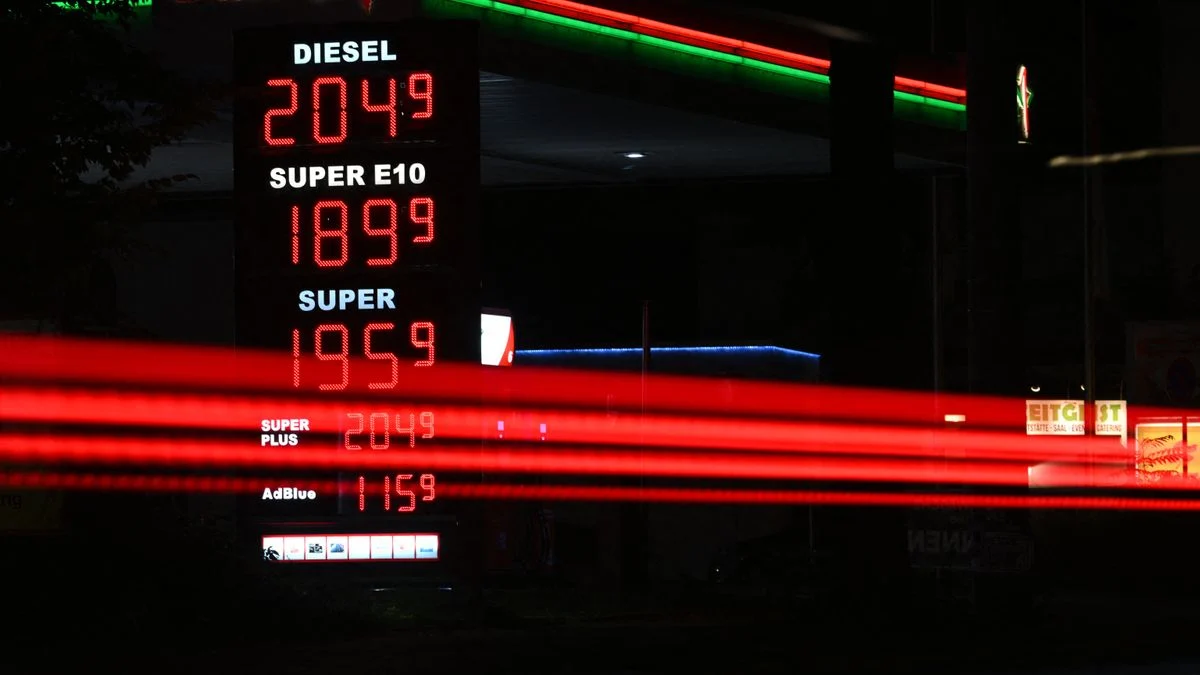
For millions of German motorists, the stroke of midnight marked more than just the start of a new day—it signaled the beginning of a highly anticipated, albeit controversial, economic experiment. As of June 1, 2022, the federal government’s "Tankrabatt" (fuel discount) officially went into effect, triggering an immediate and visible recalibration of fuel prices at gas stations across the nation.
Following weeks of volatile energy markets and record-high costs for diesel and gasoline, the government’s decision to slash energy taxes has sent a ripple through the economy. While the initial data suggests a tangible decrease in prices, the rollout has been characterized by significant regional disparities and ongoing skepticism regarding the long-term efficacy of the policy.
The Chronology of the Price Drop
The transition to the new tax regime was instantaneous. Data from the popular fuel-tracking portal Tankerkönig provided a real-time look at how the market reacted to the fiscal stimulus.
Between 11:41 PM on Tuesday and 12:41 AM on Wednesday, the average nationwide price for both gasoline and diesel plummeted by approximately ten to eleven cents. This abrupt shift was not merely a temporary fluctuation; as commuters hit the roads on Wednesday morning, the price gap remained consistent compared to the levels observed at the same time just 24 hours earlier.
The logistical coordination required for this change was substantial. Because the tax reduction applies to fuel as it leaves refineries and storage depots, the price correction at the pump was largely dependent on the inventory turnover of individual service stations. While major chains were able to synchronize their systems to reflect the tax cut immediately at midnight, independent operators faced varying degrees of success in updating their pricing software and inventory valuation in real time.
Regional Disparities: A Patchwork of Costs
While the national average showed a clear downward trend, the experience of the average driver varied significantly depending on their geography. According to data provided by the ADAC (Allgemeiner Deutscher Automobil-Club), the availability of "sub-two-euro" gasoline (E10) was far from uniform.
In major urban centers such as Munich, Stuttgart, and Leipzig, the competitive nature of the fuel market resulted in a high concentration of stations offering E10 for less than two euros per liter. Berlin saw a moderate number of these budget-friendly options. Conversely, in cities like Hamburg, such opportunities were scarce, and in Cologne, morning reports indicated that not a single station was displaying prices below the two-euro threshold.
These regional discrepancies highlight a fundamental reality of the German fuel market: pricing is driven by local supply chains, storage capacities, and intense local competition rather than a centralized, state-controlled price mandate. Consequently, while the tax cut provides a baseline reduction, local market dynamics continue to play a decisive role in the final cost to the consumer.
16.7 Cents: The Anatomy of the Tax Relief
The core of the government’s intervention is a reduction in the energy tax on fuel, amounting to 16.7 cents per liter for gasoline and a corresponding reduction for diesel. This measure is intended to provide immediate financial relief to households and businesses struggling with the inflationary pressures of the post-pandemic recovery and the energy crisis resulting from the war in Ukraine.
However, the question of "pass-through" remains the central focus of economic analysts. There is no legal obligation for individual gas station operators to pass the full extent of the tax savings directly to the consumer. Because the tax is levied upstream—at the refinery and warehouse level—the final retail price remains subject to the market forces of supply and demand.
Complexity in pricing calculations further complicates the transparency of the discount. Fuel prices were already trending downward on Tuesday and Wednesday, even before the tax cut took full effect. This makes it difficult for the average motorist to distinguish between a natural market correction and the specific impact of the government’s policy. Over the coming days and weeks, the German Federal Cartel Office (Bundeskartellamt) will be closely monitoring price developments to ensure that oil companies are not pocketing the tax windfall as additional profit.
Official Responses and Political Debate
The "Tankrabatt" has sparked a fierce debate within the Bundestag and among economic think tanks. The measure is, by all accounts, a stopgap solution—a blunt instrument designed to dampen the psychological and economic impact of skyrocketing fuel costs.
The Critics’ Perspective
Detractors of the policy, including several environmental NGOs and economic critics, argue that the discount is fundamentally flawed. Their arguments center on three main points:
- Precision: Because the tax cut is applied at the wholesale level, there is no guarantee it will reach the end user in full, leading to concerns that retailers might absorb the margin.
- Environmental Impact: Critics argue that by artificially lowering the cost of fossil fuels, the government is undermining its own climate targets. The discount effectively drapes a blanket over the price signal that would otherwise encourage consumers to shift toward public transit or electric vehicles.
- Inefficiency: Critics maintain that the tax revenue—totaling billions of euros—could have been better spent on targeted social support for low-income households rather than a blanket subsidy that benefits high-income drivers and luxury vehicle owners equally.
The Government’s Defense
Proponents, including members of the governing coalition, defend the measure as a pragmatic necessity. They argue that in an environment where inflation is eroding purchasing power, the government must act to prevent a social crisis. They emphasize that there is currently no other policy tool capable of providing such rapid, widespread relief to the millions of citizens who rely on their cars to reach their places of employment.
The mineral oil industry has also weighed in, firmly denying accusations that they are withholding the discount from consumers. Industry representatives point to the logistical challenges of shifting tax structures and argue that the competitive nature of the German market ensures that cost savings are passed on to maintain customer loyalty.
Broader Economic Implications
The implementation of the fuel tax cut is part of a larger fiscal package aimed at stabilizing the German economy. As the nation grapples with high energy prices and the structural challenges of transitioning to green energy, the government is forced to balance short-term relief with long-term fiscal responsibility.
The duration of the measure—initially planned for three months—will serve as a test case for future fiscal interventions. If the price reduction proves ineffective or leads to supply shortages, the political pressure to abandon the policy will likely intensify. Conversely, if the relief helps stabilize inflation and supports household consumption, it may embolden the government to seek similar, if more targeted, interventions in the future.
Furthermore, the "Tankrabatt" highlights the fragility of global energy supply chains. Germany’s reliance on imported oil means that domestic policies are always susceptible to fluctuations in global crude prices. If international markets see another sharp spike in oil prices, the 16.7-cent tax relief could be completely neutralized, leaving consumers back where they started—and the government with an empty treasury and a failed policy.
Conclusion: A Watching Brief
As the first few days of the tax-cut era unfold, the situation remains fluid. Motorists are enjoying a momentary reprieve, but the broader economic implications are still unfolding. For the government, the coming weeks will be defined by rigorous monitoring of fuel prices to ensure compliance and public trust.
For the German consumer, the lesson of the week is a familiar one: while government intervention can move the needle in the short term, the complexities of the global energy market and the dynamics of local retail competition mean that the price at the pump is rarely subject to a single, simple cause. Whether this policy will be remembered as a successful act of economic stabilization or a costly, misguided experiment remains to be seen. One thing is certain: all eyes will remain on the display boards at local gas stations, watching for every cent of change.