

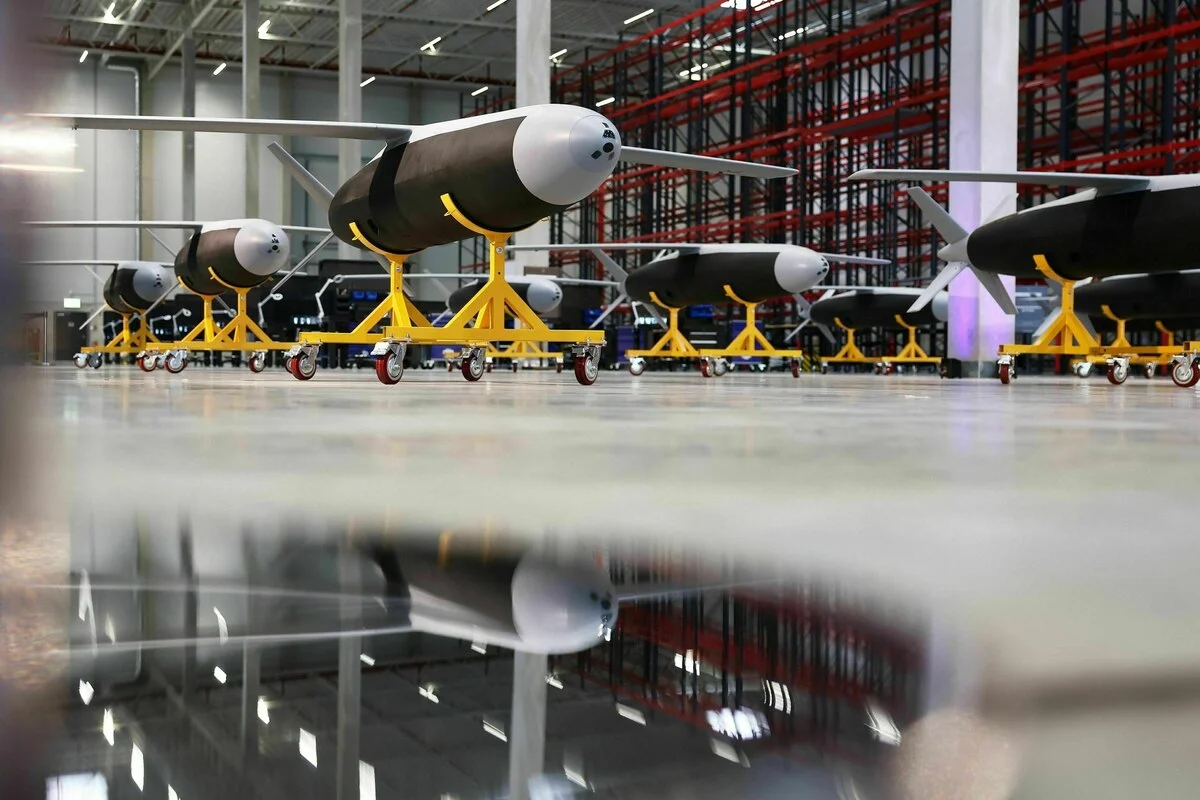
Leipzig, Germany – In a significant move signaling Germany’s accelerating shift in defense policy, US startup Covenant, a company backed by controversial tech billionaire Peter Thiel, has officially opened a new production facility for cruise missiles in Leipzig. The move underscores a growing trend of defense industry expansion in Germany, driven by the "Zeitenwende" (turning point) in security policy and the urgent demand for military hardware in Europe.
The facility, inaugurated on Monday, will produce Covenant’s "Anthem" cruise missile, with ambitious targets of 1,000 units in its first year and an escalation to 5,000 units annually by 2028. This makes Leipzig the company’s largest global production site, complementing existing operations in Texas and Israel. The development, however, is not without its complexities, drawing attention to the controversial figure of Peter Thiel and the broader debate surrounding the commercialization of defense in a country with a strong pacifist tradition.
The New Frontier of Defense Manufacturing in Saxony
The opening of Covenant’s Leipzig plant marks a tangible step in the re-industrialization of Germany’s defense sector. The company, founded in 2024, is betting on a decentralized production model, encapsulated by its motto "built locally, produced globally." This approach aims to enhance supply chain resilience and potentially foster greater European defense autonomy in a volatile geopolitical landscape.
Michael Kauman, CEO of Covenant, highlighted the strategic importance of Leipzig, emphasizing its role as the cornerstone of the company’s global production network. The choice of location in Saxony, a region eager to attract high-tech investment, was welcomed by local political figures. Saxony’s Minister-President Michael Kretschmer (CDU) attended the inauguration, articulating a clear rationale for the investment: "Freedom, democracy, prosperity are not possible without security. And the best security is still deterrence. That is why it is good that we are also active in this area."
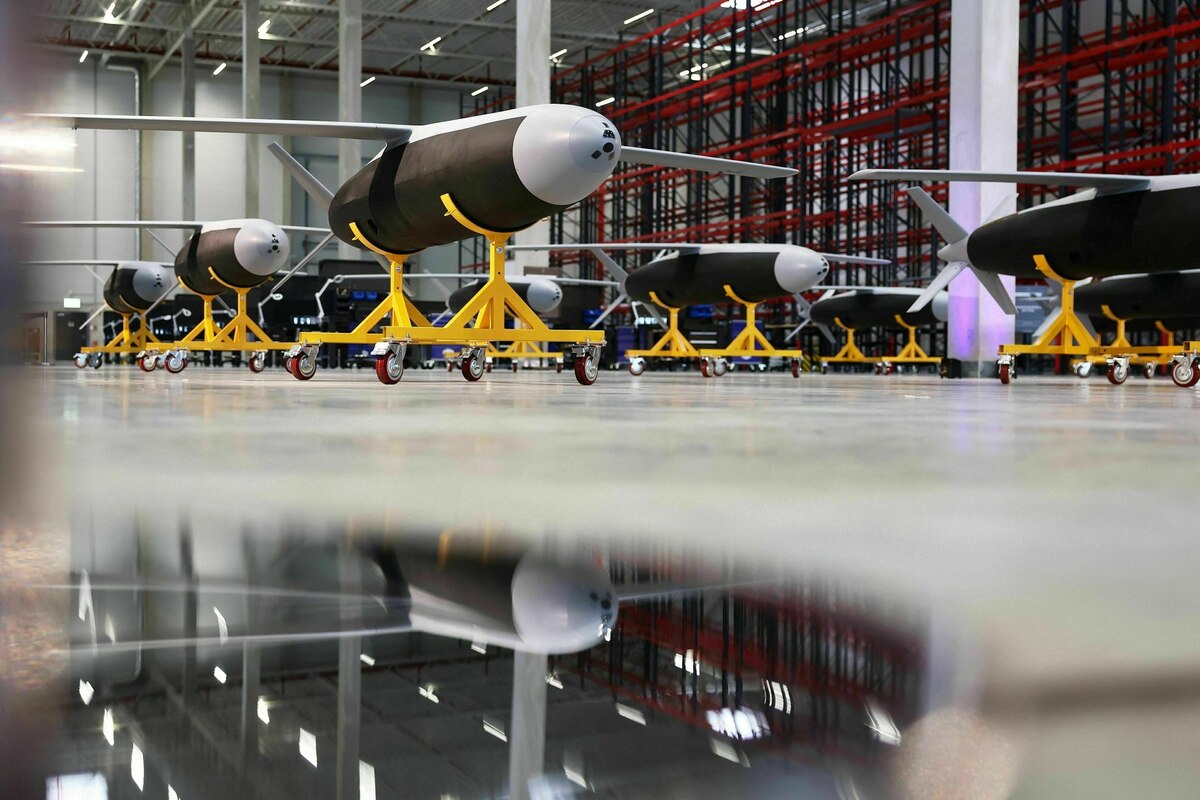
However, the "new factory" is, in fact, a repurposed commercial hall in northern Leipzig, which still requires official re-zoning from a storage facility to a manufacturing plant. This detail, though described as a mere formality, points to the rapid pace at which defense projects are being greenlit and integrated into existing industrial infrastructure.
Peter Thiel’s Enduring Influence and Controversial Stance
At the heart of Covenant’s strategic positioning is the financial backing of Peter Thiel, the German-American tech billionaire known for co-founding PayPal and Palantir Technologies. Thiel’s venture capital firm, Founders Fund, is a key investor in Covenant, extending his significant influence into the burgeoning defense tech sector.
Thiel is a figure who consistently sparks debate. His philosophical and political leanings, particularly his skepticism towards the compatibility of freedom and democracy, have drawn considerable criticism. In a widely cited 2009 essay, Thiel famously stated, "I no longer believe that freedom and democracy are compatible." His subsequent support for former US President Donald Trump and his vice presidential candidate J.D. Vance further solidified his reputation as a controversial figure with views that often clash with established democratic norms, particularly in Germany, a nation deeply committed to its democratic institutions and a multilateral order.
His involvement in German defense startups thus raises pertinent questions about the values underpinning the country’s rearmament drive. Critics argue that supporting ventures linked to individuals with such views could undermine the very democratic principles Germany seeks to defend.

The "Anthem" Missile: Cost-Effectiveness as a Game Changer
Covenant’s "Anthem" cruise missile is positioned as a disruptive force in the defense market, primarily due to its aggressive pricing strategy. While comparable advanced weapon systems often command price tags in the multi-million dollar range, Covenant aims to offer the Anthem for under one million US dollars per unit.
The missile boasts impressive specifications, including a range of 1,000 kilometers and the capacity to carry a 200-kilogram warhead. This combination of capability and affordability could make the Anthem a highly attractive option for national defense forces, particularly those operating under tighter budgets or seeking to rapidly scale up their arsenals. Covenant explicitly states its intention to target the German Bundeswehr as a potential customer. The company’s job postings for the Leipzig plant reflect this ambition, seeking quality managers with "experience in supporting defense manufacturing programs subject to NATO, German Ministry of Defense, or other military quality requirements."
The focus on cost-effectiveness is a direct response to the lessons learned from recent conflicts, where the attrition rate of advanced munitions has been high, highlighting the need for scalable and economically viable solutions.
A Broader Trend: Germany’s Defense Industrial Renaissance
Covenant’s expansion in Leipzig is not an isolated incident but rather a microcosm of a larger transformation sweeping through the German defense industry. The "Zeitenwende" announced by Chancellor Olaf Scholz in response to Russia’s full-scale invasion of Ukraine, including the allocation of a €100 billion special fund for military modernization, has injected unprecedented momentum into the sector.

Thiel’s Other German Ventures: Peter Thiel’s influence extends beyond Covenant. He is also a significant investor in Stark Defence, a Berlin-based drone manufacturer founded in 2024. Despite its nascent status, Stark Defence has rapidly become one of Germany’s most valuable startups, boasting a market capitalization exceeding €3 billion. In June alone, it secured half a billion euros in fresh capital from investors. A substantial €270 million contract from the Bundeswehr in February further fueled its growth. This success comes despite Defense Minister Boris Pistorius (SPD) having "expressly" shared concerns about Thiel’s views, illustrating the pragmatic imperative to acquire necessary defense capabilities, even if it means engaging with controversial investors.
Rheinmetall’s Expansion in Kassel: Another striking example of this industrial pivot comes from Kassel, where defense giant Rheinmetall is acquiring the locomotive plant of French railway manufacturer Alstom. This strategic takeover, announced recently, will see the facility, which employs around 750 people, transition from building trains to producing tanks and armored vehicles. Rheinmetall aims to integrate Alstom’s workforce, expanding its existing wheeled armored vehicle production in the vicinity. This move highlights the broader re-allocation of industrial capacity towards defense, impacting local economies and worker livelihoods.
These developments collectively paint a picture of a German industrial landscape rapidly reorienting itself. Traditional manufacturing hubs are adapting to new demands, and significant capital is flowing into defense technology, reflecting a national commitment to bolstering security and deterrence.
Official Responses and Societal Implications
The official response to these developments has been mixed, reflecting the ongoing societal debate in Germany. While Minister-President Kretschmer lauded the Leipzig factory as a necessary step for security and deterrence, the underlying concerns about investors like Peter Thiel persist. The paradox of the German government, through the Bundeswehr, contracting companies linked to Thiel, despite official reservations about his democratic credentials, underscores the tension between strategic necessity and ethical considerations.

For many Germans, the rapid rearmament and the resurgence of the defense industry represent a significant departure from decades of a more restrained, pacifist foreign policy. The public discourse often grapples with balancing the need for robust defense in an uncertain world with a historical commitment to peace and international cooperation. The economic benefits, such as job creation and industrial growth in regions like Saxony and Hesse, provide a compelling argument for these investments, but they are invariably accompanied by profound ethical questions.
The shift also places Germany firmly back on the map as a significant player in European defense production. The ability to "built locally" critical defense assets like cruise missiles and armored vehicles contributes to the European Union’s broader efforts to enhance its strategic autonomy and reduce reliance on external suppliers, particularly for sensitive military technology. This localized production can also streamline maintenance, logistics, and future upgrades, offering long-term strategic advantages.
Challenges and Future Outlook
While the immediate outlook for companies like Covenant and Stark Defence appears robust, challenges remain. Navigating the complex regulatory landscape for defense production, ensuring a steady supply chain for specialized components, and attracting a skilled workforce with the requisite defense industry experience will be crucial. Covenant’s explicit requirement for employees with NATO and German MoD quality experience points to the high standards and specialized knowledge needed in this sector.
The expansion of Germany’s defense industrial base also carries geopolitical implications. It signals a stronger, more capable Germany within NATO and the EU, ready to contribute more significantly to collective security. However, it also raises questions about export controls, arms proliferation, and the potential for these weapons to be used in conflicts beyond immediate defensive needs.

In conclusion, the establishment of Covenant’s cruise missile factory in Leipzig, alongside the broader trend of defense industry growth and transformation exemplified by Stark Defence and Rheinmetall’s acquisitions, marks a profound moment for Germany. It reflects a nation grappling with its historical legacy while confronting the harsh realities of contemporary geopolitics, embracing a new era of defense manufacturing driven by both strategic necessity and controversial capital. The journey ahead will undoubtedly be shaped by ongoing debates about security, democracy, and the evolving role of Germany on the world stage.




















