By Editorial Staff
Published: October 6, 2026
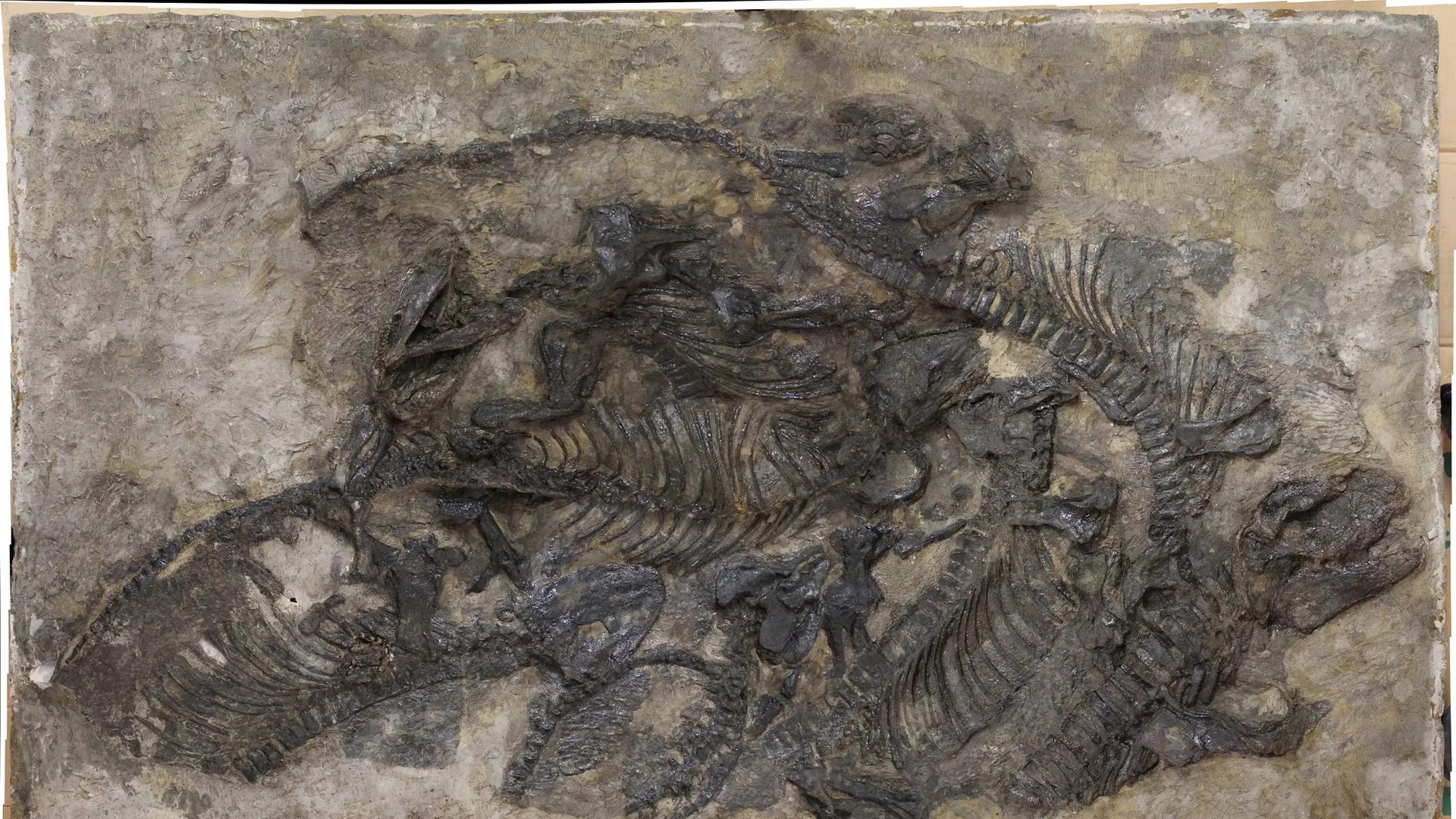
In the annals of paleontology, few discoveries capture the imagination quite like the "Saurian Slab" of Freital. It is a haunting tableau: six creatures, each approximately 1.2 meters in length, captured in a moment of eternal intimacy or perhaps desperate survival. They were entombed roughly 300 million years ago, victims of a catastrophic volcanic event that preserved their final moments with startling clarity. This week, this internationally significant geological treasure found a new permanent home at the Museum for Nature in Chemnitz, marking the beginning of a new chapter for one of the most mysterious specimens in Earth’s history.
The Main Facts: A 300-Million-Year-Old Enigma
The slab features the skeletal remains of six individuals of the genus Pantelosaurus. These were not dinosaurs, but rather complex, early land-dwelling vertebrates that occupied a critical evolutionary niche.
"The Saurian Slab is undoubtedly the most spectacular fossil in the Free State and possesses international significance of the highest order," says Dr. Ronny Rößler, director of the Museum for Nature in Chemnitz.

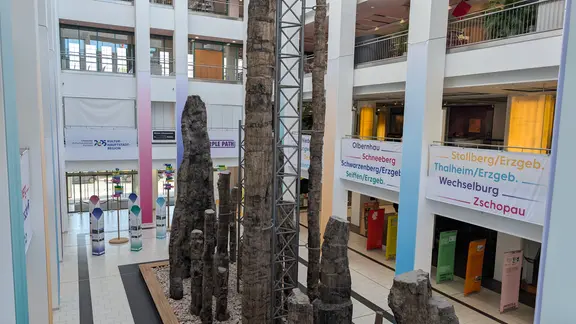
The decision to house the specimen in Chemnitz was not made lightly. The museum is renowned for its research into the "Petrified Forest" of Chemnitz—a site formed by a similar, though slightly younger, volcanic eruption approximately 291 million years ago. By bringing the Pantelosaurus remains to this facility, experts hope to create a cohesive narrative of the Permian period, a time when life on Earth was undergoing a fundamental transition.
The slab will be the centerpiece of a new special exhibition opening in January. To ensure accessibility for all visitors, the museum is preparing not just a display case, but a tactile model, allowing both sighted and visually impaired visitors to explore the anatomy of these ancient creatures through touch.
Chronology: From Discovery to Preservation
The history of the Freital slab is as complex as the fossils themselves. Its journey from the dark depths of the earth to the light of the museum gallery spans over a century of labor, conflict, and scientific advancement.
- 1901: The slab was unearthed by miners working in the hard coal pits of Freital. At the time, the discovery was recognized as a major scientific find, but the challenges of extraction and the lack of modern stabilization techniques made it a delicate treasure.
- 1901–1925: The period of preparation was, by all accounts, an ordeal. The documentation of the fossils was a labor-intensive process that spanned decades. Historical records even hint at a "hostage" situation, where the preparator—unpaid during the chaos of the Great Depression—temporarily withheld the specimen, demanding compensation for his work.
- 1925: The scientific description of the slab was finally completed, cementing its status as the definitive, and only, representative material for the Pantelosaurus genus.
- Pre-WWII Era: Recognizing its importance, copies of the slab were produced and sold to prestigious institutions, including the British Museum in London. Today, replicas are held in collections across New York, Moscow, and Oelsnitz, ensuring that even if the original were lost, the scientific data would survive.
- 2026: Following years of rigorous research and curation, the original specimen is officially transferred to the Museum for Nature in Chemnitz to serve as the cornerstone of their permanent collection.
Supporting Data: Why the Pantelosaurus Matters
For twenty years, paleontologist Frederik Spindler has dedicated his professional life to the study of this slab. His research highlights why this discovery remains at the forefront of evolutionary biology.
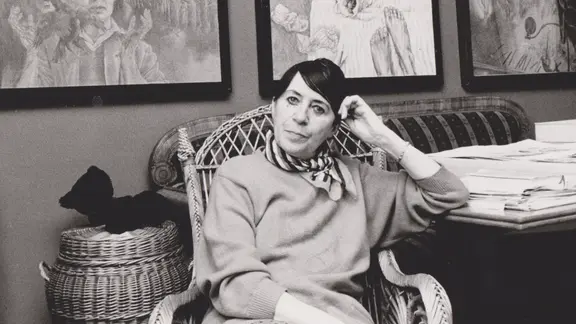
"In the grand puzzle of the evolution of dinosaurs, reptiles, and later mammals, there are still massive gaps in our fossil record," Spindler explains. "At the very beginning of this gap, I suspect we find the Pantelosaurus."
The anatomy of these six specimens provides a rare, high-resolution look at the transition between primitive tetrapods and the lineages that would eventually dominate the planet. The Pantelosaurus was likely a generalist—an omnivore to carnivore that may have occupied the role of the apex predator in its ecosystem.
By analyzing the proximity of the six skeletons, researchers are also attempting to reconstruct the behavior of these animals. Were they sleeping together? Huddled for warmth? Or were they driven into a confined space by the encroaching volcanic ash? While a definitive answer remains elusive, the density of the fossil remains provides unique data on the social or grouping behaviors of early land vertebrates.
Official Responses and Scientific Significance
The transfer of the slab to Chemnitz has been met with broad acclaim from the scientific community. The state government, which oversaw the transfer, emphasized that the preservation of such "natural cultural heritage" is a duty to future generations.

Dr. Rößler notes that the choice of the Museum for Nature was strategic. "Because our research focus aligns so closely with the geological context of the slab—the volcanic history of the region—we are uniquely positioned to interpret these fossils for the public. We aren’t just displaying bones; we are explaining the violent, creative forces that shaped the Earth during the Permian."
The pedagogical approach is also shifting. The museum’s decision to include a "tactile" version of the slab is a significant step forward in museum curation. By allowing the public to "feel" the fossilized joints, skulls, and ribs, the institution aims to bridge the gap between abstract scientific data and the tangible, lived reality of the animals.

Implications: A New Era of Public Engagement
The arrival of the Pantelosaurus in Chemnitz signals a broader trend in how regional museums are being utilized as centers for high-level international research. No longer just local cabinets of curiosities, these institutions are becoming nodes in a global network of paleontology.
The Role of Technology in Modern Paleontology
The museum has hinted that they will be using digital photogrammetry and 3D modeling to complement the physical display. By creating high-resolution digital twins of the slab, they will allow researchers from around the world to study the fossil without subjecting the original, fragile matrix to constant handling.
The Future of Paleo-Education
The exhibition in January is expected to draw visitors from across Europe. The focus on the "why" of the fossil—the volcano, the extinction event, the evolution of the mammals—serves as a cautionary tale about climate and geological change, themes that resonate strongly in the modern era.
"We want people to leave the museum feeling a connection to these creatures," says Spindler. "They were living, breathing, and interacting in a world that was radically different from ours, yet they are part of our story. By understanding how they thrived—and how they met their end—we learn something profound about the resilience and fragility of life."

A Beacon for Regional Tourism and Science
For the city of Chemnitz, the acquisition is a point of immense pride. The "Petrified Forest" and now the "Saurian Slab" position the city as a must-visit destination for those interested in the deep history of the Earth. It turns the region into a living laboratory where the past is not just studied, but experienced.
Conclusion: The Eternal Embrace
As the museum staff prepares the glass vitrine that will house the slab, there is a palpable sense of reverence. The six Pantelosaurus individuals have spent 300 million years in a silent, rocky tomb, and then another century being studied and debated by scholars. Now, they are being prepared for a new life as educators.

While the scientific community will continue to debate the specific circumstances of their demise—the mystery of why they were found so close together remains the "holy grail" of this specimen—the public will soon have the chance to stand before them. They are a testament to the fact that even in the face of cataclysmic change, the story of life is one of enduring complexity.
The exhibition, which opens this coming January, will be more than just a display of bones. It will be a dialogue between the modern human observer and the deep, silent history of a world that existed long before our ancestors took their first steps. The Pantelosaurus are coming to Chemnitz, and in doing so, they are finally coming home to the public.