The 2026 German Youth Photography Prize has concluded, revealing a cohort of young artists whose work transcends mere documentation. By shifting the focus from traditional reportage to deeply personal, politically charged, and experimental narratives, these 1,236 participants are redefining the boundaries of contemporary visual storytelling.
Main Facts: A New Visual Language
In an era saturated with ephemeral digital content, the 2026 German Youth Photography Prize has emerged as a beacon of intentionality. Organized by the German Children and Youth Film Center (KJF) and supported by the Federal Ministry for Family Affairs, the competition continues its six-decade legacy of providing a platform for the next generation of visual storytellers. This year, the jury evaluated 1,236 submissions from children, teenagers, and young adults up to the age of 25.
The winning works—totaling 40 distinct prizes—demonstrate a departure from the "classic" reportage style that dominated the competition in previous years. Instead, the 2026 collection is defined by a diverse tapestry of approaches: intimate documentary projects, staged photographic series, and contemplative observations that challenge the viewer’s perception of reality.
Chronology: A Multi-Generational Evolution
To understand the current state of youth photography, one must look at its trajectory. As Karen Fromm, Professor of Photography at the University of Applied Sciences and Arts in Hannover, notes, the shift has been palpable since she began her academic career in 2011. While the early 2010s were rooted in traditional journalistic narrative, today’s participants exist in a fluid ecosystem.
"It is no longer possible to define ‘youth photography’ as a single entity," Fromm explains. "We are seeing a profound juxtaposition of media. You have the raw, immediate influence of smartphone aesthetics and social media, balanced against a resurgence in analog techniques, hand-built pinhole cameras, and tactile experimentation."
The 2026 cycle serves as a critical checkpoint in this evolution, where the digital convenience of the smartphone is increasingly viewed not as a limitation, but as a deliberate creative choice that sits comfortably alongside the slow, methodical process of film photography.
Supporting Data: Thematic Pillars of the 2026 Winners
The winning entries are anchored by four distinct thematic pillars, each reflecting a different facet of the modern human experience:
1. The Intimacy of the Domestic Sphere
Anna Lotta Maria Schulze, a 22-year-old student at the University of Applied Sciences and Arts in Hannover, captured the jury’s attention with her series "Lina." By spending six months photographing her younger sister, who lives with a severe disability, Schulze avoided the tropes of "disability photography." Instead, she focused on the dynamics of their relationship. Her work highlights the ethical weight of the camera, emphasizing that for the young generation of photographers, the relationship between the subject and the photographer is the true subject of the frame.
2. The Intersection of Landscape and Labor
Jasper Hill, also 22, presented a stark contrast with his project "In the Land of the White Mountains." Hill spent over 18 months documenting the potash mining industry in Thuringia and Lower Saxony. His work captures the bizarre beauty of the industrial landscape, from theater performances staged in front of massive white salt heaps to the claustrophobic, high-contrast environments 750 meters underground. Hill’s work marks a shift toward investigative journalism, requiring the photographer to step out of the "comfort zone" of familiar social circles and engage with the industrial reality of their own country.
3. Identity and Cultural Renegotiation
Nele David’s series, "Start with Bismillah – In the Name of God," offers a nuanced look at the lives of young Muslim women in Germany. By documenting her friends, David dismantles pervasive stereotypes and media-driven clichés. Her work depicts faith not as a political concept, but as a lived reality—friendship, fashion, and the mundane act of grocery shopping. The jury highlighted this series as a vital example of how young photographers are reclaiming their narratives from external political discourse.
4. The Autonomy of the Self
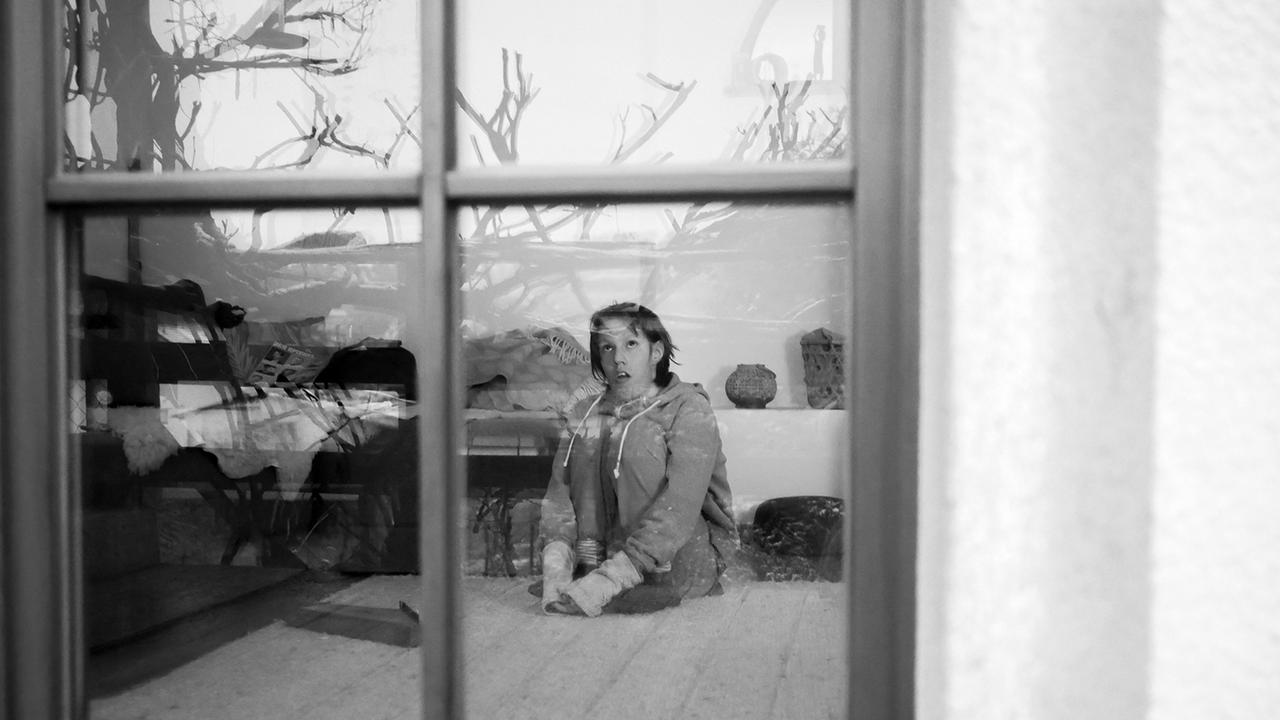
Perhaps the most striking project is that of 21-year-old Frieda Wagner from Karlsruhe. Living with ME/CFS (Myalgic Encephalomyelitis/Chronic Fatigue Syndrome), Wagner documented her life through over 150 smartphone self-portraits taken from her bed. Her series, "I Want What You Take for Granted," is a powerful exploration of illness. Unlike traditional photography, where the photographer directs the subject, Wagner is both the director and the documented, asserting control over her own representation in a way that is both vulnerable and profoundly defiant.
Official Responses: The Jury’s Perspective
Katharina Klapdor Ben Salem, head of the German Youth Photography Prize, expressed deep admiration for the cohort’s "political courage." She noted that the submissions represent a generation that is acutely aware of the "gaze."
"These young photographers are not just taking pictures; they are asking, ‘Who am I to show this? What right do I have to display this?’" says Klapdor Ben Salem. "They are incredibly engaged and politically astute, yet they achieve this without relying on preachy or intrusive proclamations. They let the reality of their subjects speak for itself."
The jury also addressed the influence of platform culture. They observed a distinct shift toward vertical (portrait) framing in many submissions, a direct aesthetic legacy of Instagram and TikTok. However, rather than viewing this as a dilution of the art form, the organizers see it as a new visual dialect that young creators are mastering with sophistication.
Implications: The Future of Photographic Ethics
The 2026 German Youth Photography Prize signals a permanent shift in how photography is taught, consumed, and produced. Several key implications arise from this year’s competition:
The Ethics of Proximity:
There is a growing consensus among young photographers regarding the "ethics of the gaze." Whether they are photographing a sibling with a disability, friends from a specific cultural background, or their own medical struggles, there is a shared rejection of the "outsider" perspective. The era of the detached, objective photographer is being replaced by the "participant-observer," who is deeply invested in the dignity and agency of their subjects.
The Resilience of the Analog:
The surge in interest in analog techniques—despite the ubiquity of high-resolution digital sensors—reveals a desire for tactile authenticity. In a world of algorithmic, fleeting images, young photographers are turning to film and alternative processes to slow down the act of seeing. This is not a regressive move, but a conscious act of resistance against the high-speed consumption of visual data.
Political Engagement through Personal Realities:
The 2026 winners prove that "the political" is no longer confined to the halls of power or street protests. By documenting the realities of chronic illness, the specificities of religious life, or the industrial landscapes of rural Germany, these photographers are making a broader statement about the state of society. They argue that personal realities are the most effective way to challenge societal prejudices and, by extension, to influence the political climate.
A New Definition of Professionalism:
The success of these young artists suggests that the future of photojournalism and documentary photography will be increasingly collaborative. The boundary between the subject and the lens is dissolving. As Karen Fromm noted, the most successful students are those who can navigate their own identity within their work. The 2026 Youth Photography Prize has demonstrated that this generation is more than capable of handling that complexity.
Conclusion
As the exhibition of the 2026 winning works travels across Germany, it serves as a testament to the power of the medium. These 1,236 participants have proven that photography is far from a stagnant art form. Through their lenses, they are documenting a world that is messy, difficult, and profoundly human. They have moved beyond the superficiality of "content" to engage with the weight of "story." In doing so, they have not only won a prize—they have set a new standard for what it means to look at the world, and in turn, how the world should look at them.