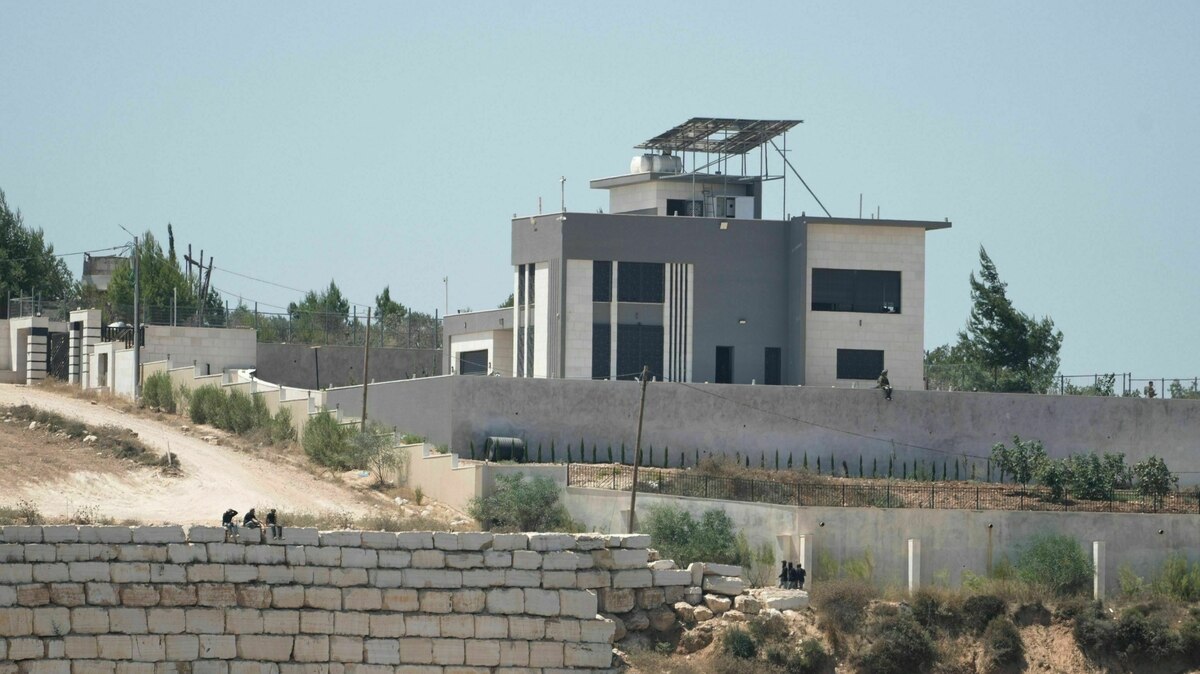
The rolling hills of the occupied West Bank, traditionally a landscape defined by ancient olive groves and the quiet rhythms of rural life, have been transformed into a theater of psychological and physical attrition. For the Hassan family, living on the outskirts of the village of Qusra, the pastoral horizon has become a prison wall. For five harrowing days, their home—a modest residential complex—has been under siege by radical Israeli settlers. What was once a place of refuge has morphed into a site of profound insecurity, where the line between military control and settler impunity has effectively dissolved.
The situation in Qusra is not an isolated incident; it is a stark, magnified reflection of the escalating instability in the West Bank. As the Hassan family endures the absence of electricity, clean water, and food, their plight has drawn international attention, yet the reality on the ground remains dictated by the presence of a "Hilltop Youth" contingent—radicalized settlers who appear to operate with a degree of freedom that defies the official military designations of the territory.
A Chronology of Coercion: From Intrusion to Siege
The ordeal began on a Sunday afternoon, a date now etched into the collective memory of the Hassan family. Security camera footage, which has since been analyzed by various observers, documents the arrival of two vehicles. Young men, distinct in their attire—hoodies, loose jeans, and kippot—emerged and began an operation that seemed pre-planned. Without a word, they began erecting a tent, marking their territory on the land surrounding the Hassan home.
The Initial Phase (Days 1–2)
The early days of the siege were characterized by a calculated campaign of intimidation. The settlers systematically sabotaged the family’s infrastructure, cutting electrical lines and blocking access roads with jagged metal shards and rocks. The strategy was clear: isolation. By cutting off the home from the village, they forced the residents into a state of total enclosure. During this time, the settlers, often joined by others as the days progressed, engaged in continuous psychological warfare—shouting, throwing stones at windows, and maintaining a constant, menacing presence.
The Escalation (Days 3–4)
By the third day, the situation reached a breaking point. The health of the family members, particularly the children, began to deteriorate. Ruqqaya Hassan, mother of two young girls, Kinda and Hur, reported that the children began suffering from fever, vomiting, and respiratory distress. The trauma of the siege manifested in the children’s behavior; the eldest daughter, terrified by the constant threat of masked men attempting to break in, refused to move through the house alone.
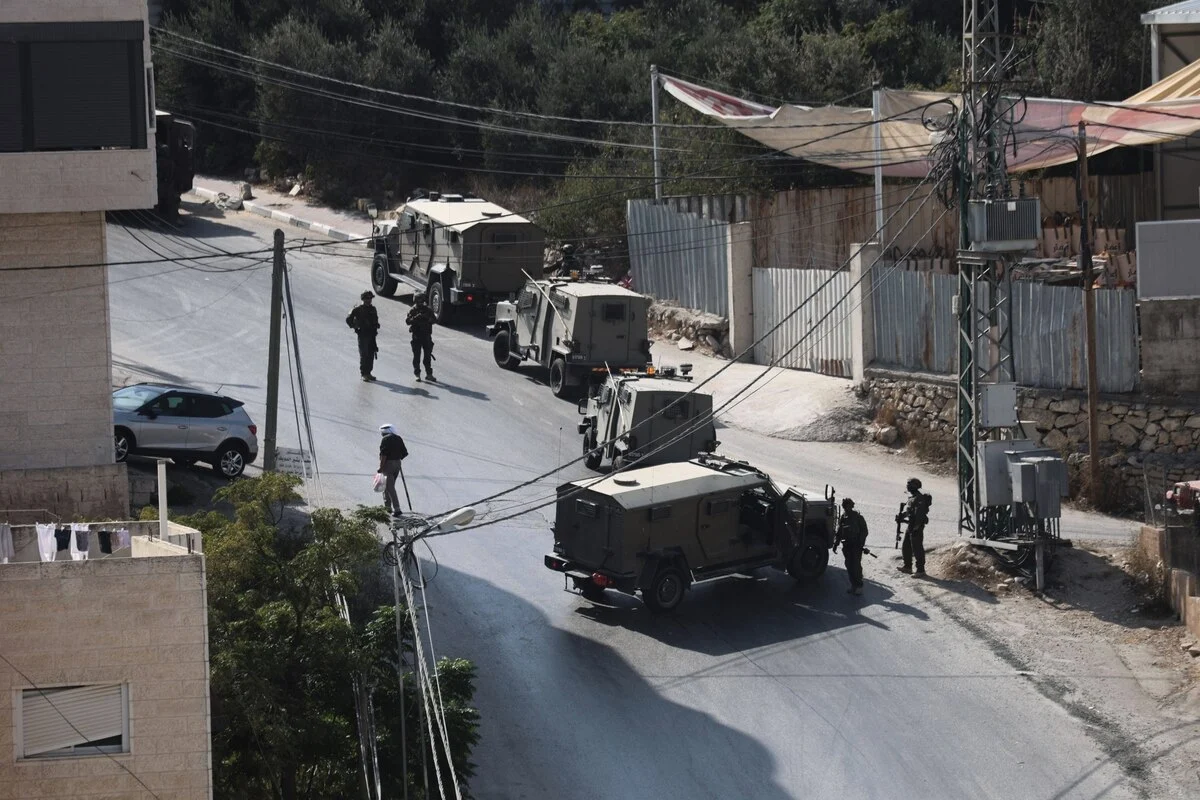
It was during this phase that the presence of the Israel Defense Forces (IDF) became a point of significant contention. Observers noted that initial units stationed in the area did not intervene to disperse the settlers. Instead, witnesses reported soldiers sharing coffee with the besiegers and participating in shared religious rituals under the settlers’ makeshift pavilion.
Supporting Data: The Collapse of Authority
The failure of the military to protect the Hassan family has ignited a fierce debate regarding the hierarchy of power in the West Bank. Qusra, a village of approximately 5,500 people south of Nablus, is uniquely vulnerable due to the complex jurisdictional divisions established by the Oslo Accords. While the village is partially located in Area B—nominally under the civil administration of the Palestinian Authority—the reality of the ground is governed by the Israeli military, which maintains control over the surrounding Area C.
The "Military Exclusion Zone" Paradox
When journalists from the Israeli newspaper Haaretz attempted to document the siege, they were blocked by a mob of settlers on quad bikes. The reporters were subjected to verbal abuse, spitting, and physical intimidation, including the deliberate deflation of their vehicle tires. Crucially, the soldiers present refused to act against the settlers. Instead, the military declared the area a "closed military zone."

This declaration, intended to restrict movement, functioned in practice as a tool to exclude the press and aid workers while allowing the settlers to remain entrenched. Even medical professionals attempting to reach the sick children in the Hassan home were barred from entry, leading to a tense standoff where the right to emergency medical care was pitted against the arbitrary authority of the soldiers on the scene.
Official Responses and the Rhetoric of Accountability
The international reaction to the situation in Qusra has been one of alarm. Even figures such as Mike Huckabee, the U.S. Ambassador to Israel, have felt compelled to label the incident as "terror," an uncharacteristic condemnation that underscores the severity of the breach.
The Military’s Stance
In response to mounting pressure, the Israeli military issued a series of statements describing the settlers’ actions as "illegal, reprehensible, and unacceptable." They pledged to take disciplinary action against soldiers who failed to maintain order and announced that a new infantry battalion had been deployed to the area. Furthermore, a high-ranking general visited the site on Wednesday.
However, for Abdelkarim Hassan, these promises ring hollow. "If the Israeli government really wanted to solve the problem, it would be done in an hour," he remarked. His skepticism is rooted in the long-term pattern of settler behavior in the region. The proximity of a new, unauthorized outpost, established just months ago, has made the Hassan family a constant target. The military’s claim of inability to act is contradicted by their overwhelming presence in the West Bank, suggesting that the problem is not a lack of capacity, but a lack of political will.

Implications: A Pattern of Impunity
The incident at Qusra is part of a broader, more alarming trend. Since the events of October 7, the involvement of reservists—many of whom are themselves settlers—has further blurred the lines between the state military and ideological settler movements. Reports suggest that approximately 5,500 settlers have been recruited into regional defense battalions, raising concerns that the state’s monopoly on violence is being outsourced to those with a clear, exclusionary agenda.
The Erosion of Safety
For the residents of Qusra, the trauma is historical as well as immediate. Three years ago, the village was the site of a lethal outbreak of violence that claimed six lives in two days. The faces of the deceased still hang on the town hall doors—a haunting reminder that safety is a fragile, fleeting commodity. The fear of harvesting olives, the fear of moving through the fields, and the constant threat of home invasion have become the defining features of life in this corner of the West Bank.
The Future of the Residential Complex
As of Thursday, the settlers remained in position, despite the military’s public commitment to clear the area. The Hassan family, currently divided between the besieged villa and temporary refuge in the village, faces an impossible choice: surrender their home to the encroaching settlers or continue to risk the lives and mental health of their children to defend their property.
The siege of the Hassan family home is a microcosm of the systemic failure in the West Bank. It illustrates a reality where the law is applied selectively, where state security forces are often seen as complicit, and where the most vulnerable—families in their own homes—are left to navigate the intersection of territorial ambition and human rights violations. Until there is a fundamental shift in the approach to settler violence, the "hilltop" will continue to cast a long, dark shadow over the valleys below, and the promise of a peaceful existence for families like the Hassans remains a distant, perhaps unattainable, dream.