As historic droughts grip the Rhine, the river is revealing a dark, explosive secret. Decades after the conclusion of the Second World War, the receding waters are exposing a deadly cache of munitions, ranging from hand grenades to anti-tank weapons, keeping bomb disposal units in a state of constant, high-stakes mobilization.
The Reality of the Riverbed
On a sun-scorched afternoon in Koblenz-Wallersheim, the Rhine looks more like a gravel path than a vital European artery. For the average passerby, the exposed riverbed is a curiosity; for the experts of the Rhineland-Palatinate Explosive Ordnance Disposal Service (KMRD), it is a minefield.
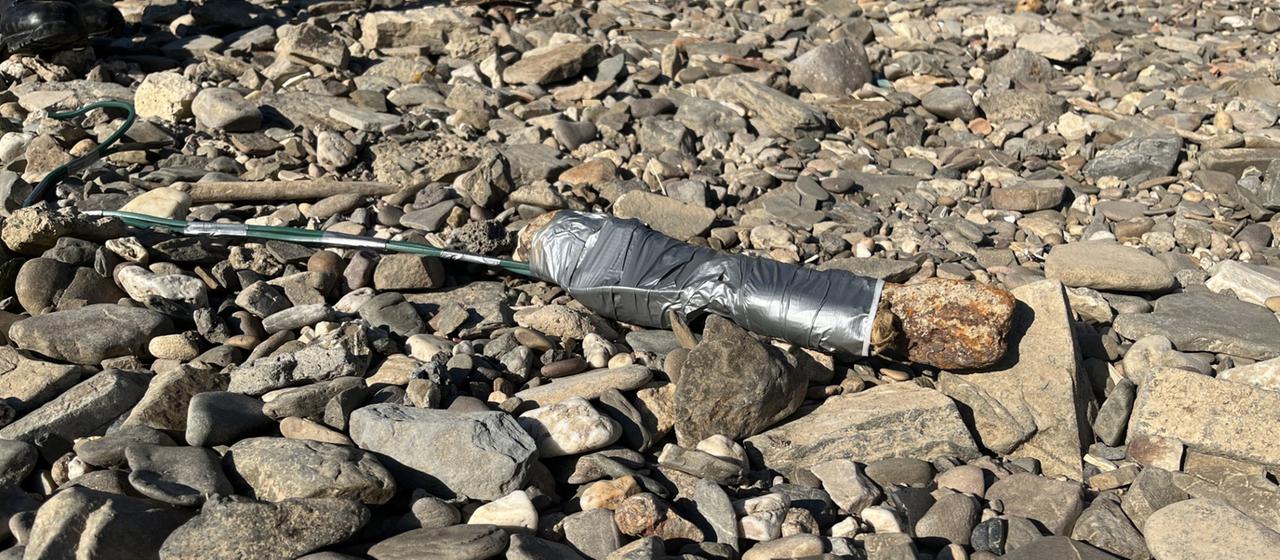
Sascha Hummrich, a seasoned technician with the KMRD, prepares to descend into the shallow, muddy waters. His objective is a "Bazooka"—a World War II-era anti-tank rocket launcher—spotted by vigilant pedestrians on the riverbank. The weapon, though submerged for over eight decades, remains a volatile relic.
"I am relaxed," Hummrich says, though his calm demeanor belies the gravity of the task. He and his colleague, Marco Ofenstein, carefully secure the weapon with sandbags and attach a detonator. Their plan is to execute a controlled underwater detonation. The weapon is not merely a piece of scrap metal; it is a ticking time bomb. "At 81 years past the war’s end, these items are still highly dangerous," explains Ofenstein. "If handled incorrectly, the ammunition can still detonate. If you are standing next to it when that happens, you do not survive."
Chronology of a Forgotten War
The current situation is the result of a convergence of environmental crisis and historical negligence. In the final months of the Second World War, particularly from January 1945 onward, the Rhine front became a theater of chaos.
As the Allied forces closed in, the German Wehrmacht faced widespread desertion and total tactical collapse. Historian Markus Pöhlmann, head of the military history research department at the Center for Military History and Social Sciences of the Bundeswehr, notes that the disposal of weaponry during this period was entirely uncoordinated.
"Soldiers simply wanted to shed their weapons," Pöhlmann explains. "It was a ‘toss it and forget it’ mentality. They threw massive quantities of war materiel into the river." Following the unconditional surrender in May 1945, the Allied occupation forces were left with the monumental task of managing millions of tons of abandoned arms. To avoid the logistical nightmare of processing and transporting these stockpiles, the Allies frequently opted for the path of least resistance: mass "dumping" into the Rhine and other deep waterways.
For decades, these caches remained buried under layers of sediment, rendered inert by the protective barrier of deep, oxygen-deprived water. Now, with climate change driving record-low water levels, the protective blanket has been stripped away.

Supporting Data: A Summer of Constant Threat
The KMRD is currently operating at a pace that its staff describes as "extreme." Across the summer of 2026, the unit has been receiving multiple reports of suspicious objects every single day, often stretching into the night.
"It’s not just the big stuff," says Sven Rasehorn, the Technical Director of the KMRD. "We are getting reports of hand grenades, mortar shells, and various munitions fragments. Of course, a significant portion of what we investigate turns out to be scrap metal, but we cannot afford to take any risks. Every single report is treated as a live threat until proven otherwise."
The logistical burden of these finds is significant. In the Koblenz-Wallersheim incident, the discovery necessitated the evacuation of twelve residential buildings within a 100-meter radius. While residents of a nearby care home were not forced to leave, they were placed under a strict lockdown. Furthermore, the vital commercial traffic of the Rhine was halted, causing ripple effects through the regional economy.
Rasehorn notes that underwater detonation is the last resort. "Our preference is always to neutralize the items on-site, place them in secure, specialized containers, and transport them to a bunker at our facility. From there, they are taken to the Bundeswehr’s disposal center in Munster for final destruction."
Regional Implications and Cross-Border Risks
The phenomenon is not limited to Rhineland-Palatinate. Across Germany, receding water levels are uncovering the grim geography of the 1945 collapse.
In Trebur, Hesse, a pedestrian recently discovered a smoking phosphorus grenade. The exposure to the air after years of submersion triggered a chemical reaction between the phosphorus and oxygen, causing the object to ignite on the riverbank. Police cordoned off the area immediately, highlighting the unpredictability of the material.
The Brandenburg Ministry of the Interior has issued a stern warning to the public: "If you encounter suspected munitions, do not touch them. Keep your distance, mark the location, and alert the police immediately."
In Bavaria, authorities are equally concerned. A spokesperson for the state’s Interior Ministry stated, "After the war, these items were intentionally sunk. Because they have been hidden under sediment for so long, they are essentially invisible to standard mapping or sonar until the water levels drop. They are not localized, and they are not going away."
Expert Analysis: The Scale of the Hidden Arsenal
Historians estimate that thousands of tons of ordnance remain scattered across German riverbeds. While the exact number of weapons dumped into the Rhine is impossible to quantify, the qualitative evidence—documented by the sheer frequency of modern finds—is overwhelming.
"We are talking about mountains of rifles, crates of ammunition, and even heavy armored vehicles," says Pöhlmann. While oceanic disposal of chemical weapons and mines has been somewhat tracked by post-war records, the riverine disposals remain a chaotic, unrecorded mass.
The implications for the future are clear: as climate change continues to impact water cycles, the Rhine and other major European rivers will periodically transform from life-giving veins into archaeological sites of explosive danger.
Conclusion: A Professional Routine
Back at the riverbank in Koblenz, the tension dissipates in an instant. A dull, powerful thud ripples through the ground as the Bazooka is neutralized. A plume of water rises and falls, and the river returns to its slow, shallow flow.
"Everything went as planned," Ofenstein says, brushing mud from his gear. But there is no time to celebrate. As he speaks, his radio crackles with a new report from a different section of the riverbank.
For the men of the KMRD, the war may have ended 81 years ago, but the work of peace—and the quiet, dangerous labor of clearing the past—remains a daily reality. The Rhine, once the lifeblood of German industry, now requires a permanent guard to ensure its bed does not claim more lives in the present than it did in the past.