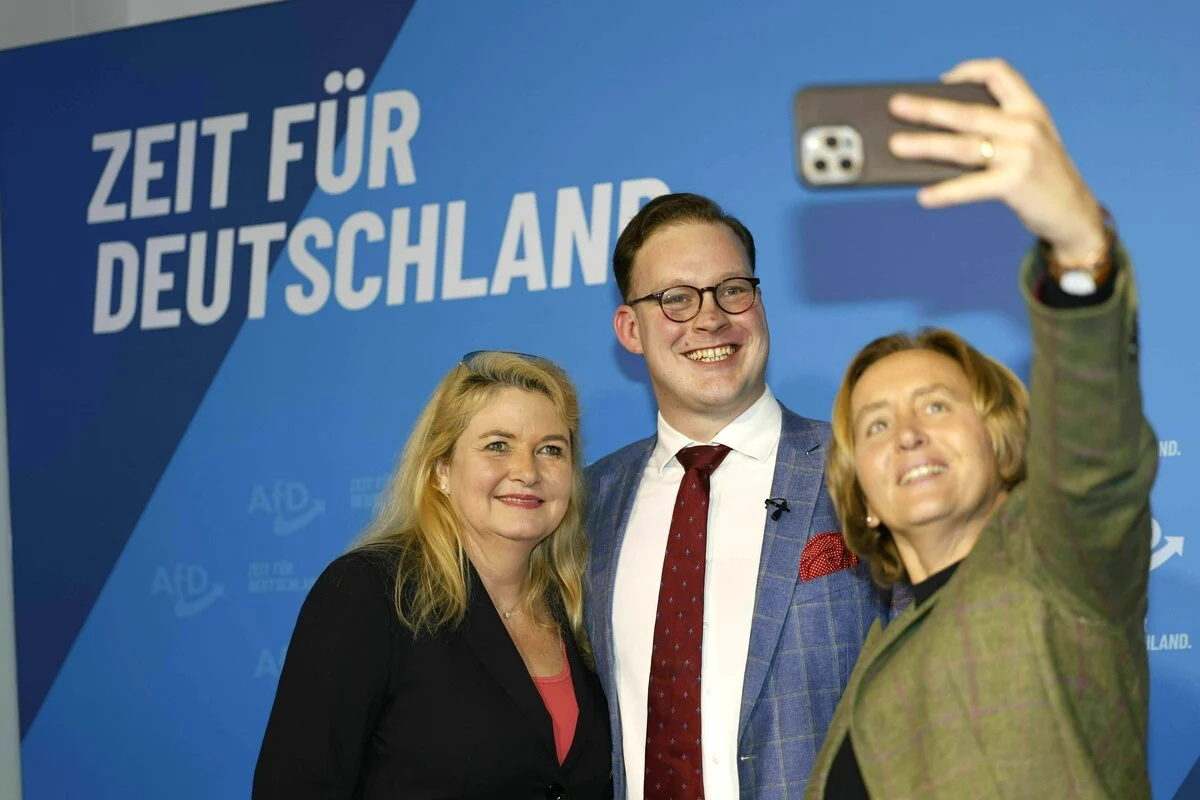
In the lead-up to critical state elections in Eastern Germany, the political establishment finds itself caught in a recurring cycle of helplessness. As poll numbers for the Alternative for Germany (AfD) continue to climb, mainstream politicians and pundits rely on a familiar, yet increasingly ineffective, script: characterizing the party as a regressive movement tethered to a pre-Adenauer past, and warning that the country must not be "surrendered" to such forces. While these moral warnings are well-intentioned, they are proving increasingly futile. They rest on the persistent, fundamental error of viewing the AfD through the narrow lens of a protest party.
The political establishment continues to comfort itself with the belief that voters are merely casting their ballots out of fleeting frustration, acting against their own economic self-interests. There is a deep-seated hope that, if left to their own devices, the party will eventually collapse under the weight of its own lack of substance. However, this narrative is failing to engage with a shifting reality: for a growing segment of the electorate—particularly younger voters for whom the atrocities of the Nazi regime are historical abstractions—the AfD is being chosen not in spite of its platform, but because of perceived economic promises.
The Data Behind the Shift: A New Economic Reality
Recent data from the Berlin-based market research institute Civey paints a sobering picture. For a significant number of supporters across both Eastern and Western Germany, the AfD is increasingly perceived as a legitimate "economic hope." While the efficacy of their proposed solutions remains a subject of intense debate among economists, the voter sentiment is clear.
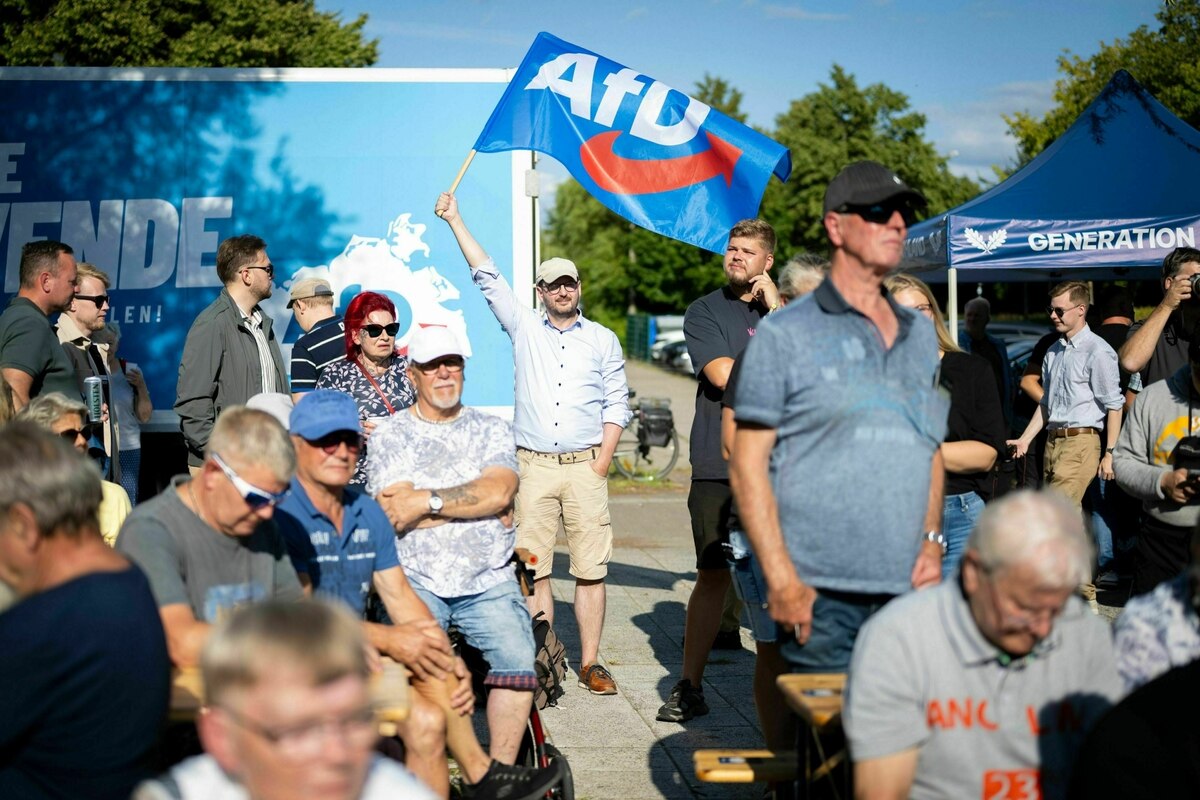
When asked which political force is most capable of solving the country’s most pressing issues, the AfD is now leading ahead of the CDU/CSU alliance. Perhaps most striking is the shift in perceived competence: with 27 percent of the electorate viewing the AfD as economically capable, they now stand on equal footing with the Union. For the CDU, this is a bitter pill to swallow, especially given that Chancellor candidate Friedrich Merz campaigned on a platform of re-establishing the party as the vanguard of economic recovery. The assumption that the AfD possesses "no economic expertise" is a view held by the political competition, not by a substantial portion of the voting public.
Chronology of Disenchantment: From Protest to Pragmatism
To understand this shift, one must look at the evolution of the voter base. Historically, the AfD thrived on a core of ideologically rigid voters. These individuals, often driven by a fundamental rejection of immigration or a desire for a return to traditional values, are effectively "lost" to the democratic center. They remain unmoved by moral appeals or counter-arguments because their commitment is rooted in identity politics.
However, the current surge is not driven solely by this hardened core. It is fueled by a secondary, pragmatic layer of voters who are motivated by economic anxiety.

- Phase 1: The Migration Catalyst: For a long time, the primary driver for the AfD was migration. Even today, 75 percent of potential AfD voters cite the desire for stricter migration control as a primary motivation.
- Phase 2: The Economic Integration: As the German economy has stagnated, the focus has shifted. Currently, 42 percent of supporters prioritize "secure borders," but a staggering 37 percent now anchor their vote to the expectation that the AfD will act as a catalyst for economic renewal.
- Phase 3: The National Convergence: Notably, this economic motivation is no longer an "Eastern phenomenon." The desire for renewed economic dynamism is nearly identical across the country, with 39 percent of Eastern voters and 35 percent of Western voters viewing the party through a lens of economic expectation.
The Mirage of Economic "Competence"
The AfD’s economic narrative is built on the promise of improving the individual’s financial situation—a claim that 75 percent of their supporters believe the party will fulfill. Unlike identity-based political positions, which are often non-negotiable, these economic expectations are, by their nature, pragmatic.
The voters in this category are not necessarily committed to the party’s broader, more radical ideological agenda. They are, however, deeply frustrated by the status quo. They witness a country where tax burdens are rising, infrastructure is crumbling, and administrative bottlenecks paralyze growth. When the AfD presents itself as the disruptor of this stagnation, it taps into a reservoir of resentment that the established parties have failed to drain.
Official Responses and the Failure of Moralism
The reaction from the established parties—the SPD, the Greens, the FDP, and the CDU—has been characterized by a reliance on moral grandstanding. By focusing on the "democratic danger" the AfD poses, these parties have inadvertently signaled to the electorate that they are more interested in the abstract survival of the political status quo than in solving the concrete, lived problems of the citizens.

This approach is failing for three primary reasons:
- The Loss of Historical Weight: For voters born in the 1990s and later, the "Never Again" narrative lacks the visceral, personal connection it held for the post-war generations.
- The "Elite vs. People" Dynamic: Moral lectures are perceived as condescending by voters who feel that their economic hardship is being ignored or dismissed as "wrongful" thinking.
- Lack of Alternative Vision: There is a vacuum in the political discourse regarding a compelling, optimistic vision for Germany’s economic future. When the government discusses "transformation" in terms of climate policy without addressing the immediate, painful impact on the cost of living, it leaves an opening for the populist right to frame themselves as the defenders of the "common man."
Implications for Future Governance
The upcoming state elections in Eastern Germany will serve as a bellwether for the rest of the republic. The core of the AfD remains small, but the party has successfully expanded its periphery to include a large, "pragmatic" segment of the population that is reachable by any party capable of delivering results.
The implication for the democratic center is clear: Economic credibility is more important than moral demarcation.

If the traditional parties wish to win back these voters, they must pivot from a posture of defense to one of active, tangible problem-solving. This requires:
- Measurable Results: These voters are not looking for rhetoric; they are looking for tax relief, investment in infrastructure, and a reduction in bureaucratic friction.
- Stability and Predictability: The current climate of constant crisis management creates anxiety. A policy of "steady hands" that makes the financial future of households and businesses more predictable is essential.
- A Positive Narrative: The discourse must shift from the "dangers of the right" to the "opportunities of the future." Voters need to feel that the country is moving in a direction that benefits them personally, not just the state or global interests.
Conclusion: A Call to Rebuild Trust
The AfD’s rise is a symptom of a deeper malaise—a sense that the German promise of shared prosperity is failing. The data shows that for a large portion of the electorate, their vote is a demand for a functional, competitive, and responsive state.
Moral outrage may serve to reinforce the convictions of those already in the democratic camp, but it is a blunt instrument that does nothing to win over the pragmatist. To counter the trend, the democratic parties must stop treating the electorate as a collection of ideological actors and start treating them as citizens who are rightfully demanding a return on their taxes and their trust.

The path back to electoral stability does not lie in the lecture hall, but in the workshop, the office, and the infrastructure project. If the political establishment fails to produce a credible, economic future-vision, they risk ceding the ground not just to the AfD, but to a permanent state of political fragmentation. The solution is neither empty applause nor harsh exclusion; it is the visible, undeniable proof that the democratic state is capable of solving the problems of the people. Until that proof is provided, the economic appeal of the populist right will only continue to grow.