Leipzig, Germany – August 8, 2026 – The security landscape of German critical infrastructure has shifted dramatically following a chilling discovery at Leipzig/Halle Airport. Authorities are currently engaged in a high-stakes investigation after a drone equipped with a sophisticated explosive device was recovered from the airport’s southern runway. The incident, which occurred mid-week, has prompted immediate federal intervention, the deployment of advanced surveillance technology, and a significant diplomatic row with Moscow.
As the Bundesanwaltschaft (Federal Prosecutor’s Office) takes the lead on the case, government officials have characterized the event as a “highly professional” hybrid attack, raising urgent questions about the vulnerability of Europe’s logistics hubs to asymmetric warfare.
The Incident: A Narrow Miss on the Runway
In the early hours of Wednesday, a routine check by airport personnel on the “Südpiste” (South Runway) took a terrifying turn. A staff member identified an unidentified drone resting on the tarmac. According to reports from security circles, the employee acted with remarkable presence of mind, using a physical maneuver to force the device to the ground before it could potentially fulfill its mission.
The proximity of the device to a parked Ukrainian Antonov AN-124 cargo aircraft has fueled speculation that the aircraft was the intended target. NATO representatives have confirmed the presence of the transport plane, which is often utilized for the movement of heavy equipment and humanitarian aid.

Upon arrival, specialized units from the Federal Police (Bundespolizei) successfully neutralized the explosive payload. Subsequent laboratory analysis revealed that the device was not a crude hobbyist contraption, but a lethal weapon. Sources confirmed the presence of high-grade military explosives, specifically PETN and Semtex. Security expert Nico Lange noted that the estimated 800 grams of Semtex found on the device represented a significant destructive capability. Investigators believe a faulty detonator prevented a catastrophic explosion, effectively saving lives and preventing massive damage to the logistics infrastructure.
Chronology of Events and Ongoing Searches
The discovery of the first drone triggered an immediate security sweep of the entire airport perimeter. As the investigation unfolded, intelligence reports indicated that a second, unidentified aerial object may have collided with a cargo plane shortly before it landed in Hannover.
- Tuesday Night/Wednesday Morning: The explosive-laden drone is discovered on the Leipzig/Halle runway.
- Wednesday Day: The Federal Police secure the scene and dismantle the explosive device.
- Thursday: Public alarm grows as reports of the military-grade explosives surface. Interior Minister Alexander Dobrindt and other officials hold emergency briefings.
- Friday: A large-scale search operation involving hundreds of police officers is launched to sweep the northern runway and surrounding areas for remnants of the potential second drone.
While normal flight operations at Leipzig/Halle resumed on Thursday morning, the airport remains under a heightened state of alert. The visual observation platform, a popular spot for aviation enthusiasts, has been shuttered indefinitely as the site is repurposed for specialized monitoring equipment.
Enhanced Security and Counter-Drone Technology
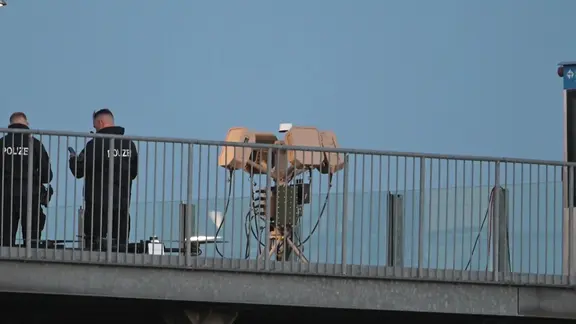
In response to the breach, the Federal Police have moved quickly to harden the airport’s defenses. A new, sophisticated surveillance system has been installed atop the facility’s old control tower. This technology is designed to detect incoming drones from a significant distance, providing security forces with the critical seconds needed to react.

Beyond passive detection, the authorities have integrated active interference systems. These devices are capable of jamming the signals of unauthorized drones and, in extreme circumstances, forcing them to land safely. “We are not just watching the skies; we are now capable of active intervention,” a police spokesperson confirmed.
However, experts like Nico Lange argue that this is merely a "reactive bandage" on a larger problem. Lange points to a systemic failure in the German approach to airspace protection, noting that while the technology exists, its deployment across critical infrastructure remains fragmented and insufficient. He suggests that the focus should shift from reacting to incidents to building a comprehensive, national sensor network that can track flight paths back to the source.
Russia’s Denial and the Specter of Hybrid Warfare
By Friday, the incident had morphed into a diplomatic flashpoint. The Russian government categorically denied any involvement in the drone incident. In a statement, the Russian Embassy in Berlin expressed “deep concern” over what it termed a “new wave of anti-Russian hysteria” in Germany.
Moscow labeled the allegations of a Russian-orchestrated attack as a “fabricated provocation” designed to serve the interests of Kyiv and "militaristic circles" within Europe. The statement further argued that such narratives are being used by European politicians to justify continued military and financial support for Ukraine.
Despite these denials, several German security experts and political figures remain unconvinced. Green Party security expert Konstantin von Notz noted that given the target—a logistics hub essential for military aid to Ukraine—the involvement of Russian state actors is a "highly plausible scenario." The incident fits the established pattern of "hybrid warfare," a strategy characterized by sabotage, cyberattacks, and the exploitation of vulnerabilities to sow fear and destabilization without triggering a direct conventional war.
Official Responses and Political Implications
The gravity of the situation has necessitated a high-level government response. On Friday, Chancellor Friedrich Merz held emergency consultations with members of the federal cabinet via the National Security Council. The discussions focused on how to mitigate the risk of further attacks and how to coordinate the investigation across various federal and state-level intelligence agencies.
A Professional Threat
Interior Minister Alexander Dobrindt’s assessment has been particularly blunt. He categorized the incident as a “high-level hybrid threat,” emphasizing that the use of military-grade explosives and the technical precision required to navigate the drone to a specific runway points away from amateur actors. "This was not a hobbyist," Dobrindt stated. "This was a professional, state-level operation."
The Search for Answers
Despite the clear nature of the threat, authorities remain cautious. Marc Henrichmann, chairman of the Parliamentary Control Committee, urged the public and the media to allow the intelligence services to complete their work. He cautioned that in the realm of clandestine operations, the most obvious suspect is not always the perpetrator. The Federal Prosecutor’s Office continues to investigate two "concrete leads," though details remain strictly confidential to avoid compromising the investigation.

The Nature of Hybrid Threats
The Leipzig incident serves as a textbook example of modern hybrid warfare. As defined by the German Office for the Protection of the Constitution (Verfassungsschutz), these threats are designed to operate in the “gray zone” between peace and open conflict.
- Sabotage: Direct attacks on critical infrastructure to cause economic or physical damage.
- Information Manipulation: Using the media landscape to sow discord and doubt.
- Espionage: Mapping vulnerabilities for future exploitation.
- Asymmetric Tactics: Using low-cost, high-impact tools—such as drones—to disrupt the functions of a modern state.
The goal is not necessarily to win a military victory, but to erode public trust in state security and force the government to divert vast resources into defensive measures, thereby weakening its overall posture.
Conclusion: A New Reality for German Security
The discovery at Leipzig/Halle is a watershed moment for Germany. For years, the country has relied on its distance from active conflict zones to provide a layer of inherent security. That illusion has been shattered. The integration of military-grade sabotage tools into the German transport network requires a fundamental rethink of how airports, power grids, and transit hubs are protected.
As investigators continue to scour the airport grounds for clues, the German government faces the difficult task of balancing the need for heightened security with the daily operational requirements of a major international logistics hub. The message from the events of the past week is clear: the battlefield is no longer confined to the frontlines in the east; it has expanded to include the infrastructure that keeps the heart of Europe beating. The investigation into the Leipzig drone attack will likely determine the future of German security policy for years to come.