By Robert Rönsch | July 25, 2026
In a move that could redefine the landscape of modern physics and reshape the socioeconomic future of Europe’s former industrial heartlands, a coalition of researchers from Germany and Italy has officially joined forces. On July 17, 2026, in the Sardinian town of Nuoro, five major scientific institutions formalized a partnership to pursue a joint bid for the Einstein Telescope (ET)—a next-generation gravitational wave observatory.
This collaboration between the Lausitz region in Germany and the island of Sardinia in Italy represents more than just a scientific proposal; it is a strategic maneuver in one of the most ambitious and costly scientific projects in human history. As the international community prepares to select the site for this monumental facility, the competition has narrowed to two primary architectural concepts: the L-shaped configuration proposed by the Lausitz-Sardinia alliance and the equilateral triangle design favored by the Euregio Meuse-Rhine (the border region between Germany, Belgium, and the Netherlands).
The Main Facts: A Billion-Euro Quest to Hear the Universe
The Einstein Telescope is designed to detect gravitational waves—ripples in the fabric of spacetime caused by the most violent events in the cosmos, such as the collision of black holes. Unlike traditional optical telescopes, which rely on light and are thus limited by the "dark ages" of the early universe, the ET will be able to probe the era shortly after the Big Bang, 13 billion years ago.
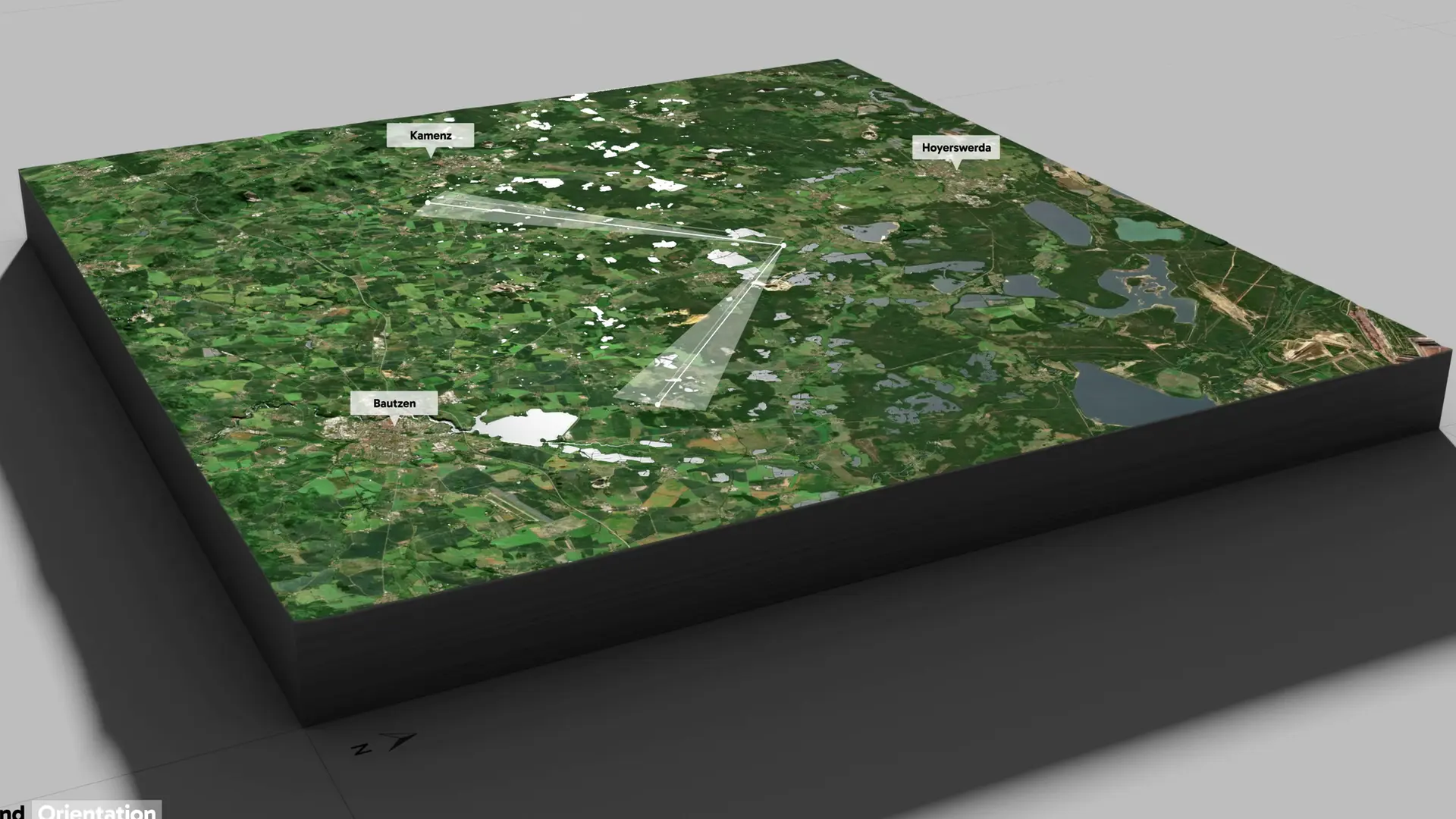
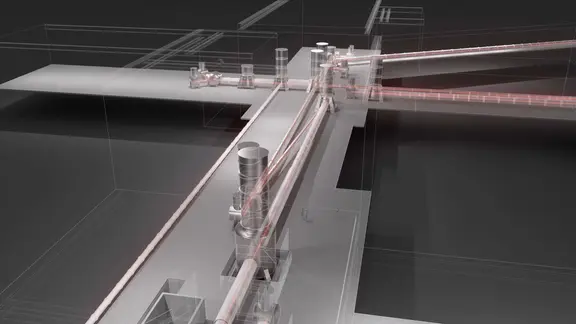
The facility will function as an ultra-sensitive interferometer. It will be located 200 to 300 meters underground to shield it from seismic noise and human activity. Laser beams will be split and sent through long tunnels, reflecting off mirrors to detect minute distortions in space smaller than a fraction of an atomic nucleus.
The proposed Lausitz-Sardinia project calls for two distinct L-shaped observatories, each with 15-kilometer-long arms. By operating in tandem, these two facilities—one in the Lausitz region (Saxony, Germany) and one on the island of Sardinia (Italy)—would provide unprecedented spatial resolution, allowing scientists to triangulate the exact origin of cosmic events with surgical precision.
Chronology of the Bid
- 2021: The Einstein Telescope is officially added to the European Strategy Forum on Research Infrastructures (ESFRI) roadmap, signaling a continent-wide commitment to the project.
- January 2026: The Free State of Saxony and the Autonomous Region of Sardinia sign a formal Memorandum of Understanding in Rome, setting the stage for political cooperation.
- July 17, 2026: A formal cooperation agreement is signed in Nuoro, Sardinia, involving the Technical University of Dresden (TUD), the Karlsruhe Institute of Technology (KIT), and three major Italian research bodies: the National Institute for Nuclear Physics (INFN), the National Institute for Astrophysics (INAF), and the National Institute of Geophysics and Volcanology (INGV).
- Late 2026/Early 2027: Deadline for feasibility studies regarding the geological and infrastructural requirements in the Lausitz.
- Summer 2027: Official submission deadline for the formal site proposal to the European governing body.
Supporting Data: Why the "Two-L" Design?
Professor Christian Stegmann, Director of the DESY site in Zeuthen and co-leader of the Lausitz feasibility study, argues that the two-L configuration is scientifically superior to the triangular design proposed by the Euregio Meuse-Rhine (EMR).
"We anticipate measuring nearly ten times more black hole mergers," says Stegmann. The technical advantages are twofold:

- Instrument Efficiency: The EMR triangle requires an interferometer at each of its three corners, necessitating six complex units. The two-L configuration requires only four. This reduction not only lowers costs but minimizes potential points of failure.
- Modular Operation: The L-shaped facilities can be commissioned independently. If construction delays hit one site, the other can continue to operate and collect data, ensuring that the project remains productive throughout its lifecycle.
Furthermore, the geological stability of the Lausitz is a major asset. The region rests on a 550-million-year-old block of granodiorite—a rock of exceptional consistency and low seismic activity. This natural "quiet" is essential for an instrument tasked with measuring vibrations smaller than a ten-thousandth of an atomic nucleus.
Official Responses and Political Landscape
The bid has sparked a healthy, yet complex, competition. In the Euregio Meuse-Rhine, a network of over 80 institutions has been working for years, supported by significant financial commitments: €870 million from the Netherlands, €500 million from Flanders, and €200 million from Wallonia.
However, the Lausitz bid has gained significant political traction. In the Bautzen district, local mayors have expressed unanimous support for the project. The regional government of Saxony has provided consistent backing, and the prime ministers of the eastern German states have recently aligned behind the Lausitz candidacy.
Yet, the German federal government remains the missing piece of the puzzle. "We need increasing support at the federal level," Stegmann admits. "I hope Germany decides to support the Lausitz-Sardinia proposal. It is a question of whether we are ready to invest in this magnitude of scientific leadership."
Implications: A Model for European Unity
Perhaps the most profound aspect of the Lausitz-Sardinia bid is its vision for European integration. Stegmann is adamant that the project should not result in a "winner-takes-all" scenario.
"We want to build a bridge between two regions that possess long and distinct cultural histories," he says. The collaboration has already transcended the laboratory; the mayor of the German municipality of Ralbitz-Rosenthal has initiated talks with his counterpart in the Sardinian town of Lula to discuss a permanent town twinning agreement.
The project also carries significant socioeconomic weight for the Lausitz, a region traditionally reliant on coal mining. The construction phase alone would create thousands of jobs for tunnelers, electrical engineers, and high-tech specialists. Stegmann paints a poignant picture of the future: "Imagine a former coal miner working on the excavation of the 30-kilometer tunnel, while his daughter, years later, serves as a lead engineer managing the most advanced vacuum system on Earth."
The Path Ahead: "We Must All Win"
As the European scientific community approaches the 2027 decision window, the rhetoric from the Lausitz team is one of collaboration, not rivalry. Even if the European authorities ultimately favor the triangular design in the Meuse-Rhine, Stegmann emphasizes that the Lausitz-Sardinia coalition would be ready to participate as partners.
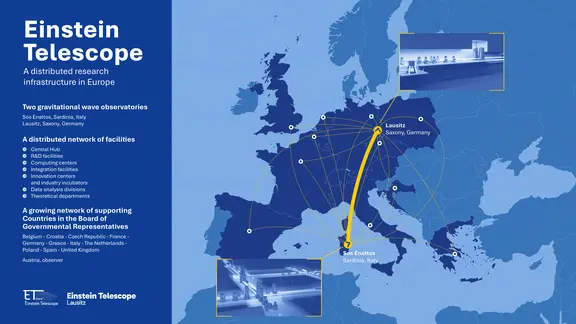
"A project of this complexity can only be achieved through European unity," he states. "Whether the telescope is built in the Netherlands or in Germany, we need the expertise of the entire European community—the Italian mirror technology, the Belgian vacuum research, the German geological analysis."
The Einstein Telescope is poised to be more than just an instrument for observing the heavens; it is a litmus test for the European Research Area. By linking the deep, quiet granodiorite of the Lausitz with the rugged terrain of Sardinia, the project aims to do more than just listen to the whispers of the early universe—it aims to demonstrate that, through shared scientific ambition, Europe can secure its place at the forefront of the global technological frontier.
For now, the drills in the Lausitz continue to sample the earth, and the researchers continue to refine their models. While the final decision rests in the hands of government representatives in 2027, the groundwork for a new era of European physics has already been laid. The Einstein Telescope is not just a quest for black holes; it is a quest for a shared future.