The Immediate Crisis: Madrid Region Under Siege
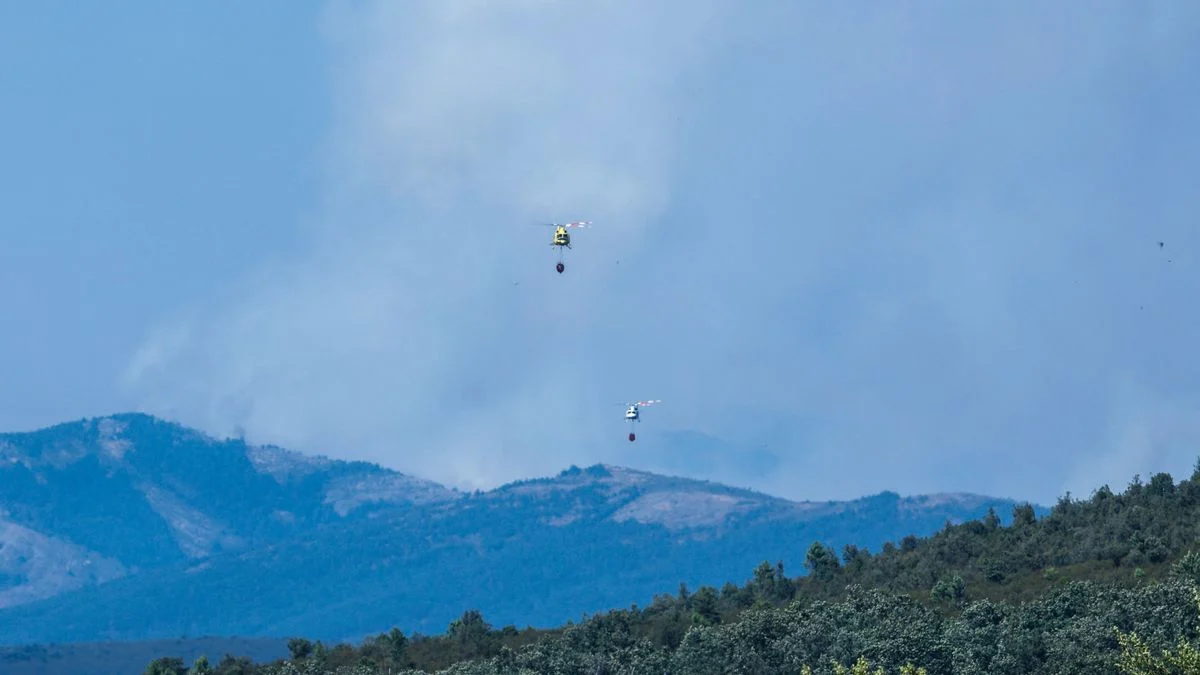
The serenity of the Spanish countryside in the southwest of Madrid was shattered this Wednesday as a ferocious wildfire tore through the landscape, forcing the emergency evacuation of multiple communities. As flames advanced, authorities scrambled to relocate residents from the towns of Encinar del Alberche, Ribera del Alberche, and Rincón del Alberche.
The situation in Villa del Prado, another locality directly in the path of the encroaching inferno, grew so critical that local officials issued a mandatory lockdown—an "exit ban"—via social media platform X (formerly Twitter). The move was designed to keep civilian traffic off the roads, allowing emergency vehicles and firefighting equipment unimpeded access to the front lines.
The fire, which ignited in the municipality of Almorox, is situated within the region of Castile-La Mancha, roughly 70 kilometers southwest of the capital. The blaze has effectively paralyzed regional logistics, with the Guardia Civil confirming the closure of several major traffic arteries. The thick, acrid smoke blanketing the area has reduced visibility to dangerous levels, prompting the Civil Protection agency to issue urgent warnings. Vulnerable individuals, particularly those with pre-existing respiratory conditions, were explicitly advised to remain indoors and keep their windows sealed throughout the night to avoid the toxic particulates carried on the wind.
Chronology of a Tense Summer
The disaster unfolding near Madrid is far from an isolated incident. It serves as the latest chapter in a summer defined by scorched earth and frantic evacuation efforts across Spain.
- The Build-up: Since the start of the year, Spain has been locked in a struggle against an unusually dry and hot climate, creating a tinderbox effect across the Mediterranean landscape.
- The Guadalajara Mega-Fire: The current crisis in the southwest is compounded by the ongoing catastrophe in the province of Guadalajara, located 100 kilometers north of Madrid. This blaze, which has been raging since last Thursday, has reached catastrophic proportions. By the most recent estimates, it has devastated 32,000 hectares of land, marking it as one of the most significant environmental disasters of the current season.
- Wednesday’s Escalation: The ignition at Almorox, coming on the heels of the Guadalajara fire, stretched regional emergency resources to their breaking point, necessitating the rapid deployment of air tankers and ground units.
- The Road Ahead: With a new heatwave settling over the Iberian Peninsula, meteorological services warn that the window of relief is closing, as temperatures are forecast to climb once more, potentially fueling new outbreaks.
Supporting Data: An Unprecedented Scale of Destruction
The sheer volume of land lost to fire in 2024 is staggering. According to the European Forest Fire Information System (EFFIS), a database that tracks real-time wildfire data across the continent, nearly 125,000 hectares of Spanish territory have been incinerated since January 1. This figure is not merely a statistic; it represents the loss of vital biodiversity, agricultural land, and carbon sinks.
The environmental impact is echoed by the human cost. The province of Almería in Andalusia recently witnessed one of the most tragic chapters in Spain’s modern history. A wildfire of unprecedented intensity claimed the lives of 13 people and reduced 7,000 hectares of land to ash. This tragedy remains a haunting backdrop to the current efforts, serving as a grim reminder of the lethal potential of these fires when fueled by extreme meteorological conditions.
Official Responses and Strategic Challenges
The Spanish government and regional authorities are currently balancing immediate crisis management with the long-term logistical nightmare of climate adaptation. The Civil Protection agency, alongside the Guardia Civil and local firefighting brigades, remains on "maximum alert."
The Challenges of Firefighting in Modern Spain
Firefighting in the 21st century has shifted from a seasonal task to a year-round battle. The primary challenges identified by experts include:

- Urban-Wildland Interface: As residential areas expand into forested regions, the difficulty of evacuating citizens while simultaneously protecting structures has increased exponentially.
- Atmospheric Instability: The current heatwave is characterized by low humidity and erratic winds, which can cause fires to "jump" natural barriers like rivers or roads, effectively rendering traditional firebreaks useless.
- Resource Exhaustion: With multiple fires burning simultaneously across different provinces, the coordination of air assets (Canadair planes and helicopters) is becoming a complex logistical chess match.
Official communication has focused on public safety. By utilizing social media and emergency broadcast systems, authorities have managed to prevent further loss of life during the recent evacuations, but the psychological and economic toll on the affected communities is profound.
The Broader Implications: A Climate in Crisis
The frequency and intensity of these wildfires are being analyzed through the lens of the global climate crisis. Spain, like much of Southern Europe, finds itself on the front lines of a changing climate that is characterized by rising average temperatures, reduced rainfall, and prolonged periods of drought.
The Feedback Loop
The relationship between the climate crisis and wildfires is a dangerous feedback loop. Forests, which act as carbon sinks, are destroyed by fires, releasing massive amounts of stored carbon back into the atmosphere, which in turn accelerates the warming process. This cycle creates conditions that are increasingly conducive to further forest fires, making the task of forest management and fire prevention more difficult than ever before.
Economic and Agricultural Impact
Beyond the immediate destruction, the fires represent a significant economic blow. Agriculture, particularly the olive and viticulture industries that are staples of the Spanish economy, faces a dual threat: the direct loss of crops to fire and the long-term degradation of soil quality and water availability. The loss of 125,000 hectares of land is a blow to regional economies that will take years, if not decades, to recover.
The Future of Forest Management
There is a growing consensus among environmental scientists and policymakers that traditional fire suppression techniques—simply reacting to fires—are no longer sufficient. Discussions are turning toward:
- Preventative Forest Management: Reducing the biomass density in forests through controlled thinning and managed grazing.
- Landscape Diversification: Moving away from monoculture plantations that are highly flammable toward more resilient, diverse forest ecosystems.
- Technological Integration: Utilizing AI-driven satellite monitoring to detect fire starts in their infancy, allowing for rapid-response intervention before a fire reaches a "mega-fire" threshold.
Conclusion: A Nation on Guard
As the sun sets on the charred remains of the southwest Madrid region, the residents of the affected municipalities face an uncertain wait. The immediate threat of the Almorox fire may be contained through the tireless efforts of the emergency services, but the broader threat remains.
Spain stands at a critical juncture. The events of this week are not an anomaly; they are a manifestation of a new environmental reality. As the nation grapples with the immediate aftermath of the evacuations and the ongoing battle against the flames in Guadalajara, the focus must inevitably shift toward a comprehensive strategy that addresses the systemic roots of these wildfires.
The resilience of the Spanish people is being tested by the elements. With the temperature rising and a new heatwave on the horizon, the vigilance of the authorities and the cooperation of the public remain the last line of defense against an increasingly volatile and unforgiving landscape. The path forward requires not only bravery on the front lines but also a fundamental shift in how the nation interacts with its land and prepares for a hotter, drier future.