A new study by the German Institute for Economic Research (DIW) has shed light on what researchers are calling an “AfD paradox.” While the party’s rhetoric thrives on voter dissatisfaction, the economic policies advocated by the Alternative for Germany (AfD) would, if implemented, disproportionately damage the very regions where the party currently enjoys its strongest support. Nowhere is this risk more acute than in Saxony-Anhalt, where the party is currently polling at roughly 40 percent ahead of upcoming elections.
Main Facts: The DIW Assessment
Marcel Fratzscher, President of the DIW, has conducted a comprehensive analysis examining how regional economies in Germany might react to a hypothetical AfD-led administration. The study, which has been provided to the press ahead of its formal release, paints a bleak picture of what happens when populist rhetoric meets the cold realities of globalized trade and economic interdependence.
The core of the study identifies a "sensitivity index" for various German districts. Fratzscher concludes that areas with high concentrations of AfD voters are generally more vulnerable to macroeconomic shocks due to a combination of smaller-scale local businesses, lower average skill levels, and a lack of economic diversification. When these factors are subjected to the radical policy shifts proposed by the AfD—specifically the isolationist, anti-European, and austerity-focused agenda—the results are catastrophic for local prosperity.
Chronology of Economic Policy Proposals
To understand the potential impact, one must look at the specific pillars of the AfD’s platform that the DIW modeled:
- Isolationism: A complete halt to or severe restriction of immigration.
- Fiscal Contraction: Drastic cuts to public spending and government investment.
- European Withdrawal: A potential exit from the European Union (a "Dexit").
The DIW modeled these changes against historical data and existing economic frameworks. The projection is stark: over a five-year period, Germany’s overall economic growth would contract by six percentage points. Inflation would climb by five percent, and unemployment would rise by two percentage points. While these figures are national averages, the burden would fall unevenly, with the most severe contractions occurring in the eastern federal states, particularly in Saxony-Anhalt.
Supporting Data: The Case of Saxony-Anhalt
Saxony-Anhalt serves as the primary case study for the DIW’s research. With a demographic profile characterized by an aging population and significant youth migration, the state relies heavily on economic stability and the integration of new talent to maintain its infrastructure and public services.
According to the study, the implementation of AfD policies would lead to:
- Income Loss: An average loss of €1,600 per capita for residents of Saxony-Anhalt.
- Labor Market Contraction: A potential loss of 10,000 jobs within the state.
- Demographic Collapse: A reduction in foreign migration by 45 to 65 percent. Given that Saxony-Anhalt already has one of the oldest average ages in the country, this reduction would exacerbate the existing shortage of skilled labor, effectively crippling the local healthcare sector and the traditional trades.
Fratzscher emphasizes that these numbers are not precise predictions but rather structural estimations of how an economy reacts to the removal of vital growth drivers. The danger of a "downward spiral" is significant, as the loss of income leads to lower consumption, which in turn leads to further business closures and reduced tax revenue for the state.

Official Responses and Industry Criticism
The findings of the DIW have been met with strong condemnation from Germany’s industrial and business sectors. Tanja Gönner, Chief Executive Officer of the Federation of German Industries (BDI), offered a scathing critique of the AfD’s economic competence.
"The AfD is not an economic party," Gönner stated in comments to the German Press Agency (dpa). "Everything I have read from them so far does not contribute to economic growth or investment. On the contrary, it creates new uncertainties for investment."
Gönner specifically highlighted the AfD’s proposal to abolish mandatory schooling in Saxony-Anhalt. Such a policy, she argued, would destroy the foundations of a competitive workforce, undermining educational standards and limiting opportunities for the next generation. Furthermore, the party’s stance on energy—a nostalgic return to outdated systems—is described by Gönner not as a path to lower prices, but as a recipe for planning uncertainty that risks the entire industrial value chain.
Rainer Dulger, President of the Confederation of German Employers’ Associations (BDA), echoed these sentiments. He explicitly ruled out engaging in dialogue with the AfD, stating that the party offers no viable solutions to the complex problems facing the German economy. "I prefer to deal with the parties of the center," Dulger said, noting that his efforts are currently focused on helping those parties improve their own problem-solving approaches to regain broader public support.

Implications: The Psychological and Political Disconnect
The most complex aspect of this situation remains the "AfD paradox": Why do voters in regions most vulnerable to economic decline continue to support a party whose platform threatens their livelihoods?
Fratzscher’s study suggests that the answer lies in the nature of voter frustration. In regions with high unemployment or perceived lack of opportunity, voters are not necessarily weighing the technical economic merits of party platforms. Instead, they are responding to a sense of alienation. For these voters, the AfD acts as a vehicle for protest. The study finds that the more dissatisfied people are, the more they support the AfD, regardless of the economic consequences.
However, the DIW report offers a potential pathway out of this cycle. Fratzscher argues that focusing solely on migration or abstract economic figures is unlikely to win back these voters. Instead, the focus must shift to structural changes that improve the lives of citizens in the long term.
"If we succeed in creating new opportunities for the future, we can turn the downward spiral into an upward one," says Fratzscher. He remains convinced that the support for the AfD is not set in stone. The party’s base is not an immovable block; rather, it is a volatile group that reacts to the success—or failure—of the political mainstream.

The Future of Regional Stability
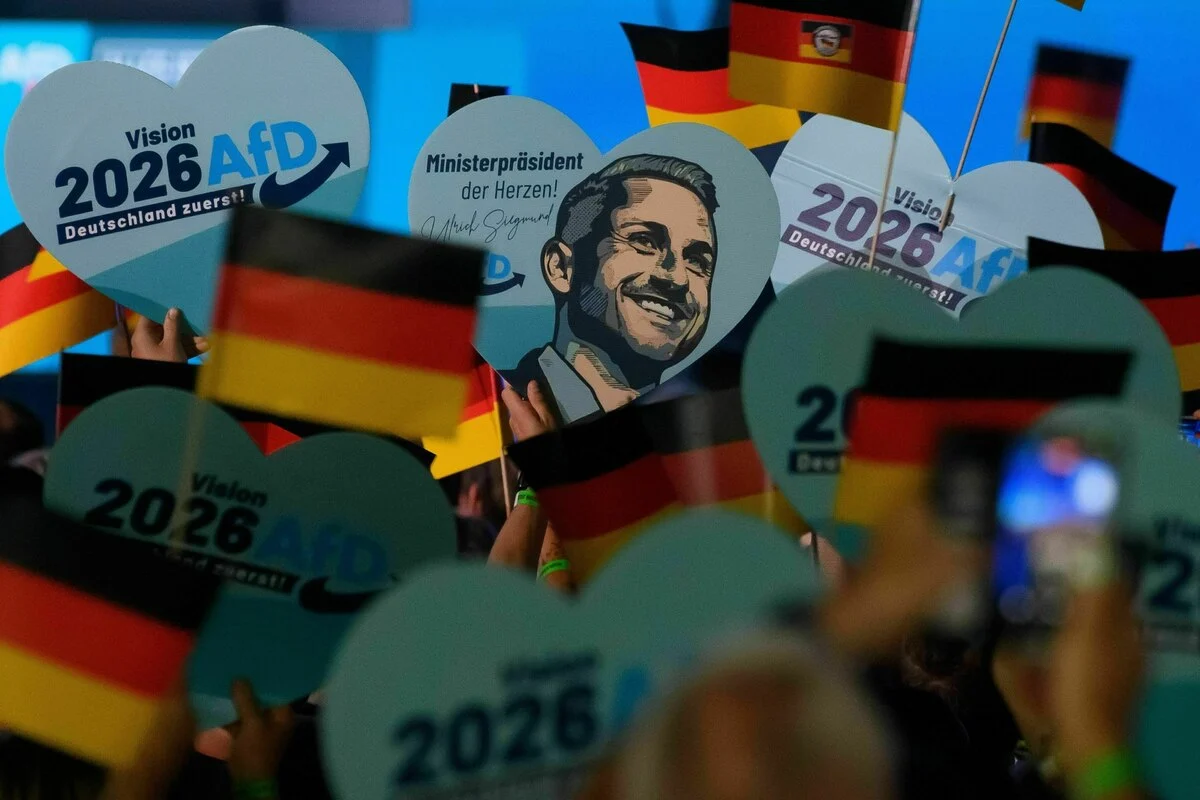
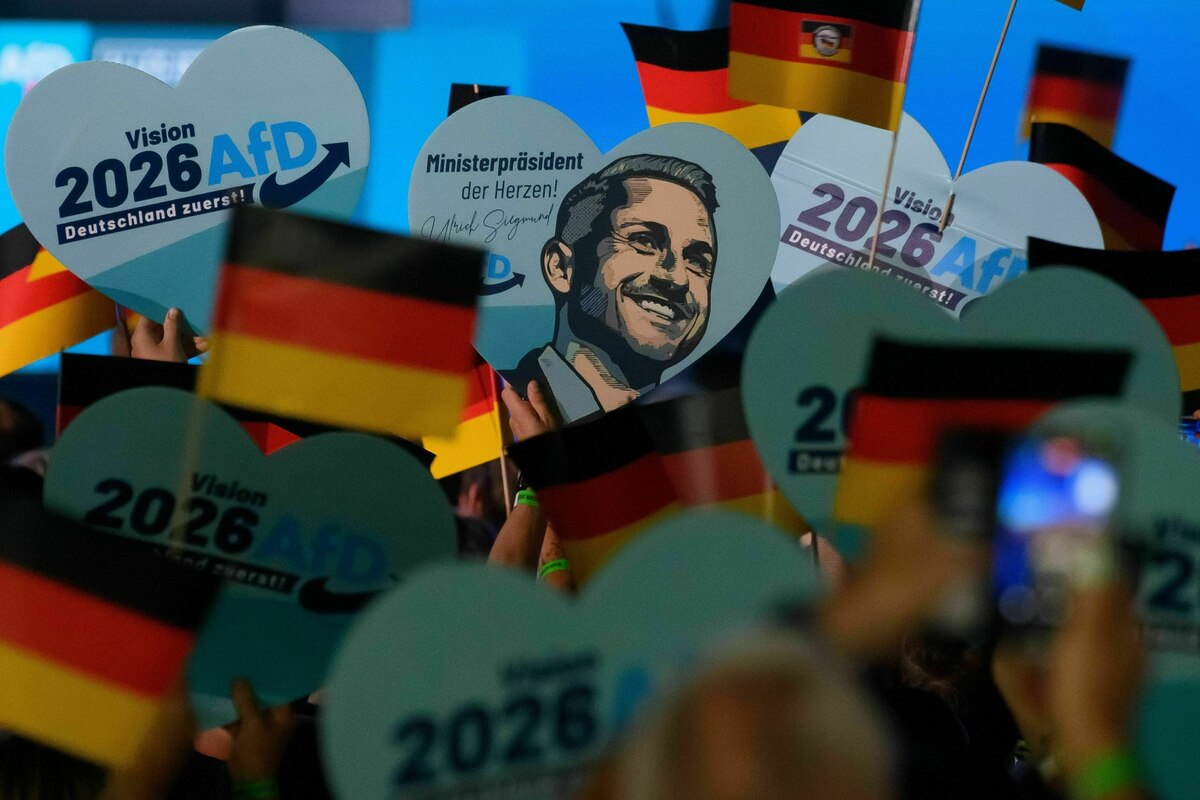
As Saxony-Anhalt approaches its upcoming elections, the discourse has become increasingly polarized. The AfD, led by figures like Ulrich Siegmund, continues to push for a vision of a "sovereign" state that rejects global integration. Yet, the economic reality is that such isolation is incompatible with the survival of the modern, industrial economy.
The study serves as a warning for the electorate: political choices have tangible economic costs. If the goal is to revitalize regions struggling with demographic change and economic pressure, the path proposed by the AfD may lead to the exact opposite of the prosperity they promise.
Ultimately, the findings suggest that the challenge for the center-ground parties is not just to defeat the AfD in the polls, but to prove that the "upward spiral" of modernization and integration is still a viable reality for every citizen, even in the most neglected corners of the republic. Without a compelling alternative that addresses the root causes of the current frustration, the threat of economic regression—and the political volatility that follows it—will continue to loom over Germany’s political landscape.
In conclusion, the DIW study acts as a vital bridge between economic theory and political reality. It strips away the populist rhetoric to reveal the potential human cost of radical policy shifts. Whether or not this information reaches the voters who need it most remains the central question of the coming electoral cycle. The data is clear: the path forward requires structural investment and integration, not the isolationist retreat that the AfD advocates. The question is whether the political will exists to deliver that promise before the regional decline becomes irreversible.