By Sports Desk
Updated: July 21, 2026 – 18:21 CET
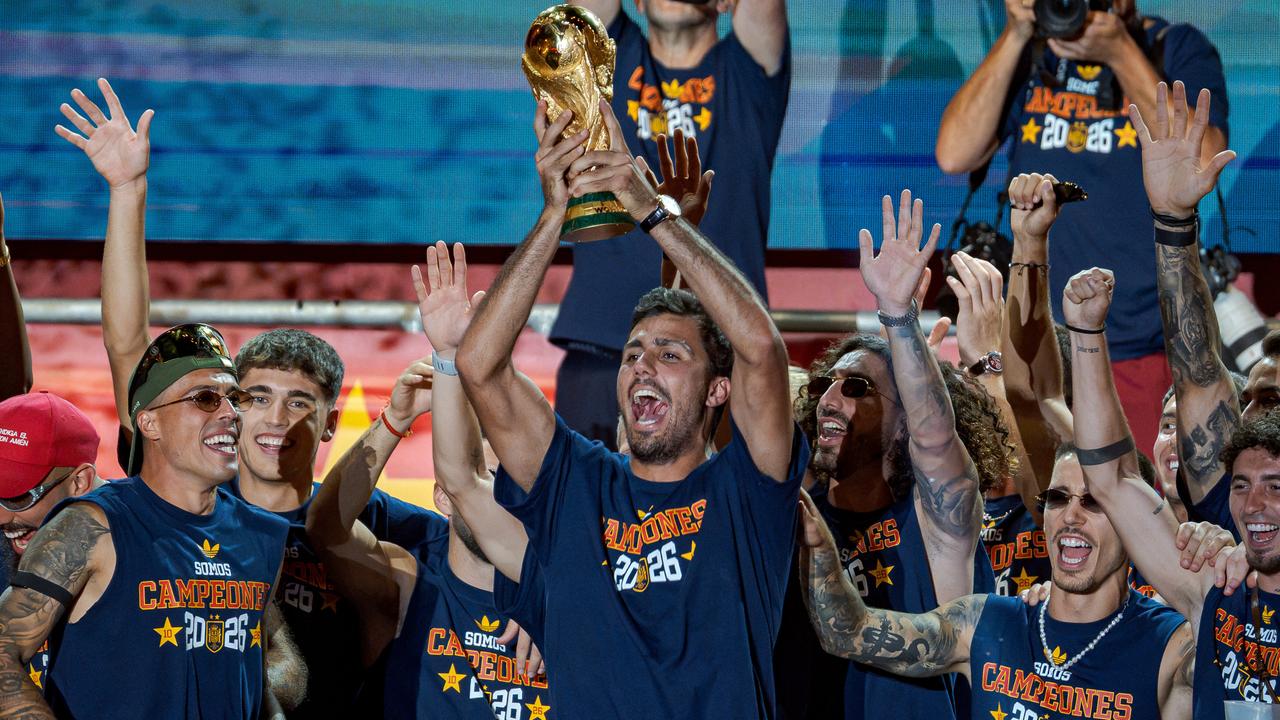
The streets of Madrid have transformed into a sea of red and yellow. One day after securing a dramatic 1-0 victory over Argentina in the 2026 FIFA World Cup final in New Jersey, the Spanish national team returned home to a reception of near-mythical proportions. More than one million fans flooded the streets of the Spanish capital, lining the route of a triumphant victory parade that culminated in a massive celebration at the iconic Cibeles Square.
Captain Rodri, the tournament’s standout performer, stood atop the team bus, soaking in the adulation of a nation that has now cemented its status as the preeminent power in world football. For Spain, this title is more than just a trophy; it is the culmination of a decade of dominance across both men’s and women’s football.
The Path to Glory: A Tournament of Resilience
The 2026 World Cup final was a grueling affair, defined by tactical discipline and a singular moment of brilliance. Ferran Torres’ extra-time strike was the difference-maker, breaking the deadlock against a formidable Argentine side led by Lionel Messi. For Messi, the defeat was a bitter pill to swallow. The 39-year-old superstar, who was appearing in his third World Cup final, shared his heartbreak with fans on social media, describing the pain as "immeasurable" and noting that the wound would require time to heal.
The road to the trophy was not without controversy. The final moments of the match were marred by physical altercations between Spanish and Argentine players, prompting FIFA’s disciplinary committee to launch an investigation into potential breaches of the FIFA Disciplinary Code. Reports suggest that Leandro Paredes, who was sent off, and several other members of the Argentine contingent may face further sanctions.
Global Implications: The 64-Team Proposal
While Spain revels in its glory, the football world is already looking ahead. CONMEBOL President Alejandro Dominguez has reignited the debate surrounding the format of the 2030 World Cup, calling for an expansion to 64 teams.
"The 2030 World Cup is a great opportunity for football to celebrate the centennial of the tournament with a 64-team competition," Dominguez stated via social media. With Spain, Portugal, and Morocco already confirmed as joint hosts for 2030—and with Uruguay, Argentina, and Paraguay slated to host individual matches—the logistics of such a massive expansion are currently under intense scrutiny. FIFA President Gianni Infantino has signaled an openness to the idea, suggesting that the success of the 48-team format in 2026 provides a blueprint for further growth.
Chronology of the 2026 World Cup Final Phase
July 19: The Final Showdown
- 19:54 CET: The starting lineups are confirmed. The air in New York/New Jersey is thick with anticipation.
- 20:58 CET: National anthems echo through the stadium. The star-studded VIP list includes Tom Cruise, Madonna, and Drake, reflecting the massive cultural footprint of the 2026 tournament.
- 21:03 CET: US President Donald Trump is spotted behind glass in the VIP box, his presence marked by a chorus of jeers from sections of the crowd.
- 23:20 CET: The match enters extra time. The tension reaches a boiling point when Enzo Fernández is sent off for a second yellow card, leaving Argentina to battle with ten men.
July 20: The Aftermath and the Return
- 14:33 CET: The Spanish team lands in Madrid-Barajas, delayed by over 90 minutes. Fans have been waiting since dawn.
- 16:30 CET: King Felipe VI hosts the team at the Palacio Real. "You are tired, but it is a wonderful tiredness," the King tells the squad, praising them for a "legendary" performance.
- 18:00 CET: Prime Minister Pedro Sánchez welcomes the players, marking the final formal obligation before the public party begins.
- 21:00 CET: The victory bus reaches Cibeles Square, where a crowd of one million erupts in celebration.
Official Responses and Behind-the-Scenes Friction
The tournament was not without internal political strife. UEFA President Aleksander Ceferin notably boycotted the final, a move interpreted by many as a protest against FIFA’s recent decisions. Tensions peaked regarding the case of US striker Folarin Balogun, whose red card was rescinded following an alleged intervention from the White House, a move that drew sharp criticism from European football officials.
Furthermore, the diplomatic landscape influenced the tournament, with the US government denying entry to Somali referee Omar Artan just days before the event. UEFA responded by nominating Artan for the upcoming Supercup final in Salzburg, a clear statement of defiance against the host nation’s visa policies.
Individual Brilliance and Records Broken
Beyond the collective achievement, individual milestones were reached in North America.
- Rodri (Spain): Awarded "Player of the Tournament," continuing his streak of dominance following his similar accolade at Euro 2024.
- Lamine Yamal (Spain): At 19 years and six days, Yamal became the youngest player in history to win both a European Championship and a World Cup. His rise to stardom mirrors the trajectory of legends like Pelé and Ronaldo.
- Emiliano Martínez (Argentina): Despite a broken finger sustained in May, the Argentine keeper played through immense pain, serving as a testament to the grit shown by the tournament’s participants.
The "Gold Standard" of Football
The Spanish victory confirms a period of absolute dominance for the nation. Since 2022, Spanish teams—men and women, across all age groups—have claimed 17 major titles. This success has led to a shift in the FIFA World Rankings, with Spain officially reclaiming the number one spot, displacing Argentina.
The contrast with the English national team is stark. Despite a high-scoring 6-4 victory over France in the "Bronze Final," England’s manager Thomas Tuchel faced heavy criticism from fans and pundits alike. Even US President Donald Trump weighed in on the tactical choices made by Tuchel, questioning the decision to pull the team into a defensive shell during the semifinal against Argentina. Despite this, the English FA has indicated that Tuchel will remain in charge, citing his tactical experience and the positive atmosphere he has fostered within the squad.
Implications for the Future
The 2026 World Cup will be remembered for its logistical scale, the star-studded nature of its entertainment, and the record-breaking financial distribution. With $871 million in prize money distributed among 48 associations, the tournament has set a new financial benchmark for the sport.
As the dust settles in Madrid and the world turns its eyes toward 2030, the legacy of this tournament is clear: football remains the ultimate global unifier. Whether it is through the tactical genius of a coach like Luis de la Fuente or the sheer, raw passion of a crowd of one million in Madrid, the game continues to write its own history.
For now, the "Kings of the World"—as the Spanish fans have christened their team—will continue to celebrate. As Rodri aptly stated during the final festivities at Cibeles: "To experience this today is the greatest thing one can achieve in football."
The world of football now shifts its focus to the qualifying cycles for 2030, where the prospect of 64 teams, a cross-continental hosting structure, and the continued evolution of the game promises to make the next four years as unpredictable and exhilarating as the ones that led to this historic night in Madrid.