The generative artificial intelligence landscape, once dominated by the singular, towering presence of OpenAI’s ChatGPT, has transformed into a sophisticated, highly competitive market. As users move beyond the "novelty" phase of AI and into the "productivity" phase, a growing contingent of power users, developers, and corporate entities are asking a pivotal question: Is it time to leave OpenAI behind in favor of Anthropic’s Claude?
This shift is not merely a preference for one interface over another; it represents a fundamental divergence in philosophy, technical architecture, and safety protocols. While ChatGPT remains the household name, Claude is increasingly being heralded as the "thinking person’s AI."
The Main Facts: A Tale of Two Models
At the heart of the current debate are two of the most capable Large Language Models (LLMs) on the planet: OpenAI’s GPT-4o and Anthropic’s Claude 3.5 Sonnet.
OpenAI, bolstered by a massive multi-billion-dollar partnership with Microsoft, continues to push the boundaries of multimodal capabilities. GPT-4o is a powerhouse designed for speed, native voice integration, and seamless interaction across text, audio, and images. It is the Swiss Army knife of the AI world—versatile, fast, and constantly evolving.
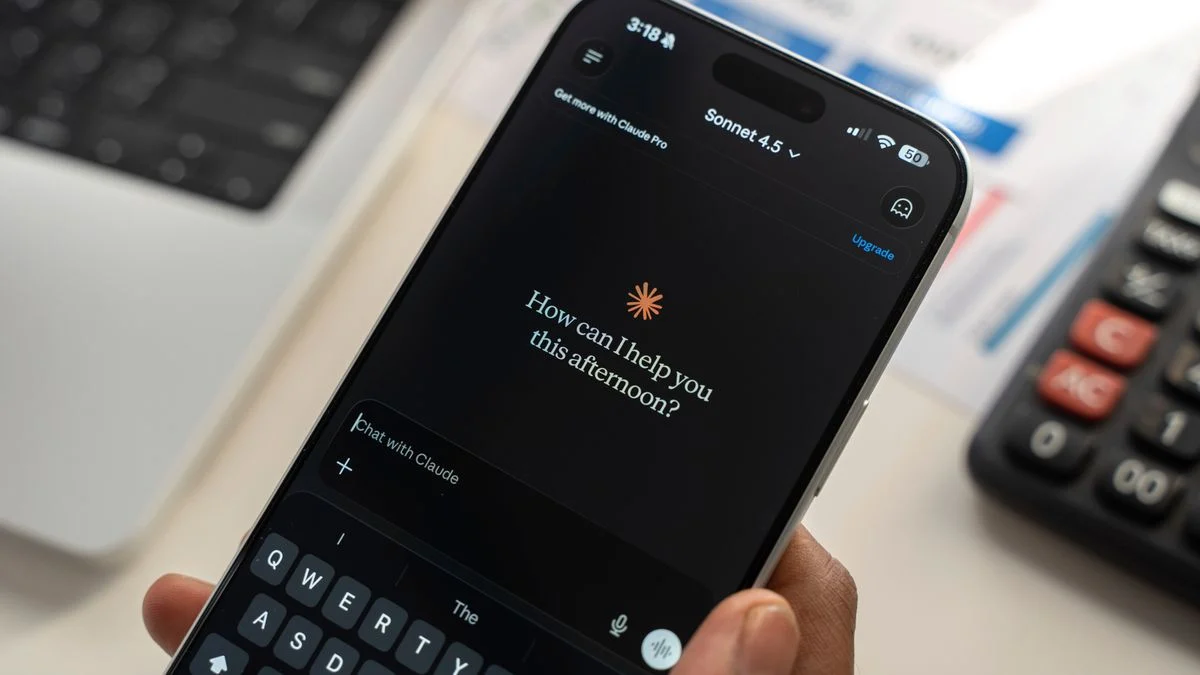
Anthropic, founded by former OpenAI employees with a heavy focus on "Constitutional AI," has taken a different route. Their Claude 3.5 Sonnet model has recently captured the tech community’s attention for its superior nuance in coding tasks, its more "human-like" writing style, and a massive "context window" that allows users to upload entire books or complex legal documents for analysis without the AI losing the thread of the conversation.
Chronology: How We Got Here
The rivalry between OpenAI and Anthropic is a narrative of ideological fission.
- 2015–2020: OpenAI begins as a non-profit research lab, eventually pivoting to a "capped-profit" model. The company shocks the world with the release of ChatGPT in late 2022, effectively kicking off the modern AI gold rush.
- 2021: Anthropic is founded by Daniela and Dario Amodei, explicitly to focus on AI safety and the development of "helpful, honest, and harmless" systems.
- 2023: OpenAI releases GPT-4, establishing the benchmark for reasoning capabilities. Anthropic struggles to keep pace, eventually releasing the Claude 2 series.
- Mid-2024: The tide begins to turn. With the release of Claude 3.5 Sonnet, benchmarks across coding, logic, and creative writing show Anthropic pulling level with, or even exceeding, OpenAI’s flagship models.
- Late 2024: The market splits. Enterprise users are increasingly weighing the "OpenAI ecosystem" (integration with Microsoft Office, robust API, massive community) against the "Anthropic experience" (nuanced reasoning, superior document handling, and perceived safer training data).
Supporting Data: By the Numbers
To understand the migration, one must look at the technical differentiators that define user experience.
The Context Window
Claude 3.5 offers a context window of 200,000 tokens. This is significantly larger than the standard interactions on many competing platforms, allowing for the analysis of roughly 150,000 words in a single prompt. For legal professionals and researchers, this is a game-changer. While OpenAI has expanded its limits, the "recall" accuracy—the AI’s ability to find a needle in that massive haystack—remains an area where Claude consistently wins in independent blind tests.
Reasoning and Coding
In recent "HumanEval" and "SWE-bench" tests—the industry standards for evaluating AI coding proficiency—Claude 3.5 Sonnet has consistently outscored GPT-4o. Developers report that Claude requires fewer "follow-up prompts" to reach a functional code block, saving both time and API costs.
The Human Touch
In subjective "blind taste tests" conducted by platforms like the LMSYS Chatbot Arena, users frequently rate Claude’s output as more natural. ChatGPT’s responses, while technically accurate, are often criticized for a distinct "AI-sounding" tone—characterized by excessive bullet points, moralizing disclaimers, and a sterile, corporate prose style. Claude, by contrast, is often described as having a more "literary" and "thoughtful" voice.
Official Responses and Strategic Positioning
Both companies have adopted distinct public relations strategies regarding their market positions.
OpenAI’s Stance:
OpenAI maintains that its product is the most "integrated." In recent communications, Sam Altman and other leadership figures have emphasized the "platform" aspect. They aren’t just selling a chatbot; they are selling an ecosystem—Custom GPTs, DALL-E image generation, advanced data analysis, and a developer suite that integrates with virtually every major SaaS tool on the market. Their message: "Why leave the most robust platform in the world?"
Anthropic’s Stance:
Anthropic leans into the "Trust" narrative. Their marketing emphasizes the "Constitutional AI" approach, where the model is trained against a set of principles rather than just human reinforcement learning (RLHF). This, they argue, makes the model less prone to the "hallucinations" and behavioral drift that often plague high-performing models. They position themselves as the "adult in the room"—the choice for enterprises that are risk-averse and demand high-fidelity, nuanced reasoning.
Implications: The Future of the AI Workforce
What does this migration mean for the average professional?
1. The Rise of "Multi-Model" Workflows
The most important implication is that the "monogamous" relationship with one AI provider is ending. Professional users are increasingly adopting a "best-of-breed" approach. Many now use ChatGPT for quick, daily tasks and voice-based brainstorming, while switching to Claude for deep-work coding, document analysis, and long-form content synthesis.
2. The Commoditization of Intelligence
As Claude and OpenAI continue to leapfrog one another, the underlying "intelligence" of these models is becoming a commodity. The real value is shifting to the interface and the integration. Whoever makes the tool that fits most seamlessly into the user’s existing digital life—whether it’s in VS Code, Microsoft Word, or Slack—will win the long-term loyalty of the enterprise.
3. The Safety Dilemma
The switch to Anthropic is often driven by a concern for data integrity. As corporations become more nervous about AI models potentially "learning" from proprietary data, Anthropic’s perceived focus on safety and data privacy is a major selling point. If OpenAI is seen as the "move fast and break things" company, Anthropic is successfully branding itself as the "move carefully and build things that last" company.
Conclusion: Making the Decision
Deciding between Claude and ChatGPT is no longer about which is "better" in a vacuum; it is about which is better for your specific workflow.
If you are a heavy user of the OpenAI ecosystem—if you rely on DALL-E, custom GPT assistants, and advanced web browsing—the cost of switching may outweigh the marginal gains in reasoning.
However, if your work involves heavy coding, the synthesis of massive documentation, or the need for a more natural, less robotic writing style, the migration to Anthropic’s Claude is not just a trend—it is a functional upgrade. The landscape is currently defined by this healthy tension, and for the end-user, the competition between these two giants has never been more beneficial. As the gap between these models narrows, the user wins: the tools are becoming more accurate, more nuanced, and significantly more capable of acting as a true cognitive partner in the modern workplace.