The world’s eyes were fixed on the pinnacle of football, but the aftermath of the World Cup final between Spain and Argentina has been marred by controversy. As the dust settles on Spain’s 1-0 victory, FIFA has officially launched a disciplinary investigation into the chaotic scenes that erupted on the pitch following the final whistle.
The Incident: A Breakdown of Professional Conduct
What should have been a moment of celebration for the newly crowned champions and a display of grace in defeat for the runners-up quickly descended into a series of ugly confrontations. The focal point of the controversy is Argentine midfielder Leandro Paredes, whose actions immediately following the conclusion of extra time have drawn widespread condemnation from fans, pundits, and international football governing bodies.
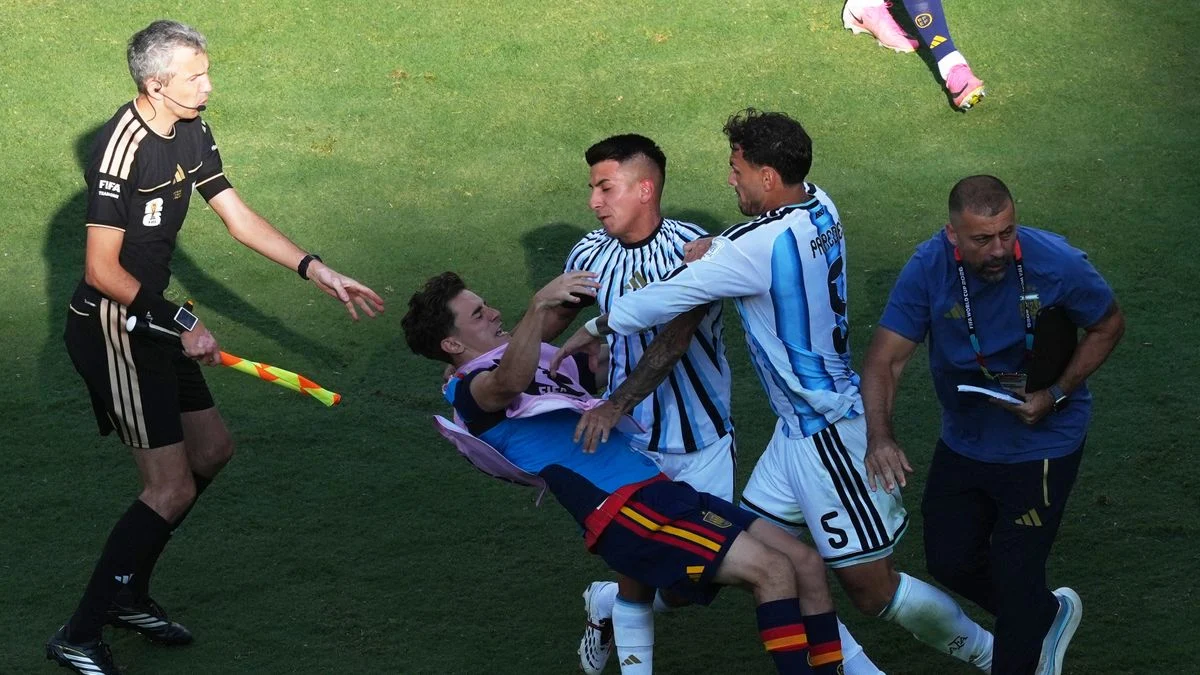
Witnesses and video footage confirm that as the match reached its conclusion, emotions spilled over in an uncharacteristic display of aggression. Paredes was captured on camera approaching Spain’s Eric García. The interaction escalated rapidly when Paredes allegedly gripped García by the neck before pushing him. The situation worsened when Spain’s Gavi entered the fray; Paredes grabbed the young Spaniard’s jersey, struck him in the face with his hand, and forced him to the ground. Even as Gavi attempted to regain his footing, he was subjected to a secondary shove by the Argentine player.

Chronology of the Confrontation
To understand the scale of the investigation, one must look at the timeline of the final minutes of the match:
- The Final Minutes: Throughout the match, Argentina employed a highly physical, often described as "destructive," style of play. This culminated in the dismissal of Enzo Fernández during stoppage time of the regulation 90 minutes after a reckless tackle, leaving Argentina at a numerical disadvantage.
- The Final Whistle: Immediately upon the conclusion of extra time, the frustration of the Argentine squad manifested in physical altercations rather than professional disappointment.
- The Paredes Outburst: Within seconds of the whistle, Paredes targeted García and Gavi. The images of the assault dominated news cycles globally, turning the post-match narrative away from Spain’s tactical masterclass and toward the breakdown of discipline.
- The Coaching Staff’s Involvement: The violence was not limited to the players. Video evidence analyzed by officials shows Argentina’s co-trainer, Roberto Ayala, striking Spanish midfielder Dani Olmo during the on-field scuffle.
- The Disciplinary Aftermath: While initial reports suggested that Paredes had been issued a red card for his actions, the official FIFA match report notably omits this detail. This discrepancy has fueled further debate regarding the officiating protocols followed during the match’s chaotic conclusion.
Supporting Data: A Statistical and Tactical Analysis
The post-match fallout was not entirely unexpected by those who analyzed the flow of the game. Statistics from the final highlight a stark contrast between the two finalists. Spain, widely recognized as the superior side, maintained tactical discipline and technical dominance. In contrast, the Argentine side, led by Lionel Messi, struggled to impose their will on the game.
Critically, the Argentine squad failed to record a single shot on target until the final minutes of the match. This lack of offensive production forced the team into a defensive, high-aggression shell. The reliance on physicality to stifle the Spanish midfield served as a tactical pivot that ultimately backfired, resulting in the aforementioned red card for Enzo Fernández and a litany of yellow cards throughout the evening.

Experts have pointed out that the frustration stemming from this impotence—being unable to break down the Spanish defense while simultaneously losing the battle for control—likely served as the psychological catalyst for the post-match violence.
Official Responses and FIFA’s Stance
FIFA’s Disciplinary Committee has confirmed that they have initiated a formal inquiry into the events. In a statement released to major news outlets, including the Associated Press and Sky, the governing body noted that they are reviewing evidence of "possible misconduct."
Crucially, FIFA has maintained a degree of ambiguity in its public communications. In their official statement, they did not name Paredes specifically, nor did they clarify why the red card—reportedly shown to him on the pitch—is absent from the official records. A spokesperson for the BBC reported that FIFA indicated there were no immediate disciplinary sanctions taken against Paredes in the exact moment of the scuffle, a stance that has left many questioning the transparency of the refereeing team on the ground.

Beyond Paredes, the investigation is expected to widen. The role of staff members, including Roberto Ayala, is under scrutiny. The involvement of non-playing personnel in physical confrontations is a severe breach of FIFA’s disciplinary code, and the video evidence of the altercation with Dani Olmo will likely form a cornerstone of the prosecution’s case.
Implications for the Sport
The incident in the World Cup final serves as a grim reminder of the fine line between competitive intensity and professional negligence. Several key themes have emerged regarding the long-term implications of this event:
1. Reputation and the "Argentina Style"
Argentina’s performance in this final has been widely criticized as "anti-football." By prioritizing physical intimidation over technical skill, the squad has faced a public relations backlash. The legacy of a team is often defined by its final appearance, and for the current Argentine generation, this match may be remembered more for its lack of discipline than for the individual brilliance of its stars like Lionel Messi.

2. The Integrity of Officiating
The confusion surrounding whether or not Paredes was sent off highlights a broader concern regarding the consistency of VAR and on-field refereeing. If a player engages in a physical altercation on camera and the official record fails to reflect a card, it undermines the authority of the governing body. FIFA will likely face pressure to explain these discrepancies to maintain public trust in the officiating process.
3. Future Disciplinary Precedents
If the investigation results in heavy sanctions—such as long-term international bans for the players and staff involved—it will set a significant precedent. FIFA is currently attempting to modernize the game and reduce the frequency of on-field violence. A "soft" response to this high-profile incident could be interpreted as a failure to uphold the values of the sport. Conversely, a harsh punishment could serve as a deterrent for future tournaments.
Conclusion
As the investigation progresses, the footballing world waits to see how the authorities will balance the emotional intensity of a World Cup final with the necessity of maintaining order. The actions of Leandro Paredes, his teammates, and his coaching staff have cast a long shadow over a tournament that was meant to showcase the highest level of human achievement.

For now, the focus remains on the evidence gathering. Whether this culminates in fines, match bans, or a complete overhaul of how post-match incidents are handled, one thing remains clear: the events that took place after the final whistle have become just as defining as the game itself. The final match of the tournament was a victory for Spain, but it was a sobering day for the integrity of the game.