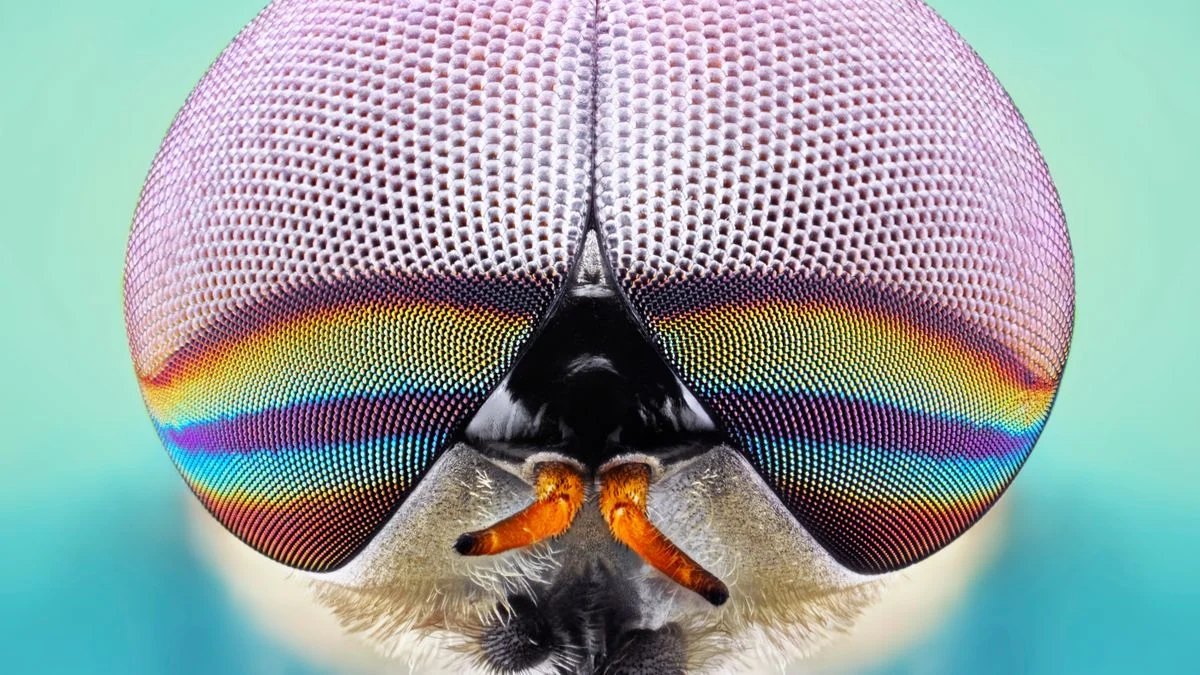
As the summer sun reaches its peak, outdoor enthusiasts, farmers, and hikers face an adversary that is as persistent as it is painful: the horsefly (Tabanidae). Unlike the common housefly or the buzzing mosquito, the horsefly attack is a surgical, aggressive strike designed to harvest blood with mechanical efficiency. This article examines the biological mechanisms that make their bites notoriously painful, the evolutionary pressures that drive their behavior, and the most effective strategies for human protection.
The Anatomy of a Bite: Why It Hurts
The pain associated with a horsefly bite is not a result of a sophisticated anesthetic delivery system, as seen in mosquitoes. Instead, it is the product of brutal, raw mechanics.
The Serrated Mandibles
To understand the agony of a horsefly bite, one must look at the insect’s mouthparts. Unlike mosquitoes, which possess a slender, needle-like proboscis designed to pierce skin silently and reach capillary beds, the female horsefly—the only gender that feeds on blood—is equipped with scissor-like mandibles.
When a horsefly lands, it does not "sting"; it performs a small, localized dissection. The mandibles are serrated, designed to slice through the tough hide of cattle, horses, and human skin alike. This laceration creates a small pool of blood, which the fly then laps up with a sponge-like labellum. Because the skin is physically severed rather than punctured, the pain receptors (nociceptors) are triggered instantly and violently.
The Anti-Coagulant Reaction
Once the skin is breached, the horsefly introduces a cocktail of saliva into the wound. This saliva contains anticoagulants that prevent the blood from clotting, ensuring a steady flow for the fly. However, this substance also acts as a potent irritant to the human immune system. The localized inflammatory response, which results in the characteristic swelling, redness, and intense itching, is the body’s way of overreacting to these foreign proteins.
Chronology of an Infestation: Seasonal Cycles
The presence of horseflies is not constant; it follows a predictable biological rhythm dictated by temperature and humidity.
- Late Spring (Emergence): As soil temperatures rise, larvae that have overwintered in moist environments (near ponds, marshes, or damp soil) pupate. The first adults begin to emerge in late May or early June, typically seeking nectar for energy before mating.
- Mid-Summer (Peak Activity): From July through August, the cycle hits its zenith. Female horseflies require a high-protein blood meal to develop their eggs. During this period, their visual sensors—highly tuned to movement and dark shapes—are in overdrive.
- Late Summer (Decline): As the days shorten and temperatures dip, the lifecycle concludes. Most adult horseflies perish by early autumn, though their eggs remain dormant in the environment to begin the cycle again the following year.
Supporting Data: The Science of Attraction
Why do horseflies seem to choose specific victims? Researchers have spent decades analyzing the sensory inputs that guide these insects.
Visual Cues: The Polarized Light Theory
Recent studies have confirmed that horseflies are particularly attracted to polarized light. Because they often lay their eggs near water, they have evolved to detect the reflection of light off water surfaces. Unfortunately, dark-colored clothing and vehicle bodies often mimic these polarization patterns, leading horseflies to strike objects they mistake for water or potential hosts.
The Role of Carbon Dioxide and Heat
Like many blood-feeding insects, horseflies track the carbon dioxide (CO2) plumes exhaled by mammals. Furthermore, they are thermotactic—they move toward heat. A person who has been exercising or is standing in the direct sun emits a signature of heat and CO2 that acts as a beacon for hungry horseflies.
Official Responses and Public Health Implications
Health authorities generally categorize horsefly bites as a nuisance rather than a significant disease vector in Western climates. However, the implications of these bites can be severe for those with hypersensitivity.
Managing the Bite
Public health guidance focuses on wound care to prevent secondary infections. Because the wound is a laceration (an open cut), it is susceptible to bacteria.
- Cleaning: The area should be washed immediately with soap and water.
- Antihistamines: Oral antihistamines or topical hydrocortisone creams are recommended to manage the histamine response.
- Medical Intervention: If a bite exhibits signs of cellulitis—such as spreading redness, pus, or a systemic fever—medical professionals advise seeking an antibiotic prescription to prevent the spread of infection.
Environmental Control
Large-scale eradication is neither feasible nor desirable, as horseflies play a role in the ecosystem as pollinators and food sources for birds and amphibians. However, in livestock settings, integrated pest management (IPM) is the standard. This involves:
- Trapping: Using "sticky traps" or specialized black-ball traps that mimic the movement and heat of a large animal.
- Habitat Management: Draining small, unnecessary standing water sources can reduce the immediate local population.
Implications: Living with the Pest
The persistence of the horsefly highlights a gap in modern pest control. While we have developed highly effective repellents for mosquitoes (such as DEET and Picaridin), these chemical barriers are often less effective against horseflies. Because horseflies rely so heavily on visual cues rather than just scent, a chemical layer on the skin does not always deter them once they have visually locked onto a target.
Strategies for Protection
For those living or working in high-density areas, the following strategies remain the most effective:
- Clothing Choices: Opt for light-colored, long-sleeved clothing. White and beige reflect light and are significantly less attractive to horseflies than black, blue, or dark red fabrics.
- Physical Barriers: Fine-mesh netting and wide-brimmed hats with face veils are the only 100% effective physical deterrents.
- Strategic Timing: Horsefly activity is lowest during the early morning and late evening, peaking in the high heat of midday. Adjusting outdoor activity schedules can drastically reduce the number of encounters.
The Future of Deterrence
Research is currently shifting toward "optical camouflage" and non-toxic lures. By understanding the specific light wavelengths that repel these insects, scientists hope to develop clothing fabrics that make humans "invisible" to the horsefly’s visual system. Until such technology hits the mainstream, the best defense remains a combination of physical coverage, environmental awareness, and the acceptance that in the theater of summer, we are merely part of the food chain.
As the season progresses, the best advice for those venturing into marshlands or near livestock remains vigilance. While a horsefly bite is a painful, often startling experience, understanding the "why" and "how" of the encounter strips the insect of its psychological power. It is not an act of malice, but a biological imperative—a reminder of the raw, often uncomfortable reality of the natural world.