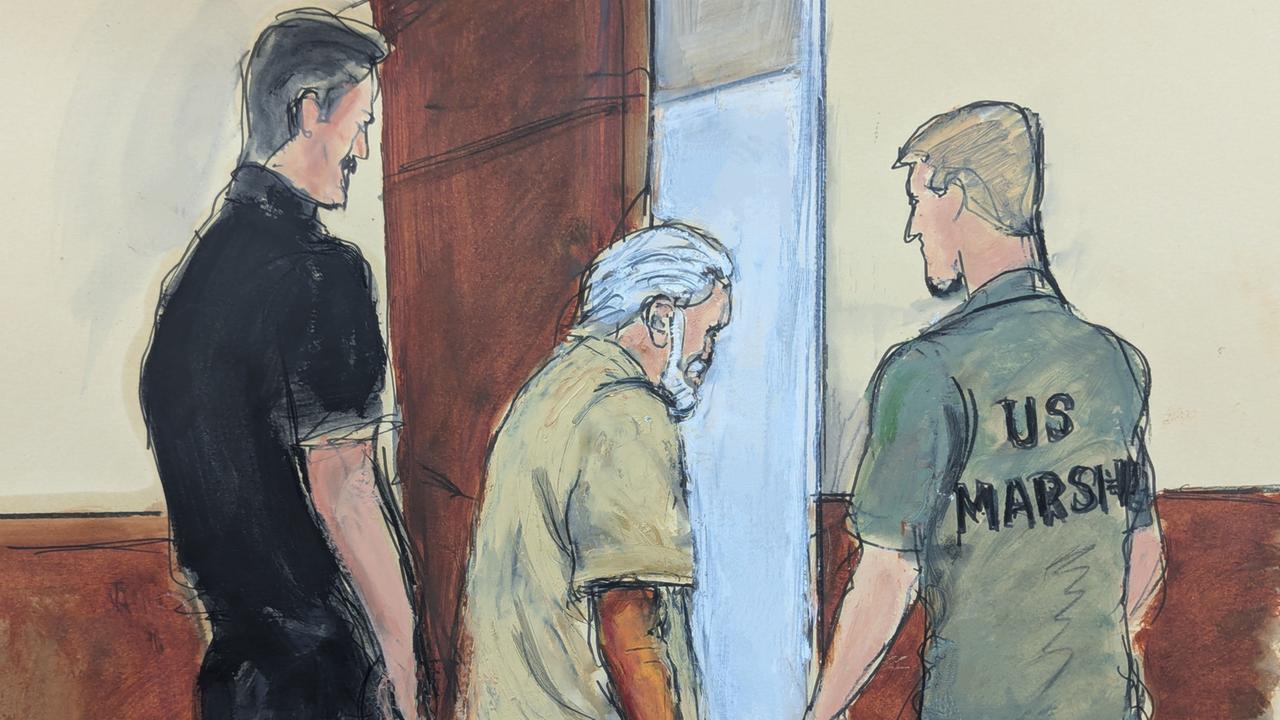
NEW YORK, NY – July 20, 2026 – In a landmark decision that closes a decades-long chapter in the brutal history of international drug trafficking, Ismael "El Mayo" Zambada García, the 76-year-old co-founder and notoriously elusive leader of Mexico’s powerful Sinaloa Cartel, has been sentenced to life imprisonment in a U.S. federal court. The verdict, handed down in a New York courtroom, marks the culmination of a relentless pursuit by American authorities against one of the most significant figures in organized crime, a man who for nearly four decades skillfully evaded capture while building a vast narcotics empire.
During the emotionally charged hearing, Zambada, a figure largely unseen by the public eye, broke his silence to express profound regret, reportedly asking for forgiveness for the immense suffering his actions had caused. He also issued a poignant plea for an end to the pervasive violence that has ravaged Mexico and beyond, a conflict he himself helped perpetuate. "Nobody wins in such a war," Zambada was quoted as saying, expressing a hope that future generations would choose a different path, acknowledging that "too many people have paid with their lives."
U.S. Attorney Joseph Nocella underscored the gravity of the sentence, stating, "Ismael Zambada García was the undisputed leader of a criminal enterprise that spent almost four decades poisoning American communities with illicit drugs and fueling an unprecedented cycle of violence. Today, this chapter finally closes." The sentence explicitly denies any possibility of parole, ensuring that Zambada will spend the remainder of his days incarcerated.
Presiding Judge Brian Cogan, who also oversaw the trial of Zambada’s notorious partner, Joaquín "El Chapo" Guzmán, noted Zambada’s acceptance of his fate. Recognizing Zambada’s advanced age and a range of progressive, age-related illnesses cited by his defense counsel, Judge Cogan suggested his placement in a federal penitentiary equipped to provide necessary medical treatment. The sentencing represents a symbolic, if not definitive, victory for the United States in its ongoing fight against transnational criminal organizations.
Chronology of a Criminal Empire
Ismael Zambada García’s journey from a humble background in Sinaloa, Mexico, to the pinnacle of global drug trafficking is a testament to his strategic acumen, ruthlessness, and unparalleled ability to evade law enforcement.
The Genesis of an Empire: From Agrarian Roots to Organized Crime (1970s-1980s)
The roots of the Sinaloa Cartel can be traced back to the rugged, remote Sierra Madre Occidental mountains of Sinaloa, a region historically known for cannabis and opium poppy cultivation. Zambada, born in El Álamo, Sinaloa, in 1948, emerged in the burgeoning drug trade of the 1970s. Initially, he was associated with the powerful Guadalajara Cartel, led by figures like Miguel Ángel Félix Gallardo. This era saw the consolidation of various independent drug trafficking groups into a more structured organization, primarily focused on smuggling marijuana and heroin into the United States. Zambada, known for his discretion and intelligence, quickly climbed the ranks, observing and learning the intricacies of the trade, from cultivation and production to transportation and distribution.
The Rise of a Duo: Zambada and Guzmán (1980s-1990s)
Following the 1989 arrest of Félix Gallardo and the subsequent fracturing of the Guadalajara Cartel, Zambada, alongside a younger, more ambitious Joaquín Guzmán Loera, known as "El Chapo," seized the opportunity to establish their own formidable organization: the Sinaloa Cartel. Their partnership was a powerful synergy of contrasting personalities. Guzmán was the flamboyant, charismatic, and often violent face of the cartel, known for his daring escapes and brutal enforcement. Zambada, in stark contrast, was the quiet, calculating strategist – "El Mayo" operated almost entirely in the shadows, avoiding the public spotlight and cultivating a reputation for meticulous planning and deep connections. While Guzmán became a global sensation, Zambada remained the ghost, the operational mastermind who ensured the cartel’s continuity and expansion. This period saw the cartel expand its influence over key trafficking routes, particularly through the Mexico-U.S. border, solidifying its control over cocaine, heroin, and marijuana supply lines.
Escalation and Expansion: Global Reach and Increased Violence (2000s)
The 2000s marked a significant escalation in the Sinaloa Cartel’s power and brutality. Under the joint leadership of Zambada and Guzmán, the cartel diversified its product offerings to include methamphetamine and, later, the highly potent synthetic opioid fentanyl. Their logistical network became incredibly sophisticated, utilizing everything from submarines and tunnels to private jets and vast land routes. The cartel’s global reach extended across the Americas, Europe, Asia, and Australia, making it one of the world’s most profitable and dangerous criminal enterprises. This expansion, however, came at a tremendous cost, fueling an unprecedented wave of violence in Mexico as the Sinaloa Cartel battled rival organizations, most notably the Juárez Cartel and later the Zetas, for control of lucrative drug corridors. Zambada’s strategic genius allowed the cartel to weather these bloody conflicts, adapt to changing market demands, and maintain its dominance.
The ‘El Chapo’ Era and Beyond: Zambada’s Enduring Elusiveness (2010s)
The 2010s were largely defined by the dramatic saga of Joaquín Guzmán. His high-profile arrests in 2014 and 2016, followed by audacious escapes from maximum-security Mexican prisons, captivated the world. Yet, throughout Guzmán’s rollercoaster ride, Zambada remained free, a testament to his extraordinary ability to corrupt officials, maintain loyalty within his ranks, and blend seamlessly into the vast Mexican landscape. While "El Chapo" became a symbol of cartel power, "El Mayo" quietly managed the day-to-day operations, finances, and strategic direction of the cartel, ensuring its survival even as its co-leader was pursued, captured, and eventually extradited to the U.S. in 2017. Zambada became the last of the original "godfathers" still at large, his legend growing with each passing year of freedom.
The Hunt and the Capture: A Decades-Long Pursuit Ends (Leading to July 2024)
The pursuit of Ismael Zambada spanned multiple U.S. presidential administrations and decades of dedicated effort by agencies like the Drug Enforcement Administration (DEA) and the Department of Justice. Intelligence agencies maintained that Zambada, despite his advanced age, continued to lead the Sinaloa Cartel, adapting its strategies and maintaining its operational integrity. The circumstances of his eventual capture in July 2024 were as dramatic as his life. After years of avoiding capture, Zambada reportedly landed in a private plane in El Paso, Texas, alongside one of Joaquín Guzmán’s sons. It was here that he was apprehended by U.S. authorities. Zambada himself later accused Guzmán’s son of orchestrating a betrayal, suggesting a complex internal power struggle or a calculated maneuver by U.S. law enforcement leveraging rivalries within the cartel. This arrest sent shockwaves through the criminal underworld, signifying the end of an era.
The Legal Process: Plea Bargain and Sentencing (August 2025 – July 2026)
Following his arrest, Zambada initially denied the extensive charges brought against him, which included conspiracy to distribute narcotics, money laundering, and engaging in violent crimes in aid of racketeering. However, in August 2025, a significant turning point occurred. Zambada entered into a plea agreement with federal prosecutors, pleading guilty to multiple counts. As part of this crucial agreement, Zambada consented to the forfeiture of an astounding $15 billion in illegal proceeds, a sum that underscores the staggering wealth accumulated by the Sinaloa Cartel. In return for his cooperation and guilty plea, the prosecution agreed to waive the possibility of seeking the death penalty, a legal option available in certain high-profile drug trafficking cases in the United States. This plea deal paved the way for the sentencing hearing on July 20, 2026, where the federal court ultimately imposed the life sentence without parole, cementing Zambada’s fate.
Supporting Data and The Cartel’s Legacy
The Sinaloa Cartel, under Zambada’s quiet but firm leadership, transformed into arguably the most powerful and enduring criminal organization in Mexico, adapting to law enforcement pressure and shifting geopolitical landscapes for over half a century.
Scale of Operations and Economic Impact
The cartel’s operations spanned the globe, primarily focusing on the illicit trade of cocaine, heroin, methamphetamine, and increasingly, fentanyl. It controlled vast swaths of territory in Mexico, utilizing sophisticated logistics networks for manufacturing, transporting, and distributing drugs. Estimates of its annual revenue have often run into the tens of billions of dollars, making it a major economic force in the criminal underworld. The $15 billion forfeiture agreed to by Zambada is not only a monumental sum but also a symbolic blow to the cartel’s financial infrastructure, although recovering such funds often proves challenging. This wealth fueled pervasive corruption at all levels of government in Mexico and beyond, distorting local economies and undermining legitimate institutions.
The Human Cost: Violence and Addiction
The direct consequence of the Sinaloa Cartel’s dominance has been unimaginable human suffering. The cartel’s wars against rivals and the Mexican state have contributed significantly to the over 400,000 murders recorded in Mexico since 2006, many of which remain unsolved. This violence has led to widespread displacement, trauma, and a breakdown of social fabric in affected regions. In the United States, the influx of drugs, particularly highly addictive substances like fentanyl, has exacerbated the opioid crisis, leading to hundreds of thousands of overdose deaths and devastating countless families. Zambada’s acknowledgment of the "war" and its victims, coming from a man directly responsible for so much of it, highlights the profound moral implications of his enterprise.
"El Mayo" as the Strategist: The Brain Behind the Brutality
Unlike "El Chapo," whose public image often overshadowed his strategic contributions, Zambada was consistently regarded as the cartel’s true operational genius. His ability to maintain a low profile, avoid detection for so long, and guide the cartel through periods of intense pressure earned him a legendary status within criminal circles. Prosecutors consistently argued that while he avoided the limelight, he was deeply implicated in the cartel’s violent enforcement, responsible for ordering murders of rivals, corrupt officials, and even dissident cartel members. His role was less about direct combat and more about the intricate web of alliances, logistics, and political maneuvering that allowed the cartel to thrive.
The Death Penalty Waiver: A Strategic Concession
The decision by the U.S. prosecution to waive the death penalty in exchange for Zambada’s guilty plea and the $15 billion forfeiture is a common but significant strategic move in high-profile cases. Such waivers are often used to secure cooperation, avoid lengthy and costly trials, and ensure convictions, particularly against aging defendants. For Zambada, facing the prospect of capital punishment, the plea bargain offered a guaranteed end to his legal battles, albeit behind bars for life. This legal maneuver allowed the U.S. government to achieve a definitive conviction and a substantial financial recovery, while also potentially gaining valuable intelligence from Zambada, though the extent of any cooperation remains undisclosed.
Official Responses and Reactions
The sentencing of Ismael "El Mayo" Zambada has elicited a range of responses from law enforcement agencies, government officials, and advocacy groups, underscoring the complex nature of the ongoing fight against transnational organized crime.
U.S. Department of Justice and DEA
The U.S. Department of Justice hailed the conviction as a monumental success, reinforcing its commitment to dismantling global drug trafficking networks. Attorney General Merrick Garland released a statement emphasizing that Zambada’s life sentence sends an unequivocal message to other cartel leaders that "there is no hiding place from American justice." Anne Milgram, Administrator of the DEA, praised the decades of tireless work by agents and analysts, stating, "This conviction is a testament to the unwavering dedication of our personnel who have pursued Zambada across continents, bringing an end to his reign of terror and holding him accountable for the devastation he wrought on communities both in the U.S. and Mexico." These statements reflect a sense of triumph and a reaffirmation of U.S. law enforcement’s resolve.
Mexican Government and Law Enforcement
Official responses from Mexico have been notably cautious, reflecting the delicate balance of bilateral relations and the complexities of domestic security. While the Mexican government did not issue a direct, effusive statement, sources within the Attorney General’s Office acknowledged the outcome as a result of "sustained bilateral cooperation" in the fight against organized crime. There was no explicit celebration, likely to avoid any perception of U.S. overreach or to highlight ongoing challenges within Mexico’s own justice system. Mexican anti-narcotics experts, speaking anonymously, suggested that while a significant figure has been removed, the underlying structural issues enabling drug trafficking persist.
Victims’ Advocacy Groups and Human Rights Organizations
For victims’ advocacy groups in both Mexico and the United States, the sentencing brought a mixed sense of closure and lingering pain. Groups representing families of those killed or disappeared in Mexico’s drug war expressed that while justice for Zambada was welcome, it only scratched the surface of accountability. "This is one man, but the system that allowed him to thrive, the corruption, the violence, still largely stands," stated a representative from a prominent Mexican human rights organization. In the U.S., anti-addiction groups welcomed the conviction as a step towards disrupting drug supply but reiterated calls for greater investment in prevention, treatment, and public health initiatives to address the demand side of the equation.
Implications for the Future of Drug Trafficking
The life sentence for Ismael "El Mayo" Zambada, while a significant achievement for law enforcement, ushers in a new phase in the dynamic and ever-evolving landscape of global drug trafficking and the war on drugs.
The Future of the Sinaloa Cartel
Zambada’s conviction leaves a profound vacuum at the top of the Sinaloa Cartel. While the organization has long operated with a decentralized structure, "El Mayo" was its strategic anchor. His absence is likely to trigger intense internal power struggles. The spotlight now falls on "Los Chapitos"—Joaquín Guzmán’s sons, Iván Archivaldo Guzmán Salazar, Alfredo Guzmán Salazar, and Ovidio Guzmán López—who have already been vying for control and are known for their more aggressive and public approach. However, other factions within the cartel, potentially led by less visible figures loyal to Zambada, could also emerge, leading to fragmentation or even a period of heightened internal violence as various groups seek to assert dominance over trafficking routes and illicit markets. The cartel’s extensive network and established infrastructure, however, mean it is unlikely to collapse entirely overnight.
The Broader Landscape of the Drug War
Zambada’s removal represents a symbolic victory, demonstrating that even the most enduring and elusive kingpins can ultimately be brought to justice. However, history has shown that the decapitation strategy often leads to the "hydra effect," where new, often more violent, leaders emerge to fill the void. The fundamental drivers of drug trafficking—poverty, corruption, and demand—remain largely unaddressed. The focus of the drug war is also rapidly shifting towards synthetic opioids like fentanyl, which are easier to produce and transport than traditional plant-based drugs, posing new challenges for interdiction efforts. Zambada’s sentencing might disrupt the traditional supply chains, but it could inadvertently accelerate the transition to synthetic drugs, which are already devastating communities worldwide.
U.S.-Mexico Relations and Anti-Narcotics Cooperation
The successful prosecution of Zambada highlights the importance of U.S.-Mexico cooperation in combating transnational organized crime. While relations have sometimes been strained, high-profile arrests and extraditions underscore periods of effective collaboration. Zambada’s case might serve as a renewed impetus for joint efforts, particularly in intelligence sharing and cross-border operations. However, the underlying tensions regarding sovereignty, the flow of firearms from the U.S. to Mexico, and the U.S.’s demand for drugs will continue to complicate the relationship.
A Symbolic Victory, Not the End of the War
Ultimately, the life sentence for Ismael "El Mayo" Zambada is a powerful message to other cartel leaders and a significant moral victory for those who have fought against his empire. It brings a degree of closure for many victims and demonstrates the long reach of international law enforcement. Yet, it is crucial to recognize that this is not the end of the drug war. Organized crime is a persistent and adaptable adversary. The fight will continue, demanding not only sustained law enforcement efforts but also comprehensive strategies that address the socio-economic factors fueling the drug trade, tackle corruption, and invest in public health solutions to curb demand. The legacy of "El Mayo" Zambada, the ghost of the Sierra Madre, will forever be etched in the annals of criminal history, a stark reminder of the enduring power and devastating human cost of the global drug trade.