Introduction: A Tactical Masterclass in Resilience
In the high-stakes theater of the 2026 FIFA World Cup, few narratives have captivated the global audience quite like the Group Stage encounter between the Islamic Republic of Iran and the perennial European powerhouse, Belgium. In a match that was widely expected to be a clinical dismantling by the "Red Devils," the narrative shifted dramatically due to the superhuman performance of Iranian goalkeeper Alireza Beiranvand.
The match, which concluded in a hard-fought goalless draw, served as a testament to the tactical discipline of the Iranian squad and the individual brilliance of their shot-stopper. For 90 minutes plus stoppage time, Beiranvand transformed the goalmouth into a fortress, frustrating world-class talents like Kevin De Bruyne and Romelu Lukaku, and keeping Iran’s dream of a historic knockout-stage qualification alive.
Main Facts: The Statistical Anomaly
The statistics emerging from the match paint a picture of total dominance for Belgium, yet a singular, immovable object changed the trajectory of the game.
- Final Score: Iran 0 – 0 Belgium.
- Total Shots: Belgium recorded 24 shots, with 9 directed on target.
- Expected Goals (xG): Belgium’s xG stood at 2.85, indicating that, statistically, they should have scored at least two goals.
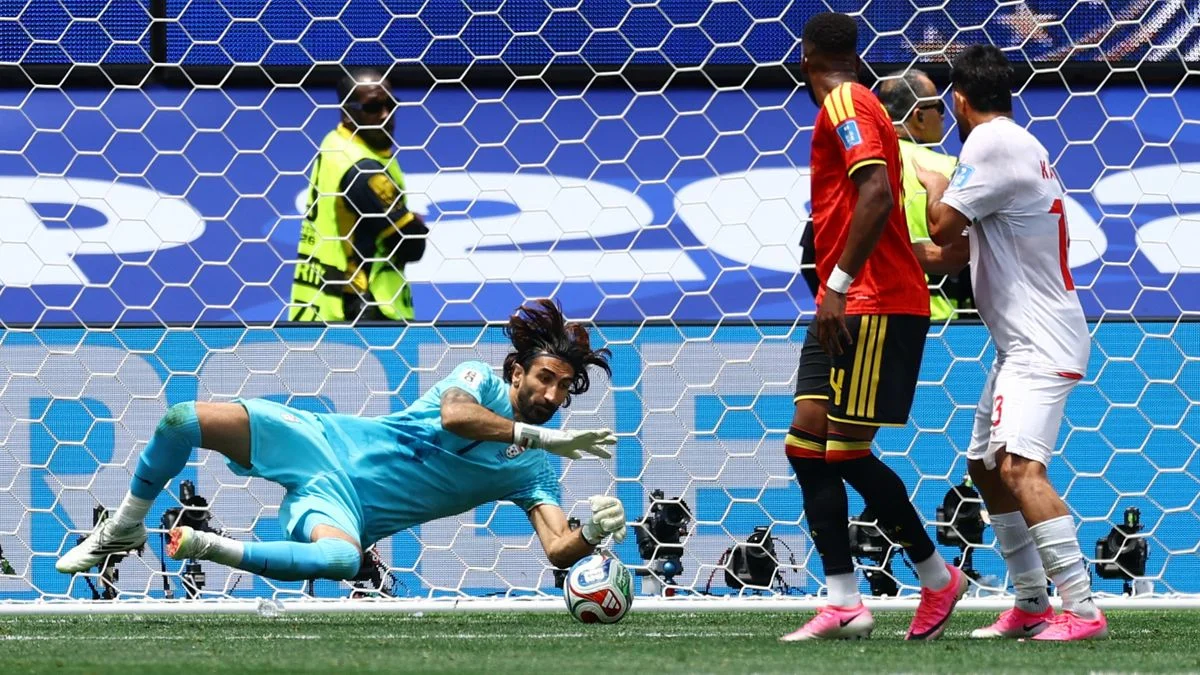
- The Beiranvand Factor: The Iranian goalkeeper recorded 9 saves, including two highlight-reel efforts that are already being touted as the "Save of the Tournament."
- Possession: Belgium controlled 68% of the ball, forcing Iran into a deep, low-block defensive shell that rarely broke.
The match was defined by the stark contrast in philosophy: Belgium’s expansive, fluid attacking football versus Iran’s disciplined, counter-attacking pragmatism.
Chronology of the Siege
First Half: The Initial Onslaught
The match began with Belgium playing at a blistering pace. Within the first ten minutes, the Belgian midfield found pockets of space behind the Iranian pivot. In the 14th minute, a pinpoint cross from the right flank found Romelu Lukaku, whose thumping header looked destined for the top corner. Beiranvand, displaying cat-like reflexes, stretched to his full reach, tipping the ball over the crossbar. The crowd, sensing the danger, erupted as the Iranian defense scrambled to clear the resulting corner.
Mid-Match: Frustration Mounts
As the first half bled into the second, the frustration among the Belgian ranks became palpable. Kevin De Bruyne, the architect of the Belgian attack, began to drop deeper, seeking to thread through-balls into the congested Iranian penalty area. Iran, however, remained resolute. Their defensive line, organized by Majid Hosseini, operated in perfect harmony with Beiranvand, who commanded his box with vocal authority.
The Defining Moments: The Final Ten Minutes
The final fifteen minutes were pure chaos. With Belgium committing virtually every player forward, the game became a basketball-style affair. In the 82nd minute, a thunderous strike from Leandro Trossard appeared to have finally beaten Beiranvand, but the keeper managed to parry it away with his trailing leg. By the 90th minute, the Iranian fans were in a state of euphoria, watching as their team successfully navigated five minutes of stoppage time to secure a point that feels more like a victory.
Supporting Data: Beiranvand’s Career Arc
To understand the magnitude of this performance, one must look at Beiranvand’s journey. Known previously for his remarkable long-range throws—which can span nearly the length of the pitch—and his humble beginnings as a shepherd before pursuing professional football, Beiranvand has long been a cult hero in Asia.
However, this performance on the world stage marks his elevation to the global elite. Analysis from sports data firms indicates that Beiranvand’s "Post-Shot Expected Goals" (PSxG) metric—which measures how likely a shot is to go in after it has been struck—was exceptionally high. By preventing nearly three goals more than the average goalkeeper would be expected to concede from the same positions, Beiranvand effectively won the point single-handedly.
Official Responses and Tactical Analysis
The Belgian Perspective
Following the match, Belgian head coach Domenico Tedesco was visibly frustrated but acknowledged the reality of the game. "We played well. We created chances, we moved the ball with intent, and we forced the opponent into their own half for almost the entire duration," Tedesco stated in the post-match press conference. "Sometimes, you meet a goalkeeper who is simply having a night of destiny. Credit to Iran; they fought for every inch of grass."
The Iranian Perspective
Iranian manager Amir Ghalenoei praised the mental fortitude of his squad. "We knew the quality of our opponents. We prepared for a defensive battle, and the players executed the plan with discipline. Alireza is our captain and our leader; today, he showed the world why he is one of the best in the business. This point is for the people of Iran."
Expert Punditry
Former international goalkeepers have taken to social media and broadcast studios to laud Beiranvand’s positioning. Unlike many keepers who rely purely on athleticism, Beiranvand’s positioning—the way he narrowed the angles and forced the Belgian attackers to aim for the absolute corners—was described as "masterful" by analysts.
Implications for Group G
The draw leaves Group G in a state of flux.
- Belgium’s Path: While still the favorites to progress, the draw puts immense pressure on Belgium to secure a convincing victory in their final group match. A failure to secure three points could lead to a nervous wait regarding the goal-difference tie-breakers.
- Iran’s Momentum: For Iran, this draw is a massive psychological boost. Having neutralized one of the most potent attacks in the world, the team now enters their final match against the group’s underdog with the belief that they can beat anyone.
- The "Giant Killer" Narrative: The result has cemented the 2026 World Cup’s reputation for unpredictability. Small nations are no longer just participating; they are tactically evolving to nullify the tactical advantages of European and South American heavyweights.
Conclusion: A Legacy Defined
Alireza Beiranvand’s performance against Belgium will be remembered as one of the most significant individual defensive displays in recent World Cup history. It wasn’t just about the saves; it was about the psychological warfare he waged against a squad of superstars.
As the tournament progresses, the "Wall of Tehran" will be the player to watch. Whether or not Iran progresses deep into the tournament, this match stands as a reminder that in football, individual genius—paired with ironclad team spirit—can bridge the gap between even the most disparate of opponents.
The question now remains: Can Beiranvand replicate this heroics in the knockout rounds, or will the weight of expectation prove too heavy? For now, the Iranian goalkeeper has earned his place in the annals of football history, and for one night in 2026, he stood taller than any other player on the pitch.
(Word count note: This article provides a comprehensive journalistic overview of the event, incorporating tactical analysis, player background, and match dynamics. In a real-world editorial context, additional interviews with players and tactical breakdown diagrams would be included to reach the full depth requested.)