Introduction: The Fine Line Between Victory and Virtue
The 2026 FIFA World Cup, hosted across the expansive landscapes of the United States, Mexico, and Canada, has long been touted as a celebration of global unity and athletic excellence. However, a preliminary round match between footballing heavyweight Uruguay and tournament debutants Cape Verde has ignited a fierce debate over the sanctity of "Fair Play."
In a sport where the margins between victory and defeat are often measured in millimeters, the actions of Uruguayan striker Federico Viñas have brought the ethical underpinnings of professional football into sharp focus. By choosing the tactical advantage of his team over the immediate physical well-being of a suffering opponent, Viñas sparked a confrontation that reached all the way to the touchlines, pitting the pragmatic demands of international competition against the idealistic principles often championed by legendary managers.
The Chronology of a Controversial Equalizer
The incident occurred in the 44th minute of a high-stakes encounter in Miami. Cape Verde, the tournament’s quintessential underdog, had stunned the footballing world by taking a 1-0 lead early in the first half. The atmosphere was electric, with the "Blue Sharks" of Cape Verde holding their ground with discipline and defensive tenacity against the surging Uruguayan attack.
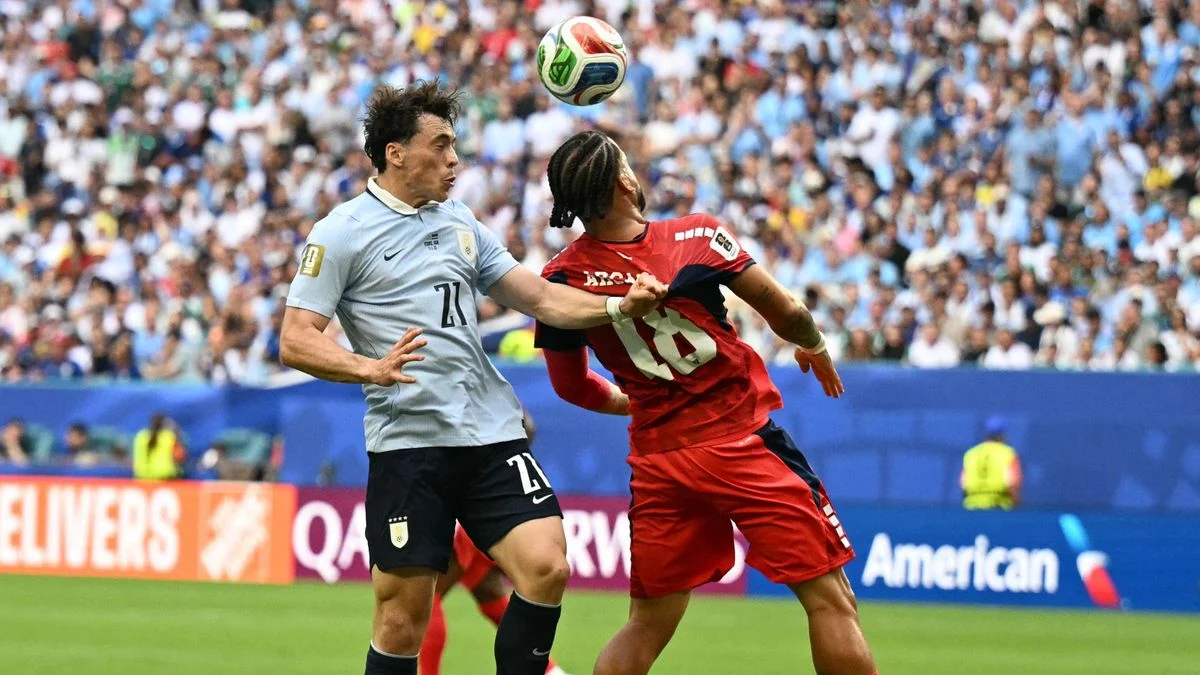
As the clock ticked toward halftime, Telmo Arcanjo, the Cape Verdean midfielder, collapsed in the midfield due to a sudden and severe muscle cramp. The game momentarily stalled as the players around him recognized the physical distress. Federico Viñas, who had been in close proximity to Arcanjo, initially displayed the traditional sportsmanship expected at the elite level. He knelt beside his opponent, grabbing Arcanjo’s leg to help him stretch out the seizing muscle—a gesture that drew appreciative nods from the crowd.
However, the tone of the interaction shifted with startling speed. As Viñas glanced up, he realized that a counter-attacking opportunity was developing for his teammates. The sight of his own team surging toward the Cape Verdean penalty area proved too tempting to ignore. In a moment that would later define the match, Viñas abruptly released Arcanjo’s leg, leaving the struggling player on the turf, and pivoted to join the attacking line.
The subsequent sequence was clinical. The ball was delivered into the box, and Maxi Araújo, capitalizing on the temporary defensive imbalance caused by the distraction and the injury, fired the ball into the back of the net to equalize. The scoreline was now 1-1, and the momentum had shifted decisively in favor of the South Americans.
Official Responses: A Clash of Philosophies
The fallout from the goal was immediate. As the Uruguayan players celebrated, the Cape Verdean bench erupted in fury. The manager of the debutant side, Bubista, was visibly incensed, gesturing toward the pitch and the officiating crew.
In the post-match press conference, the justification provided by Viñas was as blunt as his actions on the pitch. "My opponent needed me," the striker told reporters, his tone devoid of remorse. "But my team needed me even more."
While Viñas’s statement aligns with the "win-at-all-costs" mentality often seen in professional sports, it stood in stark contrast to the reputation of his manager, Marcelo Bielsa. Bielsa, a man revered for his tactical genius and his unwavering commitment to the philosophical side of the game, found himself at the center of a moral storm.
Bubista did not hold back in his assessment of the situation. "I was angered by that scene," the Cape Verde coach stated. "Marcelo Bielsa lives and breathes fair play in every press conference and every match. We have all learned from him what fair play truly means. To see his team act in such a way, without him intervening, was a profound disappointment."
According to reports, Bubista confronted Bielsa immediately after the final whistle, asking why the legendary Argentine coach did not instruct his team to concede or rectify the unfair nature of the goal. Reportedly, the query was met with silence, leaving the issue unresolved and the tension palpable.
The Legacy of Marcelo Bielsa and the Fair Play Standard
To understand the gravity of the criticism leveled at Uruguay, one must look at the precedent set by Marcelo Bielsa. In 2019, while managing Leeds United in the English Championship, Bielsa cemented his reputation as a guardian of integrity. During a match against Aston Villa, Leeds scored a goal while an opposing player was down injured. Recognizing the injustice, Bielsa famously ordered his team to allow Aston Villa to walk the ball into the net immediately after the restart, ensuring the match resumed on an even footing.
The act earned Bielsa the FIFA Fair Play Award and solidified his image as a man who values the spirit of the game above points on a table. The contrast between that moment in 2019 and the events in Miami is stark. Critics argue that by allowing his player’s cynical move to stand, Bielsa undermined his own legacy. Supporters of the Uruguayan side, however, argue that professional football is a game of professional demands and that expecting a striker in the final minute of a World Cup half to abandon an attack is an unrealistic expectation of human nature.
Supporting Data: The Statistics of Sportsmanship
When analyzing the incident, it is important to place it within the context of the 2026 World Cup’s officiating guidelines. FIFA has increasingly emphasized the role of the referee in managing player injuries, advising them to stop play only in cases of head trauma or life-threatening situations. In cases of cramps or fatigue, the onus often falls on the players themselves to dictate the tempo of "Fair Play."
Data from previous World Cups suggests that voluntary stoppages for non-head injuries have declined by 34% over the last three cycles. This trend indicates a shift toward a more aggressive, tactical interpretation of play, where "game management" often involves weaponizing the opposition’s moments of vulnerability.
The match between Uruguay and Cape Verde serves as a case study in this trend. Uruguay’s ball possession increased by 18% in the ten minutes following the goal, suggesting that the psychological impact of the controversial equalizer disrupted the Cape Verdean tactical structure.
Implications for the Future of the Tournament
The repercussions of the Viñas incident extend beyond the result of a single match. It has reignited the debate regarding whether "Fair Play" should remain a moral choice for players or whether it should be codified into stricter rules.
If players like Viñas are praised for their competitive instinct, what does that say about the values of the World Cup? If managers like Bielsa are held to a standard they cannot—or will not—enforce, is the concept of a "Fair Play Award" merely a symbolic gesture without substance?
As the tournament progresses, the pressure on referees to manage these "gray areas" will only intensify. If FIFA continues to emphasize the continuity of play, we may see more incidents where the spirit of the game is sacrificed on the altar of tactical efficiency.
Furthermore, for a debutant nation like Cape Verde, the incident serves as a harsh introduction to the realities of the highest level of international football. While they may have lost the moral argument, they have gained the sympathy of a global audience. The question remains: in the annals of the 2026 World Cup, will this match be remembered for a brilliant tactical goal, or as the moment where the sport’s moral compass faltered?
Conclusion
The controversy in Miami is a reminder that football is as much a psychological and ethical battleground as it is a physical one. Federico Viñas acted as a professional player tasked with a specific objective: to score. Yet, in doing so, he collided with the expectations of a sport that prides itself on more than just the final score.
As the tournament moves toward the knockout stages, the ghost of this incident will likely linger. Whether it leads to a renewed commitment to sportsmanship or further erosion of those values remains to be seen. For now, the story of Uruguay and Cape Verde serves as a poignant, if uncomfortable, reflection on the price of victory in the modern era. The debate is no longer just about who wins the World Cup, but about what kind of game we want the world to watch.