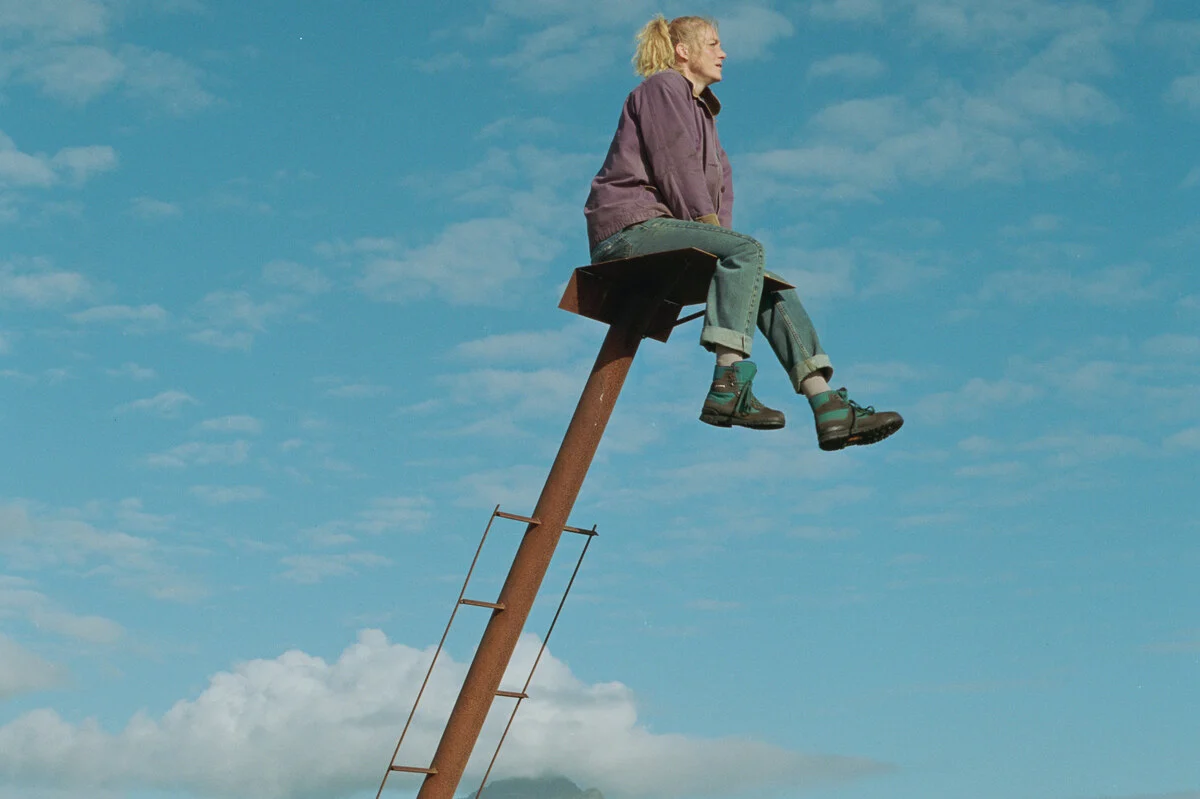
In the landscape of contemporary cinema, few directors possess the ability to turn the absence of movement into a profound narrative event quite like the Icelandic filmmaker Hlynur Pálmason. His latest feature, The Love That Remains, is a masterclass in atmospheric storytelling, stripping away the histrionics typical of the "divorce drama" genre to reveal the raw, unadorned structural reality of a relationship that has, for all intents and purposes, concluded. By focusing on the quietude of daily existence, Pálmason invites the audience to consider not the volatility of a breakup, but the persistent, often haunting architecture of what lingers after the core of a union has been dismantled.
Main Facts: A Portrait of Post-Relationship Coexistence
The Love That Remains (Island, 2025) follows the lives of Anna (played by Saga Garðarsdóttir) and Magnús (Sverrir Guðnason). They are a separated couple living in the rugged, wind-swept coastal regions of Iceland, raising three children together. The film is a deliberate exercise in restraint. There are no explosive arguments, no courtroom battles, and no moralizing monologues.
Instead, Pálmason centers the narrative on the mundane: Magnús’s labor as a high-seas fisherman and Anna’s pursuit of her artistic career, where she paints large, abstract canvases in deep, rusted earth tones. The film, which runs 109 minutes, avoids the typical "narrative arc" of reconciliation or total severance. It is a film about the state of being, rather than the act of becoming.
Chronology of Stillness
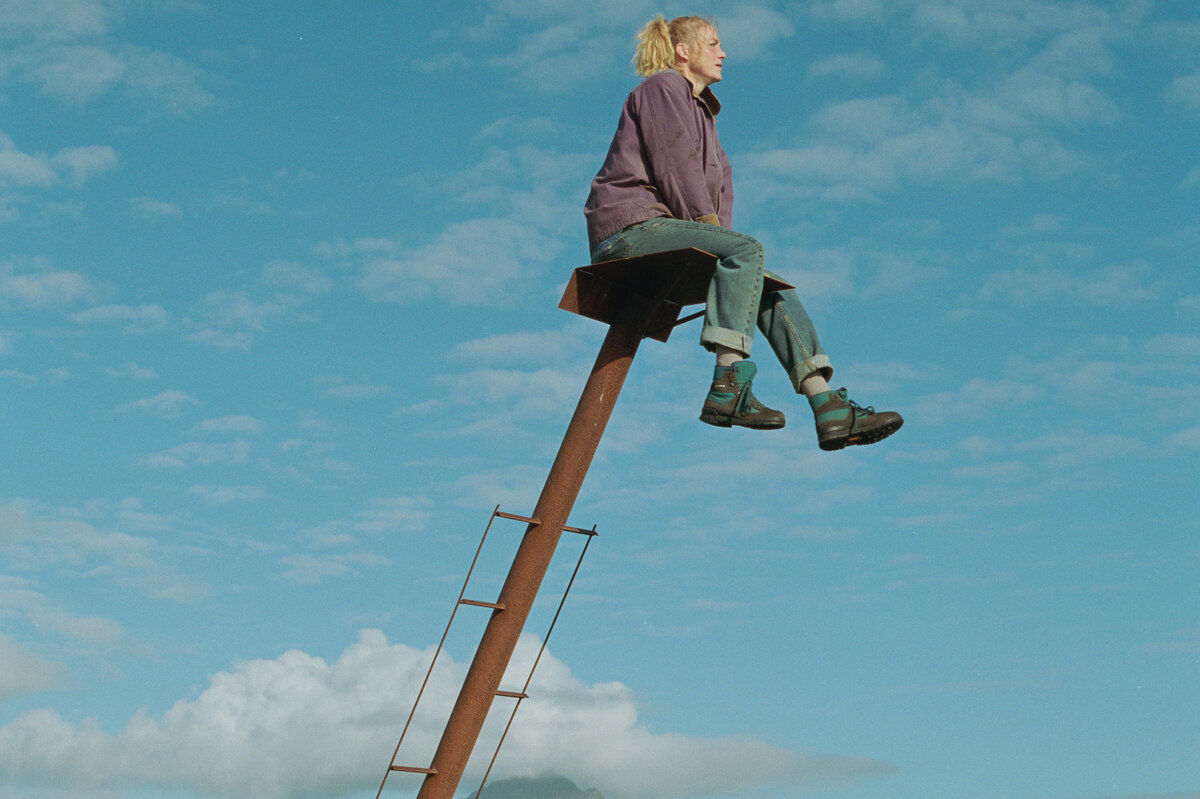
The film opens with a striking, symbolic sequence: a house is slowly, methodically dismantled. The roof is lifted away while calm piano music plays, suggesting a transformation rather than a destruction. This serves as the primary metaphor for the film—what remains when the "form" of a family is fundamentally altered?
Following this overture, the pacing slows to a near-halt. We are introduced to the daily routine of Anna and Magnús. The audience learns of their separation almost by accident, through passing glances or the physical distance they maintain in shared spaces. As the film progresses, we observe the seasons of their lives in the Icelandic landscape. There is no frantic search for closure; rather, there is a series of long, observational takes that emphasize the natural light and the unrefined beauty of their surroundings.
In the middle of the film, Pálmason introduces brief, surrealistic sequences that pierce the otherwise realistic veneer. These moments serve as the only acknowledgment of internal damage, appearing like sudden shifts in weather—violent and brief—before returning to the stoic equilibrium of their daily lives.

Supporting Data: The Aesthetic of Earth Tones
The film’s visual language is as much a character as the protagonists themselves. Pálmason, who also penned the screenplay, opts for a palette of "rust and earth," a choice that reflects his desire for the film to feel "naturalistic" rather than "artistic."
- Production Context: The film was shot on location in Iceland, utilizing the natural, raw environment to mirror the emotional state of the characters.
- Narrative Stance: By avoiding high-octane emotional crescendos, Pálmason creates a "void" that the audience must fill with their own interpretations of the relationship.
- The "Anti-Drama": Unlike classic Hollywood depictions of divorce—such as Robert Benton’s Kramer vs. Kramer—Pálmason’s work is devoid of the competitive malice that defines so many cinematic separations. There is no desire to "win" in this divorce; there is only the desire to continue existing in the same geographic and familial space.
Official and Critical Perspectives
While the film has been met with critical acclaim for its visual composition, the reception of The Love That Remains hinges on the viewer’s patience. Industry observers note that the film acts as an "anti-thesis" to modern romantic drama. Where other films focus on the "how" and "why" of a breakup, Pálmason focuses on the "now."
Critics have pointed to the performances of Saga Garðarsdóttir and Sverrir Guðnason as being remarkably disciplined. They navigate scenes of intimacy—and the lack thereof—with a palpable sense of resignation. When Magnús exhibits fleeting flickers of desire, Anna’s response is not a dramatic rejection but a quiet, almost mechanical closing of a door. It is a portrayal of a relationship that has lost its friction, leaving behind only the structural necessity of co-parenting.

Implications: The Question of What Remains
The title of the film is not a statement, but a question. If love is the heat of a relationship, what is left when that heat dissipates? Pálmason’s answer is perhaps the most honest one: the habits of a lifetime. The film suggests that the routines of family life—the shared meals, the children’s needs, the shared history—can survive long after the romantic connection has expired.
The implication here is profound: modern society often equates the end of a marriage with the end of a connection. The Love That Remains argues that "love" can also exist as a form of stewardship, a duty to the shared life that persists even when the passion has cooled. The film does not provide a neat conclusion. It does not tell the viewer whether the couple will find their way back to each other or drift further into their separate, yet connected, lives. Instead, it offers a meditation on the beauty of the mundane, suggesting that even in the absence of traditional intimacy, there is a certain dignity in the continuation of the everyday.
A Comparative Analysis: Pálmason’s Place in Icelandic Cinema
To understand the weight of The Love That Remains, one must look at the trajectory of contemporary Icelandic cinema. Works like Rúnar Rúnarsson’s When the Light Breaks or the unsettling, landscape-heavy Lamb have consistently pushed the boundaries of how we view human interaction in the shadow of vast, indifferent environments.

Pálmason’s work fits into this tradition by treating the landscape not just as a backdrop, but as a silent witness to human endurance. In The Love That Remains, the wind, the sea, and the vast, open skies of Iceland create a sense of scale that renders the characters’ personal dramas both insignificant and universal.
By stripping away the "noise" of the typical divorce film, Pálmason forces the viewer to confront the truth of the human condition: that we are often defined not by the great loves of our lives, but by the quiet, enduring patterns we establish with the people we once called our own. The film is a somber, beautiful reminder that some things do not end with a bang, but with a slow, deliberate reconstruction of a life that looks, from the outside, almost exactly the same as it did before.
Conclusion
The Love That Remains stands as a significant contribution to 2025’s cinematic landscape. It is a film that demands much from its audience—time, attention, and a willingness to sit with ambiguity. Yet, for those who engage with its slow-burn narrative, it offers a reward that few films manage: a mirror to the quiet, often ignored aspects of our own lives. It suggests that even when the house is taken apart, the foundations—the walls, the floor, the shared history—remain. The question of whether we choose to build something new within that frame, or simply live among the ruins, is left to the viewer to decide. In this way, Pálmason succeeds in turning the "event" of the film into an experience of existence itself.