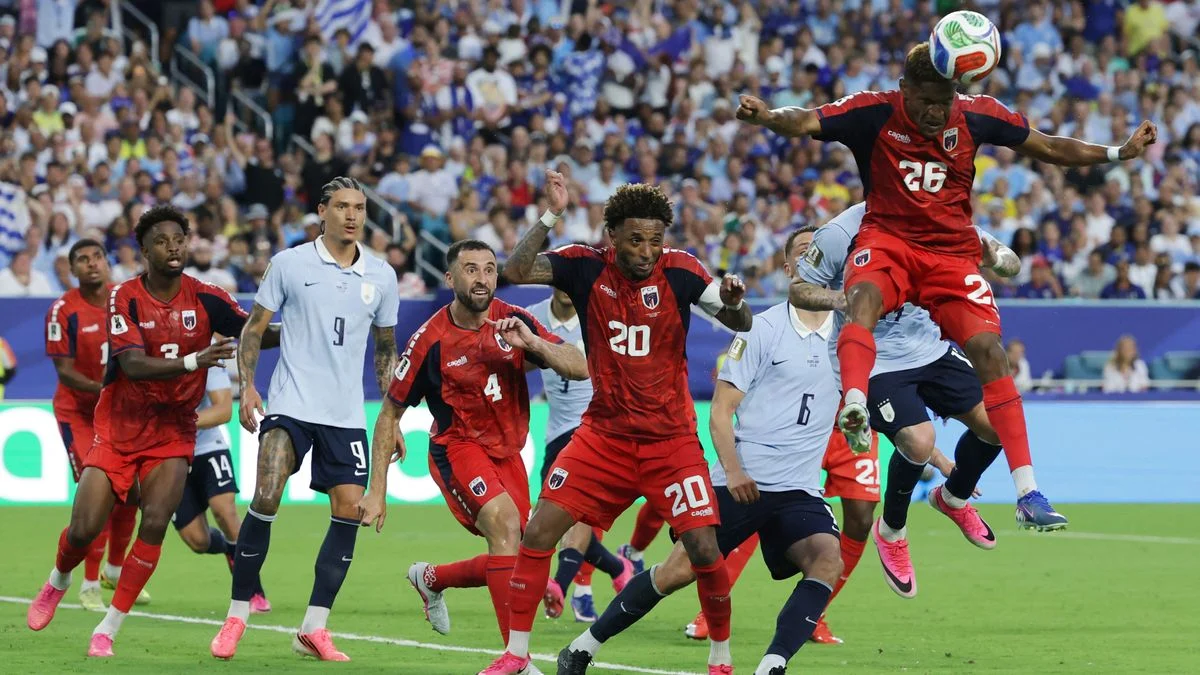
The world of international football is frequently defined by the gravitational pull of the traditional superpowers. Yet, every four years, the qualification cycle for the FIFA World Cup offers a narrative counterweight: the emergence of a nation that defies its geographic size, its limited resources, and the weight of history. As the qualification rounds for the 2026 tournament in North America intensify, one story has captured the imagination of football purists and casual observers alike: the ascent of Cape Verde.
The "Blue Sharks," as the national team is affectionately known, are currently navigating a path that few thought possible. Nestled in the Atlantic Ocean, roughly 500 kilometers off the coast of Senegal, the archipelago nation has transformed from a regional underdog into a formidable tactical unit capable of disrupting the established hierarchy of African football.
The Main Facts: A Nation on the Brink
Cape Verde’s current campaign is not merely a statistical anomaly; it is the product of a decade-long strategic overhaul of their footballing infrastructure. The team, currently managed with a blend of tactical pragmatism and creative freedom, has moved beyond relying on individual brilliance to a system defined by cohesive pressing and rapid vertical transitions.
The core of this success lies in the diaspora. Like many nations with deep migratory ties to Europe, Cape Verde has successfully integrated players born or raised in Portugal, France, and the Netherlands. This infusion of European tactical discipline, combined with the raw, instinctive flair of local talent, has created a squad that possesses a unique identity.
In their recent qualifying fixtures, the Blue Sharks have demonstrated a defensive resilience that has silenced critics. Against larger, more physically imposing opponents, they have maintained a high-block strategy, forcing turnovers in dangerous areas. Their ability to manage "game states"—the capacity to hold a lead under pressure or chase a result in the dying minutes—has been the defining characteristic of their 2026 push.
A Chronological Breakdown: The Path to the Present
The journey toward 2026 began in the shadow of the 2023 Africa Cup of Nations (AFCON), where the team signaled their intent by outperforming expectations.
- Phase 1: The Tactical Reset (Post-2023 AFCON): Following their exit from the continental tournament, the coaching staff initiated a transition period. The focus shifted toward developing a younger core of midfielders, tasked with controlling the tempo of matches rather than relying solely on counter-attacks.
- Phase 2: The Opening Qualifiers: The early stages of the 2026 qualification cycle saw Cape Verde navigate a treacherous group. Victories against regional rivals established a momentum that carried them through the initial winter break. The win against a perennial heavy hitter in the spring of 2024 served as the "watershed moment," proving that the team could compete with the continent’s elite.
- Phase 3: The Current Campaign: Throughout the most recent international window, the Blue Sharks have maintained a near-perfect record. Their tactical consistency has remained stable despite injury concerns, thanks in large part to the depth of the squad. The team is currently sitting in a position where their destiny remains entirely in their own hands, provided they avoid complacency in the final leg of the group stage.
Supporting Data: By the Numbers
To understand why this run is so significant, one must look at the quantitative data behind their performance.
- Possession vs. Efficiency: While Cape Verde rarely dominates possession statistics—often hovering around 42% to 45%—they lead their group in "Expected Goals" (xG) generated from high-turnover situations. This suggests that their lack of ball control is a deliberate design choice, prioritizing space over time.
- Age Profile: The squad boasts an average age of 25.4, one of the youngest in the qualifying pool. This youth provides the engine necessary for the high-intensity pressing style that characterizes their play.
- Clean Sheet Percentage: In their last ten competitive matches, the Blue Sharks have kept a clean sheet in six. This defensive stability is the bedrock of their campaign, allowing the attacking trident to operate with the knowledge that a single goal might be enough to secure three points.
- Diaspora Contribution: Over 70% of the current starting XI plays their club football in leagues ranked in the top 15 in Europe. This exposure to high-level competition is a crucial differentiator when facing opponents whose players operate primarily in domestic or less competitive leagues.
Official Responses: The View from the Inside
The sentiment within the Cape Verdean Football Federation is one of cautious optimism. Speaking at a press conference following their most recent victory, the head coach emphasized the importance of humility.
"We are not here to participate; we are here to compete," the manager stated. "The players understand that every match is a final. The history of this team is being written right now, but the ink is not dry. We have the support of a nation, but that support must be matched by the discipline we show on the pitch."
The federation has also doubled down on its investment in youth academies on the islands, ensuring that the current success is not merely a one-off achievement but a sustainable model. Government officials have pledged increased funding for stadium infrastructure, recognizing that a World Cup appearance would be the greatest soft-power asset the country has ever possessed.
Implications: A New Era for African Football
The rise of Cape Verde has profound implications for the structure of African football. Traditionally, the FIFA World Cup slots allocated to the Confederation of African Football (CAF) have been dominated by a rotating group of five or six nations. The success of a "smaller" nation like Cape Verde challenges the status quo, suggesting that the barrier to entry is lowering for countries that invest in smart scouting and tactical modernization.
The Economic and Cultural Ripple Effect
Should Cape Verde qualify, the economic impact on the islands would be substantial. Beyond the FIFA prize money, the increase in tourism and the heightened profile of the nation’s players in the transfer market would provide a massive influx of capital. Culturally, it would cement football as the primary unifying force of the archipelago, bridging the gap between the islands and the vast diaspora abroad.
Tactical Evolution
For the rest of the continent, the Cape Verdean model serves as a case study. Many nations with similar profiles—smaller populations, limited domestic infrastructure—are now looking to mirror the "Blue Shark" blueprint. The focus on tactical discipline and the strategic recruitment of dual-nationality players is likely to become the standard for emerging football nations.
The Road Ahead
As the final matches approach, the pressure will only mount. The psychological toll of being a "favorite" is something the team has rarely had to manage. How they handle the scrutiny of the international media and the weight of national expectation will determine whether this journey ends in glory or heartbreak.
The story of Cape Verde is more than just a football headline; it is a testament to the idea that in the modern game, organization and identity can overcome the limitations of geography and resource. As they march toward the 2026 World Cup, they carry with them the hopes of every underdog who believes that the established order is never as permanent as it seems.
Whether they ultimately secure their ticket to North America or fall just short, the Blue Sharks have already achieved something rare: they have forced the world to stop, look at the map of the Atlantic, and recognize that a new force has arrived in international football. The coming months will tell if this story ends in a Cinderella fairy tale, but for now, the dream is very much alive.