By Lisa Seemann and Mareike Wilms
Published: June 21, 2026
For many elderly citizens in Germany, a simple afternoon coffee is no longer a casual pleasure; it is a calculated luxury. Across the nation, 13 million people are currently classified as being at risk of poverty. Among them, a growing demographic is the elderly—men and women who spent decades contributing to the social fabric of the country, only to find themselves navigating the twilight of their lives with empty pockets and limited prospects. As sociological research suggests, the ladder out of poverty is not only missing rungs but is becoming increasingly difficult to climb, challenging the long-held German narrative that hard work alone guarantees security.
The Face of Precarity: Regina Brieler’s Story
Regina Brieler, a 71-year-old resident of Münster, sits on a bench at the Waldfriedhof cemetery, staring out at a lush, anonymous green space. She has already chosen this site for her own future burial—not out of a preference for minimalism, but out of financial necessity. "I don’t want to be a burden to my children and grandchildren," she explains. The cost of maintaining a traditional grave is a luxury she cannot afford.
Brieler’s monthly budget is stark: she lives on less than 300 euros of disposable income after essential costs. Her financial life is a patchwork of a meager personal pension, a small widow’s pension, and housing assistance. Her situation is far from unique; it is the culmination of a lifetime defined by "care work." Like millions of other women, Brieler spent her most productive years looking after others—raising her children, caring for her ailing mother for three decades, nursing her husband for ten years, and eventually tending to her sister until her death.
"I have no regrets; I would do it all again," she says, her voice steady. But the economic reality of such selflessness is brutal. Because she was frequently absent from the formal labor market to provide care, her pension contributions remained low. Having grown accustomed to living on next to nothing, she manages, but the structural inequality of her situation is undeniable.
Chronology of a Crisis: From Caregiver to Pensioner
The trajectory of poverty in old age is rarely a sudden event; it is often the result of a cumulative erosion of financial stability over decades.
- The Early Years: For many in Brieler’s generation, the labor market was less flexible. Interruptions for child-rearing and family care were not adequately compensated in the pension insurance system.
- The Mid-Life Hurdle: Accidents or health crises often derailed careers. In Brieler’s case, an accident forced a long absence from work, which directly impacted her ability to build capital.
- The Care Burden: As the German population ages, the burden of care falls disproportionately on women. Decades spent caring for parents, spouses, and siblings often leave these individuals with no time to accumulate private savings or professional advancements.
- The Present Day: The transition into retirement is no longer a gateway to leisure but a descent into the "poverty trap." With roughly 20 percent of people over the age of 65 now at risk of poverty, the trend is not merely a statistical anomaly—it is a systemic failure.
Supporting Data: A Nation Divided
The definition of "at risk of poverty" in Germany is stark: it applies to those living in households with less than 60 percent of the median income. Current data paints a grim picture:
- The Persistence of Poverty: Studies indicate that 25 percent of the population currently exists in precarious living conditions, where poverty is not a temporary setback but a permanent state.
- Asset Disparity: Those at risk of poverty typically possess little to no assets, live in cramped, lower-quality housing, and struggle with the rising costs of basic commodities.
- Public Perception vs. Reality: A representative ARD survey from April 2026 revealed a significant disconnect in public sentiment. 42 percent of respondents prioritized "merit-based justice"—the belief that those who perform more should earn more. Only 23 percent placed the highest value on supporting the vulnerable. This indicates that the societal stigma against those who "cannot keep up" remains a formidable barrier to reform.
Official Responses and the Stigma of "Self-Effort"
Sociologists and welfare advocates argue that the government’s reliance on individual responsibility is a form of victim-blaming. Professor Olaf Groh-Samberg, an expert on poverty at the University of Bremen, is highly critical of the political rhetoric surrounding social mobility.
"The idea that you simply need to work harder to escape poverty is highly stigmatizing and psychologically damaging," says Groh-Samberg. "You cannot solve systemic inequality by telling individuals to pull themselves up by their bootstraps. The structural conditions have deteriorated to a point where even those who ‘strample’ (struggle) endlessly are finding it impossible to rise."
The reality, according to Groh-Samberg, is that the mobility out of poverty has continuously declined over the last two decades. The "effort" expected of individuals is no longer commensurate with the economic rewards available, particularly for those in the low-wage or care sectors.
The Role of Community: A Safety Net of Last Resort
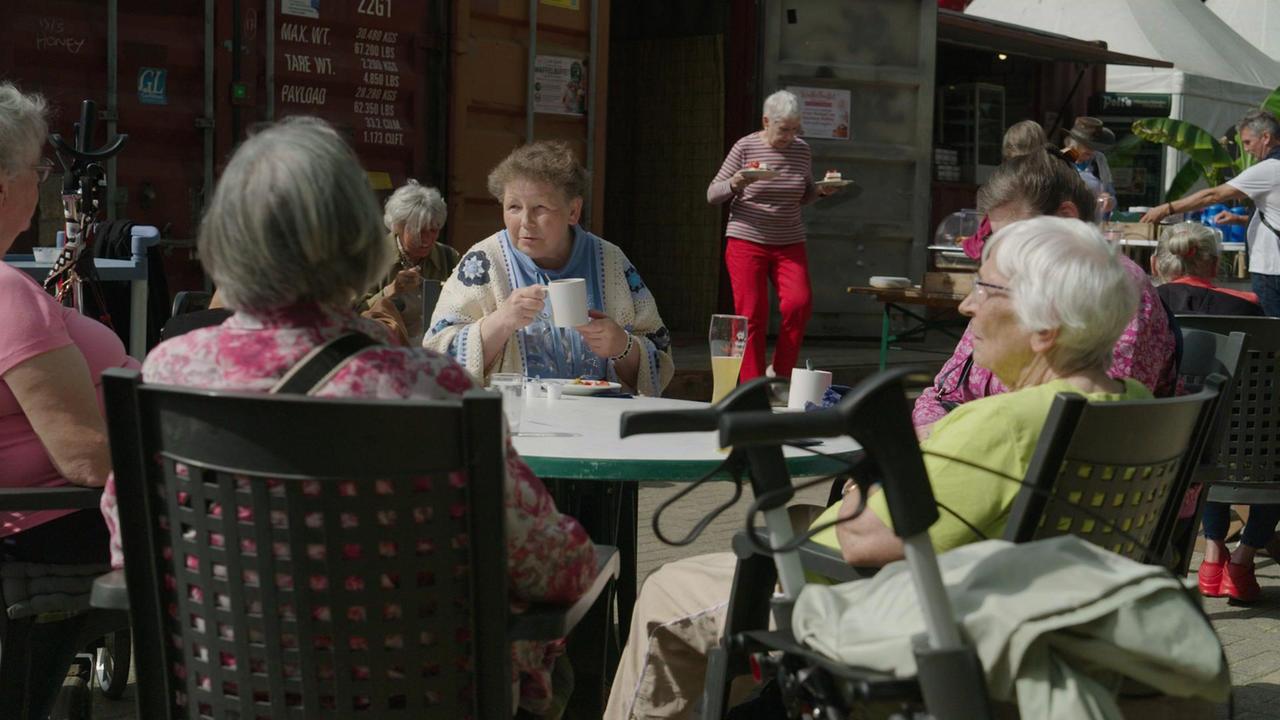
Despite her own struggles, Regina Brieler remains a vital part of her community in the Münster-Kinderhaus district. She volunteers to prepare breakfast for school children and works at a local neighborhood café—a sanctuary for those living on the margins. In this space, a coffee costs just 50 cents, making it accessible to those who otherwise could not afford to socialize.
This café is more than a place for caffeine; it is a bastion against the crushing weight of loneliness and the invisibility of poverty. It highlights a recurring theme in modern Germany: the state’s failures are increasingly being mitigated by the volunteer labor of the very people who are themselves in need.
Earlier this year, when her washing machine broke down, Brieler was forced to use an antique washboard to clean her linens by hand for months. It was only through the intervention of a local senior-support association that she finally secured a new machine. Nadine Wittkamp, a representative of the organization, offers a scathing indictment of the status quo: "We live in one of the richest countries in the world. No one, absolutely no one, should have to worry about whether they can afford bread and milk at the end of the month."
Implications for the Future: A Broken Social Contract?
The implications of this trend are profound. As the "Baby Boomer" generation reaches retirement age, the number of people facing similar conditions will likely explode. If the current structural conditions—defined by low wages, high housing costs, and inadequate pension coverage for caregivers—are not reformed, Germany faces a significant social crisis.
For Brieler, the light at the end of the tunnel is not found in policy shifts, but in her grandson, Lukas. He is training to be a shop assistant, and his grandmother watches him with a mixture of pride and anxiety. Her deepest wish is that he will carve out a life of his own design. "He’ll make it," she says, hoping he inherits the resilience she has displayed, yet silently wishing he never has to test it under the same crushing circumstances.
The narrative of "work hard and you will succeed" is being dismantled by the lived experiences of millions. As the gap between the affluent and the vulnerable widens, Germany must confront a uncomfortable truth: if its social contract is based on the premise that poverty is a personal failure rather than a structural outcome, it will continue to abandon the very people who built the foundation of its modern prosperity.
For further investigation into the cycles of poverty and the intersection of social origin and opportunity, view the MONITOR documentary "Arm sollst du bleiben? Das Los der Herkunft" available in the ARD Mediathek.