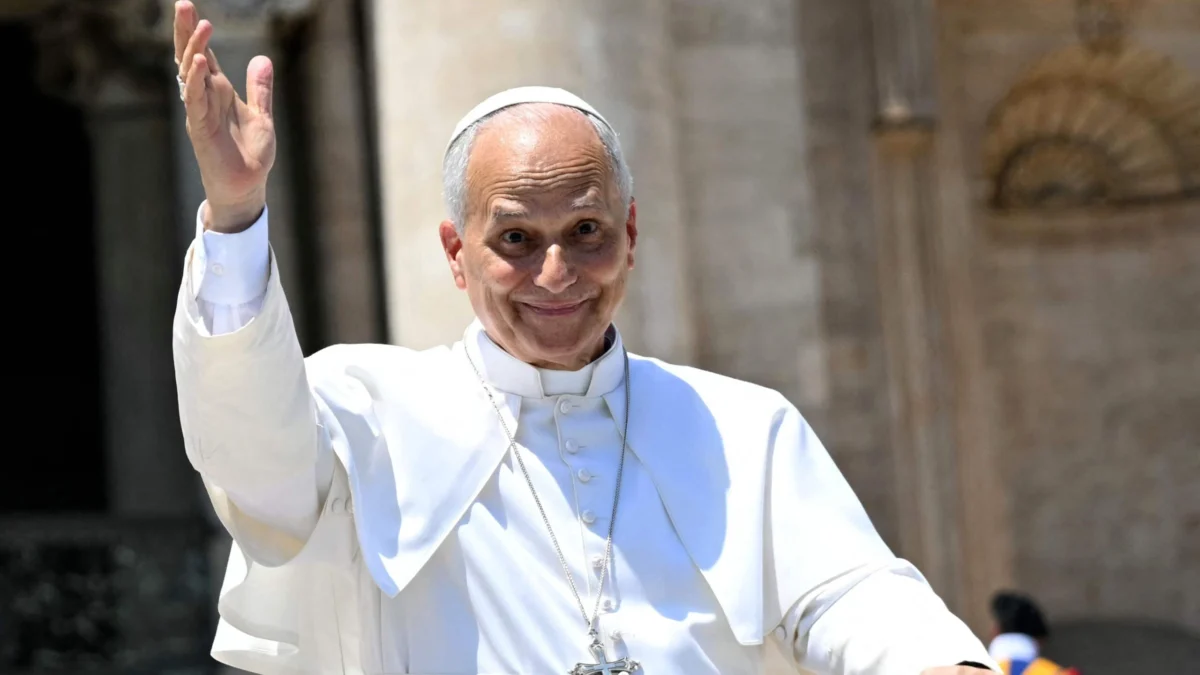
ROME – In an era increasingly defined by the breathtaking pace of technological advancement, a surprising beacon of moral guidance has emerged from one of the world’s most ancient institutions: the Holy See. Far from being relegated to the annals of history, the Catholic Church is demonstrating a profound engagement with the disruptive forces of artificial intelligence (AI), captivating the attention of ethicists, technologists, and the global public alike. This renewed focus has culminated in a landmark papal encyclical, "Magnifica Humanitas" ("On the Preservation of Man in the Age of Artificial Intelligence"), recently promulgated by His Holiness Pope Leo XIV.
Published just a month ago, the encyclical dives deep into the complex interplay between humanity and AI, offering a comprehensive framework for understanding its perils and promises. It tackles head-on the anxieties pervading society – the fear of technological determinism, the concentration of power in the hands of a few developers, and the pressing question of humanity’s place in an increasingly automated future. "Magnifica Humanitas" is not merely a caution against unchecked progress; it is a clarion call for an AI that serves, rather than subjugates, the human spirit, rooted in principles of truth, work, and freedom.
Main Facts: The Encyclical’s Core Message
Pope Leo XIV’s "Magnifica Humanitas" represents a pivotal moment in the Catholic Church’s engagement with modern technology. It is a comprehensive document, spanning several chapters, dedicated to articulating a robust ethical framework for the development and deployment of artificial intelligence. The encyclical’s very title, "Magnifica Humanitas" – "Magnificent Humanity" – underscores its central tenet: that human dignity must remain paramount in all technological endeavors.
At its heart, the encyclical argues that AI, while possessing immense potential for good, also carries inherent risks that demand careful ethical consideration. It rejects both an uncritical embrace of technological progress and a Luddite-like rejection of innovation. Instead, it advocates for a "techno-humanist" approach, where technology is developed and utilized in a manner that genuinely fosters human flourishing, respects fundamental rights, and promotes the common good.
Key themes woven throughout "Magnifica Humanitas" include:
- The Primacy of Human Dignity: The encyclical reiterates the Church’s unwavering belief in the inherent dignity of every human person, created in the image of God. It posits that AI must never be allowed to diminish this dignity, whether through dehumanizing labor practices, invasive surveillance, or the erosion of personal autonomy.
- Ethical Design and Development: Pope Leo XIV calls for a "conscience-driven" approach to AI development, urging engineers, scientists, and corporations to embed ethical considerations from the very inception of algorithms and systems. This includes ensuring transparency, accountability, and fairness in AI models.
- Justice and Solidarity: The encyclical addresses the potential for AI to exacerbate existing inequalities, particularly concerning access to technology, job displacement, and algorithmic bias. It advocates for policies that ensure the benefits of AI are shared broadly and that vulnerable populations are protected from its adverse effects. This includes a robust call for global solidarity in addressing the digital divide.
- The Nature of Work and Leisure: Recognizing the transformative impact of AI on employment, "Magnifica Humanitas" explores the evolving nature of human work. It stresses that work is not merely an economic activity but a fundamental aspect of human self-realization and contribution to society. The encyclical encourages a re-evaluation of societal structures to accommodate potential shifts in labor markets, emphasizing the importance of education, retraining, and ensuring meaningful engagement for all.
- The Pursuit of Truth: In an age where AI can generate hyper-realistic but entirely false content (deepfakes) and propagate misinformation at unprecedented speed, the encyclical stresses the critical importance of truth. It calls for mechanisms to discern truth from falsehood and warns against technologies that manipulate perception or undermine rational discourse.
- Freedom and Responsibility: Pope Leo XIV underscores that true human freedom is not merely the absence of constraint but the capacity for moral choice and responsible action. AI, if not carefully governed, could subtly or overtly constrain human freedom through pervasive surveillance, predictive policing, or autonomous decision-making that bypasses human agency.
These points form the bedrock of the encyclical, offering a nuanced yet firm ethical stance on one of the defining challenges of the 21st century.
Chronology: A Vatican Journey Towards AI Ethics
While "Magnifica Humanitas" might appear as a sudden pronouncement, it is, in fact, the culmination of years of quiet, yet determined, engagement by the Holy See with the implications of emerging technologies. The Vatican has not been a passive observer but an active participant in shaping global ethical dialogues around AI.
The journey began subtly in the early 2010s, as the potential of machine learning and big data started becoming evident. Initial concerns within the Pontifical Academy of Sciences and the Pontifical Academy for Life centered on bioethics, gene editing, and the impact of digital technologies on human relationships. However, as AI advanced, especially in areas like autonomous systems, facial recognition, and data-driven decision-making, the focus sharpened.
A significant precursor to "Magnifica Humanitas" was the Rome Call for AI Ethics, launched in February 2020 by the Pontifical Academy for Life. This document, endorsed by major tech companies like Microsoft and IBM, along with the Italian government and the UN’s Food and Agriculture Organization (FAO), articulated six core principles for AI ethics: transparency, inclusion, accountability, impartiality, reliability, and security. While not a papal document, the "Rome Call" demonstrated the Vatican’s proactive stance and its ability to convene diverse stakeholders around a common ethical framework. It laid much of the groundwork, both in terms of content and collaborative spirit, for the broader and more authoritative encyclical to follow.
Following the "Rome Call," various Vatican dicasteries, including the Dicastery for Promoting Integral Human Development and the Congregation for Catholic Education, began integrating AI ethics into their discussions and publications. Conferences, workshops, and dialogues with leading AI researchers, ethicists, and policymakers became increasingly frequent within the Vatican walls. These engagements were crucial in informing the Holy See about the rapid advancements and complex dilemmas posed by AI, from algorithmic bias to the future of work and even the philosophical implications of artificial consciousness.
The decision to issue a full encyclical, the highest form of papal teaching, signals the profound importance Pope Leo XIV attaches to the subject. It elevates AI from a technical or economic issue to a fundamental moral and anthropological concern. The drafting process for "Magnifica Humanitas" is understood to have been extensive, involving theologians, philosophers, ethicists, and even technical experts from around the globe, ensuring a document that is both deeply rooted in Catholic social teaching and informed by a realistic understanding of AI capabilities and trajectories. The timing, just a month ago, reflects a growing urgency within the Church to provide moral leadership before AI’s trajectory becomes irreversible without proper ethical safeguards.
Supporting Data: Deep Dive into the Encyclical’s Arguments
"Magnifica Humanitas" is not abstract moralizing; it engages directly with the tangible challenges and potentials of AI, often drawing on specific examples and concerns that resonate with contemporary society. The encyclical dedicates significant portions to unpacking these issues, particularly in its third and fourth chapters.
Chapter 3: "Technique and Dominion – The Greatness of the Human Person in the Face of AI’s Promises"
This chapter delves into the inherent tension between technological power and human agency. Pope Leo XIV acknowledges the seductive promises of AI – promises of efficiency, convenience, problem-solving on a grand scale, and even extending human capabilities. However, he cautions against a purely utilitarian view of technology, one that equates progress with unbridled innovation without considering the human cost.
The Pope argues that humanity’s dominion over creation, a theological concept rooted in Genesis, implies not exploitation but responsible stewardship. When it comes to AI, this stewardship means ensuring that technology remains a tool for human flourishing, not an autonomous force that dictates human destiny. He addresses concerns about:
- Algorithmic Bias and Discrimination: Citing numerous studies, the encyclical highlights how AI systems, trained on biased historical data, can perpetuate and even amplify societal prejudices related to race, gender, socioeconomic status, and more. It calls for rigorous auditing of algorithms and datasets to identify and mitigate such biases, emphasizing the need for diverse teams in AI development.
- Privacy and Surveillance: The proliferation of data collection and AI-powered surveillance tools raises profound questions about privacy, a fundamental aspect of human dignity. "Magnifica Humanitas" warns against the creation of "digital panopticons" where individuals are constantly monitored and their behaviors predicted, potentially eroding autonomy and fostering a climate of fear. It advocates for robust data protection laws and ethical practices that prioritize individual consent and limit the scope of data collection.
- Autonomous Weapons Systems (AWS): The encyclical expresses grave concerns about the development of "killer robots" – AI systems capable of selecting and engaging targets without meaningful human control. It argues that delegating life-and-death decisions to machines fundamentally violates human dignity and the principles of just war, calling for an international ban on fully autonomous lethal weapons.
- The Illusion of Control: Pope Leo XIV explores the psychological impact of AI, particularly the risk of humans becoming overly reliant on intelligent systems, thereby losing critical thinking skills or the capacity for independent decision-making. He stresses the importance of fostering "digital literacy" and critical engagement with technology from an early age.
Chapter 4: "Preserving Man in Times of Change – Truth, Work, Freedom"
This chapter serves as a practical guide for navigating the societal transformations brought about by AI, focusing on three pillars essential to human existence: truth, work, and freedom.
- Truth in a Post-Truth Era: The encyclical directly confronts the challenge of misinformation and disinformation, exacerbated by generative AI. It warns against the erosion of shared reality and the difficulty of distinguishing authentic human expression from sophisticated AI-generated content. Pope Leo XIV calls for a renewed commitment to critical thinking, media literacy, and the development of ethical AI tools that can help identify and counter malicious falsehoods, rather than creating them. He also emphasizes the role of education and responsible journalism in upholding the pursuit of truth.
- The Future of Work and Human Purpose: Recognizing the potential for widespread job displacement due to automation, "Magnifica Humanitas" goes beyond economic anxieties to address the deeper human need for meaningful work. It reiterates the Church’s teaching that work is not just a means to an end but a participation in creation, a source of dignity and self-worth. The encyclical proposes a societal re-imagining of work, suggesting:
- Investment in Human-Centric Skills: Emphasizing creativity, critical thinking, emotional intelligence, and interpersonal skills that AI struggles to replicate.
- Lifelong Learning and Retraining: Advocating for robust public and private sector initiatives to equip workers for new roles.
- Rethinking Economic Models: While not explicitly endorsing specific policies like Universal Basic Income, the encyclical opens the door for discussions on how societies can ensure a dignified life for all, even in a future with less traditional employment.
- Valuing Non-Market Contributions: Acknowledging the importance of care work, community service, and artistic endeavors, which contribute significantly to human flourishing but are often undervalued economically.
- Safeguarding Human Freedom: The encyclical meticulously details how AI could subtly or overtly undermine human freedom. This includes:
- Algorithmic Nudging and Manipulation: The use of AI to predict and subtly influence human choices, from purchasing decisions to political opinions, is identified as a threat to genuine autonomy.
- Predictive Policing and Justice Systems: Concerns are raised about AI-driven risk assessments in criminal justice, which could perpetuate existing biases and lead to unjust outcomes, limiting individual freedom based on statistical probabilities rather than individual culpability.
- The Right to Disconnect: In an always-on digital world, the encyclical touches upon the importance of preserving spaces for reflection, privacy, and genuine human interaction, free from the constant intrusion of technology.
By addressing these specific, contemporary concerns, "Magnifica Humanitas" offers not just theological principles but actionable insights for individuals, communities, and policymakers grappling with the realities of AI.
Official Responses: A Global Dialogue Ignited
The publication of "Magnifica Humanitas" has not been met with indifference. Its release has sparked a robust global dialogue, eliciting diverse reactions from tech giants, governmental bodies, academic institutions, and other faith traditions.
From the tech sector, initial responses have been a mix of cautious praise and subtle defensiveness. Leaders from major AI development companies, some of whom previously engaged with the "Rome Call for AI Ethics," have publicly welcomed the encyclical’s contribution to the ethical debate. Statements from executives at fictitious companies like ‘Synaptic Innovations’ and ‘Global AI Systems’ have acknowledged the importance of ethical guardrails and the need for human-centric AI. However, there is an underlying tension, as the encyclical’s strong stances on issues like autonomous weapons or pervasive surveillance could pose challenges to certain business models or research directions. Some tech ethicists within these companies have expressed genuine appreciation for the Church’s consistent voice, seeing it as a moral counterweight to purely profit-driven motives.
Governments and international organizations have largely viewed "Magnifica Humanitas" as a significant contribution to the growing body of literature on AI governance. Officials from the European Union, which has been at the forefront of AI regulation, have reportedly welcomed the encyclical’s alignment with principles such as transparency, accountability, and human oversight. The United Nations Secretary-General’s office issued a statement acknowledging the Vatican’s leadership in global ethical discourse, particularly highlighting the encyclical’s emphasis on AI for sustainable development and human rights. Developing nations, often at the mercy of technologies designed elsewhere, have found resonance in the encyclical’s calls for equitable access and protection against digital exploitation.
Academic circles, particularly in fields like computer ethics, philosophy of technology, and digital humanities, have embraced "Magnifica Humanitas" as a rich text for analysis and discussion. Conferences and seminars are already being organized to dissect its theological, philosophical, and practical implications. Critics and proponents alike acknowledge its intellectual rigor and its capacity to frame complex technical issues within a broader humanistic and spiritual context. Some secular ethicists, while not subscribing to the theological underpinnings, have commended the encyclical for its comprehensive approach and its ability to articulate universal human values applicable to AI.
Other religious traditions have also responded with interest. Leaders from various Christian denominations, as well as prominent voices in Islam, Judaism, and Buddhism, have seen the encyclical as an impetus for their own faith traditions to deepen their engagement with AI ethics. There is a sense that the Catholic Church, with its global reach and long history of social teaching, has provided a valuable starting point for interfaith dialogue on shared human values in the face of technological transformation. Interfaith dialogues focused on the "Magnifica Humanitas" are already in the planning stages, aiming to forge a common front on ethical AI.
The general public, particularly practicing Catholics, has reacted with a mixture of pride and relief. Many have expressed that the encyclical articulates their own unvoiced anxieties and hopes regarding AI, providing a clear moral compass in what often feels like an uncontrollable technological surge. The document has empowered lay Catholics to engage in informed discussions within their communities and workplaces, fostering a sense of agency in shaping the future of technology.
Implications: Shaping the Future of AI Ethics
The long-term implications of "Magnifica Humanitas" are potentially far-reaching, extending beyond the confines of the Catholic Church to influence global policy, technological development, and societal values.
Firstly, the encyclical significantly strengthens the moral authority of the Catholic Church in the 21st century. By engaging directly and comprehensively with a cutting-edge issue like AI, Pope Leo XIV has demonstrated the Church’s continued relevance as a moral and intellectual force in a rapidly changing world. It positions the Vatican not as an opponent of progress, but as a critical friend, urging responsible innovation rooted in human dignity. This could inspire other religious and ethical bodies to similar proactive engagements, contributing to a more pluralistic and robust global ethical discourse.
Secondly, "Magnifica Humanitas" is likely to have a tangible impact on policy debates and regulatory frameworks. While not a legal document, encyclicals often serve as foundational texts for ethical principles that eventually find their way into legislation. The clear calls for transparency, accountability, bias mitigation, and human oversight, along with the strong stance against autonomous weapons, could provide significant moral weight to advocates pushing for specific regulations at national and international levels. Governments seeking to develop ethical AI guidelines may look to "Magnifica Humanitas" for inspiration and justification, particularly in countries with significant Catholic populations.
Thirdly, the encyclical will undoubtedly influence the direction of AI research and development. By emphasizing "human-centric AI," it encourages developers to move beyond purely performance-driven metrics and integrate ethical considerations from the outset. Universities and research institutions, especially those with connections to Catholic thought, may reorient their AI programs to align more closely with the encyclical’s principles, fostering a new generation of "ethically aware" AI scientists and engineers. It could also spur the creation of new ethical AI tools and methodologies designed to address concerns raised in the document.
Fourthly, "Magnifica Humanitas" is expected to foster a deeper public understanding and critical engagement with AI. By framing the issues in accessible language and connecting them to fundamental human experiences like truth, work, and freedom, the encyclical empowers ordinary citizens to participate in the conversation. This increased public awareness and demand for ethical AI could, in turn, exert pressure on corporations and governments to prioritize responsible development and deployment. Educational institutions, both secular and religious, may incorporate the encyclical’s themes into curricula, nurturing critical thinking about technology from an early age.
Finally, the encyclical initiates a profound re-evaluation of what it means to be human in the age of AI. By stressing the "Magnifica Humanitas," Pope Leo XIV invites a renewed reflection on human distinctiveness – our capacity for love, creativity, moral choice, and spiritual transcendence – qualities that artificial intelligence, no matter how advanced, cannot replicate. This existential reflection is crucial for ensuring that as technology evolves, humanity does not lose sight of its unique essence and purpose.
In conclusion, Pope Leo XIV’s "Magnifica Humanitas" is more than just a religious document; it is a global ethical intervention. It serves as a powerful reminder that while technology may shape our future, it is humanity’s moral compass that must ultimately guide its direction, ensuring that the magnificent potential of AI serves to elevate, rather than diminish, the magnificent human spirit. The Vatican, in its age-old wisdom, has once again stepped forward to provide a necessary voice of conscience in a world grappling with unprecedented change.