Washington D.C., June 21, 2026 – Five months after its much-hyped launch, the "Board of Peace," an ambitious international body spearheaded by former and current U.S. President Donald Trump, finds itself mired in controversy. Despite grand declarations of billions in funding for global peace and, specifically, the urgent reconstruction of the Gaza Strip, investigations reveal that the council’s official coffers remain strikingly bare. Critics are increasingly questioning whether the initiative is a genuine diplomatic effort or merely a performative "PR show" lacking substance and transparency.
A Bold Declaration, A Lingering Doubt
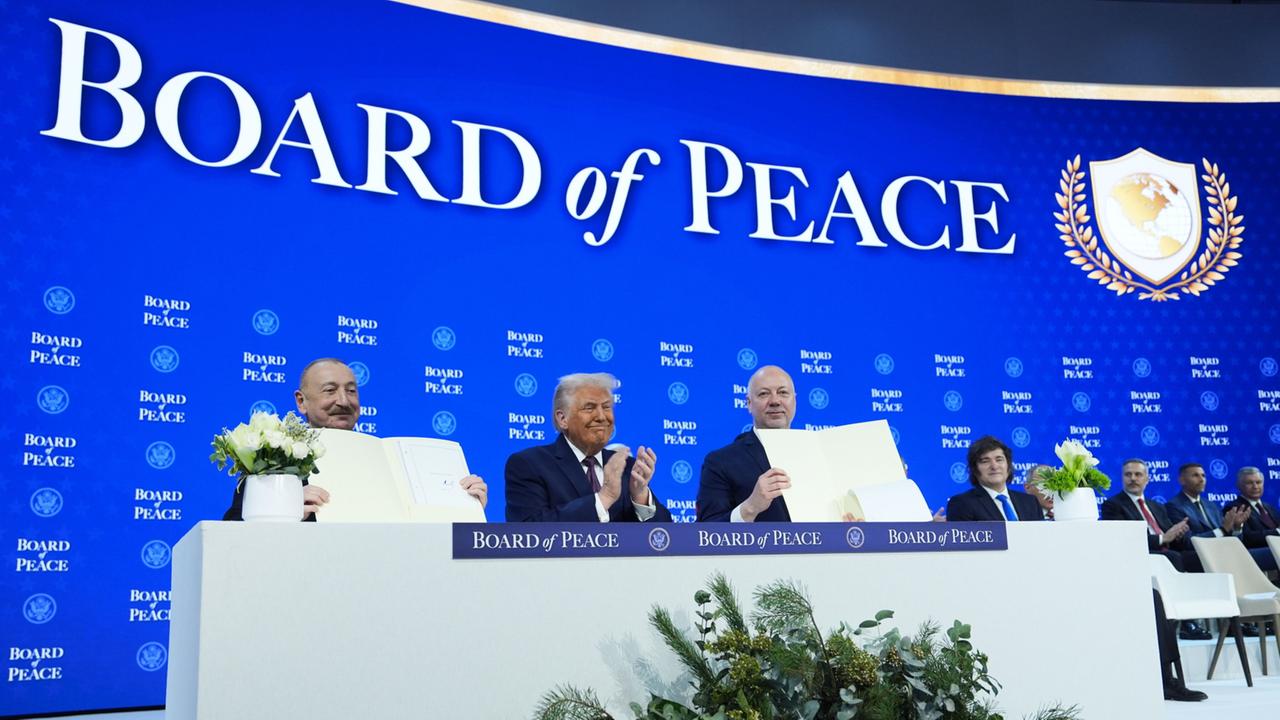
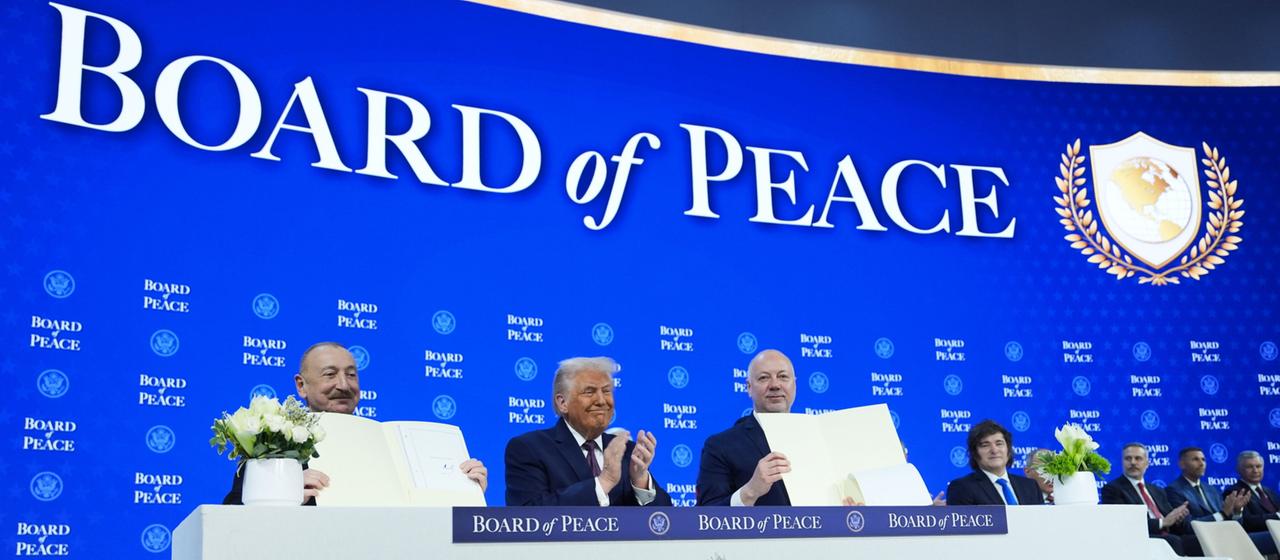
In February 2026, President Trump convened the inaugural session of his "Board of Peace" at the newly christened Donald Trump Institute for Peace in Washington. The event, described by some attendees as "partly strange-looking," brought together representatives from approximately two dozen nations, largely non-European, under the self-proclaimed lifetime chairmanship of the U.S. President. The initial mandate, narrowly focused on overseeing the reconstruction of the war-torn Gaza Strip, was swiftly expanded prior to the founding meeting to encompass the far broader and more ambiguous goal of "peace in the entire world." Curiously, the final charter for the organization makes no explicit mention of the Palestinian territory it was originally conceived to aid.
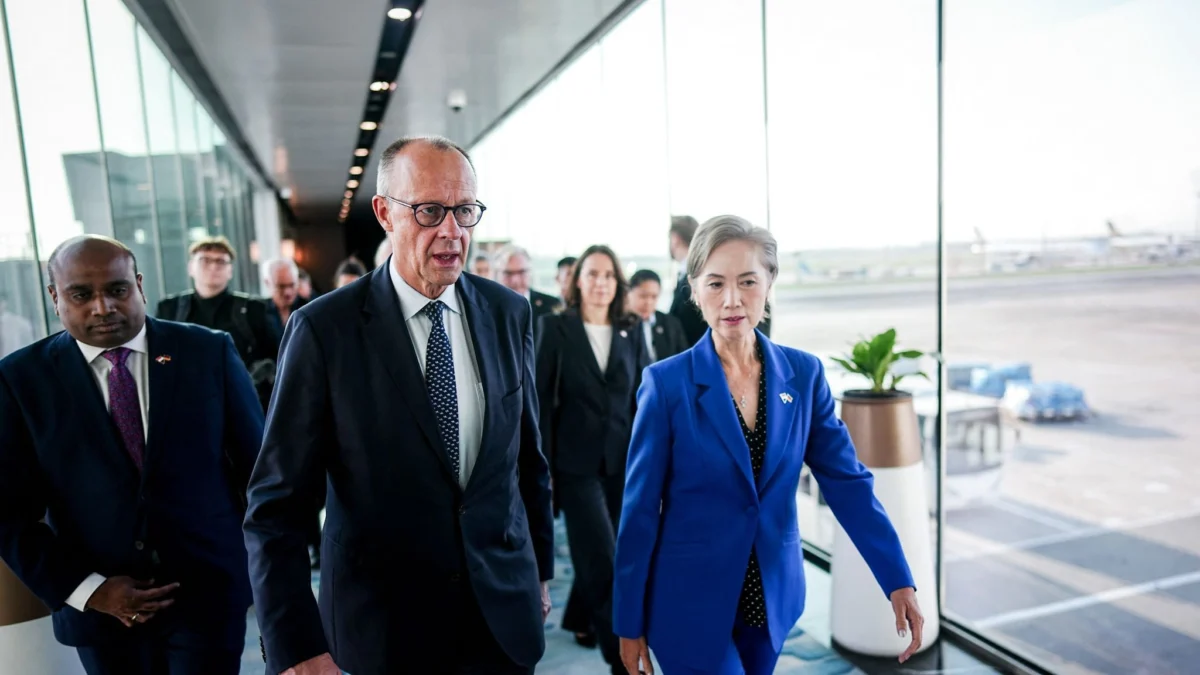
From its inception, the initiative faced significant skepticism from traditional international powerhouses. Germany, a key U.S. ally, notably declined to participate, with Chancellor Friedrich Merz publicly citing "constitutional concerns" regarding the council’s structure and legitimacy. This stance was echoed by most European allies, who overwhelmingly maintained their allegiance to the established framework of the United Nations for such critical global endeavors.
Despite this international reticence, President Trump, ever the showman, lauded his new creation in the highest possible terms. He declared it the "most significant body in terms of power and prestige" ever conceived, a unique entity with "nothing comparable" in history. Yet, beneath the veneer of this grandiose rhetoric lies a stark and troubling reality: the financial commitments that were to underpin this unparalleled vision have, to date, largely materialized as an illusion. According to a recent investigation by the Financial Times, an official fund established for the "Peace Council" at the World Bank holds a balance of precisely zero dollars. While a separate account at a private bank reportedly holds some funds, the amount remains undisclosed, shielded by a complete lack of transparency obligations – a critical red flag for international accountability. Meanwhile, the humanitarian crisis in Gaza continues unabated, a stark testament to the council’s inaction.
Chronology of a Controversial Initiative
February 2026: The Inaugural Spectacle
The curtain rose on the "Board of Peace" in February 2026, marking what President Trump envisioned as a pivotal moment in global diplomacy. The setting was the opulent Donald Trump Institute for Peace in Washington, D.C., a venue that itself underscored the deeply personal branding of the initiative. Dignitaries and representatives from roughly two dozen nations gathered, many from countries not typically at the forefront of major international peace efforts, lending an eclectic and, for some observers, an unsettling air to the proceedings.
President Trump, seizing the spotlight as the self-appointed "chairman for life," delivered a characteristically triumphant address. He painted a vivid picture of a new global order, one spearheaded by his council, promising unprecedented effectiveness and groundbreaking results. The atmosphere, while celebratory for participants, struck many seasoned diplomatic correspondents as "befremdlich wirkende" – a strangely disjointed spectacle, perhaps due to the mix of participants, the grandiosity of the claims, and the apparent absence of detailed operational plans.
Crucially, this inaugural session was punctuated by sweeping financial pledges. President Trump himself promised a staggering $10 billion from the United States to kickstart the council’s operations and fund its ambitious agenda. Complementing this, member states were encouraged, and indeed expected, to contribute an additional $7 billion. In a somewhat unexpected turn, even FIFA President Gianni Infantino reportedly committed significant sums, specifically earmarked for the promotion of sports and youth development in the Gaza Strip – a gesture that, while positive in intent, highlighted the disparate nature of the pledges and the seemingly uncoordinated approach to fundraising.
The Expanding Mandate and International Skepticism
Even before the first gavel struck at its founding session, the "Board of Peace" underwent a significant, and arguably problematic, shift in its stated purpose. What began as a focused initiative to oversee the complex and critical reconstruction of the Gaza Strip rapidly broadened into a far more diffuse and aspirational mission: securing "peace in the entire world." This expansion, while seemingly noble, immediately raised questions about the council’s capacity, expertise, and potential for diluted focus. The most telling detail of this pivot was the complete omission of any explicit reference to Gaza in the council’s official charter, despite the Palestinian territory being the original impetus for its creation. This erasure signaled a move away from concrete, immediate humanitarian and reconstruction efforts towards a more abstract, overarching goal that could prove difficult to measure or achieve.
The international community’s response was swift and largely skeptical. Germany, a traditionally strong advocate for multilateralism and a significant donor to humanitarian causes, outright rejected participation. Chancellor Friedrich Merz articulated "constitutional concerns," which likely encompassed worries about the council’s legal standing, its potential to undermine established international bodies like the UN, and the implications of its governance structure. The German government, along with the majority of its European allies, reiterated their firm belief that the United Nations remained the appropriate and legitimate forum for addressing such complex global challenges. Their reluctance stemmed not only from institutional loyalty but also from a palpable unease with the council’s ad hoc formation, its lack of clear democratic oversight, and the highly personalized leadership style of its founder. This collective European stance left the "Board of Peace" without the significant diplomatic heft and financial contributions that a broad international coalition would typically bring.
Supporting Data: The Stark Financial Reality
Billions Promised, Zero Delivered to Official Channels
The most damning evidence against the efficacy and credibility of the "Board of Peace" comes from its financial records – or rather, the lack thereof. Four months after the initial fanfare and colossal financial promises, a rigorous investigation by the Financial Times unveiled a deeply troubling reality: the official fund established for the council at the World Bank has received precisely zero dollars. This stark figure stands in glaring contrast to President Trump’s pledge of $10 billion from the United States alone, let alone the additional $7 billion promised by member states.
The investigation further highlighted the existence of a parallel, opaque financial channel: a separate account held at a private bank. While this account reportedly holds some funds, its exact balance remains shrouded in secrecy. Crucially, it operates under no transparency obligations, meaning donors and the public have no insight into the sources of its funds, how they are managed, or how they are being spent. This dual-track financial system immediately raised alarm bells among financial oversight bodies and international aid experts.
Michael Mattler, a respected figure with three decades of experience at the U.S. State Department, articulated the profound implications of this lack of transparency. "Any organization that seeks to raise significant funds needs structures that assure donors their resources are well-managed and responsibly expended," Mattler emphasized. "Without such safeguards, trust erodes, and legitimate concerns about misuse or diversion of funds inevitably arise." He pointed out that the "Board of Peace" has yet to establish these fundamental structures, a critical oversight that undoubtedly contributes to its inability to attract substantial, credible funding. The limited contributions that have surfaced – approximately $3 million from Morocco and $20 million from the United Arab Emirates – pale in comparison to the billions initially envisioned and primarily serve to cover administrative costs, such as the office of Nikolaj Mladenow, the Bulgarian diplomat appointed as the High Representative for Post-War Gaza, and the salaries of a newly formed Palestinian technocratic committee.
Vague Goals, Concrete Suffering
Beyond the financial void, the "Board of Peace" has also been criticized for its nebulous operational framework. Four months into its existence, the council has yet to articulate a clear, detailed plan for how any collected funds would actually be spent. Its promises remain vague, lacking the concrete objectives and measurable outcomes that are standard in effective humanitarian and reconstruction initiatives.
This lack of specificity stands in stark contrast to the urgent and devastating reality on the ground in Gaza. A poignant film screened at the council’s founding session proclaimed: "From the rubble left by Hamas, a new future will emerge." Yet, as of June 2026, the people of Gaza are still desperately awaiting that promised future. The humanitarian situation remains catastrophic, with widespread shortages of essential medical supplies, rampant food insecurity, and hundreds of thousands of displaced individuals still living in makeshift tents and overcrowded shelters. The daily struggle for survival continues, largely untouched by the grand pronouncements made in Washington.
Adding another layer of complexity, the "Board of Peace" does possess a mandate from the United Nations for reconstruction efforts in Gaza, specifically Resolution S-Res-2803. This mandate, however, appears to be an ironic counterpoint to the council’s actual capabilities. As Mattler observed, "If you build an organization from scratch, it’s a lot of work and doesn’t happen quickly and easily." He questioned the wisdom of entrusting the pressing problems of Gaza to an organization that "first has to do a lot of foundational work," suggesting a fundamental misjudgment of the urgency and complexity involved. The UN mandate itself is set to expire at the end of 2027, placing an implicit timeline on an organization that has yet to even establish basic operational and financial credibility. The discrepancy between its ambitious claims and its tangible output underscores a profound institutional dysfunction that leaves the suffering populace of Gaza in a continued state of limbo.
Official Responses and Lingering Questions
Secretary Rubio’s Confirmation and Limited Contributions
The mounting questions surrounding the "Board of Peace" recently reached the halls of the U.S. Congress, where Secretary of State Marco Rubio faced a parliamentary committee for questioning. Under scrutiny, Rubio was compelled to confirm that the United States, despite President Trump’s much-publicized $10 billion pledge, had not yet transferred any of these promised funds to the "Peace Council." This admission served as a powerful indictment of the council’s financial viability and cast a long shadow over the sincerity of the initial commitments.
Rubio’s testimony further elucidated the meager financial contributions that have been received. According to the Financial Times report cited in the hearings, approximately $3 million from Morocco and $20 million from the United Arab Emirates constitute the entirety of external funding. These relatively modest sums, a mere fraction of the billions promised, are primarily allocated to the operational expenses of the High Representative for Post-War Gaza, Bulgarian diplomat Nikolaj Mladenow, and to cover the salaries of a Palestinian technocratic committee established by the "Peace Council." While these components represent a nascent administrative structure, they are far from the large-scale reconstruction and humanitarian aid initiatives that were originally envisioned.
Furthermore, the Secretary confirmed that funds had been earmarked for the training of a new police force in Gaza. However, like many other initiatives, this program remains stalled and has yet to commence. The revelation underscored the pervasive inertia plaguing the council, where even preparatory steps for critical security infrastructure are unable to move forward. The testimony left many lawmakers and observers wondering about the true intent and functional capacity of an organization that, even with a UN mandate, struggles to deploy even basic funding for its stated objectives.
The Hamas Hurdle: A Precondition for Action?
Perhaps the most significant and politically charged explanation for the "Board of Peace’s" inaction emerged from a recent statement by a council spokesperson to U.S. journalists. The spokesperson clarified, "We are not yet active in Gaza," adding a critical precondition: "Hamas must first be disarmed." This declaration effectively positions the council’s operational engagement in Gaza as contingent upon a complex and highly sensitive political and military outcome.
While the disarmament of Hamas is undeniably a crucial element for long-term stability and security in the region, making it an absolute prerequisite for any council activity, particularly humanitarian and reconstruction efforts, raises profound questions. It suggests that the "Board of Peace" is not merely a neutral humanitarian and development body but is deeply entangled in the political and security dynamics of the conflict. This stance effectively stalls any tangible progress, as the disarmament of Hamas is a protracted and contentious process, unlikely to be resolved swiftly or easily.
Critics argue that by linking humanitarian aid and reconstruction to such a demanding political precondition, the council is inadvertently delaying crucial assistance to a suffering population. It also provides a convenient justification for its current state of paralysis, shifting the blame for inaction from internal organizational deficiencies to external political realities. The spokesperson’s statement underscores the dilemma: is the "Peace Council" genuinely equipped to navigate the intricate geopolitical landscape of the Middle East, or is it merely using these complexities as a shield for its own operational shortcomings? The answer remains open, but the immediate consequence is clear: the people of Gaza continue to wait, their desperate needs unmet, while the "Board of Peace" remains an observer rather than an actor.
Implications: A Legacy of Disappointment?
Erosion of Trust and Credibility
The troubled trajectory of Donald Trump’s "Board of Peace" carries significant and far-reaching implications, particularly for the already fragile landscape of international aid and diplomatic credibility. The spectacular failure to deliver on grand financial promises, coupled with a pervasive lack of transparency, risks severely eroding trust among potential donors, partner nations, and the very populations it purports to serve. When an initiative launched with such fanfare and presidential endorsement falters so dramatically, it fosters cynicism about future international cooperation and makes it harder for legitimate organizations to garner support.
This scenario plays directly into the narrative that the "Board of Peace" was, from its inception, more of a "PR show" than a serious, functional entity. The image of billions pledged but zero delivered to official channels, contrasted with the desperate reality in Gaza, reinforces the perception of performative diplomacy over substantive action. For President Trump, this failure could undermine his stated goal of promoting global peace and establishing a lasting legacy, potentially painting his efforts as hollow and self-serving. More broadly, it could discourage other nations from participating in future ad hoc, leader-driven initiatives, pushing them further towards established, albeit sometimes slower, multilateral frameworks. The long-term damage may extend beyond this particular council, making it more challenging to mobilize resources and build consensus for critical global challenges in the future.
The Future of the Board of Peace
The structural integrity of the "Board of Peace" is as questionable as its financial standing. According to its own charter, the council is set to automatically dissolve after a period of two years. This means that by February 2028, the organization will cease to exist unless its "chairman for life," Donald Trump, actively initiates and secures an extension. This clause places immense power in the hands of a single individual, underscoring the autocratic nature of the council’s governance and further highlighting its deviation from conventional multilateral structures.
Perhaps even more concerning are the provisions regarding any unspent funds. Should the council dissolve, the decision on what happens to any remaining money will rest solely with President Trump and his hand-picked board, which is majority-composed of his trusted confidantes. This arrangement immediately raises significant ethical and accountability questions. Without robust independent oversight and clear legal frameworks, there is a risk that funds, however minimal, could be subject to discretionary use, potentially for purposes far removed from the council’s stated humanitarian or peace-building objectives. This lack of clear exit strategies and financial stewardship further compounds the perception of the council as an instrument designed more for the personal aggrandizement of its founder than for the collective good.
As the "Board of Peace" navigates its precarious existence, the urgent humanitarian crisis in Gaza continues unabated. The promised billions remain a distant mirage, and the grand vision of a new era of global peace remains unrealized. The tragic irony is that while a council dedicated to peace and reconstruction struggles to find its footing, the actual needs of those it purports to help grow more dire by the day, leaving a profound legacy of disappointment and unfulfilled hope.