
Introduction
In a landmark operation that has sent shockwaves through Vietnam’s animal welfare community and local law enforcement, police in Ho Chi Minh City successfully dismantled a sprawling, multi-year criminal syndicate dedicated to the theft and trafficking of domestic cats. The raid, which resulted in the rescue of over 400 living animals and the discovery of 80 frozen carcasses, marks one of the most significant interventions against the illicit pet-theft trade in the nation’s recent history. As the investigation deepens, the case has ignited a national debate regarding the ethics of the pet meat industry, the enforcement of regulatory standards, and the growing demand for animal protection laws in a rapidly modernizing society.
The Facts of the Raid: A City-Wide Investigation
The operation, carried out late last week, was the culmination of months of intensive surveillance and intelligence gathering. Law enforcement officials in Ho Chi Minh City acted on a growing wave of reports from local residents who had grown increasingly desperate as their beloved pets began to vanish in alarming numbers.
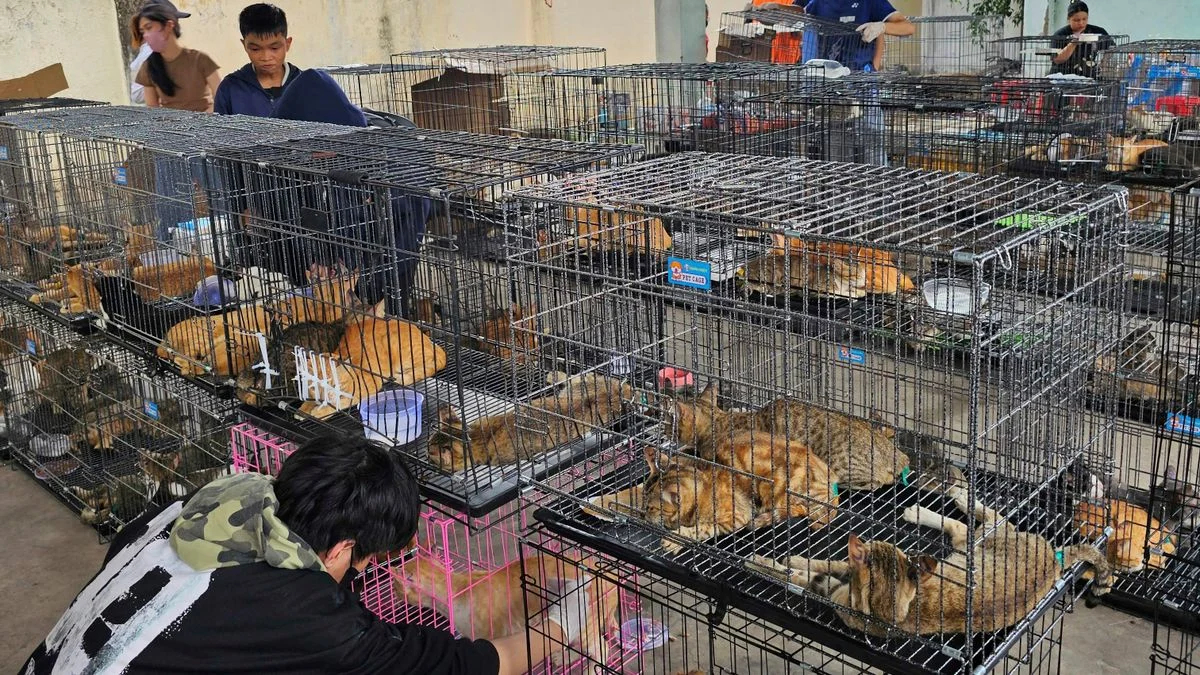
According to the official bulletin released by the Ho Chi Minh City Police Department, the raid targeted a clandestine facility used as a staging ground for the criminal enterprise. Upon entering the premises, officers were confronted with a harrowing scene: hundreds of cats, many suffering from extreme dehydration, malnutrition, and trauma, were being held in cramped, unsanitary conditions.
Beyond the living victims, the discovery of 80 dead, deep-frozen cats underscored the industrial scale of the operation. Preliminary findings suggest that the site served as a collection hub where stolen animals were processed and prepared for distribution to various outlets. Nine suspects were apprehended at the scene and are currently in police custody, facing charges related to theft and the illegal handling of animal products.
Chronology of a Criminal Enterprise
The investigation into the syndicate revealed a sophisticated, albeit cruel, logistical network that had been operating in the shadows for years.
The Initial Phase (2021–2023)
Interrogations of the nine suspects have shed light on the inner workings of the ring. The suspects confessed to authorities that they had been systematically targeting suburban and urban neighborhoods throughout Southern Vietnam for the past three years. Using bait and specialized capture equipment, they targeted domestic pets—many of which were socialized, family-owned animals—rather than strays, as they were easier to lure.
The Escalation
As the syndicate grew in confidence, their reach expanded across multiple provinces. The animals were transported to the Ho Chi Minh City hub, where they were sorted and stored. This period saw a noticeable spike in “missing pet” reports, which overwhelmed local social media groups and animal rescue forums, eventually drawing the attention of the police.
The Final Crackdown
In the weeks leading up to the raid, police utilized geo-tracking data and witness testimonies to pinpoint the primary storage location. The final operation was executed with precision, catching the traffickers off-guard. Within 48 hours of the raid, the organization Humane World for Animals arrived on-site to assist in the emergency medical triage of the surviving cats.
Supporting Data: The Scale of the Crisis
The sheer volume of animals recovered—400 alive and 80 dead—provides a staggering look at the hidden economy of the pet meat trade. While the consumption of dog and cat meat remains a legal, albeit controversial, practice in Vietnam, the source of the meat is where the law becomes clear.
Under Vietnamese regulations, any business dealing in dog or cat meat must provide verifiable documentation regarding the origin of the animals. This includes health certificates and proof of legal acquisition. The syndicate failed to produce a single valid document, confirming that the entire operation was built on theft.
The recovery process has been equally daunting. As of the most recent update, over 40 cats have been reunited with their owners, a process facilitated by the Humane World for Animals organization. The remaining hundreds of cats are currently housed in a makeshift, high-security rescue center established on the grounds of the Ho Chi Minh City Criminal Police headquarters. Veterinarians and volunteers are working around the clock to treat infections, manage stress-related illnesses, and provide the basic nutrition these animals were denied for weeks or even months.
Official Responses and Public Engagement
The response from the Ho Chi Minh City Police has been remarkably proactive, signaling a potential shift in how the state handles animal-related crimes.
Police Statement
"This is not merely a matter of missing property; it is a matter of public safety and social order," a police spokesperson stated during a press conference. "We invite anyone who has lost a pet in recent months to come to the station, identify their animal, and assist us in providing testimony that will ensure these individuals face the full extent of the law."
The Role of Advocacy Groups
Humane World for Animals has been instrumental in bridging the gap between the police and the public. By establishing an identification portal and coordinating volunteer veterinary care, they have transformed the police station into a center of hope for grieving pet owners. Their presence has also ensured that the welfare of the rescued animals remains a priority throughout the investigative process.
Community Reaction
The discovery has sent a wave of indignation through the Vietnamese public. On platforms like Facebook and Zalo, thousands of pet owners have shared photos of their missing companions, hoping to find them among the rescued cats. The raid has also sparked a wider conversation about the necessity of a dedicated Animal Welfare Act, a piece of legislation that remains absent in the current legal framework.
Implications for Vietnam’s Animal Meat Industry
The case has laid bare the complex, often murky, nature of the dog and cat meat trade in Vietnam. While there is a cultural history of consuming these meats, the tide is rapidly turning, particularly among the younger, urbanized demographic.
Legal Ambiguity vs. Criminal Reality
The legality of the meat consumption itself is not the focus of this prosecution; rather, the focus is on the theft and trafficking components. However, this case highlights a fundamental problem: when the demand for meat exceeds the legal, regulated supply, it creates a vacuum filled by criminal organizations that steal pets from backyards and streets.
Future Regulatory Outlook
The government is under increasing pressure to tighten the regulations surrounding the trade. Experts suggest that the current system of "origin certificates" is insufficient, as it is easily forged and rarely enforced. There are now calls for:
- Stricter Licensing: Implementing mandatory registration for all commercial sellers of dog and cat meat.
- Increased Penalties: Elevating the theft of a pet from a petty crime to a more serious offense involving substantial prison time.
- Mandatory Microchipping: A national campaign to encourage pet owners to microchip their cats and dogs, which would make the recovery of stolen animals significantly easier.
A Shifting Cultural Landscape
The raid serves as a microcosm of a broader cultural evolution. As pet ownership becomes more common in Vietnam, the status of cats and dogs is transitioning from "livestock" or "pest" to "companion." This shift is driving a moral outcry that is becoming impossible for policymakers to ignore.
The successful rescue of these 400 lives is a triumph, but the shadow of the 80 lost cats remains a haunting reminder of the work that lies ahead. As the legal proceedings against the nine suspects move forward, the case will undoubtedly serve as a benchmark for future Tierschutz (animal protection) efforts in the region. Whether this incident leads to comprehensive legislative change remains to be seen, but for the hundreds of families currently being reunited with their companions at a police station in Ho Chi Minh City, the impact of this operation is nothing short of life-changing.
The story is far from over. As the investigation into the eventual buyers of the meat continues, the police are signaling that no part of the supply chain is safe from scrutiny. For now, the focus remains on the survivors: the 400 cats currently waiting, one by one, to return home.