

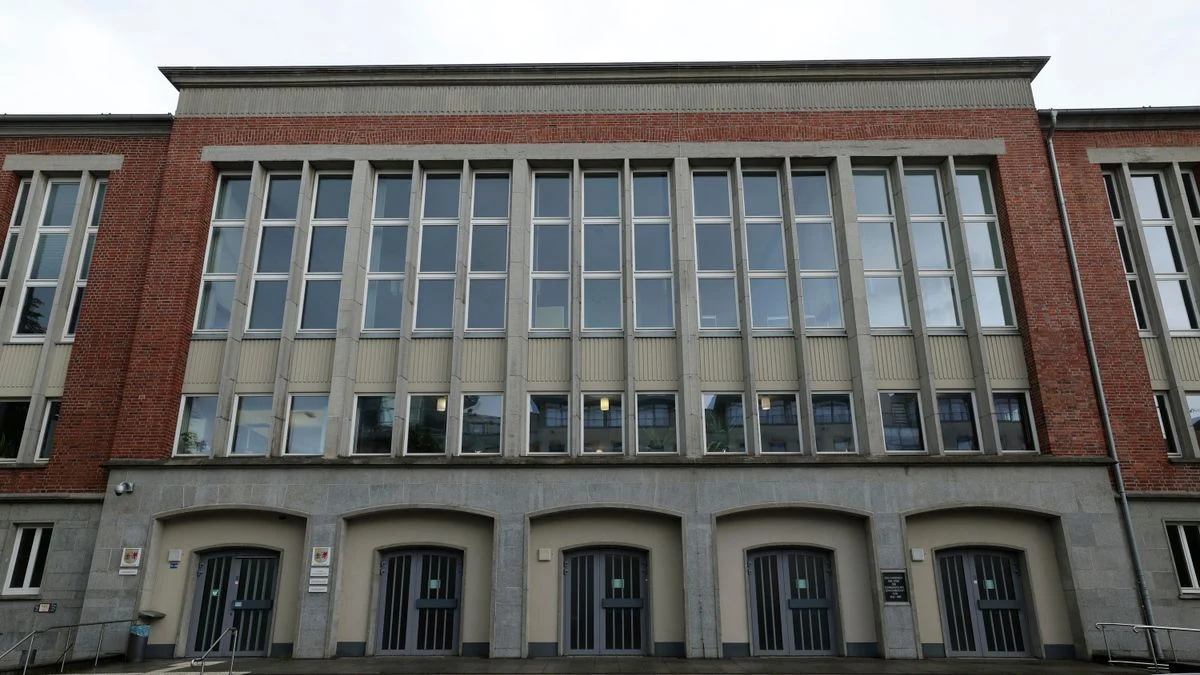
The courtroom at the regional court has become the stage for a harrowing drama that blurs the lines between grief, manipulation, and the cold reality of a criminal investigation. Since late April, the judicial system has been scrutinizing the actions of a 30-year-old woman accused of murdering a young boy in October of last year. What should be a straightforward pursuit of justice has instead devolved into a psychological labyrinth, centered on a fractured relationship between the defendant and the victim’s father—a man who, despite the gravity of the accusations, has publicly declared his unwavering faith in the woman’s innocence.
The Core Facts: A Crime of Devastating Proportions
The prosecution’s case rests on the events of last October, which resulted in the tragic death of a young boy. The defendant, who has been in pre-trial detention since November 2025, faces charges of murder. While the investigation initially focused on forensic evidence and the immediate timeline of the crime, the trial has shifted its focus toward the intricate personal dynamics that defined the life of the victim and the accused.
The prosecution alleges that the motive is inextricably linked to the volatile, long-term relationship between the defendant and the victim’s father. According to the state’s theory, the conclusion of this relationship—or perhaps the lengths to which the defendant went to preserve it—served as the catalyst for the fatal event. However, the courtroom atmosphere is heavily weighted by the testimony of the father, who has spent hours on the stand attempting to dismantle the prosecution’s narrative.
Chronology of a Relationship and a Tragedy
To understand the current impasse, one must look at the timeline that preceded the indictment:
- Pre-October 2025: The defendant and the victim’s father maintain a long-term, reportedly turbulent relationship.
- October 2025: The young boy is killed. Investigations are launched immediately, leading to the arrest of the 30-year-old woman.
- November 2025: The accused is officially placed in pre-trial detention, where she has remained ever since.
- Late April 2026: The main trial proceedings begin.
- Present Day: The trial continues with the father of the victim appearing as a witness, confirming that he and the accused have reconciled and are currently a couple.
This chronology is essential to the prosecution’s argument. The fact that the victim’s father, the man who arguably suffered the greatest loss, is now the primary defender of the woman accused of killing his son has shocked the public and frustrated the judiciary.
The Prosecution’s Stance: A Narrative of Manipulation
Chief Prosecutor Nowack has been vocal about his frustration regarding the testimony provided by the father. During the proceedings, Nowack pointedly addressed the inconsistencies between the father’s current statements and his earlier depositions given to the police.
The Problem of Shifting Testimony
Nowack emphasized that it is profoundly difficult to reconcile the witness’s current stance with the statements he provided during the initial phase of the investigation. While the prosecutor did not detail every specific discrepancy, he noted that the father’s transformation from a potential victim-witness to a vocal supporter of the accused suggests a strategic shift rather than a factual one.
Allegations of Emotional Coercion
Beyond the inconsistencies, the prosecution has leveled a serious charge of emotional manipulation against the defendant. According to the state, the woman has successfully exerted influence over the father from behind bars. The prosecutor argues that the defendant actively sought to rekindle the relationship to secure the father’s loyalty, effectively neutralizing him as a witness for the prosecution.
“It is not comprehensible why the father would resume a relationship with the accused,” Nowack stated, highlighting that the defendant’s primary motivation was to ensure her own exoneration by controlling the narrative of those closest to the case.
The Legal Implications: A Witness Uninterested in Justice
Perhaps the most damning argument raised by the prosecution is the father’s apparent lack of interest in the truth. In legal systems like the one currently overseeing this trial, victims’ families are often given the right to participate as "joint plaintiffs" (Nebenkläger). This role allows family members to access the case files, question witnesses, and provide input on the trial’s direction.
The father’s refusal to exercise these rights is, according to the prosecution, evidence that he is not interested in an objective search for the truth. By opting out of the legal mechanisms designed to protect the victim’s interests, the father has effectively signaled that his loyalty lies with the accused rather than with the memory of the boy. This tactical withdrawal from the legal process serves as a cornerstone for the prosecution’s argument that the witness has been compromised.
The Defendant’s Silence
Throughout the months of the trial, the defendant has remained largely silent. While her partner—the victim’s father—has been eager to speak on her behalf, the accused has not offered a statement regarding the events of that night in October. In a legal environment where silence can be interpreted as either a constitutional right or a sign of guilt, the defendant’s quiet demeanor has only added to the tension.
Legal analysts observing the case note that this silence creates a vacuum that is being filled by the father’s testimony. If the accused were to speak, she would be subject to cross-examination; by remaining silent, she allows the father to act as her surrogate, effectively shielded by his status as a bereaved parent.
Implications for the Verdict
The trial raises profound questions about the nature of truth in a courtroom. Can a trial result in justice if the primary witnesses are emotionally compromised? The court is now tasked with weighing the objective forensic evidence against the subjective testimony of a man who has chosen to stand by the person accused of taking his child’s life.
The Psychological Aspect
The case has sparked a wider conversation about trauma bonding and the psychological control that can exist within abusive or toxic relationships. If the prosecution’s theory of manipulation is correct, it presents a chilling case study of how a suspect can manipulate the judicial process through the very people who should be seeking her conviction.
Impact on the Judicial System
For the court, the challenge is to maintain its impartiality while dealing with a witness who is seemingly working against the interests of the investigation. The judge must decide how much weight to give to the father’s testimony, given his clear conflict of interest. If the court determines that the witness is being manipulated, it may lead to stricter scrutiny of his statements and could potentially result in his testimony being dismissed or heavily discounted during the final deliberations.
Conclusion: A Search for Resolution
As the trial moves toward its conclusion, the central question remains: who is telling the truth? Is the defendant a victim of circumstance, as her partner claims, or is she a calculated actor who has successfully subverted the legal system?
The tragedy of the young boy’s death is magnified by the circus-like atmosphere that has developed around the trial. As the court prepares for closing arguments, the eyes of the public remain fixed on the strange, unbreakable bond between the father and the accused. Regardless of the final verdict, the trial has already left an indelible mark on the community, serving as a grim reminder of how deeply personal relationships can distort the path to justice.
The court must now navigate this treacherous emotional landscape to reach a verdict that stands up to scrutiny—a task made significantly harder by the very person who should have been the prosecution’s most important ally. The verdict will not only determine the fate of the 30-year-old woman but will also serve as a final judgment on the tragic, twisted relationship that defined the final months of a young life.


















Leave a Reply