

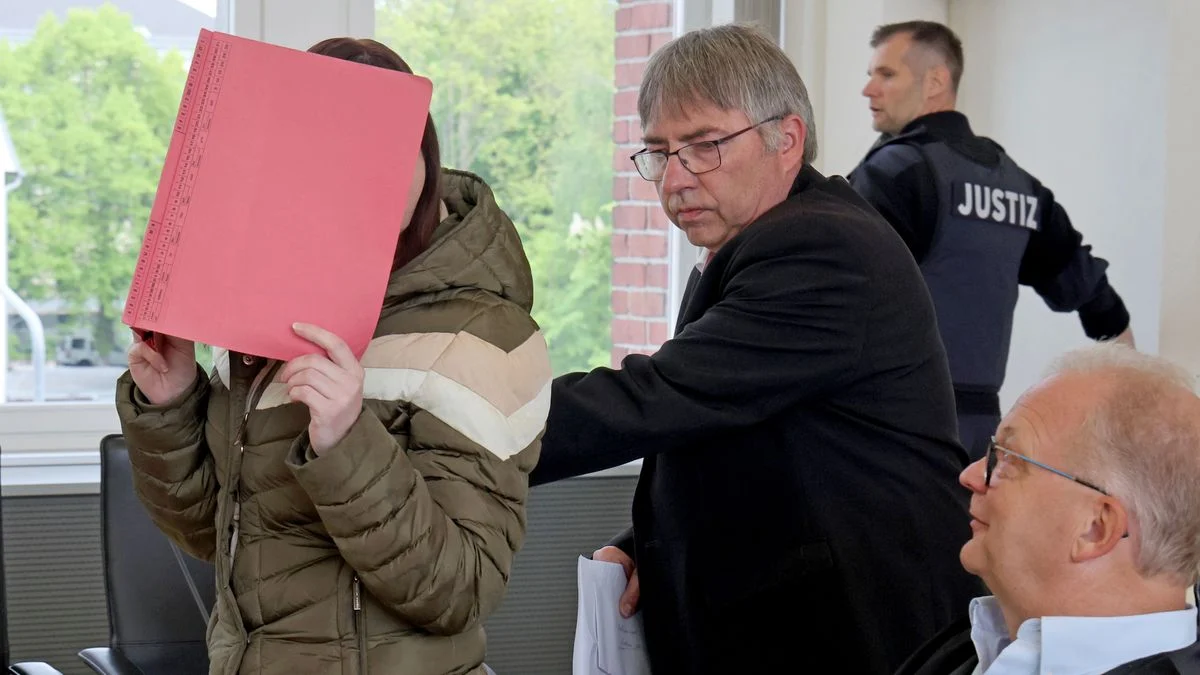
The death of a young man named Fabian in Rostock has sent shockwaves through the community, turning a quiet city into the epicenter of a complex legal and emotional debate. As the judicial proceedings unfold, the public remains captivated by the question of how a promising life could be cut short under such circumstances. This report synthesizes the ongoing legal proceedings, the perspectives of those who knew the victim, and the broader societal implications of this tragic event.
I. Main Facts of the Case
The case revolves around the violent death of Fabian, a young man whose life was abruptly ended in an incident that has left his family and friends in deep mourning. While the specific legal charges involve complex questions of intent and culpability, the core fact remains: a young life was lost in an act of violence that has prompted a high-profile trial in the Rostock court system.
The investigation, which spanned several months, eventually led to the current trial. Prosecutors have focused on the actions of the accused, attempting to reconstruct the sequence of events that led to the fatal encounter. For the victim’s friends and family, the courtroom is not merely a place of legal procedure, but a stage where they hope to find answers and, eventually, a sense of justice for a friend who was known for his vibrant personality and future potential.
II. Chronology of the Event
Understanding the gravity of the case requires a detailed look at the timeline leading up to the tragedy.
- The Period Prior: Fabian and his circle of friends were integrated into the local social fabric of Rostock. Reports indicate no prior history of major conflict that would have signaled the impending tragedy.
- The Incident: On the night of the incident, initial investigations suggest a confrontation occurred. While the exact spark remains a point of contention between the defense and the prosecution, witnesses have described an escalation that turned from a verbal dispute into a physical altercation.
- The Immediate Aftermath: Following the incident, local law enforcement secured the scene. The subsequent investigation relied on forensic evidence, surveillance footage, and witness testimonies, which were compiled over the following months.
- The Trial Commencement: The trial formally began at the Rostock regional court. It has since featured testimony from various individuals, including law enforcement officials, medical examiners, and, most poignantly, the friends of the deceased.
III. Perspectives from the Inner Circle: What Friends Say
Perhaps the most harrowing aspect of the trial is the testimony provided by Fabian’s friends. During the proceedings, those who stood by him in life have now taken the stand to provide context to his character and the void his absence has created.
According to those closest to him, Fabian was a stabilizing force within their group. "He was the one who mediated," one friend testified. "It is inconceivable that he would have been the one to initiate a violent confrontation." These testimonials serve to counter any narratives that might seek to paint the victim as a participant in his own demise. The emotional toll on these witnesses is evident; many have expressed that the trial is not just about the legal outcome, but about preserving the dignity of their friend’s memory.
The defense, conversely, has sought to probe the reliability of these memories, questioning whether the emotional closeness of the witnesses might cloud their objectivity. However, the consistent portrayal of Fabian as a non-violent individual remains a cornerstone of the prosecution’s narrative.
IV. Supporting Data and Forensic Evidence
The prosecution’s case rests on a foundation of forensic data. Medical experts have testified regarding the cause of death, providing technical insights into the nature of the injuries sustained by Fabian. This data is critical because it directly influences the charges brought against the defendant.
Furthermore, digital forensics—including the analysis of text messages and social media interactions leading up to the night of the incident—have been presented to the court. These pieces of evidence aim to establish a motive or, at the very least, a pattern of behavior that corroborates the prosecution’s argument. The defense has challenged the interpretation of this data, arguing that circumstantial evidence is being used to construct a narrative that does not necessarily reflect the defendant’s state of mind at the time of the event.
V. Official Responses and Legal Stance
The court, under the guidance of the presiding judge, has maintained a rigorous focus on the facts. The prosecution has been adamant that the actions taken by the accused were not merely reckless but constituted a severe breach of law that warrants a substantial sentence.
The defense counsel has adopted a strategy centered on the concept of "reasonable doubt." They have argued that the events were chaotic and that the defendant acted under duress or in a perceived state of self-defense, though the latter has been met with strong opposition from state prosecutors. The public prosecutors, for their part, have urged the court to look past the confusion of the moment and focus on the clear causal link between the defendant’s actions and the victim’s death.
VI. Societal Implications
The trial of the killing of Fabian is more than just a local news story; it touches upon broader societal issues in Germany, particularly regarding youth violence and the role of the judicial system in resolving disputes that arise in social settings.
The Impact on the Community
The Rostock community has been deeply affected. The trial has prompted discussions about safety in public spaces and the escalation of interpersonal conflicts. Many residents have expressed concern that such a tragedy could happen in their city, leading to calls for increased community outreach and violence prevention programs.
The Role of Media and Public Opinion
The media coverage surrounding this trial highlights the tension between the public’s right to know and the necessity of a fair trial. The sensitivity of the case has meant that the court must constantly navigate the pressure of public opinion while remaining strictly bound to the evidence presented in the courtroom.
The Path to Justice
As the trial progresses, the question remains: what does justice look like for Fabian? For some, it is the incarceration of the perpetrator. For others, it is an acknowledgment of the truth and an end to the speculation surrounding the incident. The judicial process, while often slow and cold, is tasked with the monumental burden of balancing these societal needs with the constitutional rights of the accused.
Conclusion
The death of Fabian remains a tragedy that defies simple explanation. As the court in Rostock continues its deliberations, the public waits, hoping that the final verdict will provide a measure of closure for those who loved him. While legal systems are designed to parse facts and assign responsibility, they are often insufficient to heal the wounds left by such senseless loss. The trial serves as a somber reminder of the fragility of life and the lasting impact that a single moment of violence can have on a community.
As we look toward the final days of the trial, the testimonies, the forensic data, and the emotional appeals will all be weighed in the balance. Whatever the outcome, the memory of Fabian will continue to be a rallying point for those who believe in the necessity of justice and the importance of remembering those who can no longer speak for themselves. The lessons learned in this courtroom will likely resonate in Rostock for years to come, serving as a cautionary tale of how quickly lives can be changed, and how much effort is required to find truth in the wake of tragedy.





















Leave a Reply