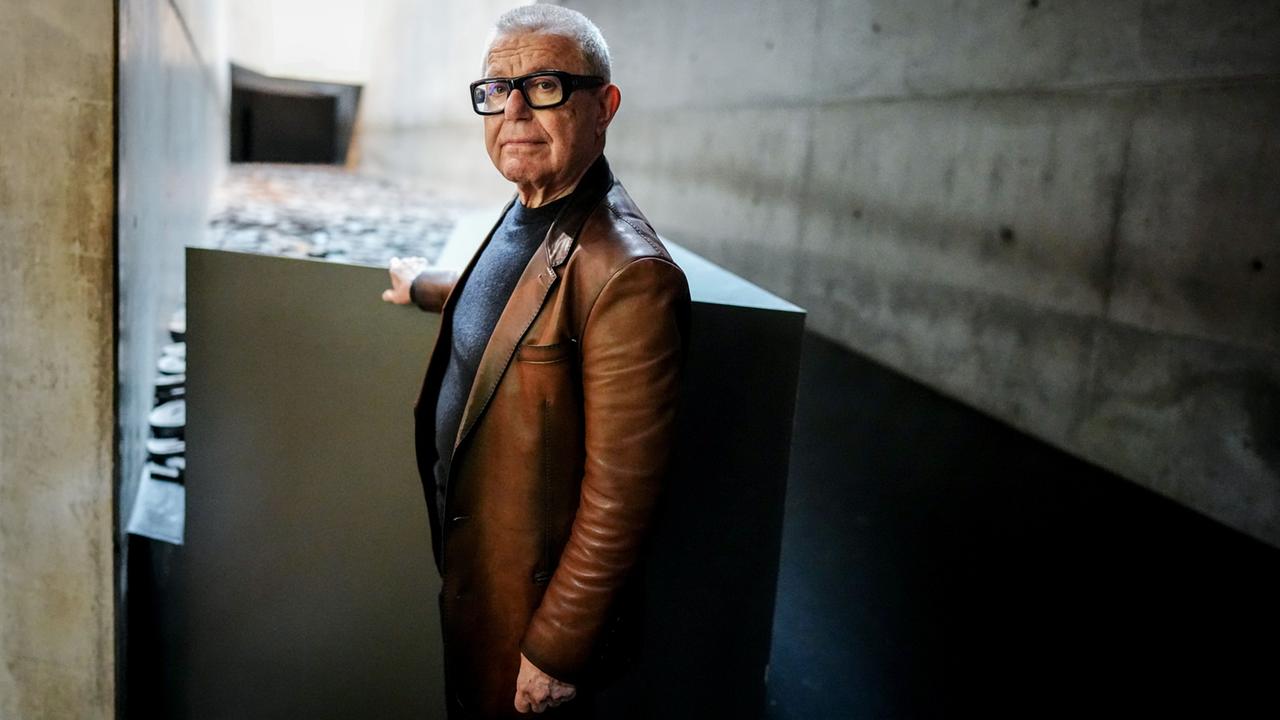
As Daniel Libeskind celebrates his 80th birthday, he stands not merely as a master builder, but as an architect of the human condition. From his origins as a musical prodigy in post-war Poland to the deconstructivist icon who redefined the skyline of Berlin and the emotional geography of Ground Zero, Libeskind’s career is a testament to the power of narrative-driven design.
Main Facts: A Legacy Etched in Steel and Light
Daniel Libeskind’s impact on modern architecture transcends traditional blueprints. Born on May 12, 1946, in Łódź, Poland, to parents who survived the Holocaust, his work is inextricably linked to the concepts of memory, trauma, and resilience.
He is arguably best known for his breakthrough design of the Jewish Museum Berlin—a structure that broke every convention of museum architecture when it opened in 2001. His firm, Studio Libeskind, which he operates alongside his wife and business partner, Nina Libeskind, has since become a global powerhouse. His portfolio is vast, spanning from the radical angularity of the Imperial War Museum North in Manchester to the revitalization of urban spaces in Singapore and the United States. Unlike architects who rely on a rigid aesthetic "brand," Libeskind views architecture as a fluid language that must adapt to the "local color" and history of its site.
A Chronology of a Visionary Life
1946–1960: From Łódź to the West
Libeskind’s early life was marked by displacement. Fleeing the dual pressures of Stalinism and rising antisemitism in Poland, his family immigrated to Israel in 1957 before eventually settling in the United States. His initial passion was not architecture, but music; as a virtuoso accordion player, he developed a sensitivity to rhythm, structure, and silence—qualities that would later define his spatial designs.
1970s–1980s: The Theoretical Challenger
Before he laid a single brick, Libeskind was a formidable intellectual force. In the 1970s, he emerged as a leading voice against the "exhausted" functionalism of the post-war era, which he criticized for being purely driven by economic metrics. During this period, he gained fame as a brilliant graphic artist and a creator of "utopian" models, which captured the imagination of the architectural avant-garde.
1988: The Breakthrough
At age 42, with no major built projects to his name, Libeskind’s life changed. He won an international competition for the Jewish Museum Berlin. His design, characterized by a jagged "blitz" floor plan, drew immediate controversy. It was not merely a building; it was an argument. Through "voids"—empty, echoing spaces—he forced visitors to confront the absence left by the Holocaust in German society.
1991–2001: The Struggle for Realization
The construction of the Jewish Museum was almost derailed by the political climate of the early 1990s. As the Berlin Senate sought to cut costs after reunification, the project was nearly canceled. It was only through the tireless advocacy of his wife, Nina, alongside political heavyweights like Willy Brandt and Jerusalem’s former mayor Teddy Kolle, that the project survived. It opened on September 13, 2001—two days after the terrorist attacks on the World Trade Center.
2002–Present: Ground Zero and Global Expansion
Following his success in Berlin, Libeskind was appointed as the master planner for the World Trade Center site in New York. While his original vision for the site was partially compromised by commercial interests, his influence remained central to the emotional recovery of Lower Manhattan. Since then, his work has expanded into commercial and social sectors, from the "Kö-Bogen" in Düsseldorf to social housing in Brooklyn.
Supporting Data: Architectural Philosophy vs. Economic Realism
Libeskind’s work sits at a unique intersection. While critics often label his work as "deconstructivist"—defined by fragmentation and non-rectilinear shapes—he rejects the label.
- The "Mozart" Analogy: Libeskind argues that he is a chameleon. Much like Mozart, who adapted his compositions to the acoustics and cultural expectations of the cities he visited, Libeskind asserts that an architect must "inhabit" a site before drawing.
- The Role of Voids: In the Jewish Museum, Libeskind utilized 1,500 square meters of "empty" space. This was not a lack of design; it was a deliberate choice to manifest the psychological weight of historical absence.
- Commercial Balance: His firm currently manages projects in over 20 countries. Data on his recent works, such as the Leuphana University in Lüneburg, show a shift toward integrating his signature geometric tension into functional, daily-use spaces, proving that his radical design language can serve educational and public needs without losing its artistic integrity.
Official Responses and Public Discourse
The architectural community remains divided, yet respectful. While his buildings—with their slanted walls and sharp, triangular windows—are often challenging to maintain, they are widely cited as "destination architecture" that elevates local tourism and civic pride.
During recent anniversary commemorations, curators at the Jewish Museum Berlin emphasized that Libeskind’s design was the most important factor in the institution’s global success. "It is a building that speaks even when the galleries are empty," noted one museum official.
Conversely, Libeskind has been a vocal critic of what he calls "neoclassical kitsch." He has publicly criticized projects like the proposed expansion of the White House under the Trump administration, labeling them as a retreat into empty, imperialistic pomp that ignores the contemporary realities of global society.
Implications: The Future of the "Libeskind Way"
As Libeskind enters his ninth decade, his influence remains a subject of intense academic study. The implications of his work are twofold:
- Architecture as Memory: He has established a standard for memorial architecture. Today, any project that deals with difficult history is measured against the "Libeskind standard"—the ability to create a visceral, physical experience of historical narrative.
- The Humanistic Approach: Despite the cold, sharp steel often found in his designs, Libeskind maintains a profound humanism. He argues that because all humans share the same biology, the same eyes, and the same relationship to gravity, architecture must prioritize human experience over purely decorative or status-seeking design.
Conclusion
Daniel Libeskind’s 80th birthday is not just a milestone for a man; it is a moment to reflect on how architecture has evolved from a tool of state power into a tool of public consciousness. Whether in the heart of Berlin or the bustling streets of Manila, his work reminds us that buildings are not just shelters—they are stories frozen in time, waiting for the public to step inside and find their own meaning.
As he continues to work, his legacy is already secured: he is the architect who taught us that the most significant part of a structure might not be the walls themselves, but the light and the silence that they contain.