


As the German national team prepares for the upcoming World Cup in North America, the German Football Association (DFB) has finalized a performance-based bonus structure that promises a historic payout for the squad should they secure a fifth world title. Despite the high stakes and complex financial landscape of the tournament, officials maintain that the focus remains firmly on sporting glory.
The Core Revelation: A New Financial Benchmark
With the 2026 FIFA World Cup approaching, the German Football Association (DFB) has officially confirmed that the national squad will be eligible for a record-breaking bonus package should they hoist the trophy. DFB Managing Director Andreas Rettig, speaking at a media event in Düsseldorf on Tuesday, May 12, 2026, confirmed that while the specific figures remain confidential, the payout will comfortably exceed the previous benchmarks set for the 2022 tournament in Qatar.
"If the team becomes world champion, there is more than there was in Qatar," Rettig stated, dismissing any speculation that the organization would attempt to scale back expenditures. "Because significantly more revenue is coming in, I don’t want to be stingy there."
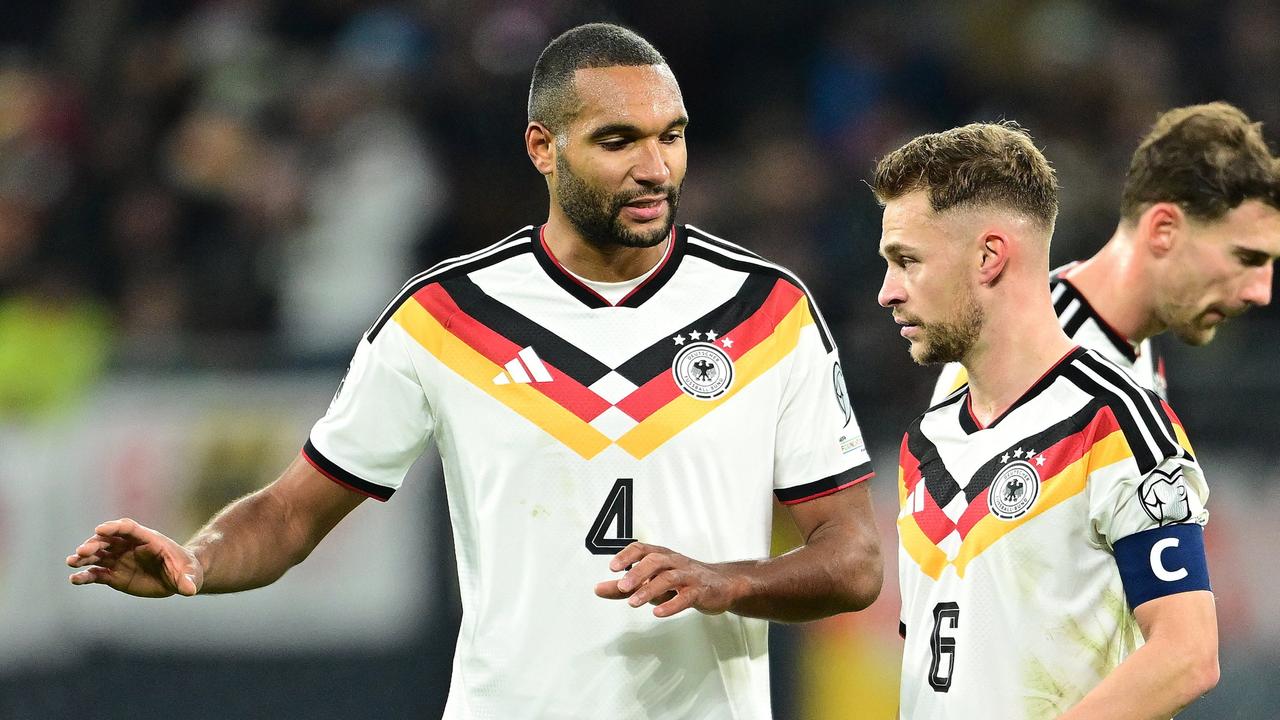
This announcement sets the stage for a summer of high expectations. For the players led by captain Joshua Kimmich, the financial incentive serves as a reflection of the tournament’s massive commercial scale, while for the DFB, it represents a calculated reinvestment of the association’s projected revenues.
A Chronology of German World Cup Bonuses
To understand the significance of this year’s financial framework, one must look at the historical precedent of the DFB’s performance-related compensation.
- 2014 (Brazil): The high-water mark of modern German football. The team received a bonus of 300,000 euros per player for their historic victory in Rio de Janeiro.
- 2018 (Russia): Following the 2014 success, expectations were high, but the team’s premature exit in the group stage meant that no performance bonuses were triggered.
- 2022 (Qatar): The DFB had negotiated a potential payout of 400,000 euros per player for a title win. However, the team suffered a second consecutive group-stage elimination, leaving the bonus pool untouched.
- 2024 (Home European Championship): Despite the advantage of playing on home soil, the payout structure mirrored the 2022 model, with 400,000 euros earmarked for a tournament victory.
- 2026 (USA, Mexico, Canada): The new agreement moves beyond the 400,000-euro ceiling of previous years, reflecting both inflation and the significantly higher commercial revenue expected from the expanded North American tournament.
Supporting Data: The Complexities of International Finance
Setting a bonus structure for a tournament of this magnitude is not as simple as merely signing a check. Andreas Rettig highlighted several logistical and financial hurdles that have made these negotiations particularly intricate.
Currency Fluctuations
FIFA distributes prize money to national associations in U.S. Dollars. Because the DFB operates primarily in Euros, currency volatility poses a risk. Rettig emphasized that the association aims for a "neutral" outcome: "No one should lose out—neither the team nor the DFB." This necessitates a hedging strategy to ensure that the players’ promised payouts are not eroded by unfavorable exchange rate movements between the time of tournament qualification and the final distribution.
The Tax Variable
Taxation remains a significant, often opaque, layer in international player bonuses. Because the tournament spans three different countries and the players earn their primary incomes in various tax jurisdictions, the DFB faces a complex legal puzzle in calculating the net value of these bonuses. Rettig admitted that the tax implications remain "a big problem," requiring specialized financial advisors to ensure compliance while maximizing the take-home pay for the squad.
Operational Costs and Puffer Zones
The 2026 tournament is characterized by exceptionally high operational costs due to the vast distances between host cities in the United States, Mexico, and Canada. The DFB has accounted for these overheads by building a "buffer" into the bonus budget. Rettig noted that for the majority of teams—those who do not reach the semi-finals—the tournament will likely be a "loss-making business" for the association. By negotiating a "rough line" rather than a rigid, ironclad contract, the DFB has created a flexible framework that adjusts based on the actual financial realization of the tournament’s success.
Official Responses: "A Schnapps More"
Perhaps the most telling aspect of the current climate within the DFB is the lack of friction between the administration and the players. According to Rettig, the squad, guided by the leadership of Joshua Kimmich, has shown little interest in debating specific euro-cent figures.
"There are no hard negotiations," Rettig observed. "The team is so convinced of their own quality that they view the bonus as a secondary matter. They have told us, in essence: ‘Let’s focus on winning the World Cup, and then we’ll have a schnapps more.’"
This professional attitude marks a shift from previous eras where bonus negotiations were occasionally fraught with public tension. The current squad’s philosophy is rooted in a "total readiness to perform." The players understand that if they are eliminated early, the bonus effectively drops to zero—a risk they are reportedly comfortable with, given their confidence in their own abilities.
Implications: The Pressure to Deliver
The financial setup for 2026 places an immense weight of expectation on the German squad. By moving to a higher, performance-linked bonus tier, the DFB is signaling its total confidence in the team, but it is also creating a high-stakes environment where failure to advance deep into the tournament will carry both sporting and financial consequences.
Impact on Team Morale
By removing the "bonus negotiation" as a source of conflict, the DFB has cleared the path for a singular focus on football. The message from the DFB to the players has been clear: "Play football, secure the title or deep tournament success, and we will ensure you are rewarded." This creates a meritocratic atmosphere that aligns the players’ financial interests perfectly with the nation’s desire for a fifth star.
The Future of International Football
The 2026 tournament serves as a test case for how national associations will handle the ballooning revenues of expanded FIFA tournaments. As FIFA continues to increase the number of matches and teams, the financial rewards are growing, but so are the risks associated with long-term travel, logistical overheads, and currency instability.
The German model—prioritizing a flexible, trust-based negotiation over rigid, public-facing contracts—may well set the standard for how other major footballing nations manage their players. If the German team succeeds in North America, the 2026 bonus structure will be remembered not just for the record-breaking payout, but as the foundation of a new era of professional cooperation between players and the governing body.
Ultimately, as the team prepares to travel to the Americas, the conversation in the locker room remains centered on legacy. The money, while record-breaking, is seen by the players as a byproduct of success, rather than the goal itself. Whether that success translates into the elusive fifth star remains to be seen, but the infrastructure for that victory is now firmly in place.





Leave a Reply