

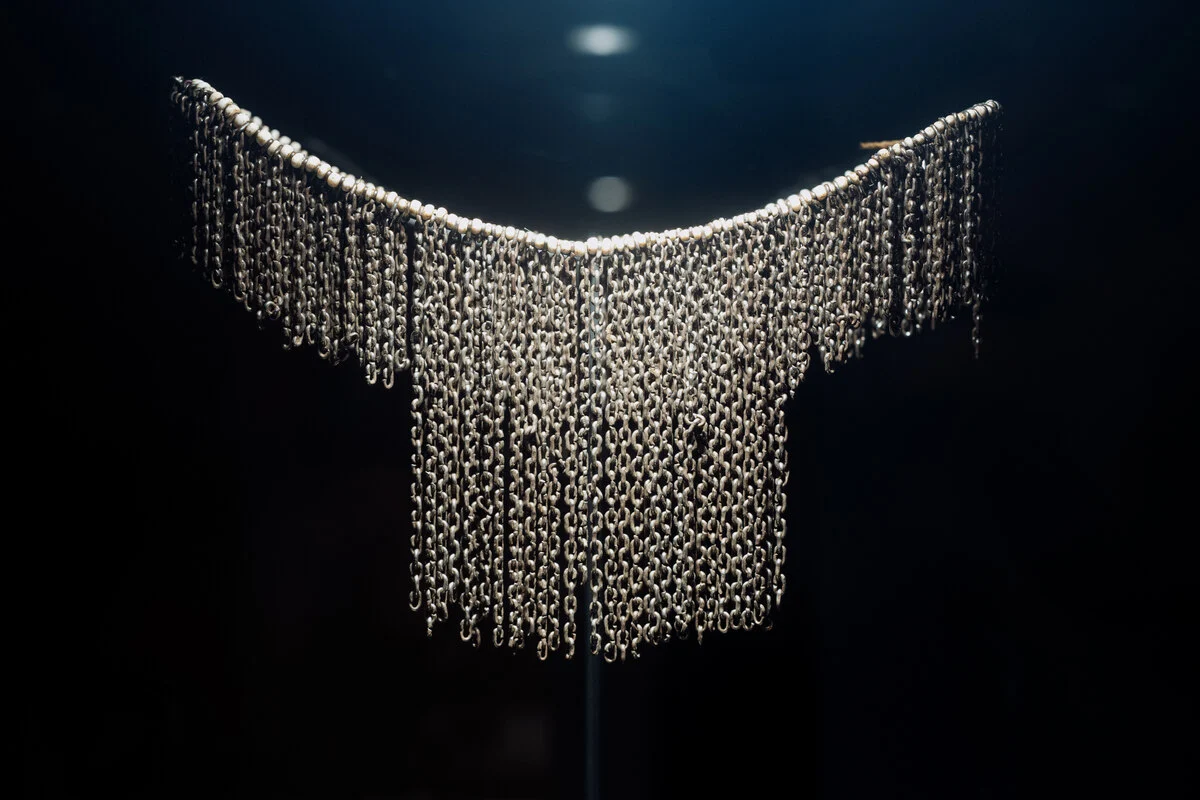
Stuttgart, Germany – In a dimly lit exhibition hall at the Linden-Museum Stuttgart, a collection of intricately beaded jewelry shimmers under spotlights: a skirt, necklaces, armbands, and a series of hip rings. These artifacts, originating from the Chagga people of Tanzania, form the heart of the "Celebrating Womanhood. Cultural Heritage from Kilimanjaro" exhibition. Co-curated by social anthropologist Fiona Siegenthaler and Tanzanian archaeologist Valence Silayo, the exhibition embarks on a self-critical journey, confronting the complex layers of cultural heritage, colonial legacies, and the profound ethical dilemmas inherent in presenting such narratives.
The exhibition’s title, "Celebrating Womanhood," promises an exploration of female identity and tradition. Indeed, the initial displays evoke a sense of rich cultural expression and artistic craftsmanship. However, the museum’s commitment to a holistic and honest portrayal quickly reveals a darker, more challenging aspect of womanhood within Chagga traditions: the historical practice of female genital mutilation (FGM). This juxtaposition, presented without explicit judgment but with an invitation for diverse perspectives, thrusts the exhibition into a delicate balancing act, highlighting the ongoing tension between cultural relativism and universal human rights in the context of decolonizing museum practices.
Main Facts: A Dual Narrative of Adornment and Agony
"Celebrating Womanhood. Cultural Heritage from Kilimanjaro," running at the Linden-Museum Stuttgart until June 7th, is a studio exhibition that critically examines objects acquired during the colonial era. The exhibition focuses on the Chagga people residing on the slopes of Mount Kilimanjaro in Tanzania, presenting their rich material culture through the lens of female identity.
The centerpiece of the initial display is an array of pearl-embroidered jewelry, including elaborate skirts, necklaces, armbands, and a distinctive series of hip rings. These items, believed to have belonged to an elite Chagga family, speak to a vibrant history of craftsmanship and social signaling. Fiona Siegenthaler, one of the exhibition’s curators, explains that glass beads, traded globally since the 18th century, once served as a form of currency. Her research uncovered a delivery note from that era specifically mentioning "red and turquoise beads for the Chagga," underscoring the deep integration of these materials into local economies and social structures. Chagga girls, often with the help of their mothers and grandmothers, crafted this pearl jewelry before their initiation rites. The hip rings, in particular, were powerful markers of social identity, indicating a girl’s initiation into womanhood and, in the case of multiple rings, signifying the number of children she had borne.
Yet, the celebration promised by the title is intentionally juxtaposed with a starker reality. In an adjacent vitrine, the gleaming, finely wrought iron hip jewelry and bell-adorned foot jewelry, clearly crafted for a very slender girl, are displayed alongside a chilling artifact: an iron circumcision knife, barely larger than a razor blade. This abrupt shift confronts visitors with the "dark side" of womanhood within these traditions, directly addressing the historical practice of female genital mutilation.

The exhibition, a result of a two-year research project by Valence Silayo focusing on Chagga cultural heritage, represents a significant step for the Linden-Museum in its ongoing self-assessment regarding its colonial collections. The curatorial team’s decision to include the FGM instruments and contextualize them within the broader narrative of female initiation underscores the museum’s commitment to a more comprehensive and, at times, uncomfortable truth, even as it grapples with the ethical complexities of its presentation.
Chronology: From Ancient Beads to Colonial Shadows
The history of the artifacts presented in "Celebrating Womanhood" is deeply intertwined with centuries of trade, indigenous practices, and the devastating impact of German colonialism in East Africa.
The story of the glass beads, for instance, stretches back to the 18th century, when a burgeoning global trade network brought these colorful adornments to East Africa. Beads quickly transcended their decorative purpose, becoming a significant form of currency and a crucial element in social and economic exchanges. For the Chagga, these beads were not merely commodities but integral components of their cultural expression, particularly in the creation of initiation jewelry. The practice of young girls crafting these intricate pieces with their female elders speaks to a tradition passed down through generations, symbolizing community, identity, and the preparation for adult roles within Chagga society.
The practice of female initiation, including FGM, existed long before European colonization. Historical accounts and oral traditions suggest that these rituals, though painful and often debilitating, were deeply embedded in the social fabric, marking the transition from girlhood to womanhood and conferring social acceptance and eligibility for marriage. A woman who refused the ritual faced severe social ostracization, as vividly illustrated by an ancient song discovered by the curatorial team. Through a contact Silayo had with the Phonogrammarchiv of the Humboldt Forum Berlin, the team unearthed a recording made over a century ago, recounting the story of Ndesamiro, a girl who fled before her circumcision. This song, with its poignant lyrics now enlarged and printed on a Plexiglas panel, offers a rare glimpse into individual resistance and the social pressures surrounding the practice. The lyrics reveal a deeply entrenched belief system where a woman was expected to be "rigid like trees" during intercourse, emphasizing control over female sexuality within the marital context.
The late 19th century brought a dramatic shift with the advent of European colonialism. In 1890, the German Empire assumed control of the "Schutzgebiete" (protectorates) of the German East African Company (DOAG), establishing German East Africa. Moshi, located strategically south of the Kilimanjaro massif, became a crucial military outpost. It was here that Kurt Johannes, the station commander, famously ordered the hanging of Manga Meli, a revered Chagga leader, in 1900. This brutal act was a calculated move to crush indigenous resistance and solidify colonial authority. The pervasive presence of Johannes’s name on many object labels throughout the Stuttgart exhibition serves as a stark reminder of the violent and exploitative origins of much of the museum’s collection. His colleague, Moritz Merker, also extensively documented the region through photography. Siegenthaler noted the existence of a photograph depicting two girls in initiation attire, but this image was consciously excluded from the exhibition, a curatorial decision made to avoid over-emphasizing the colonial context and potentially overshadowing the indigenous narratives the museum sought to foreground.

The mid-20th century saw a decline in the practice of FGM in Tanzania, particularly from the 1950s onwards. This shift was largely influenced by changing social norms, increased awareness, and targeted interventions. In 1998, Tanzania officially outlawed female genital mutilation, aligning itself with international human rights standards. Despite these legal prohibitions and public health campaigns, statistics from counseling centers worldwide indicate that girls continue to fall victim to this archaic ritual, highlighting the persistent challenges in eradicating deeply ingrained cultural practices.
The exhibition’s development itself represents a contemporary chronological step, reflecting current trends in museum practice. Valence Silayo’s two-year research project at the Linden-Museum is part of a broader, global effort to re-evaluate ethnographic collections, acknowledge their colonial origins, and foster collaborative relationships with originating communities. This project directly informs the exhibition, bringing a Tanzanian perspective to the interpretation of Chagga cultural heritage.
Supporting Data: Artifacts, Voices, and Colonial Provenance
The detailed presentation of artifacts and the inclusion of diverse voices provide critical supporting data for the exhibition’s complex narrative. The pearl-embroidered jewelry, meticulously crafted and rich in symbolism, offers tangible evidence of the Chagga’s artistic prowess and sophisticated social structures. Fiona Siegenthaler’s phone interview shed light on the economic significance of glass beads, stating, "Glass beads served as currency." Her discovery of an 18th-century delivery note for "red and turquoise beads for the Chagga" is a precise piece of historical data, illustrating the global reach of trade and the local demand for these materials. The functional and symbolic role of hip rings, indicating initiation and fertility, provides concrete examples of how material culture encoded social information.
The inclusion of the iron hip and foot jewelry, designed for a "very slender girl," alongside the "circumcision knife… barely larger than a razor blade," is a powerful visual testimony to the physical realities of FGM. The deliberate placement and starkness of these objects underscore the exhibition’s commitment to not shy away from the uncomfortable aspects of "womanhood."
The exhibition’s wall texts are a crucial source of information, providing context without overtly dictating interpretation. They clarify that FGM has "hardly been practiced in Tanzania since the 1950s" and has been "prohibited since 1998." However, they also present the counter-narrative from "traditionalists" who "do not recognize international human rights – and thus the prohibition of circumcision – because they are a product of Western culture." This direct quotation of a differing viewpoint is key to the museum’s stated aim of enabling "different perspectives."

The rediscovery of the over-100-year-old song about Ndesamiro, the girl who fled circumcision, adds an invaluable indigenous voice to the historical record. This oral tradition, brought to the curators’ attention through Silayo’s contact with the Humboldt Forum’s Phonogrammarchiv, serves as powerful evidence of individual agency and the societal pressures associated with FGM. The song’s lyrics, detailing the consequences of refusal, are a primary source illustrating the deep social implications of adherence to, or defiance of, the ritual.
Furthermore, the exhibition’s accompanying online feature on the Linden-Museum’s homepage provides crucial data regarding the colonial context. It details the German Empire’s takeover of German East Africa in 1890, the establishment of Moshi as a military base, and the brutal execution of Chagga leader Manga Meli by station head Kurt Johannes in 1900. The fact that Johannes’s name appears on "many object labels" within the exhibition is a direct and damning piece of provenance data, linking the collection directly to colonial violence and exploitation. Siegenthaler’s mention of Moritz Merker’s extensive photography, including a specific image of "two girls in initiation attire" that was ultimately excluded, provides insight into the curatorial decision-making process and the conscious effort to navigate the visual representation of colonial power dynamics.
Valence Silayo’s repeated public statements, including in the taz, expressing his desire for the return of Chagga material cultural heritage, constitute significant supporting data on the demands for restitution from originating communities. This directly informs the discussions around the museum’s role as a "mediator" in restitution processes.
Official Responses: Navigating Restitution and Dialogue
The Linden-Museum Stuttgart, through its director Inés de Castro and co-curator Fiona Siegenthaler, articulates a careful and evolving official response to the complex issues of colonial heritage and restitution.
Fiona Siegenthaler emphasizes the curatorial philosophy behind the exhibition’s treatment of FGM: "We didn’t want to impose a judgment but to enable different perspectives." This statement clarifies the museum’s intention to present a nuanced view, allowing visitors to engage with the historical and cultural context of the practice without a prescriptive moral stance from the institution itself. This approach acknowledges the sensitivity of the topic, particularly when engaging with originating communities, and attempts to foster dialogue rather than condemnation. The inclusion of the traditionalists’ viewpoint – that the FGM ban is a "Western import" – is a direct manifestation of this commitment to presenting multiple perspectives, even those that challenge universal human rights principles.

Inés de Castro, the Director of the Linden-Museum, provides the institution’s official stance on restitution. She states unequivocally, "Provenance research does not automatically result in restitution." This highlights a key distinction in the ongoing debate: while rigorous research into the origins of objects is paramount, the act of returning them is a separate, often politically charged, process. For de Castro, the primary focus is on the "collaborative research of objects from a colonial context." She champions the "community approach" as "the future of museum work," emphasizing partnerships with originating communities in understanding and interpreting shared heritage.
De Castro positions museums not as decision-makers in restitution but as "mediators." She asserts that "restitution is negotiated by committees between states," thereby placing the ultimate authority and responsibility for such decisions at a governmental level. However, she also acknowledges that the work of museums as "mediators" is "decisive for the outcome." This dual role underscores the institution’s commitment to facilitating the restitution process while adhering to established legal and political frameworks.
The Linden-Museum’s proactive engagement in these efforts is further demonstrated by its initiation of a research project with the German Lost Art Foundation (Deutsches Zentrum für Kulturgutverluste) concerning its holdings from Cameroon. This project aims to "create the basis for restitutions," signaling a tangible commitment to addressing colonial-era acquisitions and fostering a new paradigm for museum practice. De Castro describes this as "a new partnership path in processing the colonial era, which wants to build bridges into the future." This official response frames the museum’s work as forward-looking, focused on repair, dialogue, and collaborative future-building, rather than merely reflecting on past injustices.
Implications: The Moral Dilemma of Decolonization and Dialogue
The "Celebrating Womanhood" exhibition at the Linden-Museum Stuttgart offers a microcosm of the profound implications and ethical challenges facing ethnographic museums worldwide as they grapple with their colonial past and strive for decolonization. The decision to present both the beautiful adornments and the grim instruments of FGM without explicit commentary highlights a significant moral dilemma.
On one hand, the museum’s approach of "enabling different perspectives" is a commendable step towards a more nuanced and less Eurocentric interpretation of cultural heritage. It attempts to respect the historical and cultural contexts of the Chagga people, allowing their voices and traditions to speak for themselves, even when those traditions are deeply unsettling from a modern human rights perspective. This move away from imposing Western moral judgments is crucial for fostering genuine dialogue and building trust with originating communities, many of whom have long felt their cultures were misrepresented or demonized by Western institutions. The inclusion of the traditionalist view on FGM as a "Western import" is a bold, if controversial, example of this commitment to presenting internal cultural debates.

However, this balancing act veers perilously close to cultural relativism, which can be problematic when dealing with practices that violate fundamental human rights. Female genital mutilation is internationally recognized as a severe human rights violation, causing lifelong physical and psychological trauma. Presenting such a practice "without judgment" can be perceived as tacitly legitimizing it, or at least failing to adequately condemn a practice that inflicts immense suffering. The article itself acknowledges this tension, describing the endeavor as "a considerable balancing act, if not a moral dilemma." The implication is that while respect for cultural context is vital, there are universal ethical boundaries that museums, as educational and public institutions, may be obligated to uphold.
The exhibition’s engagement with the colonial context has equally far-reaching implications. The explicit acknowledgment of figures like Kurt Johannes and their violent role in acquiring objects directly challenges the traditional, often sanitized, narratives of museum collections. By linking artifacts to their colonial provenance, the museum is actively participating in the decolonization of knowledge, revealing the power dynamics and injustices embedded in its very foundations. Valence Silayo’s aspiration for the return of Chagga heritage underscores the urgent and ongoing demand for restitution, which extends beyond the academic realm into matters of historical justice and cultural sovereignty.
Inés de Castro’s articulation of museums as "mediators" in restitution negotiations between states has significant implications for future policy and practice. It positions museums not as passive repositories but as active facilitators in complex international processes. This model suggests a shift from unilateral institutional decisions to a more collaborative, multi-stakeholder approach. The Linden-Museum’s initiative with the German Lost Art Foundation on Cameroonian holdings further exemplifies this, setting a precedent for systematic provenance research aimed at laying the groundwork for future restitutions. This "new partnership path" could reshape the relationship between museums in the Global North and communities in the Global South, moving towards genuine collaboration and shared stewardship of cultural heritage.
Ultimately, "Celebrating Womanhood" compels visitors and the museum community alike to confront uncomfortable truths. It implies that decolonizing museums is not merely about returning objects, but also about decolonizing narratives, acknowledging complicity, and navigating profound ethical quandaries. The exhibition serves as a vital case study in the ongoing global effort to redefine the role of ethnographic museums in the 21st century: institutions that must simultaneously preserve, educate, and critically engage with the complex, often painful, histories embedded within their collections, all while striving to build bridges towards a more equitable and respectful future. The difficult, yet courageous, decision to engage with the moral dilemma of FGM, rather than exclude it, ensures that the exhibition contributes meaningfully to this vital global conversation.


















Leave a Reply