In the quiet, leafy corridors of Berkeley, California, Michael Pollan—the renowned author who has spent decades demystifying the intersection of nature, biology, and human culture—is contemplating a new, synthetic horizon. Known for his seminal investigations into the food industry and the profound psychological effects of psychedelics, Pollan has recently turned his analytical gaze toward the most abstract frontier of the modern era: artificial intelligence.
While the tech world races toward the "Singularity," Pollan remains a grounded observer. Sitting in his garden, he offers a sobering perspective on the current obsession with machine consciousness, dismissing the prevailing narrative of a looming "superintelligence" as a calculated marketing ploy. For Pollan, the real mystery isn’t whether a machine can calculate, but whether we, in our digital acceleration, are losing the very thing that makes us human: our own consciousness.

Main Facts: A Philosophical Disconnect
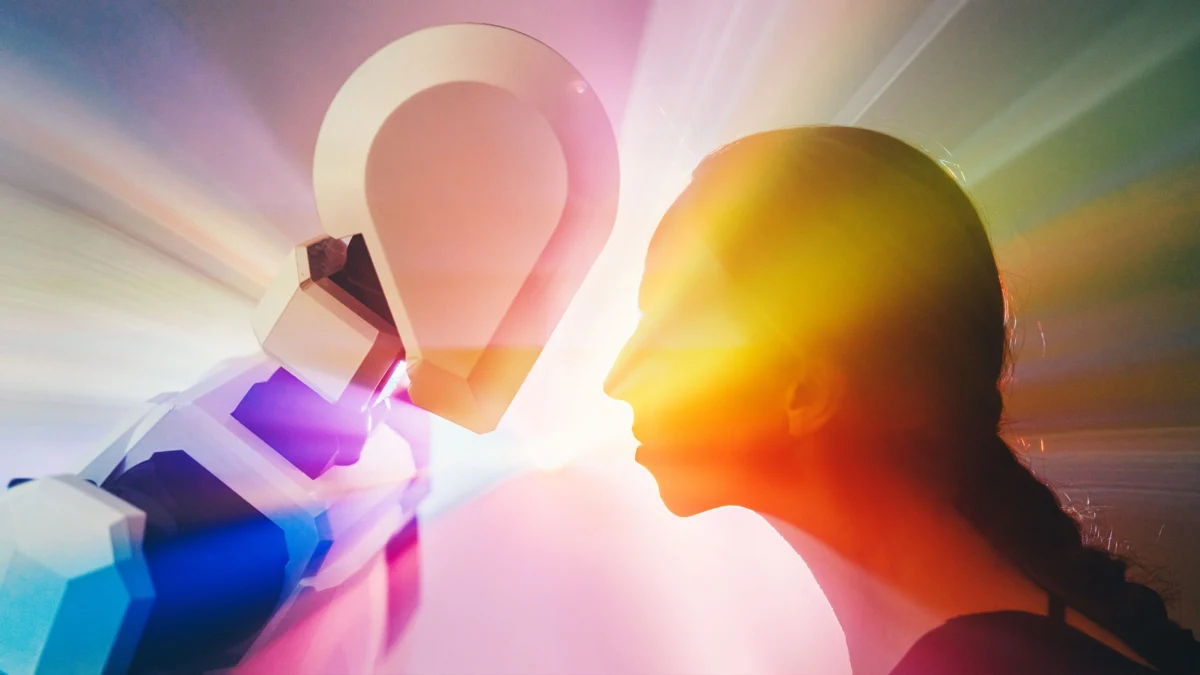
The core of Pollan’s argument lies in a fundamental category error: the confusion of information processing with lived experience. As generative AI models like Claude and ChatGPT demonstrate increasing linguistic sophistication, public perception has shifted toward anthropomorphizing these systems.
Pollan asserts that while these tools are extraordinary at pattern matching and statistical prediction, they possess no "interiority." They have no body, no sensory apparatus, and no stakes in their own existence. In his view, consciousness is not a byproduct of complex computation; it is an evolutionary adaptation born from the necessity of navigating a physical environment. To Pollan, the current discourse surrounding "AI consciousness" is a distraction from the urgent need to understand the biological foundations of our own awareness—a domain he has explored extensively through the lens of psychedelic research.

Chronology of the Inquiry
Pollan’s trajectory toward this topic follows a logical progression of his life’s work:
- The Biological Foundation (2000s–2010s): Through books like The Omnivore’s Dilemma, Pollan established that the human relationship with the environment is defined by what we consume and how we interact with the living world.
- The Shift to Internal Landscapes (2018): With the publication of How to Change Your Mind, Pollan shifted from the external world to the internal, investigating how psilocybin and other compounds reset the "default mode network" of the brain.
- The Digital Encounter (2023–Present): Recently, Pollan has begun engaging with Large Language Models (LLMs). He treats these interactions not as conversations with a peer, but as a "form of consciousness hygiene"—a way to test the boundaries of his own thought processes against a machine that mimics human reason but lacks human depth.
Supporting Data: Empiricism vs. Simulation
The debate over AI consciousness is often framed by the "Turing Test," but Pollan suggests we need a new metric. Modern AI is trained on the collective output of human culture, essentially acting as a "mirror of the human mind."
- Pattern Recognition: Studies show that LLMs can accurately simulate empathy, grief, and curiosity. However, these are derived from massive datasets, not personal trauma or joy.
- The Biological Constraint: Neuroscientists argue that consciousness is deeply tied to the autonomic nervous system. Because AI lacks a body—lacking the hormonal regulation and visceral feedback loops that define mammalian life—it cannot, by definition, experience "feeling."
- Market Dynamics: The term "Superintelligence" is a construct driven by Silicon Valley investment cycles, designed to create an aura of inevitability around software that is, fundamentally, a sophisticated statistical engine.
Official Responses and Perspectives
The AI community remains divided. On one side, proponents of "Effective Accelerationism" argue that the architecture of neural networks is sufficiently analogous to the human brain that consciousness will emerge as an inevitable consequence of scale.
Pollan, however, aligns himself with the growing chorus of philosophers and biologists who argue for "embodied cognition." This view posits that intelligence cannot be divorced from the physical form. As Pollan noted during his reflections in Berkeley, even a jellyfish—an organism far simpler than a human—possesses a form of "sensing" that is fundamentally tied to its survival. It knows what is good or bad for its environment. A chatbot, by contrast, has no environment; it has only a prompt.

Implications: The Risks of Digital Disembodiment
The implications of this debate extend far beyond the technical. If we continue to mistake sophisticated simulation for genuine consciousness, we risk several societal shifts:
The Devaluation of Lived Experience
If we outsource our creative, emotional, and intellectual labor to machines that "fake it" well enough, we may lose the ability to distinguish between genuine human insight and synthetic output. Pollan suggests that our obsession with AI is a symptom of a broader malaise: a society increasingly disconnected from the physical world.

The "Consciousness Hygiene" Approach
Pollan suggests that instead of looking for consciousness in our machines, we should use them to sharpen our own. By interacting with AI, we can identify our own cognitive biases and the limitations of our language. However, he remains steadfast about what he would never share with a machine. He avoids feeding the "intimate core" of his life—his deepest fears, his personal relationships, and his vulnerabilities—into these systems. To do so, he argues, is to hand over the keys to one’s own subjectivity to an entity that cannot possibly comprehend or respect it.
The Future of Human Agency
As we integrate AI into our decision-making, we are essentially delegating the "navigation" of our lives to algorithms. Pollan’s warning is clear: by prioritizing the "efficiency" of AI, we may be pruning away the very friction and struggle that give human life its texture. He describes psychedelics as a form of "consciousness hygiene"—a way to break the rigid, repetitive patterns of the brain. AI, conversely, often acts as an echo chamber, reinforcing patterns rather than breaking them.

Conclusion: The Persistence of the Human
Michael Pollan’s perspective serves as a necessary anchor in the turbulent sea of AI hype. He does not deny the utility or the brilliance of the technology, but he refuses to grant it the status of a sentient being.
The "mystery of the human" is not a puzzle to be solved by code. It is an experience to be lived. While a chatbot can describe the taste of a lemon or the sensation of a psychedelic journey with startling accuracy, it will never know the sourness on the tongue or the ego-dissolution of a transcendental moment.

As we move forward, the challenge for humanity will not be to build a better machine, but to preserve the integrity of our own consciousness. We must ensure that we remain the ones who decide what is meaningful, what is true, and what is worth feeling. In an age of artificial everything, the most radical act may be to simply, and fully, be human.