Brussels, Belgium – October 27, 2026 – In a significant move to bolster its external border management and address growing migration challenges, the European Commission has unveiled a sweeping proposal to dramatically expand the operational scope and resources of the European Border and Coast Guard Agency, Frontex. The ambitious plan, detailed in a recently released document, aims to transform Frontex into a more proactive and powerful entity, with a particular emphasis on accelerating and coordinating returns of irregular migrants and establishing a rapid-response capability for border crises.
The proposed reforms envision a substantial increase in Frontex’s personnel, a doubling of its budget, and a significant broadening of its mandate, including the controversial prospect of facilitating returns from non-EU countries. These proposals come in the wake of persistent challenges at the EU’s external borders, most notably the migration crisis in Ceuta in late July, which highlighted the need for swifter and more coordinated responses to sudden influxes of people.
Key Pillars of the Proposed Frontex Overhaul
At the heart of the Commission’s proposal is a multi-faceted approach designed to equip Frontex with enhanced capabilities across the entire migration management spectrum. The core elements of this ambitious plan include:
-
Massive Personnel Expansion: The standing reserve of Frontex, primarily composed of officers deployable from member states, is slated for a dramatic increase. The plan proposes to grow this reserve from the current 10,000 officers earmarked for next year to a formidable 30,000 personnel in the coming years. This surge in human resources is intended to provide Frontex with the necessary capacity to undertake a wider range of operations and respond more effectively to diverse challenges.
-
Doubled Budgetary Allocation: To support this significant expansion in personnel and operational reach, the European Commission is advocating for a doubling of Frontex’s budget. The current allocation of six billion euros is proposed to be increased to approximately twelve billion euros for the next multiannual EU budget. This substantial financial commitment underscores the EU’s determination to invest heavily in its border security apparatus.
-
Enhanced Role in Returns: A central and transformative aspect of the proposed reforms is the significant strengthening of Frontex’s role in the return process of irregular migrants. The agency is set to receive its own dedicated coordination center for returns, signaling a shift from a purely supportive function to a more central and directive role. This new center is intended to oversee the entire return process, from early identification and voluntary return counseling to the execution of return measures and the provision of reintegration assistance.
-
Cross-Border Return Facilitation: In a move that is likely to spark considerable debate, the Commission is proposing to empower Frontex to facilitate returns from third countries to other non-EU states. This would involve individuals who are already outside the European Union being returned to another third country, provided a relevant agreement is in place with the destination country. This provision could have significant implications for the development and operation of EU-funded "Return Hubs" in third countries.
-
Rapid Intervention Force: To address acute border crises, the proposal includes the establishment of a rapid intervention force. This unit would be deployable to the border at the request of an affected member state, with the aim of being on-site within 24 hours. This concept was directly inspired by the surge of migrants in Ceuta, where a sudden and large-scale influx overwhelmed local resources.
-
Digital Monitoring and Intelligence Gathering: As a proactive measure, Frontex will also implement an online monitoring system. This system will observe publicly accessible social media content that may indicate potential migration aspirations. This intelligence-gathering capability is seen as a lesson learned from past crises, aiming to anticipate and mitigate potential migration pressures.
Chronological Context: From Border Support to a Proactive Agency
Frontex, officially known as the European Border and Coast Guard Agency, was established in 2004 with its headquarters in Warsaw, Poland. Its initial mandate was primarily to assist member states in their efforts to manage the EU’s external borders. This support typically involved activities such as joint surveillance operations, the exchange of information, and technical assistance during border checks.
Early Years and Gradual Expansion: In its early years, Frontex operated as a relatively small agency, focusing on coordinating border management activities among member states. Its role in returns was limited to providing technical and operational support upon request from national authorities. The agency’s mandate was expanded in 2016, granting it more permanent operational capabilities and a larger pool of officers. This revision aimed to equip Frontex to deal with the increased migratory pressures experienced by the EU in the preceding years.
The 2019 Mandate and the Seeds of a Standing Reserve: A significant evolution in Frontex’s capabilities came with its 2019 mandate. This revision introduced the concept of a standing reserve, comprised of 1,500 officers intended for rapid deployment in urgent situations. While this was a step towards a more agile agency, the number was relatively modest and its primary focus remained on border surveillance and management. The current proposal represents a quantum leap from this earlier iteration, aiming for an agency with far greater autonomy and a much broader operational reach, particularly in the sensitive area of returns.
The Ceuta Crisis as a Catalyst: The migration crisis in the Spanish enclave of Ceuta in late July, where an estimated 80,000 people crossed from Morocco in a short period, served as a stark illustration of the need for more robust and immediate responses to border emergencies. This event, which resulted in the tragic deaths of at least 140 individuals, is explicitly cited as a key impetus for the Commission’s current proposal for a rapid intervention force. The crisis underscored the limitations of existing mechanisms in dealing with sudden and overwhelming arrivals, prompting a re-evaluation of Frontex’s role and readiness.
Supporting Data and Projected Impact
The proposed expansion of Frontex is underpinned by several key figures that highlight the scale of the intended transformation:
-
Personnel Growth: The projected increase in the standing reserve from 10,000 to 30,000 personnel represents a threefold expansion. This substantial growth is intended to provide Frontex with the capacity to manage multiple complex operations simultaneously across the EU’s extensive external borders.
-
Budgetary Doubling: The proposed doubling of the budget from €6 billion to €12 billion signifies a significant investment in the agency’s operational capacity, technological advancements, and human resources. This financial commitment is crucial for sustaining the expanded workforce and implementing new operational strategies.
-
Return Hubs and Third-Country Agreements: The potential for Frontex to facilitate returns from non-EU countries opens up a new frontier in migration management. The success of such initiatives would depend heavily on the negotiation and implementation of robust agreements with third countries, a process that has historically been complex and politically sensitive. The effectiveness of "Return Hubs" remains a subject of ongoing discussion and evaluation.
-
Rapid Response Time: The ambition for a rapid intervention force to be deployed within 24 hours is a significant operational goal. This would require pre-positioned resources, streamlined decision-making processes, and well-rehearsed operational protocols.
Official Responses and Statements
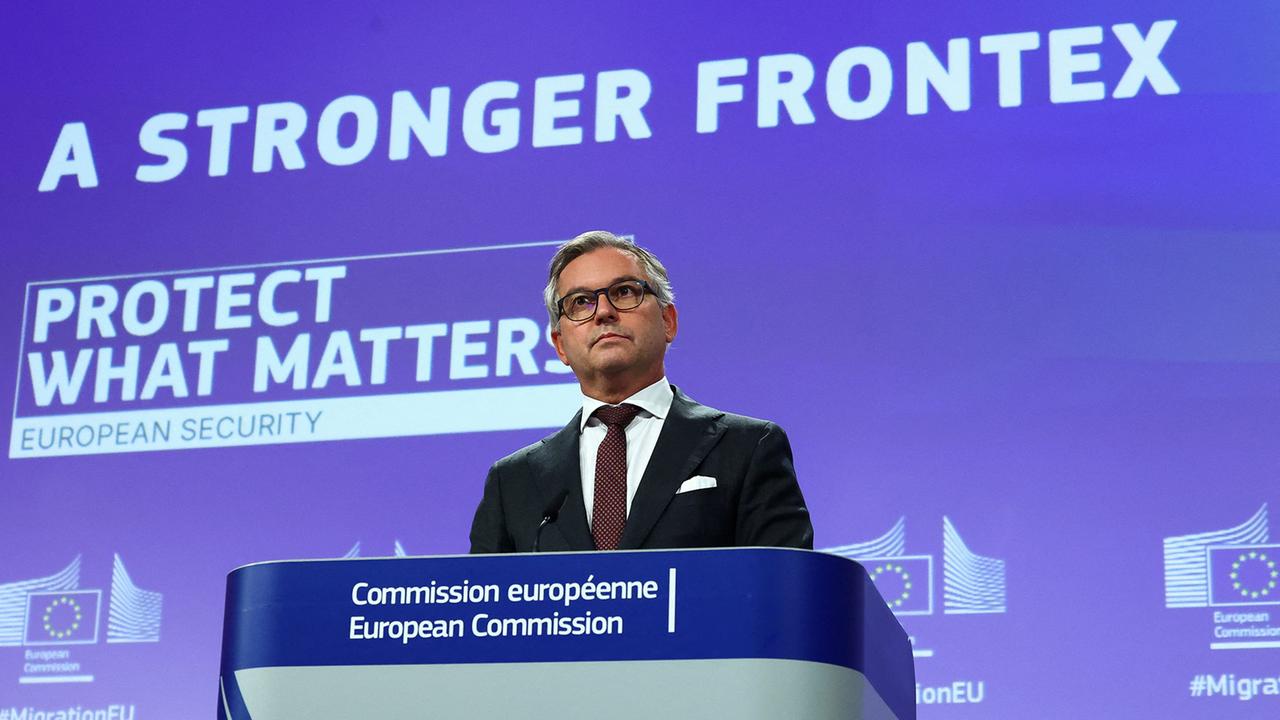
Commissioner Magnus Brunner articulated the Commission’s rationale behind the proposal, stating, "Frontex must be faster, it must be more agile, and it must be better prepared." This statement encapsulates the core objective of the reform: to create a more responsive and effective agency capable of addressing the dynamic challenges of border management and migration.
While specific detailed responses from all member states are still emerging, the proposal is expected to generate considerable discussion. Some member states, particularly those on the front lines of migration flows, may welcome the enhanced support and resources. Others might express concerns about national sovereignty, the potential for overreach, and the implications for fundamental rights. The European Parliament and the Council of the EU will be crucial in shaping the final form of these proposals.
Bundesinnenminister Alexander Dobrindt of Germany has previously advocated for a swift EU border guard intervention force, indicating potential support for the rapid response element of the proposal. His stance suggests a willingness among some key member states to bolster Frontex’s operational capabilities.
Implications and Criticisms
The proposed expansion of Frontex’s powers and resources carries significant implications for migration policy in the European Union and beyond.
Potential Benefits:
- Enhanced Border Security: The increased personnel and resources could lead to more effective border surveillance, detection of irregular entries, and the disruption of smuggling networks.
- Improved Crisis Management: A dedicated rapid intervention force could provide crucial support to member states facing sudden and overwhelming migration pressures, potentially preventing humanitarian crises at borders.
- Streamlined Returns: A more centralized and coordinated approach to returns could increase the number of individuals who are returned to their countries of origin, potentially easing pressure on asylum systems.
- Proactive Intelligence: The digital monitoring aspect could offer earlier insights into potential migration trends, allowing for more proactive planning and intervention.
Criticisms and Concerns:
-
Migrant Rights: A central concern raised by critics is the potential impact on the rights of refugees and migrants. Frontex has faced repeated accusations of inadequate protection of fundamental rights, particularly concerning allegations of illegal pushbacks by national authorities. The expansion of its role in returns, especially the facilitation of returns from third countries, could exacerbate these concerns if not accompanied by robust safeguards.
-
Accountability and Oversight: With increased powers and a broader mandate, the mechanisms for ensuring Frontex’s accountability and oversight become even more critical. Critics will be looking closely at how the agency’s actions are monitored and whether effective redress mechanisms are in place for individuals whose rights may be violated. The agency’s existing internal control mechanisms, such as the deployment of observers, have faced scrutiny in the past.
-
Sovereignty and National Control: The expansion of Frontex’s mandate, particularly its role in returns and potential cross-border operations, may raise questions about national sovereignty and the control of external borders by member states. The current model, where Frontex primarily acts upon request or with the approval of national authorities, could shift towards a more autonomous operational framework.
-
Effectiveness of "Return Hubs": The proposed ability of Frontex to facilitate returns from third countries could bolster the concept of "Return Hubs" outside the EU. However, the effectiveness and ethical implications of such centers, particularly regarding the rights of individuals who may not be able to return to their country of origin, remain subjects of intense debate.
The proposed reforms by the European Commission represent a significant moment in the evolution of EU border management. The coming months will be crucial as the European Parliament and the Council of the EU deliberate on these far-reaching proposals, weighing the imperative of border security against the fundamental rights and freedoms of individuals seeking protection. The final outcome will undoubtedly shape the future of migration policy and human mobility within and around the European Union.