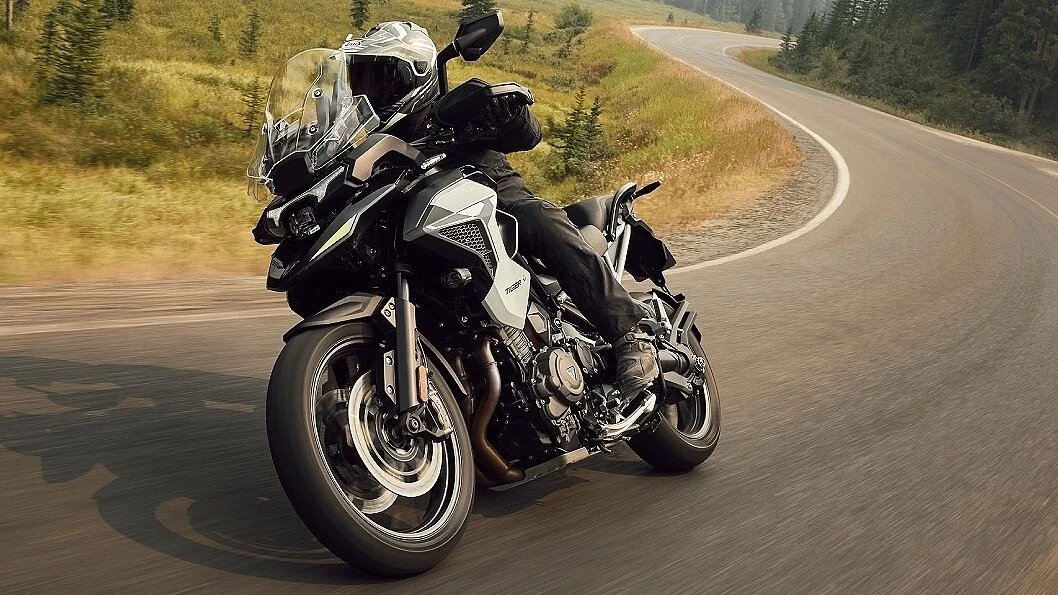
The premium adventure motorcycle segment has long been a battlefield of attrition, where manufacturers compete in a relentless arms race of electronics, ergonomics, and power delivery. In recent years, the Triumph Tiger 1200 had begun to feel the pressure, with competitors pushing the boundaries of what a touring machine could offer. However, Triumph has answered the call with a comprehensive overhaul of its flagship series. The 2027 model year marks a significant turning point, repositioning the Tiger 1200 as a technological powerhouse designed to reclaim its crown in the elite touring category.
Main Facts: The New Standard for Adventure
The 2027 Tiger 1200 lineup retains the familiar four-model structure, yet beneath the surface, almost every component has been refined. The strategy remains bifurcated between the GT series (optimized for tarmac with cast wheels) and the Rally series (engineered for off-road prowess with wire-spoked wheels).
Perhaps the most controversial and significant change is the wheel configuration. Abandoning the previous 21-inch front and 18-inch rear setup for the Rally models, Triumph has standardized a 19-inch front and 17-inch rear wheel size across all four variants. While purists may debate the loss of the larger front wheel for extreme terrain, Triumph’s engineering goal was clear: superior agility and handling on the varied surfaces riders encounter during long-distance touring. By focusing on a more neutral, responsive chassis geometry, the 2027 Tiger 1200 promises to be less of a handful in tight, technical riding conditions.
The lineup consists of the GT Pro, Rally Pro, GT Explorer, and Rally Explorer. The "Explorer" designation continues to denote the long-distance capability provided by a massive 30-liter fuel tank, whereas the "Pro" variants carry a 20-liter tank, shedding weight for riders who prefer a leaner aesthetic.
Chronology of the Overhaul
The development of the 2027 model did not happen in a vacuum. Triumph engineers looked at years of owner feedback and the rapid acceleration of the rider-assistance electronics market.
- Engine Evolution: At the heart of the machine is the 1160cc inline-triple with the signature T-Plane crankshaft. For 2027, the power output has been bumped to 158 hp at 9,250 rpm—an increase of 8 hp over the predecessor. More importantly, the torque curve has been shifted. The peak torque of 130 Nm now arrives earlier at 6,750 rpm, providing the punchy mid-range performance essential for effortless highway overtaking.
- Mechanical Refinements: To achieve this power, Triumph redesigned the cylinder heads, introduced new pistons, lightened the valves, and optimized the exhaust routing. Furthermore, the first three gears feature shorter ratios to improve acceleration and low-speed tractability.
- Balancing Act: A critical phase of the 2027 update involved the optimization of rotating masses within the crankshaft and balance shafts. This has resulted in a noticeably smoother engine, allowing for more precise gear selection and refined power delivery, reducing rider fatigue over long days in the saddle.
Supporting Data: Engineering and Performance Metrics
The technical specifications of the 2027 Tiger 1200 suggest a machine that balances raw performance with sophisticated user-interface design.

The Suspension Breakthrough
Triumph is touting the 2027 chassis as the most advanced suspension system ever fitted to one of its motorcycles. The semi-active Showa setup has been evolved to include three distinct damping modes—Firm, Medium, and Soft—accessible via a dedicated handlebar button, eliminating the need to dig through digital menus while on the move.
The system is constantly fed data from a six-axis Inertial Measurement Unit (IMU). This allows the bike to adjust compression and rebound damping in real-time, ensuring stability during heavy braking or aggressive cornering. Furthermore, the system includes a hydraulic secondary bump stop, which provides a "cushion" for the suspension to prevent bottoming out during heavy off-road use or when carrying full luggage.
The "Active" Seat Height
Perhaps the most innovative feature for the everyday rider is the active ride height adjustment. When the bike senses it is coming to a stop, the system uses the electronic suspension to lower the seat by 30 mm. This drops the effective seat height to a manageable 790 mm, ensuring that even shorter riders can firmly plant their feet on the ground. Once the bike begins to accelerate, the suspension automatically returns to its standard riding height after two seconds.
Radar and Safety Tech
The 2027 model introduces a state-of-the-art Bosch front radar system, complementing the existing rear radar. This integration allows for:
- Adaptive Cruise Control: Automatically managing speed and distance to the vehicle ahead.
- Emergency Brake Assist: Increasing braking pressure if a collision is detected, coupled with a haptic warning through the rear brake pedal.
- Blind Spot Assist: Integrated with the turn signals, it alerts the rider if a vehicle is in the blind spot during an overtaking maneuver.
Official Perspectives and Market Positioning
Triumph’s leadership has emphasized that the 2027 Tiger 1200 is not just an update, but a response to the "premiumization" of the motorcycle market. By incorporating Apple CarPlay and Android Auto via a 7-inch TFT touchscreen, Triumph is aligning itself with modern automotive standards.
However, the brand is aware of the trade-offs. The wealth of technology and the heavy-duty nature of the chassis come with a weight penalty. The GT Pro weighs in at 250 kg, while the top-of-the-line Rally Explorer hits the scales at 268 kg. Triumph justifies this by pointing to the "luxury touring" nature of the machine. The price-to-value ratio is anchored by a four-year manufacturer warranty, which serves as a testament to the brand’s confidence in the mechanical reliability of their refined powertrain.

Pricing has been kept at a competitive level for the premium segment:
- GT Pro: €21,395
- Rally Pro: €22,295
- GT Explorer: €22,995
- Rally Explorer: €23,995
Implications: Can it Reclaim the Top Spot?
The implications of these changes for the market are significant. By prioritizing the 19-inch front wheel, Triumph has signaled that it views the Tiger 1200 primarily as a "do-it-all" adventure tourer rather than a dedicated enduro machine. This is a strategic move to capture the widest possible demographic—riders who want the capability of an off-road bike but spend 90% of their time on asphalt.
The introduction of the "Centre Stand Assist" feature, which uses the hydraulic suspension to lift the bike’s rear for easier parking, is a small but telling detail. It shows that Triumph is listening to the specific pain points of long-distance tourers: heavy bikes are hard to manage when parked, and high seats are intimidating in city traffic.
Final Assessment
The 2027 Triumph Tiger 1200 is a masterclass in evolution. While it may not be the lightest bike in its class, it is arguably one of the most intelligent. By integrating advanced radar safety, adaptive ride height, and a more accessible torque curve, Triumph has created a motorcycle that manages to be both intimidatingly powerful and remarkably easy to live with.
For the existing owner, the upgrade offers a tangible improvement in comfort and engine refinement. For the newcomer, it presents a package that is difficult to ignore. As the 2027 season approaches, the Tiger 1200 stands ready to prove that when it comes to long-distance adventure, the "triple" engine remains one of the most characterful and capable powerplants in the industry. The competition has been put on notice: the Tiger has regained its claws, and it is ready to hunt.