Overview: A Crisis of Identity and Economics in the Regionalliga
The landscape of German football is bracing for a seismic shift as the Deutscher Fußball-Bund (DFB) prepares to finalize a long-awaited reform of the Regionalliga—the country’s fourth tier. However, what was intended to be a streamlined path to professional football has instead ignited a firestorm of dissent.
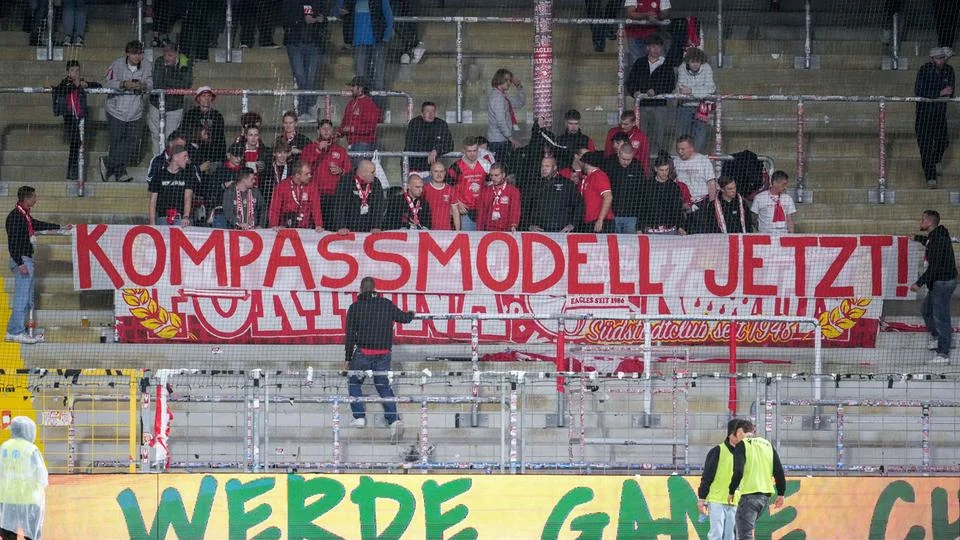
Five prominent Hessian clubs—the Kickers Offenbach, Hessen Kassel, Steinbach Haiger, FSV Frankfurt, and SG Barockstadt Fulda-Lehnerz—have launched a coordinated offensive against the DFB’s favored proposal, known as the "Compass Model." The clubs argue that the restructuring is not only underdeveloped but poses an existential threat to the regional identity and financial viability of their organizations. As the DFB moves toward an extraordinary federal assembly on December 18, the divide between the governing body’s desire for structural uniformity and the clubs’ need for regional stability has never been wider.
The Chronology: A Decade of Deadlocks
To understand the current tension, one must look back at the historical struggle of the German fourth tier.
- Pre-2012: The Regionalliga consisted of three divisions, which were expanded to five (Nord, Nordost, West, Südwest, and Bayern) to accommodate the sheer volume of clubs and reduce travel costs.
- The Promotion Dilemma: The core issue has always been the promotion process. With five champions and only four promotion slots to the 3. Liga, the DFB has historically relied on a rotation of direct promotion and promotion playoffs. This system has been criticized for years as being unfair, unpredictable, and commercially underwhelming.
- 2018-2023: Various working groups and "Future Forums" were established to find a permanent solution. Proposals ranged from a single, nationwide fourth division to maintaining the status quo with minor adjustments.
- Late 2024: The DFB coalesced around the "Compass Model," which suggests four leagues of 20 teams each, with geographical boundaries adjusted annually to reflect the current distribution of clubs.
- December 2024: The upcoming extraordinary DFB Bundestag is set to be the decisive vote on the future of these competitions.
The "Compass Model": What is Being Proposed?
The "Compass Model" is the DFB’s attempt to square the circle. By reducing the five existing leagues to four, the association aims to guarantee that every league champion earns a direct promotion to the 3. Liga. To achieve this, the DFB proposes that the 80 clubs (4 leagues x 20 teams) be distributed based on geographical "compass" coordinates.
The primary innovation—and the source of the controversy—is the annual "re-shuffling." Depending on which clubs are relegated from the 3. Liga or promoted from the Oberliga, the league boundaries could shift every summer. This ensures that the leagues remain balanced in terms of geography, preventing one league from becoming significantly larger or more sparsely populated than another.
The Hessian Resistance: Official Responses
The joint statement released by the five Hessian clubs serves as a stern warning to the DFB leadership. The clubs are not categorically against reform, but they are firmly against this reform in its current, nebulous state.
The Clubs’ Key Arguments:
- Lack of Transparency: The clubs emphasize that the DFB has failed to provide the "hard data" required to justify such a radical shift. They argue that the organizational and economic consequences have not been adequately modeled.
- The Death of the Derby: Football in Germany is defined by tradition and local rivalries. Hessian clubs fear that the "Compass" approach will force them into leagues with clubs from distant regions, breaking up long-standing regional hierarchies. A club like Kickers Offenbach relies heavily on regional rivalries to drive ticket sales and fan engagement; traveling to face an unfamiliar club 500 kilometers away holds little commercial or emotional appeal.
- Economic Instability: The clubs point out that changing the league structure annually makes long-term sponsorship deals and logistical planning nearly impossible. "A reform of this magnitude cannot be decided on the basis of unresolved cornerstones," the statement reads.
- The "Scapegoat" Narrative: The clubs have pushed back against the insinuation that the Regionalliga Südwest—a highly competitive and professionalized circuit—is the primary obstacle to reform. They argue that they have invested millions in professionalizing their operations and should not be penalized for the structural failings of other regions.
Economic and Sporting Implications
The implications of the Compass Model extend far beyond the pitch. For a club like FSV Frankfurt or Hessen Kassel, the Regionalliga is a delicate balance of professional aspirations and amateur realities.
Financial Risks
If the league boundaries shift annually, clubs lose the ability to cultivate regional media partnerships. Local radio stations, regional newspapers, and regional sponsors invest in clubs because they belong to a specific geographic market. If a club is shifted into a league containing teams from across the country, their "regional value" as a marketing entity diminishes.

Sporting Integrity
Critics of the model point to the potential for "sporting dilution." If teams are forced to move between leagues, the competitive balance of the division becomes volatile. Furthermore, if a team is moved into a league with a higher travel burden, their operational costs (buses, hotels, staff hours) will skyrocket, placing a heavier burden on smaller clubs that lack the budget of a third-tier professional outfit.
Supporting Data: The Travel Burden vs. The Promotion Goal
While the DFB points to the goal of "direct promotion" as a meritocratic necessity, the data regarding travel distances suggests a different reality.
- Current Model: Clubs in the Regionalliga Südwest currently enjoy a relatively concentrated geographic area, minimizing travel costs.
- The Compass Impact: Under the proposed model, the "geographic balancing" would likely force teams from Central Germany to travel into Southern or Northern zones to keep the leagues at exactly 20 teams. Projections suggest that for many clubs, travel-related expenses could increase by 15–25% annually.
The DFB maintains that this is a necessary price to pay for a standardized promotion path. However, the Hessian clubs argue that the DFB is solving a "3. Liga promotion problem" by creating a "Regionalliga operational problem."
The Road to December 18
As the date for the extraordinary DFB Bundestag approaches, the pressure on the national association is mounting. The dissent from the Hessian clubs is likely the tip of the iceberg; other regional associations across Germany are reportedly watching the debate with similar skepticism.
For the DFB, the stakes are high. If they push the Compass Model through without broad consensus, they risk a permanent rift with some of the most historic and well-supported clubs in the fourth tier. If they delay, they continue to operate a system that has been widely criticized for nearly a decade.
The Path Forward?
The Hessian clubs have proposed an alternative approach:
- Evidence-Based Review: A call for the DFB to present a detailed impact study that includes the financial forecasts for all 80 clubs.
- Open-Ended Examination: A request that the DFB considers all models, including those that might keep regional structures intact while finding alternative ways to facilitate promotion.
- Collaboration, Not Dictation: The clubs are demanding a seat at the table. They argue that a reform that affects the livelihoods of thousands of staff, players, and volunteers cannot be drafted in isolation by governing committees.
Conclusion: A Turning Point for German Football
The conflict over the Regionalliga reform is a microcosm of the tension between the modern commercialization of football and its deeply rooted regional traditions. The DFB views the league as a pyramid that must be streamlined for the benefit of professional efficiency. The clubs, however, view themselves as the stewards of regional culture.
As the December 18 deadline looms, the voice of the Hessian clubs serves as a vital reminder that in football, the map is not the territory. Fans do not travel to see a "geographic quadrant" compete; they travel to see their rivals, their neighbors, and their history. Whether the DFB can navigate these concerns without sacrificing the soul of the fourth tier remains to be seen. One thing is certain: the current proposal, in its current form, is a long way from a consensus.