Introduction: A Monument to War and Memory
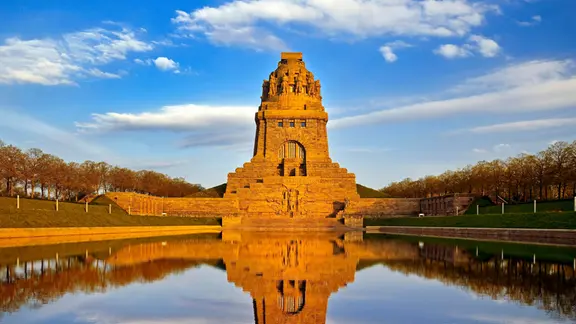
Standing as a monolithic sentinel on the southern outskirts of Leipzig, the Völkerschlachtdenkmal (Monument to the Battle of the Nations) is more than just a tourist destination; it is a structural embodiment of German history, identity, and the heavy burden of remembrance. Rising 91 meters into the sky, this colossal structure, inaugurated on October 18, 1913, marks the centenary of the monumental Battle of Leipzig—a conflict that reshaped the map of Europe and signaled the beginning of the end for Napoleon Bonaparte’s continental hegemony.
However, the monument’s history is as complex as its architecture. It has served as a site of national pride, a tool for nationalist propaganda, a symbol of ideological struggle, and, ultimately, a place of historical reflection. To understand the monument is to understand the shifting tides of German self-perception over the last century.
Chronology of the Monument
1813: The Crucible of Nations
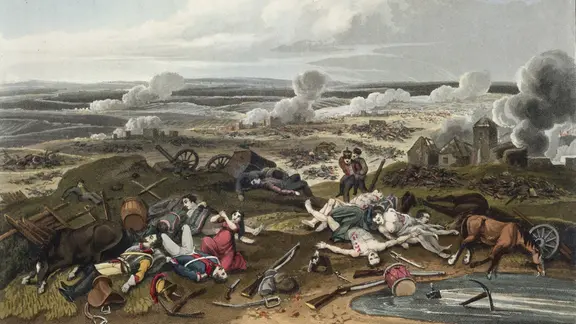
In mid-October 1813, the fields surrounding Leipzig became the stage for the largest battle in European history prior to the First World War. For four days, over half a million soldiers from Russia, Prussia, Austria, Sweden, and France fought in a desperate, grinding struggle. The defeat of Napoleon’s forces was decisive but catastrophic; approximately 100,000 soldiers lost their lives, and the ensuing typhus epidemics claimed the lives of over 10% of Leipzig’s civilian population.
1814–1894: From Vision to Foundation
The desire for a permanent memorial emerged almost immediately after the smoke cleared. Dichter Ernst Moritz Arndt, a veteran of the struggle, famously called for a monument that would be "great and glorious… like a colossus, a pyramid, a cathedral." Despite the fervor, political fragmentation hindered progress. The Saxon King, having fought on Napoleon’s side, initially prohibited commemorations. It was not until 1863—the 50th anniversary—that a foundation stone was laid. Yet, it took another three decades for the "German Patriotic League," spearheaded by architect Clemens Thieme, to secure the necessary funding through a combination of citizen donations and lotteries.
1898–1913: The Engineering Feat
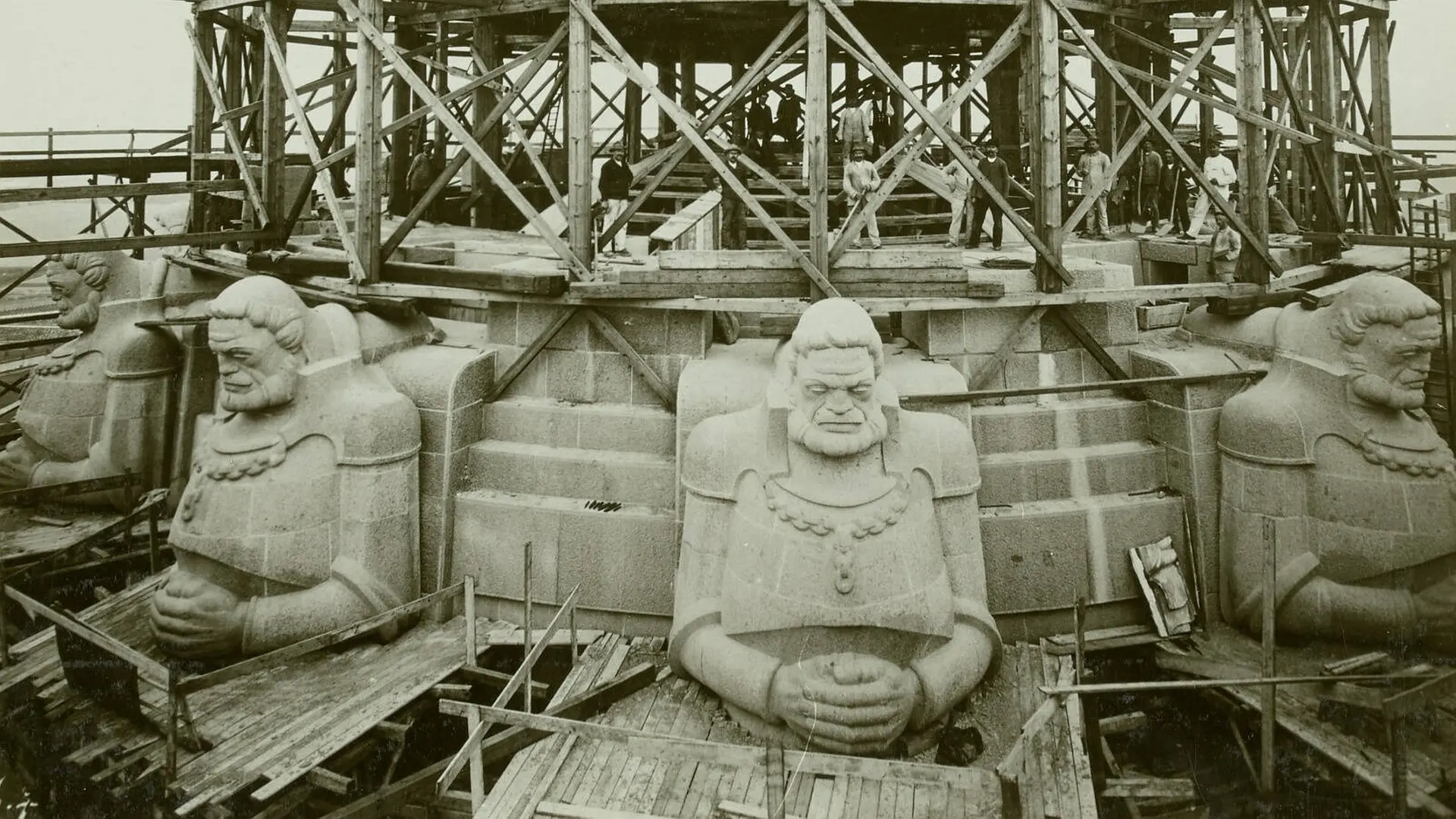
Construction began in 1898 under the architectural vision of Bruno Schmitz. The design sought an "archaic" aesthetic, intentionally avoiding the then-fashionable styles of the Italian Renaissance or French Baroque in favor of a uniquely "Germanic" expression. The result was a technical marvel. The structure consists of over 200,000 tons of tamped concrete and steel—a pioneering use of the material at the time. The base rests on 65 massive concrete pillars, and the surrounding grounds were elevated using nearly a million cubic meters of debris, effectively reshaping the local landscape.
Architectural Symbolism: A Language of Stone
The interior of the Völkerschlachtdenkmal is a masterclass in heavy, symbolic architecture designed to evoke awe and solemnity.

The Crypt and the Hall of Fame
The lowest level, the Crypt, is a somber space guarded by eight massive, stone-hewn warrior statues. These "Watchers of the Dead" stand as silent, stoic sentinels over the fallen. Above this lies the Hall of Fame, featuring four colossal figures—each 9.5 meters tall—representing the virtues deemed essential to the German people during the wars of liberation: Tapferkeit (Valor), Glaubensstärke (Faith), Volkskraft (National Strength), and Opferfreudigkeit (Self-sacrifice).
The Dome and the Guardians
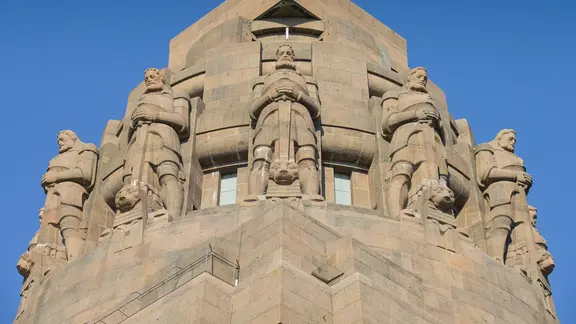
Rising through the center of the structure, the dome is adorned with 324 life-sized horsemen, symbolizing the return of the victors. Externally, the crown of the monument is encircled by twelve 13-meter-tall "Freedom Guardians," leaning on their swords. These figures serve as the final visual point of contact between the monument and the sky, emphasizing the weight of the liberty won at such a high cost.

Historical Implications: Ideological Appropriation
The history of the monument is not merely architectural; it is political. Since its completion in 1913, the site has been repeatedly "claimed" by various regimes to serve their specific agendas.
The Imperial Era and World War I
At its 1913 inauguration, the monument was presented as a pinnacle of German national unity. However, the onset of World War I just one year later transformed the site. It became a focal point for military recruitment, flag-worship, and religious services intended to bolster the national war effort.

The Darkest Chapter: National Socialism
During the Third Reich, the monument was repurposed to fit Nazi ideology. The rhetoric shifted from "remembrance of the fallen" to "cult of the hero." The Nazis utilized the structure to glorify the "Germanic fighting spirit" and to justify the expansionist, aggressive policies of the regime. The scale of the monument made it an ideal backdrop for rallies that emphasized the insignificance of the individual compared to the state.
The DDR Era: "Brotherhood in Arms"
Following 1945, the Soviet-backed East German government (DDR) faced a dilemma: how to handle a monument that was fundamentally nationalist in origin. Their solution was to reinterpret the Battle of Leipzig as an early example of "German-Russian brotherhood in arms." By emphasizing the alliance against Napoleon, the socialist state effectively stripped away the nationalist, monarchist connotations of the site, replacing them with a narrative of socialist unity.
Supporting Data: The Monument by the Numbers
- Total Height: 91 meters.
- Foundation Depth: The structure is built upon a foundation plate that rests on 65 massive concrete columns.
- Materials: 26,500 blocks of granite porphyry were used for the facade.
- Concrete: Over 200,000 tons of tamped concrete were poured, making it one of the largest concrete structures in Europe at the time of its completion.
- Visitors: Today, the monument hosts hundreds of thousands of visitors annually, functioning as a museum and a viewing platform that offers panoramic views of Leipzig and the surrounding plains.
Official Stance and Contemporary Reflection
In the modern era, the monument is managed by the City of Leipzig. The contemporary approach is one of "critical engagement." The museum within the structure provides context, educating visitors not only on the 1813 battle but on the 100-year history of the monument’s own manipulation.
Academic and civic discourse now focuses on the "myth" of the monument. Historians emphasize that while the structure commemorates a historical event, the way it commemorates it is a historical event in itself. The current administration views the site as a space for reflection—not just on the tragedy of the Napoleonic Wars, but on the dangers of how national symbols can be twisted to serve xenophobic or expansionist agendas.
Conclusion: The Monument as a Mirror
The Völkerschlachtdenkmal stands as a mirror to German history. Its massive concrete walls have absorbed the echoes of imperial declarations, Nazi propaganda, and socialist revisionism. Yet, despite these attempts to own its meaning, the monument persists as a testament to the sheer scale of human loss.
For the modern traveler or student of history, the ascent to the top of the monument—past the silent stone warriors and the soaring dome—is a journey through time. It serves as a reminder that while monuments are built to last, the interpretations of the events they represent are perpetually in flux. By separating the architectural achievement from the ideological baggage, we can appreciate the Völkerschlachtdenkmal for what it truly is: a powerful, albeit heavy, artifact of a continent that has spent centuries learning how to remember, and how to eventually forgive.