

October 27, 2026 | Financial Analysis
Following an encouraging start to the week, German stock market participants appear to be shifting into a more cautious gear. The DAX, Germany’s premier equity index, is showing signs of consolidation, with market analysts projecting a stagnant opening as investors digest a complex mixture of macroeconomic indicators, corporate earnings, and upcoming monetary policy decisions.
Main Facts: The Current Market Landscape
As of early Tuesday morning, the DAX is expected to hover near its previous close of 25,411 points. Brokerage firm IG Markets has projected a marginal increase of just three points, signaling a "wait-and-see" approach. This tepid outlook follows a robust performance on Monday, where the index climbed 0.9 percent, buoyed largely by the latest reading of the ifo Business Climate Index.
The ifo index, a critical gauge of German economic health, has now recorded six consecutive months of improvement. This streak suggests that, despite the lingering burden of elevated energy costs, the domestic industrial engine is demonstrating resilience. Ulrich Stephan, Chief Investment Strategist for Private and Commercial Clients at Deutsche Bank, noted that the sentiment in the German economy is brightening, a sentiment reinforced by a recent, albeit slight, cooling in global oil prices.
Chronology of Market Sentiment
The trajectory of the markets this week has been defined by a transition from optimism to strategic recalibration.
- Monday Morning: The market opened with significant bullish momentum. Investors reacted positively to the ifo data, which served as a much-needed morale booster after weeks of geopolitical tension.
- Monday Afternoon: The focus shifted toward the United States, where news of the upcoming initial public offering (IPO) of AI giant Anthropic revitalized the tech sector. This news provided the catalyst for a rally in the S&P 500 and Nasdaq.
- Tuesday Morning: As the initial enthusiasm from the ifo report settles, the market is bracing for a "week of truth." The focus has moved away from macroeconomic sentiment toward concrete corporate earnings and the high-stakes calendars of global central banks.
Supporting Data: A Global Context
The current stability in the DAX is not occurring in a vacuum. It is part of a broader, global recalibration of risk.
In the United States, the tech sector—often the barometer for global risk appetite—has broken a two-week losing streak. The S&P 500 finished Monday at 7,677 points (+0.7%), while the Nasdaq climbed to 26,169 points (+0.8%). The Dow Jones Industrial Average also enjoyed a gain, closing at 52,362 points (+0.3%).
Asian markets have mirrored this recovery. Japan’s Nikkei 225 index is currently trading up by approximately 2%, while South Korea’s technology-heavy KOSPI index has seen a remarkable surge of nearly 5%. These figures suggest that the global appetite for technology stocks, particularly those linked to AI infrastructure, remains robust despite valuation concerns.
Official Responses and Expert Perspectives
The prevailing sentiment among financial analysts is one of "cautious optimism balanced by systemic anxiety." Timo Emden, a market expert at CapTrader, describes the current environment as a precarious balancing act.
"On one side, we have the lure of a cyclical economic recovery; on the other, geopolitical risks and monetary policy question marks continue to fray investors’ nerves," Emden noted. He characterizes the current market state as a "tension field" where investors must navigate between fragile technological enthusiasm and the reality of an uncertain geopolitical landscape.
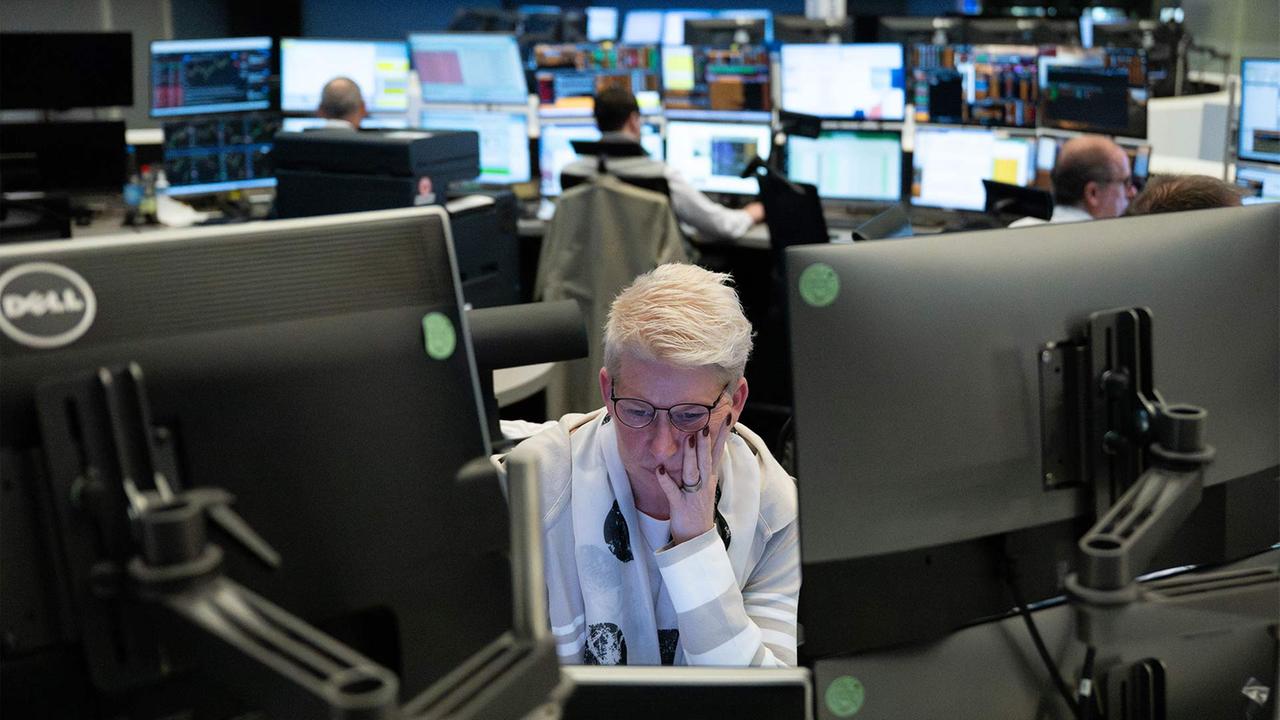
The "Woche der Wahrheit" (Week of Truth), as described by Jürgen Molnar of RoboMarkets, is defined by the heavy concentration of earnings reports from the world’s most influential technology corporations. Amazon, Alphabet, and Microsoft are all scheduled to report their quarterly results this week. Molnar emphasized that these reports are critical: "After the recent price fluctuations, the decisive factor will be whether business performance can keep pace with the massive investments being made in infrastructure. These earnings will either restore confidence or lead to further volatility."
The "Week of Truth": Monetary Policy and Earnings
The remainder of the week will be dominated by two primary forces:
1. The Earnings Avalanche
Investors are looking for proof that the massive capital expenditures poured into Artificial Intelligence are beginning to yield tangible dividends. For companies like Microsoft and Alphabet, the market is no longer satisfied with mere promises of future innovation; it now requires evidence of sustainable, profit-generating business models. Should these firms report guidance that exceeds expectations, it could provide the fuel for a year-end rally. Conversely, any sign of margin compression could trigger a sharp correction.
2. Central Bank Synchronicity
Beyond the boardroom, the central banks are set to dominate headlines. The U.S. Federal Reserve (Fed), the European Central Bank (ECB), and the Bank of Japan (BoJ) all have major policy meetings on the horizon. Each institution faces a unique set of challenges:
- The Fed: Balancing the cooling of inflation with the need to avoid a restrictive interest rate environment that stifles growth.
- The ECB: Managing the disparate economic health of Eurozone member states while attempting to maintain price stability.
- The Bank of Japan: Monitoring the impact of its recent policy shifts on global currency liquidity.
Implications for Investors
The primary implication for investors in the current climate is the necessity of risk management. The combination of the Anthropic IPO—which underscores the market’s insatiable hunger for AI exposure—and the impending central bank decisions creates a binary environment.
Geopolitical Risks
The shadow of global instability continues to hang over the markets. While oil prices have dipped, providing some relief to input costs for German manufacturers, any escalation in geopolitical hotspots could immediately reverse this trend, reigniting inflationary pressures and forcing central banks to maintain higher-for-longer interest rate stances.
Strategic Outlook
For the DAX, the immediate future depends on whether the domestic industrial sector can decouple itself from the volatility of the tech sector. If the German economy continues to show signs of a modest, consistent recovery, the DAX may find a floor even if global tech valuations undergo a correction.
However, investors should prepare for a period of heightened volatility. As the "Week of Truth" unfolds, the correlation between macroeconomic data and stock prices is expected to tighten. Investors are advised to focus on firms with strong cash flows and lower debt-to-equity ratios, as these entities are better positioned to weather the potential storms brought on by shifts in central bank policy.
Conclusion: A Delicate Equilibrium
As we move into the heart of the week, the global financial system remains in a state of delicate equilibrium. The surge in Asian markets and the rebound in U.S. technology stocks provide a buffer against potential negativity, but the market’s reliance on a handful of tech giants to drive indices higher remains a point of structural concern.
The DAX, while currently stagnant, is essentially holding its breath. Whether the index moves higher to test new resistance levels or pulls back depends entirely on the upcoming narrative from the boardroom and the central bank podiums. For the prudent investor, the coming days represent a time to monitor exposure, prepare for news-driven volatility, and look for the fundamental strength that will define the market in the final quarter of 2026.