BELGRADE – In a political earthquake that has stunned the Balkans and reverberated throughout European capitals, Serbian President Aleksandar Vučić has formally conceded defeat following the country’s snap parliamentary elections. The results mark the end of a decade of dominance for the Serbian Progressive Party (SNS) and signal a profound transformation in Serbia’s political landscape, driven by a grassroots movement led by the nation’s youth.
The Main Facts: A New Chapter for Serbia
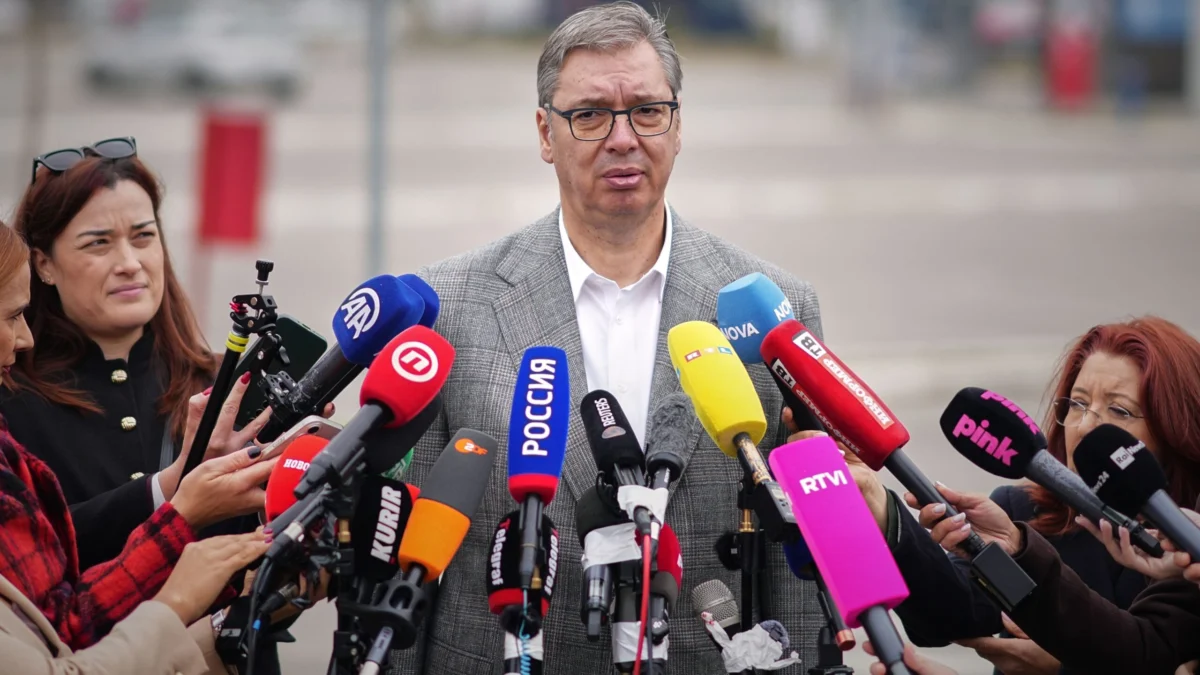
Late Sunday night, as initial projections began to consolidate, President Vučić appeared before the media to deliver a somber address. While emphasizing that official tallies were still being finalized, he acknowledged that the momentum had swung decisively against his administration.
"The numbers speak for themselves," Vučić stated. "It is clear that the mandate for the future of this country has shifted."
According to the latest projections, the student-led coalition—a political force that emerged from the streets rather than the traditional corridors of power—is set to secure between 135 and 140 seats in the National Assembly. This result comfortably clears the threshold for an absolute majority in the 250-seat parliament. Conversely, Vučić’s SNS is projected to fall to 105 mandates. Other traditional political players failed to meet the electoral threshold, effectively clearing the stage for a new era of governance defined by the movement’s platform of transparency, anti-corruption, and democratic reform.
Chronology: From Tragedy to Political Transformation
The roots of this electoral upheaval were not sown in a campaign office, but in the tragic events of 2024.
The Catalyst: The Novi Sad Disaster
In 2024, the city of Novi Sad was gripped by horror when a massive concrete canopy at the city’s railway station collapsed. The tragedy, which claimed the lives of 16 people, served as a devastating indictment of the state of infrastructure and the broader culture of corruption within the public sector. Investigations quickly pointed toward substandard construction practices and a lack of oversight, issues that the public linked directly to the policies of the ruling administration.
The Rise of the Student Movement
Following the disaster, a wave of outrage swept through Serbia. Students, previously considered a largely apolitical demographic, began organizing spontaneous protests. What started as small, localized gatherings rapidly evolved into a national movement. For nearly two years, Belgrade and other major cities were the scenes of persistent demonstrations. The movement channeled the public’s anger over alleged systemic corruption, the erosion of media freedom, and the growing authoritarian tendencies of the Vučić government.
The Decision to Call Snap Elections
Facing mounting pressure and a declining approval rating, President Vučić announced in September that he would trigger snap parliamentary elections. It was a gamble intended to consolidate his power and validate his leadership style. Instead, the move provided the opposition with a deadline, a focal point, and a stage upon which to mobilize a fed-up electorate.
Supporting Data: An Electorate in Revolt
The electoral data reveals a stark polarization. While the SNS had historically maintained a grip on rural areas and older demographics, the student-led coalition successfully bridged the gap between urban centers and suburban regions.
- Voter Turnout: Preliminary reports indicate one of the highest voter turnouts in recent Serbian history, suggesting that the "apathy" often cited by analysts had been replaced by a fierce determination to effect change.
- The Mandate Distribution: With the student movement capturing up to 140 seats, they possess the legislative capacity to form a government without the need for complex, fragile coalitions.
- Demographic Shift: Exit polls indicate that the primary engine of this victory was the youth vote, bolstered by significant crossover support from middle-aged voters disillusioned by the economic stagnation and ethical scandals associated with the SNS tenure.
Official Responses and International Reaction
The concession from Vučić was met with a mixture of shock and celebration. In the streets of Belgrade, thousands gathered to celebrate the result, characterizing it as the "liberation of Serbia."
International observers, who had been closely monitoring the lead-up to the election, have noted that the process was characterized by a high level of civic engagement. While the European Union and the United States have yet to issue formal, long-form policy statements, early signals from Brussels indicate a willingness to engage with the new, emerging power structure in Belgrade. The primary focus for the international community remains the stability of the Balkans and the continuation of the Belgrade-Pristina dialogue.
Domestically, supporters of the movement have called for a "period of transition marked by total transparency," urging the outgoing administration to ensure a peaceful transfer of power.
Implications: A New Trajectory for the Balkans
The defeat of the Vučić-led administration has profound implications for Serbia’s future and its role in the global arena.
1. The End of "Illiberal" Governance
For nearly a decade, President Vučić was seen by many international observers as the quintessential "illiberal" leader, adept at maintaining power through a combination of media control, patronage networks, and nationalistic rhetoric. The success of the student movement suggests a pivot away from this model. The new government is expected to prioritize the rule of law and the independence of the judiciary—cornerstones that the protests championed from the beginning.
2. European Integration
A significant plank of the student movement’s platform has been a more earnest approach to European Union accession. While the previous administration maintained a complex balancing act between Brussels, Moscow, and Beijing, the new coalition is expected to adopt a more decisive pro-European stance, aiming to fast-track reforms necessary for EU membership.
3. Economic and Institutional Reform
The most immediate challenge for the incoming government will be the audit of public institutions. The Novi Sad tragedy left a scar on the national psyche that can only be healed through accountability. The new parliament will likely initiate a series of investigations into government contracts and procurement processes from the last decade. Economically, the movement has promised a shift away from state-subsidized cronyism toward a more competitive, transparent market environment.
4. A Template for Grassroots Change
Perhaps the most significant long-term implication of these elections is the "Serbian Template." Across the globe, various movements have struggled to translate street protests into parliamentary power. The Serbian student movement’s ability to organize, draft a coherent platform, and navigate the electoral process provides a potential blueprint for other grassroots movements operating in challenging political environments.
Conclusion: A Nation at the Crossroads
As the dust settles on the streets of Belgrade, the gravity of the moment cannot be overstated. Serbia is not merely witnessing a change in the ruling party; it is witnessing a change in the fundamental relationship between the citizen and the state.
President Vučić, who rose to the position of Prime Minister in 2014 and President in 2017, now faces the reality of a political landscape that no longer looks to him for direction. For the students who mobilized their peers, organized through social media, and refused to be silenced by the rhetoric of the state, the work is only just beginning. The promise of "accountability and change" will now be tested against the reality of governing a nation with deep-seated structural challenges and a divided public.
However, for now, the message from the ballot box is clear: The youth of Serbia have demanded a seat at the table, and for the first time in a decade, they have taken the head of it. The world will be watching to see how this transition unfolds, and whether the aspirations of the protest movement can be successfully woven into the fabric of a new, democratic Serbia.