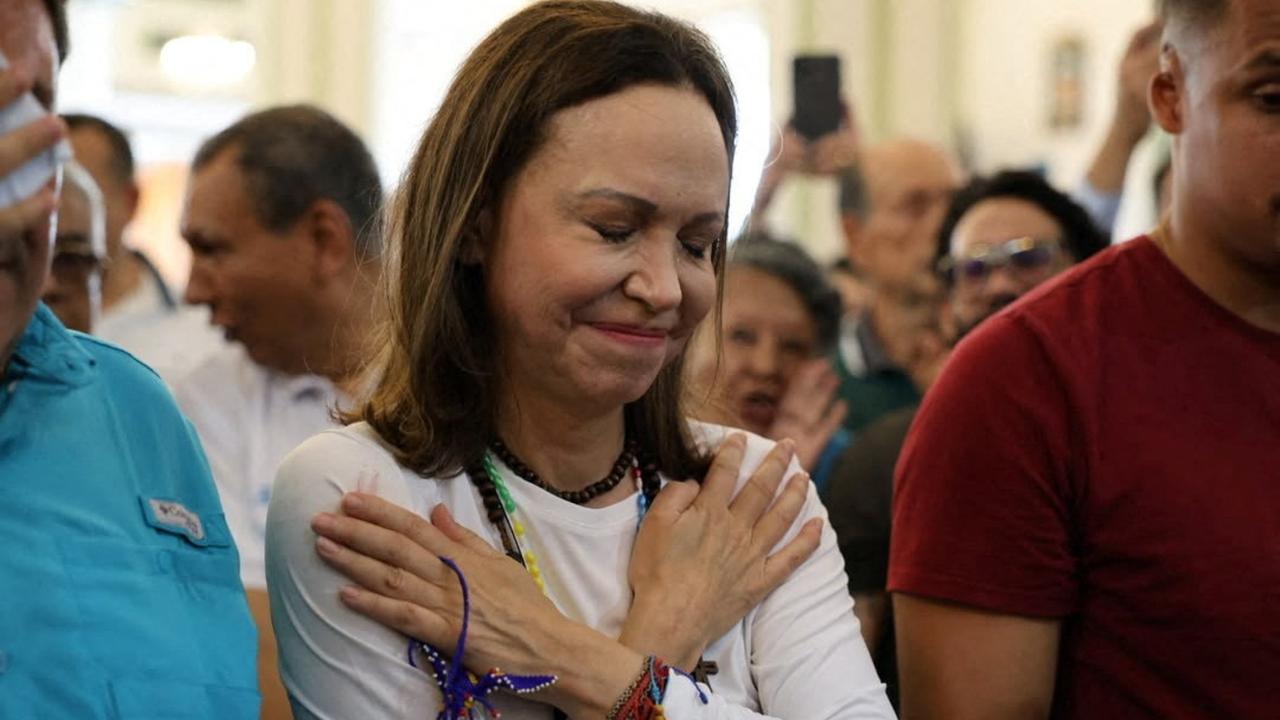
Caracas, Venezuela – October 25, 2026 – In a development that sent ripples of anticipation and apprehension across Venezuela and the international community, María Corina Machado, a prominent opposition leader and Nobel Peace Prize laureate, has returned to her homeland after nearly a year in exile. Her reappearance marks a significant moment in the protracted struggle for political change in the South American nation, injecting renewed energy into a movement long suppressed by the ruling regime.
Machado, a fierce critic of the current government, announced her return via the social media platform X, stating, "I am here. With you." The simple yet powerful declaration resonated deeply with her supporters, who have been yearning for her leadership and advocating for her return. The circumstances of her arrival and her immediate whereabouts remain undisclosed, adding an element of intrigue and underscoring the sensitive political climate in Venezuela.
Her return comes at a critical juncture, with presidential elections looming and a history of government crackdowns on dissent. Machado’s presence on Venezuelan soil is expected to galvanize opposition forces and intensify calls for free and fair elections, a demand that has been central to her political platform for years.
A Symbol of Resistance: Machado’s Journey and Return
María Corina Machado’s political trajectory has been marked by unwavering dedication to democratic principles and a relentless challenge to the Venezuelan government. Her recent exile was a consequence of her long-standing opposition to the ruling party, which has seen its power consolidated through various means, including the disqualification of opposition candidates from electoral races.
A Difficult Departure and International Recognition:
Machado’s departure from Venezuela in December of the previous year was shrouded in secrecy. She left the country following the controversial presidential election of 2024, a contest that was widely criticized by the opposition and international observers for alleged irregularities. Her journey was fraught with peril, as she reportedly sustained a vertebral fracture during a dangerous boat trip while fleeing the country. This arduous escape prevented her from attending the Nobel Peace Prize ceremony in Oslo, where her daughter accepted the prestigious award on her behalf.
Despite her physical absence from the award ceremony, Machado’s voice continued to resonate on the international stage. In January 2026, she presented her Nobel Prize medal in Washington to then-U.S. President Donald Trump. This gesture, while symbolic, highlighted her commitment to leveraging international platforms to advocate for democratic reforms in Venezuela. At the time, Trump offered a brief but notable statement, expressing his admiration for Machado and his hope for her safety, while also acknowledging the complex political landscape she navigated.
Years of Advocacy and Opposition:
For years, Machado has been a leading figure in the movement advocating for a political transition in Venezuela. Her party, Vente Venezuela, has consistently highlighted the systemic barriers placed before opposition movements, including repeated attempts to prevent her return to her home country. Her political activism has often placed her at odds with the government, leading to periods of intense scrutiny and political maneuvering.
Escalating Tensions and the Road to Elections
The backdrop to Machado’s return is one of escalating political tensions and a desperate desire for change among a significant portion of the Venezuelan population. The government’s actions in the lead-up to and aftermath of the 2024 presidential election have been particularly contentious.
Disqualification and Contested Election Results:
In January 2026, Venezuelan authorities issued a ban that prevented Machado from running for president. Despite this disqualification, Nicolás Maduro was declared the winner of the election. However, the opposition, represented by Edmundo González Urrutia, claimed victory, leading to a deeply divided political landscape and widespread accusations of electoral fraud.
Government Crackdowns and Exodus:
The post-election period was characterized by a severe crackdown on government opponents. Reports indicate that this wave of repression resulted in the deaths of 28 individuals, with numerous opposition figures fleeing the country to seek refuge abroad. This period of intensified state control and suppression further fueled the desire for political change and underscored the risks faced by those who dared to dissent.
International Involvement and Negotiation Attempts:
In a significant turn of events, U.S. forces apprehended then-President Nicolás Maduro in Caracas in early January of this year, transferring him to the United States. Following Maduro’s removal, Delcy Rodríguez assumed the role of interim president, overseeing the government. In late August, representatives from her administration and the opposition initiated dialogue concerning the nation’s political future. Both sides expressed a commitment to holding presidential elections. However, Machado herself did not participate in these negotiations, a testament to the complex and often fragmented nature of the opposition’s engagement with the ruling powers.
Demonstrations for Democracy and Machado’s Return
The desire for Machado’s return and for democratic reforms has been palpable among the Venezuelan populace, manifesting in widespread protests and demonstrations. Just days before her confirmed return, thousands of Venezuelans took to the streets to demand her reappearance and the organization of genuine elections.
Public Outcry for Change:
In the capital city of Caracas, approximately 2,000 demonstrators gathered, holding placards that called for Machado’s return and the holding of elections. Similar protests were observed in the western state of Táchira, near the border with Colombia, signaling a nationwide sentiment for political change. These demonstrations underscore the deep-seated aspiration for democratic governance and the significant public support Machado commands.
Allies and Official Responses
Machado’s return has been met with confirmation and cautious optimism from her allies within the opposition. Edmundo González Urrutia, a key figure in the opposition and a former presidential candidate, corroborated Machado’s arrival, emphasizing the significance of her presence for the ongoing political struggle.
González Urrutia’s Statement:
"Today is a very important day for Venezuelans," González Urrutia stated, highlighting the symbolic weight of Machado’s return. "With her, our sovereign voice returns to lead this process and steer it in the right direction!" His remarks suggest a belief that Machado’s leadership will be instrumental in navigating the complex path towards a democratic future for Venezuela.
While official statements from the current Venezuelan government regarding Machado’s return have not yet been widely disseminated, the historical context suggests a likely response of heightened surveillance and potential restrictions. The government’s past actions have consistently aimed at curtailing the influence of opposition leaders, and Machado’s return is expected to be met with a carefully calibrated, yet firm, response.
The international community, which has long been observing the political situation in Venezuela, is likely to react with a mixture of hope and concern. The United States, in particular, has played a significant role in recent events, and Machado’s return could influence its future engagement with the Venezuelan political landscape.
Implications and the Path Forward
María Corina Machado’s return to Venezuela is more than just a personal homecoming; it is a potent symbol of defiance and a catalyst for renewed political engagement. Her presence is expected to invigorate the opposition, potentially leading to increased pressure on the government for genuine democratic reforms and free and fair elections.
A Strengthened Opposition Movement:
Machado’s leadership has the potential to unify disparate factions within the opposition, providing a clearer and more cohesive vision for the country’s future. Her charisma and international recognition can serve to galvanize domestic support and garner greater attention from the global community.
Challenges and Uncertainties:
However, Machado’s return is not without its inherent risks and challenges. The Venezuelan government has a history of suppressing dissent, and her safety and freedom of movement will be under constant scrutiny. The exact nature of her legal standing within Venezuela, particularly given past disqualifications, remains a critical question. Furthermore, the path to truly free and fair elections is complex, involving not only the will of the people but also the cooperation and genuine commitment of the ruling powers.
The Role of International Actors:
The international community’s role in Venezuela’s political transition will continue to be crucial. Diplomatic pressure, sanctions, and humanitarian aid are all potential tools that can be employed to support democratic aspirations. Machado’s return may prompt a reassessment of international strategies and a renewed push for dialogue and accountability.
A Glimmer of Hope, But a Long Road Ahead:
María Corina Machado’s return to Venezuela marks a significant chapter in the country’s ongoing struggle for democracy. While her presence offers a powerful symbol of hope and resistance, the road ahead remains fraught with uncertainty and challenges. The coming weeks and months will be critical in determining how her return impacts the political landscape, the government’s response, and the ultimate trajectory of Venezuela’s democratic aspirations. The eyes of the world will be watching closely as this pivotal moment unfolds.