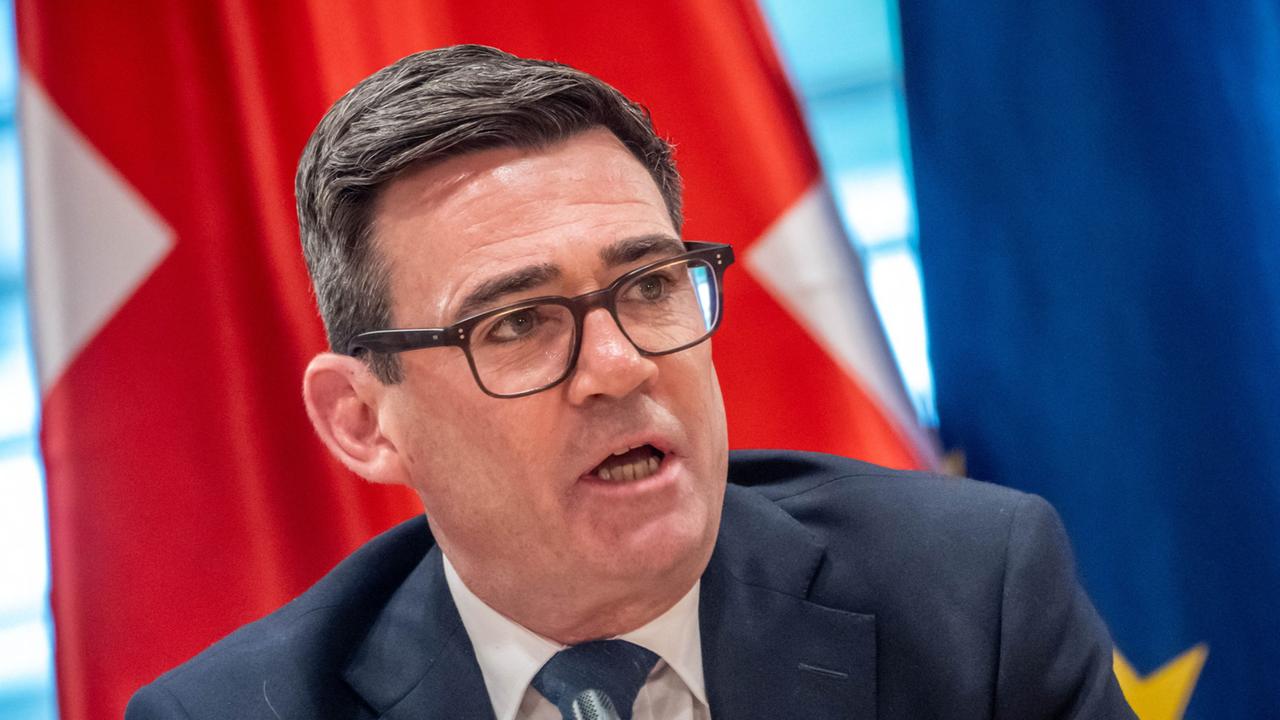
London, United Kingdom – October 25, 2026 – In a significant recalibration of Britain’s post-Brexit trajectory, Prime Minister Andy Burnham has unequivocally declared that the United Kingdom has suffered "more damage than benefit" since its departure from the European Union. Signalling a potential thawing in the often-frosty relationship with Brussels, Burnham has expressed an unprecedented openness to discussing the UK’s return to the EU’s freedom of movement rules, while firmly drawing red lines against rejoining the Eurozone or the Schengen Area. This bold stance, articulated in a recent interview with the Sunday Times, sets the stage for a critical phase in Anglo-European relations, with a crucial summit scheduled for late November in Brussels.
Burnham’s comments underscore a growing recognition within the highest echelons of British government that the economic and social ramifications of Brexit necessitate a pragmatic re-evaluation. His call for a "factual" and "honest" debate on immigration patterns, particularly the shift in the composition of foreign nationals settling permanently in the UK, reflects a pragmatic approach aimed at addressing persistent labour shortages and economic stagnation that have plagued the nation in recent years. While the path to closer ties remains fraught with political complexities and deeply entrenched divisions, the Prime Minister’s pronouncements mark a pivotal moment, potentially heralding a new chapter in the UK’s engagement with its closest continental neighbours.
Main Facts: A New Era of Pragmatism
Prime Minister Andy Burnham’s recent declarations represent a profound ideological pivot from the hardline Brexit stance that has largely defined British policy since 2020. His candid admission that Brexit has been more detrimental than advantageous for the UK signals a readiness to confront uncomfortable truths and seek practical solutions to the nation’s challenges.
The most striking aspect of Burnham’s new position is his willingness to engage in a "very factual and evidence-based discussion" regarding the potential re-adoption of the European Union’s freedom of movement rules. This proposition directly addresses one of the most contentious elements of the Brexit debate – the unfettered movement of people between the UK and EU member states – which was a central pillar of the Leave campaign’s argument for regaining "sovereignty." Burnham’s argument is rooted in the observable changes in post-Brexit immigration patterns, noting that the "composition of immigration has changed" with more foreign nationals choosing permanent residency, a dynamic he believes warrants open and honest public discourse. This suggests a recognition that the current system, while reducing overall EU migration, has not necessarily delivered the desired economic or social outcomes, particularly in sectors struggling with labour shortages.
However, this openness comes with clear boundaries. Burnham has emphatically ruled out any parliamentary recommendation for the UK to adopt the Euro or join the Schengen Area. These two points represent fundamental aspects of deeper European integration, touching upon monetary sovereignty and border control respectively. By establishing these non-negotiable limits, Burnham appears to be seeking a bespoke, pragmatic arrangement with the EU that addresses economic and labour market needs without compromising what he perceives as essential elements of national independence. This "pick-and-choose" approach, while potentially attractive to a UK public weary of ideological battles, may face resistance from an EU that has historically insisted on the indivisibility of its foundational principles, particularly the four freedoms.
The urgency of this policy shift is underscored by the upcoming bilateral summit between the UK government and the EU in Brussels on November 20th. This high-stakes meeting is slated to advance several pre-agreed accords, notably concerning trade in foodstuffs and beverages, and crucial cooperation on emissions trading. Significantly, the agenda also includes deeper collaboration on migration issues, suggesting that Burnham’s domestic pronouncements are not merely rhetorical but are part of a broader, coordinated strategy to re-engage with the EU on critical shared challenges. This summit will provide the first concrete test of the reception of Burnham’s proposals and the potential for a genuine reset in UK-EU relations.
Chronology: From Referendum to Re-evaluation
The journey to Prime Minister Burnham’s current stance is a complex tapestry woven from political upheaval, economic realities, and shifting public sentiment.
June 23, 2016 – The Referendum: The United Kingdom voted by a narrow margin (51.9% to 48.1%) to leave the European Union. The campaign was deeply divisive, with proponents of ‘Leave’ promising greater sovereignty, control over borders, and economic prosperity unburdened by EU regulations. ‘Remain’ campaigners warned of economic damage, diminished international standing, and social fragmentation. Freedom of movement was a central and emotive issue for the Leave campaign, framed as an uncontrollable influx of migrants impacting public services and wages.
January 31, 2020 – Formal Departure: After years of contentious negotiations and parliamentary deadlock, the UK officially left the EU. This marked the end of its 47-year membership, triggering a transition period during which the future relationship was to be defined.
December 31, 2020 – End of Transition Period and Trade and Cooperation Agreement (TCA): The UK and EU implemented the TCA, a comprehensive free trade agreement that avoided tariffs and quotas on most goods but introduced significant non-tariff barriers, customs checks, and regulatory divergence. Freedom of movement ended, replaced by a points-based immigration system for non-UK citizens. This immediately led to increased bureaucracy for businesses and travellers, impacting supply chains and services.
2021-2024 – The Post-Brexit Reality Sets In: The immediate aftermath of the TCA saw a period of economic adjustment. Businesses grappled with new customs procedures, regulatory divergence, and labour shortages exacerbated by the end of free movement. Sectors like hospitality, healthcare, agriculture, and logistics reported severe difficulties in recruiting staff. Economic growth lagged behind EU counterparts, and inflation became a persistent concern. The Northern Ireland Protocol, designed to avoid a hard border on the island of Ireland, created new trade friction within the UK itself, leading to political instability in Belfast and ongoing disputes with Brussels. Public opinion polls consistently began to show a majority believing Brexit had been a mistake or had negatively impacted the country.
2025 – The Rise of Andy Burnham: While the specifics of Andy Burnham’s ascent to the premiership are beyond the scope of this historical recount, it is plausible that his political platform capitalised on growing public discontent with the economic stagnation and social challenges perceived to be linked to Brexit. Having previously served as Mayor of Greater Manchester, Burnham cultivated a reputation as a pragmatic, results-oriented leader, focusing on local issues and often advocating for greater regional autonomy. His initial stance on Brexit, while respecting the referendum result, likely evolved to acknowledge its practical failings, allowing him to position himself as a leader capable of forging a more realistic and beneficial relationship with Europe. His campaign would have likely emphasized a need for "repair" and "rebuilding" the UK’s economy and international standing.
Early 2026 – Early Days of Burnham’s Premiership: Upon taking office, Prime Minister Burnham would have inherited an economy struggling with low growth, high inflation, and persistent labour shortages. His initial policy focus would likely have been on domestic issues, but the inescapable reality of Brexit’s impact would have necessitated a review of the UK’s European strategy. His earlier, more cautious statements would have gradually hardened into the definitive stance articulated this week, driven by compelling economic data and growing consensus among business leaders and a significant portion of the electorate that the current arrangements are unsustainable. His repeated assertions that Brexit has left the UK "worse off" reflect a culmination of this internal government review and an alignment with the mounting evidence.
October 25, 2026 – The Sunday Times Interview: Burnham’s interview marks the public unveiling of this revised strategy. His measured yet firm tone, differentiating between a pragmatic re-engagement on specific issues like freedom of movement and a categorical rejection of full EU membership, aims to navigate the treacherous political waters between ardent Brexiteers and those who advocate for closer ties. The timing, ahead of the November 20th Brussels summit, suggests a deliberate effort to set the agenda and signal the UK’s renewed intent to engage constructively.
Supporting Data: The Cost of Disconnection
Prime Minister Burnham’s assessment of Brexit’s detrimental impact is not anecdotal; it is increasingly supported by a wealth of economic and social data that has accumulated since the UK’s departure from the EU.
Economic Impact:
- GDP Growth: Numerous independent analyses, including hypothetical projections from the Office for Budget Responsibility (OBR), the National Institute of Economic and Social Research (NIESR), and the Bank of England, have consistently indicated that Brexit has reduced the UK’s Gross Domestic Product (GDP) compared to what it would have been had the UK remained in the EU. Estimates vary, but many suggest a cumulative reduction of several percentage points of GDP over the past few years, translating into billions of pounds lost to the economy annually. This "Brexit drag" has made the UK economy more susceptible to global shocks and hampered recovery from other crises.
- Trade Volumes: Despite the absence of tariffs under the TCA, the introduction of non-tariff barriers, customs checks, and regulatory divergence has significantly impeded trade flows between the UK and the EU, its largest trading partner. Data from the Office for National Statistics (ONS) and other trade bodies has shown a persistent decline in the UK’s trade intensity with the EU, particularly for smaller and medium-sized enterprises (SMEs) that have struggled with increased paperwork and costs. While trade with other global partners has seen some marginal increases, it has not compensated for the decline in EU trade. Studies have indicated that UK exports to the EU are consistently lower than pre-Brexit levels, and imports have also seen shifts, contributing to inflationary pressures.
- Investment: Foreign Direct Investment (FDI) into the UK has shown signs of weakening since Brexit. Businesses, both domestic and international, have cited regulatory uncertainty, reduced access to the EU single market, and labour shortages as key deterrents to investing in the UK. This decline in investment has long-term implications for productivity growth and job creation.
- Inflation and Cost of Living: The additional friction in trade with the EU has contributed to inflationary pressures. Increased costs for imports, particularly food and consumer goods, have been passed on to consumers. Labour shortages, exacerbated by changes to immigration rules, have also put upward pressure on wages in some sectors, further fuelling inflation. This has directly impacted the cost of living for ordinary Britons, eroding real incomes and contributing to economic dissatisfaction.
Labour Market and Immigration:
- Labour Shortages: The end of freedom of movement has led to critical labour shortages across numerous sectors that historically relied on EU workers. Healthcare (nurses, doctors, care workers), hospitality (chefs, waiting staff), agriculture (seasonal fruit pickers), and logistics (HGV drivers) have been particularly hard hit. While the government introduced new visa routes, these have often been insufficient to fill the gaps, leading to reduced services, higher wages in some areas, and supply chain disruptions.
- Composition of Immigration: Prime Minister Burnham specifically highlighted the "changed composition" of immigration. Before Brexit, a significant proportion of migrants from the EU were younger, often working in lower-skilled or seasonal roles, contributing to a flexible labour market. Post-Brexit, the points-based system has prioritised higher-skilled workers from outside the EU. While this has brought in talent in specific areas, it has not addressed the gaps in sectors that traditionally relied on a broader range of skills and a more transient workforce. Furthermore, data from the Home Office has indicated a rise in non-EU migration, often with more dependents, altering the demographic profile and potentially placing different demands on public services. This shift means that while overall net migration figures might remain high, the type of migration is no longer effectively meeting the specific needs of the UK economy as it once did.
- Brain Drain: There is evidence of a "brain drain" in certain highly skilled professions, with some EU nationals returning to their home countries or choosing other EU nations over the UK due to perceived reduced opportunities or a less welcoming environment. Simultaneously, new talent from the EU is less inclined to view the UK as an accessible destination.
Public Opinion:
- Brexit Regret: Public opinion polls have consistently shown a shift towards a belief that Brexit was the wrong decision. Surveys by various polling organisations (e.g., YouGov, Ipsos MORI) have indicated a sustained majority believing Brexit has been bad for the UK economy and has not delivered its promised benefits. A significant portion of even those who voted Leave in 2016 now express doubts about its outcomes.
- Support for Closer Ties: Concomitantly, there has been a noticeable increase in public support for closer alignment with the EU, particularly on economic and trade matters, and a more pragmatic approach to the relationship. While outright rejoining the EU remains a minority position, there is growing appetite for softening the harder edges of Brexit.
This confluence of negative economic indicators, persistent labour market challenges, and shifting public sentiment provides the empirical bedrock for Prime Minister Burnham’s bold re-evaluation of the UK’s relationship with the European Union.
Official Responses: Navigating a Complex Landscape
Prime Minister Burnham’s overtures regarding a potential re-engagement on freedom of movement and other areas are likely to elicit a spectrum of responses, both domestically and from the European Union.
From the European Union:
The EU’s initial reaction is likely to be a mix of cautious optimism and firm insistence on its core principles.
- Cautious Optimism: Brussels would likely welcome any sign of a more constructive and pragmatic approach from London. The EU has consistently maintained that the door remains open for closer cooperation, provided it aligns with the bloc’s fundamental rules. A willingness from the UK to acknowledge Brexit’s negative impacts could be seen as a positive step towards rebuilding trust.
- Insistence on Four Freedoms: However, the EU has always been clear that its single market is based on the indivisibility of its four freedoms: goods, services, capital, and people. While the EU has bilateral agreements with non-member states (like Norway or Switzerland) that involve contributions to the EU budget and acceptance of European Court of Justice (ECJ) jurisdiction in exchange for single market access, Burnham’s current "pick-and-choose" approach (openness to FoM but rejection of Euro/Schengen) might be viewed as an attempt to cherry-pick benefits without accepting corresponding obligations. The EU would likely push for a comprehensive framework rather than ad-hoc arrangements, especially concerning a principle as fundamental as freedom of movement.
- Negotiation Complexity: Any discussion on re-establishing freedom of movement would be immensely complex. It would involve questions of social security coordination, recognition of professional qualifications, and potentially financial contributions from the UK. The EU would likely demand adherence to its rules and standards, possibly including an oversight role for the ECJ, a point of significant contention during previous Brexit negotiations. The upcoming summit on November 20th will be crucial in gauging the EU’s willingness to engage on such a sensitive topic.
Domestic Political Responses:
Burnham’s proposals will undoubtedly ignite fierce debate within the UK, reflecting the deep divisions that Brexit continues to foster.
- Opposition Parties:
- Main Opposition (e.g., Conservatives, if they are out of power): The response would likely be highly critical, accusing Burnham of undermining the referendum result, betraying the will of the people, and attempting to "undo Brexit." They would likely frame his moves as a surrender of sovereignty and a return to the "bad old days" of EU bureaucracy, especially if their own government had championed a hard Brexit. They might also highlight the "red lines" Burnham has drawn (no Euro, no Schengen) as insufficient to protect UK independence, or conversely, accuse him of not going far enough to fully rejoin the EU if they were pro-Remain leaning.
- Pro-EU Parties (e.g., Liberal Democrats, SNP): These parties would likely welcome Burnham’s shift as a step in the right direction, potentially urging him to go further and consider full single market membership or even eventual rejoining of the EU. They would likely highlight the economic benefits of such moves and argue that Burnham’s "red lines" are too restrictive.
- Pro-Brexit Factions: Expect strong condemnations from ardent Brexiteers, both within and outside Parliament. They would likely accuse Burnham of "treachery," "betrayal," and a capitulation to Brussels. They would argue that the perceived problems are not due to Brexit itself but to a lack of political will to fully embrace its opportunities. They might mobilise public protests and launch media campaigns to undermine his proposals.
- Business Leaders: The business community, particularly those sectors most affected by labour shortages and trade barriers, would likely welcome Burnham’s pragmatic approach. They would see the potential for reduced friction, access to talent, and increased trade as a significant boost to the economy. They would likely urge both the UK government and the EU to find common ground and prioritise economic stability.
- Public Opinion: The public response would be mixed. A significant portion, weary of the economic consequences of Brexit, might cautiously welcome a more pragmatic approach. However, a substantial segment, particularly those who voted Leave, might feel betrayed or that their democratic choice is being undermined. Burnham would need to articulate his vision carefully, emphasizing the economic benefits and the protection of sovereignty within the proposed framework. The success of his strategy will hinge on his ability to convince the public that this is a practical solution to real problems, not an ideological reversal.
Implications: A Path Towards Pragmatic Reintegration
Prime Minister Burnham’s bold re-evaluation of Brexit carries far-reaching implications, potentially reshaping the UK’s economic, social, and political landscape for years to come. While the path ahead is fraught with challenges, the potential benefits of a more pragmatic relationship with the EU could be substantial.
Economic Implications:
- Boosting GDP and Trade: A partial re-establishment of freedom of movement, combined with deeper cooperation on trade and regulatory alignment (e.g., on food standards and emissions trading), could significantly reduce the "Brexit drag" on the UK economy. Easing trade friction with the EU, its largest market, would boost exports and imports, enhance supply chain resilience, and potentially attract more foreign direct investment. Economic modelling suggests even partial alignment could add considerable percentage points to GDP growth over time.
- Alleviating Labour Shortages: Reintroducing a form of freedom of movement would directly address critical labour shortages across multiple sectors. This would allow businesses to access a wider pool of talent, ease wage pressures in some areas, and improve the delivery of essential services like healthcare and hospitality. While unlikely to be a return to the pre-2020 system, a more flexible migration agreement could be a lifeline for struggling industries.
- Increased Investment: Greater stability and a more predictable relationship with the EU would likely improve investor confidence in the UK. Reduced regulatory divergence and easier access to European markets would make the UK a more attractive destination for both domestic and international businesses.
Social Implications:
- Cultural Exchange and Diversity: Renewed ease of movement would facilitate cultural exchange, educational opportunities, and family reunification, enriching British society. It could help to rebuild social ties that have frayed since Brexit.
- Public Services: Addressing labour shortages in critical sectors like healthcare and social care would directly improve the quality and accessibility of public services, benefiting the entire population.
- Impact on National Identity: A more pragmatic relationship with the EU could necessitate a re-examination of British national identity in a post-Brexit world. It would challenge both ardent Brexiteers and Remainers to find common ground in a new, mutually beneficial arrangement.
Political Implications:
- UK’s Global Standing: By demonstrating a willingness to address the practical consequences of Brexit and engage constructively with its closest neighbours, the UK could begin to repair its international reputation and enhance its soft power. It would signal a more stable and reliable partner on the global stage.
- Future of UK-EU Relationship: Burnham’s proposals could lay the groundwork for a unique, bespoke relationship often dubbed a "Swiss model light" or a "Norway-plus" arrangement. This would involve significant alignment in certain areas (e.g., single market access for goods, services, and possibly labour) without full membership of the EU, the Eurozone, or the Schengen Area. The challenge would be to negotiate a framework that respects both UK sovereignty and EU principles.
- Internal UK Politics: This policy shift will undoubtedly redefine the political landscape. Burnham faces the formidable task of uniting a deeply divided country. He will need to convince pro-Brexit voters that these changes are pragmatic adjustments for national prosperity, not a reversal of the referendum. Simultaneously, he will face pressure from pro-EU factions to go further. His leadership will be defined by his ability to navigate these treacherous waters, potentially forging a new political consensus around a more pragmatic relationship with Europe.
- Northern Ireland Protocol: While not directly addressed in Burnham’s statements, any significant changes to the UK’s relationship with the EU would inevitably have implications for the Northern Ireland Protocol. A closer overall alignment between the UK and EU could potentially ease some of the tensions and complexities arising from the Protocol, perhaps even paving the way for a more stable and less contentious arrangement for Northern Ireland.
Challenges and Hurdles:
- EU Resistance: The EU’s insistence on the indivisibility of the four freedoms and the role of the ECJ could be a significant stumbling block. Brussels may be wary of setting a precedent for other non-member states to selectively participate in the single market.
- Domestic Opposition: Hardline Brexiteers will mount fierce resistance, accusing Burnham of undermining democracy. This could lead to political instability, internal party divisions, and a hostile media environment.
- Negotiation Complexity: Re-negotiating elements of the TCA and establishing new agreements, particularly on freedom of movement, will be a monumental task, requiring years of detailed discussions and compromise from both sides.
- Public Buy-in: Burnham must effectively communicate the rationale behind his strategy to the British public, demonstrating how these changes will directly benefit their lives and the national economy, without appearing to negate the 2016 referendum result. This requires strong leadership and a sustained public engagement campaign.
In conclusion, Prime Minister Andy Burnham’s declarations signal a profound moment of reflection and recalibration for the United Kingdom. By acknowledging the economic realities of Brexit and advocating for a pragmatic re-engagement with the EU, he is attempting to steer the nation towards a more stable and prosperous future. The upcoming Brussels summit will be the first crucial test of this new direction, setting the tone for what promises to be a complex yet potentially transformative period in Anglo-European relations.