Atlanta, Georgia – October 25, 2026 – In a move that sent immediate ripples through both the automotive industry and the political landscape, German luxury carmaker Audi announced plans to construct its first dedicated manufacturing plant in the United States. The revelation, strategically unveiled during a campaign rally for former President Donald Trump in Georgia, underscored the intricate interplay between global corporate strategy and American political ambition. While Audi touts the investment as a pivotal step to solidify its presence in the crucial North American market, the timing and location of the announcement have ignited a complex debate over economic nationalism, transatlantic trade, and the future of automotive production.
Main Facts: A Bold Bet on American Soil
Audi, a subsidiary of the Volkswagen Group, confirmed its intention to invest approximately $4 billion (around €3.6 billion) in a new facility in Georgia. This substantial investment is projected to create 4,500 direct jobs, with production slated to commence in the early 2030s. The plant is designed to produce 200,000 premium SUVs annually, specifically tailored to meet the preferences of North American consumers. Construction is anticipated to begin in 2027.
The announcement was made dramatically, with Donald Trump, a vocal proponent of bringing manufacturing jobs back to the U.S., personally inviting Audi CEO Gernot Döllner onto the stage during a raucous campaign event. Döllner, in a brief appearance, expressed gratitude for the support, acknowledging the strategic significance of the decision. This public endorsement from a high-profile political figure underscored the immediate political dividends reaped by Trump, who has consistently championed policies aimed at incentivizing foreign companies to localize production within the United States, often under the threat of punitive tariffs.
Chronology: A Calculated Unveiling Amidst Political Fervor
The timing of Audi’s announcement was anything but coincidental. It arrived less than ten days before the crucial 2026 Midterm elections, scheduled for November 3rd. These elections will determine the composition of the U.S. House of Representatives and a portion of the Senate, with Trump’s Republican Party aiming to defend its slim majorities in both chambers of Congress. Georgia, a pivotal swing state with a burgeoning automotive manufacturing sector, served as the ideal backdrop for such a politically charged revelation.
The sequence of events unfolded rapidly at the Georgia rally. Trump, addressing a fervent crowd, first teased the audience with news of a major economic development. He then detailed Audi’s ambitious plans, emphasizing the scale of the investment and the number of jobs created, framing it as a direct result of his "America First" economic policies. Following his introduction, Döllner’s appearance on stage, though brief, lent corporate gravitas to Trump’s political narrative. The CEO’s acknowledgment of Trump’s "support" was carefully worded but nonetheless amplified the perception of a direct link between the political climate and the company’s investment decision.
This public display highlighted the delicate tightrope walk for multinational corporations navigating the often-turbulent waters of U.S. politics. While the business rationale for a U.S. plant has been building for years, the decision to align the announcement with a political campaign event speaks volumes about the perceived necessity of securing political goodwill, especially from a figure known for his transactional approach to trade and investment.
Supporting Data: Driving Forces Behind the US Investment
Audi’s decision to establish a U.S. manufacturing base is underpinned by a confluence of economic, strategic, and geopolitical factors, extending far beyond the immediate political optics.
Market Proximity and Demand: The North American market, particularly the U.S., represents a colossal and highly profitable segment for premium automobiles. For Audi, having a local production footprint allows for quicker response to market demands, reduced logistics costs, and a buffer against currency fluctuations. The focus on "premium SUVs" directly addresses a dominant and growing consumer preference in the U.S., where larger, versatile vehicles continue to outsell sedans. Producing these models domestically allows for greater customization and quicker adaptation to local tastes and regulatory requirements.
Mitigating Trade Risks and Tariffs: Donald Trump’s past rhetoric and actions regarding tariffs on imported goods, particularly automobiles, have created a strong incentive for foreign automakers to localize production. His consistent threats of imposing steep duties on cars manufactured abroad have loomed large over companies like Audi, which primarily import vehicles into the U.S. By building a plant in Georgia, Audi effectively insulates a significant portion of its future U.S. sales from potential tariff hikes, ensuring more stable pricing and supply chains.
Economic Incentives and the IRA: Georgia has aggressively pursued and secured numerous large-scale automotive investments in recent years, leveraging attractive state-level incentives, including tax breaks, infrastructure development, and workforce training programs. While the original article specifies SUVs without explicitly stating electric vehicles, the timeline for production starting in the early 2030s strongly suggests that the plant will be either primarily focused on electric vehicles (EVs) or built on a flexible platform capable of producing both internal combustion engine (ICE) and electric models. The Inflation Reduction Act (IRA), signed into law in 2022, offers substantial tax credits and incentives for EVs and battery components manufactured in North America, further sweetening the deal for automakers considering U.S. production. While the initial announcement focuses on "SUVs," the long-term strategic play almost certainly includes future-proofing for electrification to capitalize on these federal incentives.
Supply Chain Resilience: Recent global disruptions, from the COVID-19 pandemic to geopolitical tensions, have exposed the vulnerabilities of extended, globalized supply chains. Localizing production in the U.S. enhances resilience, reduces transit times, and minimizes the risk of disruptions, ensuring a more consistent supply to the crucial North American customer base.
Competitive Landscape: Audi’s premium rivals, including BMW, Mercedes-Benz, and Volvo, have long-established manufacturing operations in the U.S. BMW’s Spartanburg plant in South Carolina, for instance, is its largest worldwide and a major exporter. Mercedes-Benz operates a significant plant in Alabama. Audi’s decision to build its own facility brings it in line with its direct competitors, allowing it to compete more effectively on pricing, delivery times, and product customization for the U.S. market.
Official Responses: A Mix of Political Acclaim and Labor Concern
The announcement elicited a spectrum of reactions, from enthusiastic political endorsements to cautious labor assessments.
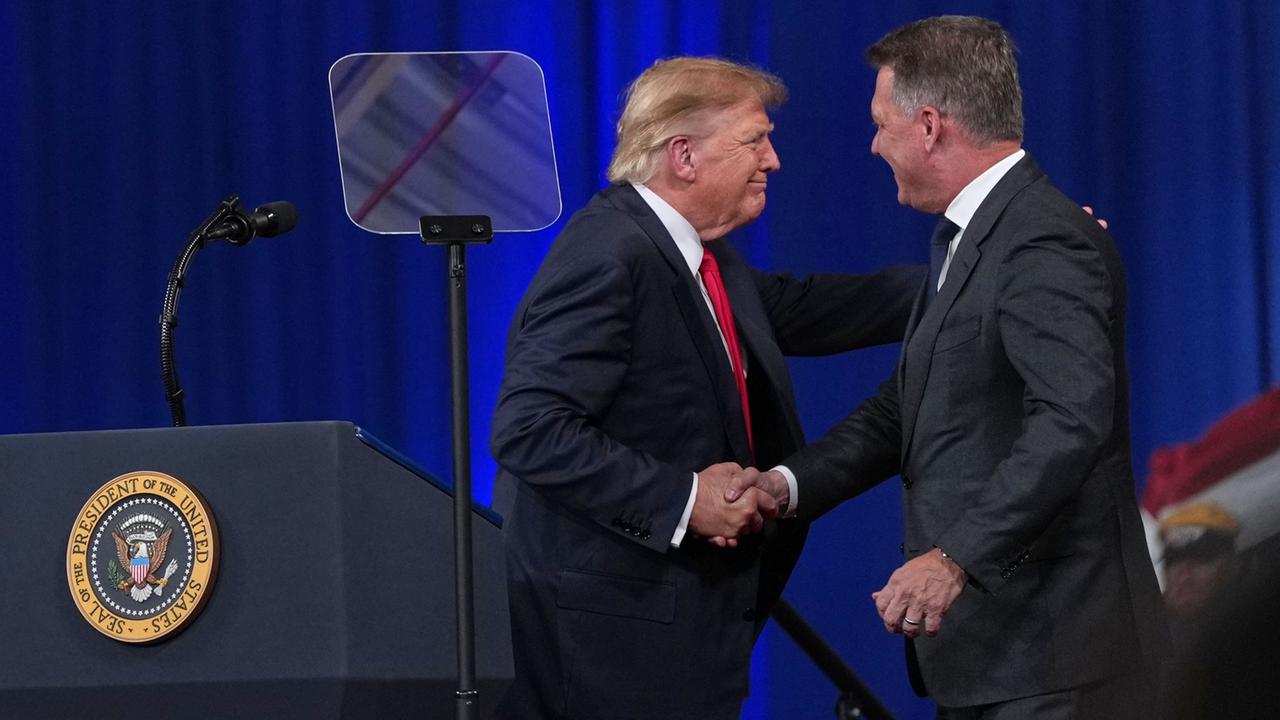
Donald Trump and Republican Allies: Unsurprisingly, Donald Trump hailed the Audi investment as a resounding victory for his "America First" agenda. During the rally, he emphasized the 4,500 new jobs and the $4 billion investment as tangible proof that his policies were successfully luring manufacturing back to the U.S. He framed it as a testament to his ability to negotiate and create a favorable business environment, contrasting it with the economic policies of his political opponents. Republican figures quickly echoed this sentiment, using the announcement as a campaign talking point to highlight economic growth and job creation under their proposed governance.
Audi CEO Gernot Döllner: Döllner’s brief statement on stage was carefully crafted to be appreciative without overtly endorsing a political candidate. His expression of gratitude for "support" is a common diplomatic maneuver for corporate leaders engaging with political figures. Later, in official company statements, Audi elaborated on the business rationale, stressing the strategic importance of the North American market and the long-term vision behind the investment. The company emphasized its commitment to global production networks and serving customer needs effectively.
IG Metall’s Measured Response: The powerful German trade union, IG Metall, reacted with a blend of cautious approval and firm demands. Christiane Benner, the First Chairwoman of IG Metall, acknowledged the strategic necessity of the move: "To better tap into the U.S. market through a new plant is correct and necessary." However, she immediately coupled this positive assessment with a strong caveat regarding job security in Germany. "However," Benner stressed, "binding prospects for employees at all, especially the domestic sites, must be clearly defined and maintained."
Benner further articulated the union’s expectation that the Audi management board has a "Bringschuld" – a debt of performance or an obligation – to ensure the stability and future of German operations. She also highlighted the critical role of German corporate governance, noting that "the final vote on a possible new factory construction in the USA is subject to the approval of the committees. The final decision will rightly and importantly be made with a holistic view by the Supervisory Board of Volkswagen AG." This statement underscores the influential role of employee representatives and the union within Volkswagen’s co-determination (Mitbestimmung) structure, ensuring that German workers’ interests are considered at the highest levels of corporate decision-making. The union’s stance signals that while global expansion is accepted, it must not come at the expense of domestic employment or technological development.
Implications: Far-Reaching Consequences for Industry, Politics, and Trade
Audi’s decision to build a U.S. plant, and the manner of its announcement, carries significant implications across economic, political, and transatlantic dimensions.
Political Impact on the 2026 Midterms: For Donald Trump and the Republican Party, the Audi announcement provides potent campaign fodder. It allows them to claim a tangible economic victory, bolstering their narrative of bringing manufacturing back to America and creating jobs. In a swing state like Georgia, where the automotive industry is a significant employer, such news could sway undecided voters. The timing, just days before the midterms, maximizes its political impact, allowing candidates to frame it as immediate evidence of successful economic policies. This creates a challenging counter-narrative for their opponents, who might struggle to dismiss such a substantial investment.
Economic Revival and Job Creation: The $4 billion investment and 4,500 direct jobs will undoubtedly provide a significant boost to Georgia’s economy. The ripple effect will extend to indirect job creation in supply chains, logistics, and local services. It further solidifies the Southeastern U.S. as a hub for automotive manufacturing, attracting ancillary businesses and skilled labor. This contributes to the broader trend of a "reshoring" or "friend-shoring" of manufacturing, driven by economic nationalism, supply chain diversification, and government incentives.
Strategic Shift for Audi and Volkswagen Group: For Audi, this represents a fundamental strategic shift. Historically, Audi has relied on its German and European plants for global production, with a smaller facility in Mexico serving some North American demand. A dedicated U.S. plant signifies a deep commitment to the market, allowing for greater agility and product specialization. For the broader Volkswagen Group, it diversifies its global manufacturing footprint and strengthens its position in a market where it aims for significant growth, especially in the premium and EV segments. This move is also a tacit acknowledgment that merely importing vehicles, even premium ones, may not be sustainable or strategically sound in an increasingly protectionist global economy.
Transatlantic Trade Relations: The announcement, particularly its political framing, highlights the ongoing tension in transatlantic trade. While European leaders often criticize U.S. protectionist policies, especially those embedded in the IRA, European companies are simultaneously adapting their investment strategies to benefit from these very incentives. This creates a complex dynamic where European governments advocate for open trade, but European businesses are compelled to localize production in the U.S. to remain competitive. Should a more protectionist administration take power in the U.S., such investments could become even more critical for European companies to maintain market access.
Future of German Automotive Manufacturing: IG Metall’s concerns are legitimate. While a U.S. plant addresses North American market needs, it raises questions about the future allocation of production, research and development, and advanced manufacturing capabilities within Germany. German automotive companies face immense pressure from high energy costs, stringent environmental regulations, and intense global competition. Ensuring that Germany remains a leading hub for innovation and high-value production will require proactive strategies from both industry and government to counteract the allure of foreign incentives. The VW AG Supervisory Board’s holistic view will be crucial in balancing global expansion with domestic job security and technological leadership.
The Road Ahead for Audi: Establishing a new manufacturing plant is a monumental undertaking. Audi will face challenges including recruiting and training a skilled workforce in a competitive labor market, navigating local regulatory environments, building out a robust supply chain within the U.S., and managing the complexities of integrating a new facility into its global production network. The success of the Georgia plant will ultimately depend on its ability to produce high-quality vehicles efficiently, meet market demand, and contribute positively to Audi’s global profitability, all while balancing stakeholder expectations from both sides of the Atlantic.
In conclusion, Audi’s decision to build its first U.S. plant is a landmark event, reflecting strategic business imperatives, geopolitical realities, and the persistent influence of economic nationalism. While it promises significant economic benefits and political wins in the U.S., it simultaneously underscores the ongoing challenges for German industry in maintaining its competitive edge globally and for transatlantic partners in navigating a complex and often protectionist international trade environment. The reverberations of this announcement will be felt for years to come, shaping not only the automotive landscape but also the broader contours of international economic relations.