In a significant move to streamline user experience and foster deeper content engagement, YouTube has announced a comprehensive redesign of its mobile application’s home screen. The update introduces a new, dynamic navigation bar at the top of the interface, designed to consolidate access to live content, music, premium media, and subscription feeds. Perhaps more intriguingly, the platform is rolling out a feature allowing users to generate custom, AI-curated feeds through natural language text inputs. This overhaul signals a shift from a one-size-fits-all algorithmic discovery model to a more granular, user-intent-driven navigation experience.
The Core Redesign: A New Architectural Approach
The primary objective of the YouTube mobile update, as outlined in recent documentation from the Google support community, is to reduce the friction between a user opening the app and finding the specific type of content they crave. By repositioning essential navigation elements to the very top of the home screen, YouTube is effectively flattening its information architecture.
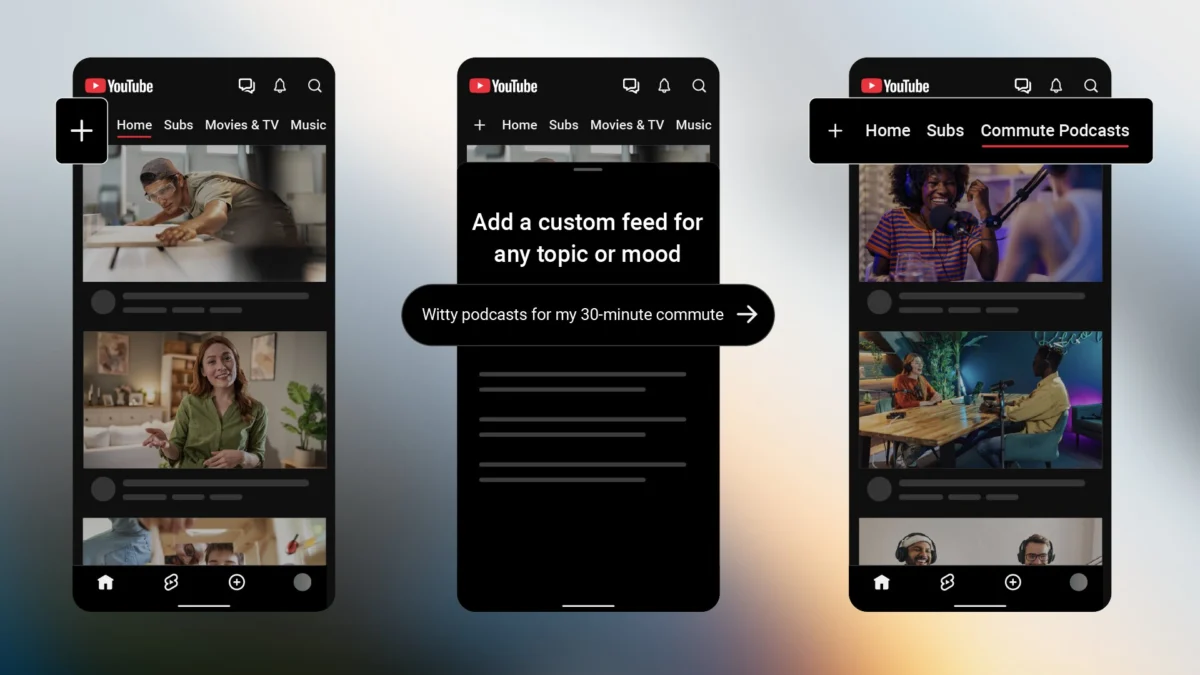
The new interface centers on a horizontal navigation bar that acts as a gateway to dedicated sub-feeds. Key components of this navigation bar include:
- Live: A dedicated space for real-time broadcasts, ensuring that ephemeral content is prioritized for users seeking immediate updates or event coverage.
- Music: A streamlined path to music videos, live performances, and algorithmic playlists.
- Subs (formerly Subscriptions): Shortened for mobile efficiency, the "Subs" tab places the creators a user has chosen to follow front and center, ensuring that community loyalty is rewarded with higher visibility.
- Movies & TV: This entry is context-sensitive. It will only appear for users who have active subscriptions, have purchased specific media, or have engaged with "Primetime Channels," keeping the interface decluttered for those who do not utilize YouTube as a transactional VOD (Video on Demand) platform.
Chronology of the Deployment
The rollout follows a period of iterative testing by YouTube’s product design teams. While internal testing began several months ago, the public announcement marks the first phase of a broader multi-stage strategy.
- Conceptualization: YouTube researchers identified that users often struggle to switch between "discovery" (browsing the home feed) and "intent" (specifically looking for music or live news).
- Initial Beta Testing: A limited pilot program was conducted in selected territories to gauge how users interacted with a top-mounted navigation bar compared to the legacy bottom-tab structure.
- Formal Announcement: The official Google Blog post (dated mid-2024) signaled the commencement of the global rollout.
- Current Phase: The update is currently being pushed to mobile devices, with a strict geographic limitation initially favoring English-language users in the United States.
- Future Roadmap: YouTube has explicitly stated that this is merely the first step. The company intends to continue refining the home screen based on telemetry data and user feedback, suggesting that further UI shifts are imminent.
Supporting Data and Custom Feeds: The Power of Intent
Perhaps the most innovative aspect of this update is the introduction of "Custom Feeds." By tapping the "+" icon located in the navigation bar, users can access an input field where they can describe exactly what they want to watch.
How It Works
Instead of relying solely on the platform’s "Up Next" algorithm, users can dictate their preferences. For instance, a user might input: "A 10-minute guided meditation for post-work relaxation." The AI behind the scenes processes this intent, curates a list of videos matching the duration, theme, and tone, and creates a persistent tab on the navigation bar.
Tiered Feature Access
YouTube has structured this feature to incentivize its premium ecosystem:
- Free Tier: Standard users can create and save up to three custom feeds.
- Premium Tier: Subscribers receive an expanded limit, allowing for up to eight custom feeds.
This cross-platform synchronization is a crucial detail for power users; once a feed is created on a mobile device, it is automatically synced to the desktop version of YouTube, provided the user is logged into the same Google account. This ensures that the user’s "curated viewing environment" is consistent, regardless of the hardware being used.
Official Responses and Strategic Intent
In the official communication regarding the update, YouTube emphasized that this change is intended to "shorten the journey" to content. A spokesperson noted that the "Home" tab had become somewhat bloated, serving too many masters simultaneously. By separating "Live" and "Music" into distinct lanes, the platform hopes to prevent the common scenario where a user gets lost in a sea of unrelated recommendations.

The decision to limit the initial launch to English-language users in the U.S. is a calculated move to manage the complexities of natural language processing (NLP). The AI required to interpret human intent—such as the difference between "energetic workout music" and "calm study lo-fi"—requires extensive training data. By starting with a localized user base, YouTube can refine the semantic accuracy of the feed generation before scaling the technology to non-English languages and global markets.
Implications for Content Creators and the Advertising Ecosystem
The implications of this redesign are significant for both creators and advertisers.
The Creator Economy
For creators, the shortening of the "Subscriptions" tab to "Subs" and its elevation to the top navigation bar is a tacit acknowledgment that creators need direct lines to their audiences. If users find it easier to navigate to their subscriptions, creators may see an uptick in consistent viewership, as their videos are no longer buried under the weight of broad, algorithmic "Recommended for You" content.
However, the "Custom Feed" feature creates a new layer of competition. If a user can define a feed based on a specific niche (e.g., "Vintage car restoration"), creators who focus on those specific keywords may find their content surfaced more frequently in these custom lists. Conversely, generalist channels that rely on wide-net algorithmic discovery may find themselves needing to be more precise with their titles and metadata to ensure they appear in these high-intent custom feeds.
The Advertising Landscape
From an advertising perspective, the move toward intent-based feeds is a goldmine. When a user tells the platform exactly what they want to watch (e.g., "beginner guitar tutorials"), they are providing a clear signal of their current interests and intent. This allows YouTube to serve highly relevant, contextual advertisements that are far more likely to convert than generic ads served against an ambiguous "Home" feed.
The Long-Term Vision: A Truly Personalized YouTube
This redesign represents a paradigm shift for YouTube. For years, the platform has been defined by its recommendation algorithm—a "black box" that decided what users should watch based on historical behavior. By introducing custom feeds, YouTube is handing some of that control back to the user.
While the current version is limited, the trajectory is clear: YouTube is evolving into a more modular application. The ability to "program" your own home screen via text is a precursor to a future where the app looks completely different for every individual. Whether a user is a professional looking for industry news, a student looking for educational content, or a casual viewer looking for entertainment, the "Home" tab will eventually be a custom dashboard tailored to their specific lifestyle.
As the rollout continues, the industry will be watching closely to see if the "Custom Feed" feature gains traction or if it remains a niche tool for power users. If it proves successful, it could fundamentally alter the SEO strategies for YouTube creators, as they will need to optimize for both human-led intent and traditional algorithmic recommendation. For now, users in the United States are getting a first look at a more organized, intentional, and personal YouTube—a development that marks one of the most significant UI changes in the platform’s history.