Approximately 261 million years ago, the Earth was a world in flux. As the middle Permian period neared its conclusion—a time known as the Guadalupian epoch—our planet’s magnetic field began to behave in a manner that, by modern standards, would be considered chaotic. New research published in the National Science Review reveals that the Earth’s magnetic poles reversed their orientation approximately eleven times per million years. This discovery, led by geophysicists Min Zhang and Yongxin Pan from the Chinese Academy of Sciences in Beijing, alongside geoscientist Shu-zhong Shen of Nanjing University, marks one of the most rapid sequences of magnetic reversals ever identified in the geological record.
This period of magnetic instability is particularly striking because it followed the "Kiaman-Superchron," a vast stretch of time lasting nearly 50 million years during which the Earth’s magnetic field remained essentially static. The sudden transition into a state of high-frequency flipping suggests a profound transformation occurring deep within the planet’s interior, coinciding with a global collapse of primordial coral and sponge reef ecosystems.
The Fengshan Profile: A Geological Time Capsule
The evidence for this magnetic turbulence was unearthed in the Fengshan profile near the city of Liuzhou in southern China. Millions of years ago, this region was situated on the floor of a shallow sea near the equator. As layers of calcium carbonate settled on the seabed, iron-rich minerals like hematite acted as miniature compass needles, aligning themselves with the prevailing magnetic field of the time. Once the sediment hardened into limestone, this magnetic orientation was locked in place, preserving a record of the Earth’s geomagnetic history.
However, extracting this information is a delicate task. Over hundreds of millions of years, later magnetic influences can "overwrite" the original signals. To isolate the primary magnetic data, the research team subjected 876 limestone core samples to a rigorous laboratory process. Using a magnetically shielded facility, the scientists heated the samples to temperatures as high as 690 degrees Celsius. This controlled heating process effectively erased modern magnetic "noise," allowing the team to measure the original orientation using SQUID (Superconducting Quantum Interference Device) magnetometers, which are capable of detecting even the most infinitesimal magnetic signatures.
The result of this painstaking work was the identification of 29 distinct magnetic reversals occurring in the period immediately following the Kiaman-Superchron. Of these, 22 reversals occurred within a tight window of just 1.73 million years, directly preceding the biological crisis that devastated marine life.
The Geodynamo and the Supercontinent Pangaea
To understand why the magnetic field would suddenly begin to "flicker," scientists look to the Earth’s interior, specifically the boundary between the solid mantle and the liquid outer core, located nearly 2,900 kilometers beneath our feet. The Earth’s magnetic field is generated by a "geodynamo"—the motion of molten iron and nickel swirling in the outer core. This process is sensitive to temperature fluctuations in the mantle above.
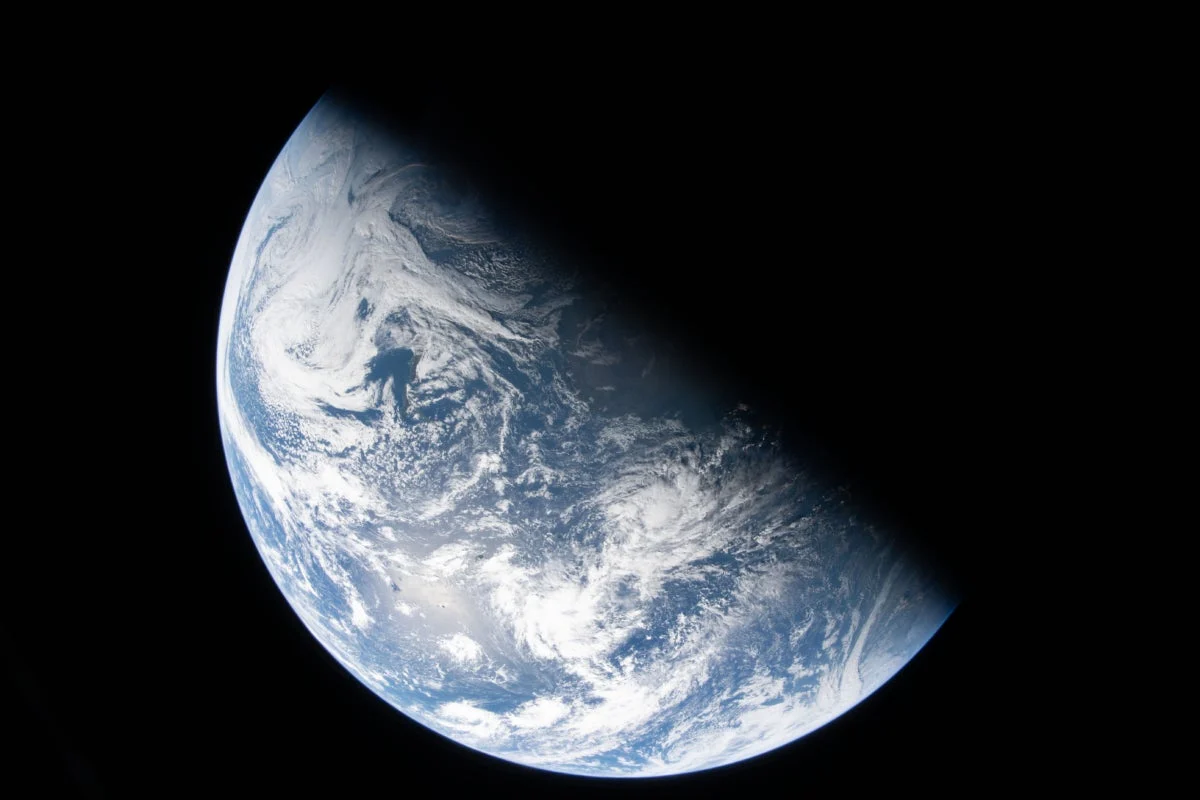
During the Permian, the Earth’s landmasses were coalescing into the supercontinent Pangaea. The subduction of cold oceanic plates into the mantle, a process that takes tens of millions of years, meant that by the late Guadalupian, these cold slabs were reaching the core-mantle boundary. This massive heat exchange—the cooling of the outer core by the encroaching mantle slabs—likely destabilized the geodynamo, causing the magnetic poles to flip with unprecedented frequency.
The Shielding Effect and Atmospheric Consequences
The weakening and frequent reversal of the magnetic field have significant implications for life on the surface. The Earth’s magnetosphere serves as a protective shield against the solar wind and harmful cosmic radiation. When the field is in a state of rapid transition, its intensity often drops, allowing more high-energy particles to penetrate the upper atmosphere.
Research by climatologist Pavle Arsenović and his colleagues, published in Proceedings of the National Academy of Sciences (2024), underscores the potential biological impact of a weakened magnetosphere. Their models demonstrate that increased solar particle flux leads to the formation of nitrogen oxides, which deplete the ozone layer.
The depletion of ozone increases the amount of ultraviolet-B (UV-B) radiation reaching the surface. Previous studies, including analyses of malformed fossilized pollen grains from the end-Permian mass extinction 252 million years ago, suggest that high levels of UV radiation caused significant genetic damage to land plants. While the magnetic instability identified by Zhang and his team occurred slightly before the main extinction event, it suggests a pre-existing state of environmental stress that may have made the biosphere more vulnerable to subsequent cataclysms.
Deciphering the Causality: Correlation vs. Causation
Despite the compelling timeline, the research team is cautious, explicitly stating in their findings that "causality remains unproven." The scientific community recognizes that the Permian period was defined by multiple, simultaneous environmental crises. The primary suspects for the mass extinction remain the Emeishan flood basalt eruptions in southwest China—a period of massive volcanic activity—and a dramatic sea-level regression that destroyed shallow-water habitats.
Furthermore, the volcanic eruptions themselves released vast quantities of halogens, which are known to strip away ozone, providing a mechanism for environmental collapse that does not rely on magnetic field fluctuations. The researchers acknowledge that while the magnetic reversals are a fascinating phenomenon, they may simply be a "co-conspirator" rather than the primary "killer" in the ecological collapse.
Limitations and Future Directions
Methodological constraints also limit the current conclusions. While the frequency of the reversals is well-documented in the Fengshan limestone, there is a lack of reliable, continuous data regarding the "paleointensity"—the actual strength of the magnetic field during those reversals.
Additionally, modern computer simulations of the Earth’s core are highly complex and rely on significant simplifications of physical conditions 3,000 kilometers deep. These models are sensitive to chosen parameters, meaning that current interpretations of the core’s behavior in the Permian are, to some extent, speculative.
Future research will focus on two key areas:
- Geochemical Proxies: Seeking more precise methods to determine the actual field strength during the Permian to understand whether the field was truly "weak" or just "unstable."
- Refining Global Models: Integrating the Chinese findings with data from other regions to see if the 29 reversals are reflected in sediments worldwide, which would confirm this as a truly global geomagnetic event.
Implications for Earth Science
The study of the Permian magnetic field provides a rare window into the long-term interaction between the Earth’s deep interior and the biosphere. It highlights that the planet is an interconnected system where the slow cooling of the mantle can, after millions of years, influence the protective capacity of the magnetosphere.
As humanity continues to monitor the current, slow migration of the Earth’s magnetic poles, the lessons from the Guadalupian epoch serve as a humbling reminder of the Earth’s geological volatility. While the planet’s magnetic state is not currently a direct threat to human civilization in the way that it might have been to early Permian life, the research serves as a vital blueprint for understanding how core dynamics influence the habitability of our planet. The mystery of the 261-million-year-old magnetic pulse remains, for now, one of the most compelling puzzles in deep-time geology, inviting further exploration into the complex dance between the center of the Earth and the life that thrives upon its surface.