For decades, homeowners and automotive enthusiasts have blamed the unsightly peeling of fences or the mysterious micro-scratches on vehicle paintwork on a singular, predictable culprit: chemical corrosion caused by environmental pollutants. We have long accepted that acid rain, salt-laden air, and moisture are the enemies of longevity. However, groundbreaking research from the Max Planck Institute for Polymer Research suggests we have been missing a critical piece of the puzzle.
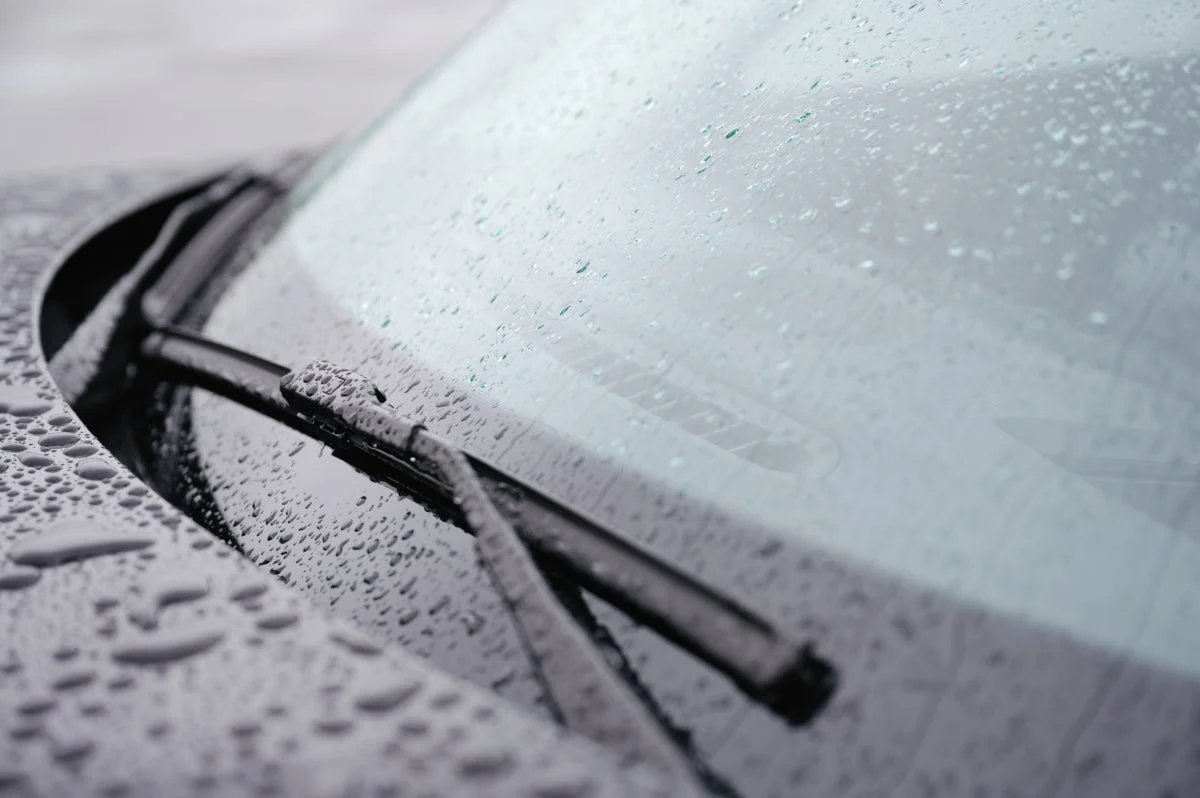
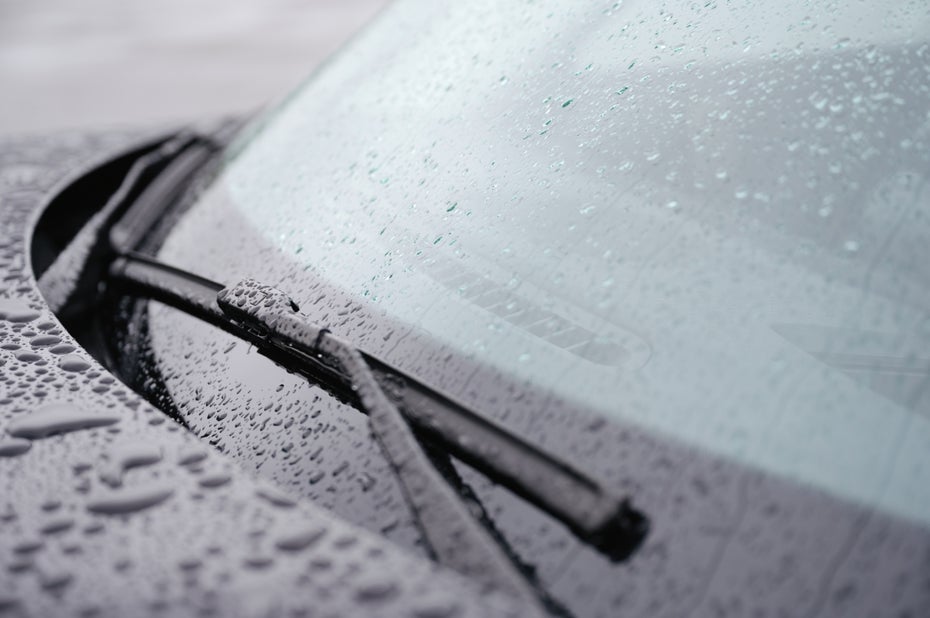
It turns out that the very act of a raindrop sliding across a surface—a common occurrence on cars, windows, and outdoor structures—turns these innocuous droplets into microscopic, high-voltage saboteurs. These findings, recently published in the journal Nature, reveal that raindrops can spontaneously generate enough electrical charge to physically puncture protective coatings, effectively "punching" holes in materials we rely on to protect our most valuable assets.
The Physics of the "Micro-Lightning" Strike
The phenomenon identified by researchers Jürgen Butt, Rüdiger Berger, and their colleagues is rooted in a complex form of contact electrification, often referred to as triboelectricity. When water droplets slide over insulating surfaces—such as the hydrophobic coatings on a car’s clear coat or the specialized layers on a garden fence—they accumulate an electrical charge.
As the droplet travels down a surface, it strips away electrons, becoming highly charged. When this charged drop eventually detaches and strikes another part of the surface, it does not merely land like a neutral liquid; it discharges its stored energy in a concentrated, localized event. The researchers describe this as a miniature, controlled lightning strike.
"We have been studying the physics behind how water droplets charge up when they slide over surfaces for several years," explains Rüdiger Berger, a group leader in the ‘Physics at Interfaces’ department. "It is a form of ‘droplet triboelectricity’ and is physically much more complex than previously assumed. When such charged droplets hit a coating, they discharge locally and can penetrate the layer like a tiny bolt of lightning—with significant consequences for the material’s long-term durability."
Chronology of the Investigation
The team’s experimental setup was designed to replicate the chaotic reality of a rainy day, albeit under tightly controlled laboratory conditions.
Phase 1: The Setup
To understand the mechanics, the researchers utilized 35-microliter droplets, slightly modified with sodium chloride to mimic the conductivity of natural rainwater. They tested these droplets on various surfaces, including the leaves of Tradescantia spathacea (a common houseplant), PVC foam, commercial window glass, and a highly controlled fluorinated coating on quartz.
Phase 2: Simulating "Weather"
The researchers established two testing protocols. In the first, droplets were dropped directly onto a Teflon-coated copper surface. In the second, they simulated the "sliding" action by allowing droplets to travel down an inclined plane for four centimeters before falling five millimeters onto the target surface. This process was repeated 3,000 times for each scenario to simulate the repeated wear and tear of a typical rainy season.
Phase 3: High-Speed Observation
Using high-speed cameras, the team captured the moment of impact. They observed that as a charged droplet approaches a surface, its shape undergoes a radical transformation. The drop shifts into a "Taylor cone"—a sharp, conical geometry associated with electro-spraying. This deformation is a direct result of the intense electric field generated between the droplet and the substrate, serving as a clear indicator of the potential for surface damage.
Supporting Data: When Voltages Turn Destructive
The quantitative data collected during the experiment is startling. Depending on the material of the surface, the droplets acquired charges ranging from 0.2 to 2 nanocoulombs. While these numbers sound infinitesimal, the physical reality is anything but.
A single nanocoulomb, when compressed into the tiny volume of a raindrop, translates to several thousand volts. By modeling the system as a conductive sphere hovering over a conductive wall, the researchers calculated that a drop with a two-nanocoulomb charge reaches a potential of 60 kilovolts per millimeter.
When researchers examined the Teflon-coated copper plates under a scanning electron microscope (SEM) after the 3,000-cycle trial, the results were unequivocal:
- The Sliding Droplets: The plates showed distinct pits several nanometers deep. In several instances, the punctures were deep enough to penetrate the 60-nanometer-thick Teflon layer entirely, exposing the copper underneath to the elements and initiating immediate corrosion.
- The Direct Impact Droplets: In stark contrast, droplets that hit the Teflon directly without the "sliding" phase resulted in zero damage. The coating remained entirely intact.
This confirms that the accumulation of charge through sliding is the primary mechanism of degradation, rather than the simple physical impact of the water.
Implications for Future Protective Coatings
The industry-standard approach to protecting outdoor surfaces has historically focused on chemical resistance. Protective waxes, sealants, and paints are formulated to withstand UV radiation, acid rain, and oxidation. However, the Max Planck findings suggest that the industry must now pivot to include "electrical discharge resistance" as a core performance metric.
Rethinking the "Micro-Meter" Standard
Most commercial coatings are only a few micrometers thick. This study demonstrates that even these thin layers are vulnerable to high-voltage discharges. If a coating is not designed to dissipate electrical charges, it acts as a capacitor, storing energy until it reaches a breakdown point. Future engineers will need to incorporate conductive additives or adjust the dielectric properties of these coatings to "bleed off" the charge before it can spark.
A Natural Phenomenon
The study notes that this process is not limited to man-made objects. This electrical charging happens naturally in clouds, ocean spray, and waterfalls. However, the interaction between these charged natural phenomena and our synthetic materials is where the problem accelerates. As we move toward more advanced, hydrophobic, and "self-cleaning" surfaces, we may inadvertently be creating materials that are more susceptible to this type of electrical damage because they facilitate the sliding action required to build the charge.
The Road Ahead: What This Means for You
For the average consumer, this research provides a sobering explanation for why high-end protective coatings sometimes fail sooner than expected. Your car’s clear coat, designed to be smooth and water-repellent, may actually be the perfect "generator" for these high-voltage events.
The implications are far-reaching:
- Maintenance Strategies: Owners of high-end vehicles or those with sensitive outdoor architectural finishes may need to rethink their maintenance schedules. If sliding droplets are the enemy, keeping surfaces free of dust and debris—which can influence the charging process—might become even more critical.
- Product Innovation: The research invites a new generation of "electro-compatible" coatings. Manufacturers will likely begin marketing products that are not just hydrophobic, but also electrically dissipative.
- Scientific Perspective: This study serves as a reminder that the microscopic world often hides the causes of macroscopic failure. What we perceive as "bad luck" or "poor paint quality" is often a sophisticated interplay of physics that we are only just beginning to map.
As the Max Planck team continues their work, they emphasize that while the experiments were performed in a lab, the physics are universal. Every time it rains, a silent, invisible battle is occurring on the surface of your property. Understanding this "micro-lightning" is the first step in winning the war against the elements, ensuring that your home and vehicle look as good in ten years as they do today.
This report highlights the necessity of interdisciplinary research in material science, bridging the gap between fluid dynamics, electrostatics, and industrial design. While the researchers note that their study is a starting point, it fundamentally shifts our understanding of surface degradation in the 21st century.